REVIEW · LONDON
Explore Biblical Artifacts at the British Museum
Book on Viator →Bookable on Viator
Bible stories meet giant stone evidence. This British Museum tour connects the Assyrian, Egyptian, Greek, and Roman galleries to the people and themes in the Bible using guide David’s guided timeline.
I love how David ties physical objects to named biblical figures like Joseph, Moses, Jonah, Ahab, Hezekiah, Jesus, and Paul. I also love the built-in prep: a Google Doc of study notes plus Bible verses you can reference during the tour.
One consideration: the pace is brisk. In 3 to 4 hours, you’ll move room to room, so it’s not the pick for slow browsing or for people who just landed and feel jet-lagged.
In This Review
- Key Things to Know Before You Go
- Bible-Linking Tour Time: Why This Half Day Feels Worth It
- Finding Your Feet at the British Museum (Great Russell St Start)
- David’s Ground-Floor Route: Assyrian, Egyptian, Greek (3 Civilizations With Biblical Names)
- Assyrian: Power, conflict, and the world around the prophets
- Egyptian: Leaders, symbolism, and biblical figures like Joseph and Moses
- Greek: The Parthenon sculptures and the background Paul traveled through
- Roman Galleries Upstairs: The Jesus and Paul Thread Gets Specific
- The Study System: Google Doc Notes + Bible App in Airplane Mode
- Pace, Comfort, and Real-Life Museum Heat
- Museum Admission + Tour Ticket: Getting Value Out of $77.50
- Who This Tour Fits Best (And Who Might Want to Skip)
- Should You Book This British Museum Bible Tour?
- FAQ
- Where does the tour start and end?
- How long is the tour?
- How large is the group?
- What galleries and themes are included?
- Which biblical people and time periods are discussed?
- Is museum admission included?
- Do I need a Bible app?
- Are folding stools available?
- Is free cancellation available?
Key Things to Know Before You Go
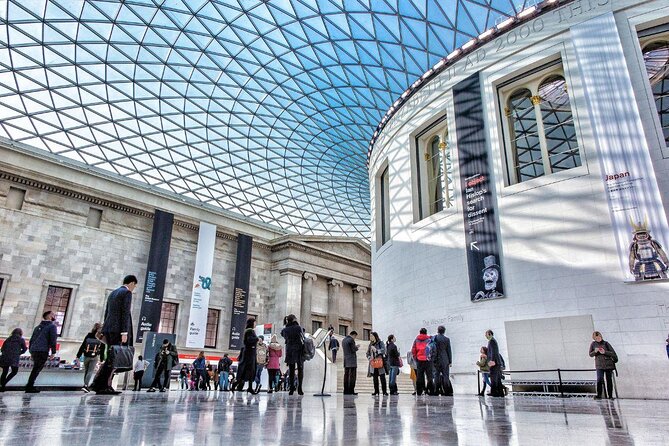
- David’s verse-to-artifact method: he connects what you’re seeing to Scripture in a clear sequence
- A tight route through four civilizations: Assyrian, Egyptian, Greek (ground floor), then Roman (upper galleries)
- A Google Doc study pack: helpful before you arrive, and it keeps the tour focused
- Airplane-mode Bible support: you’re encouraged to use a Bible app like YouVersion
- Small group size: up to 10 people, so you can ask questions and keep up
- Folding stool option: available at the museum if standing gets uncomfortable
Bible-Linking Tour Time: Why This Half Day Feels Worth It
If you’re the type who likes your faith (or curiosity) backed by real-world context, this tour has a smart format. Instead of wandering randomly through a huge museum, you follow a guided timeline that starts with ancient Near Eastern empires and then moves into the Roman world where Jesus and Paul fit in.
I like that the experience is built for focus. You’re not paying to listen to general “museum facts.” You’re paying for a narrative that keeps steering you back to specific biblical moments. And because it’s timed for about 3 to 4 hours, you can do the museum in the morning or afternoon and still keep the rest of the day for London.
The price—$77.50 per person—works best if you plan to actually use the study tools and ask questions as you go. If you want to treat this like casual sightseeing, you may feel like you could do more on your own. If you want the Bible to make more sense through archaeology and artifacts, this is one of those tours that turns the museum into a story you can follow.
You can also read our reviews of more museum experiences in London



Finding Your Feet at the British Museum (Great Russell St Start)
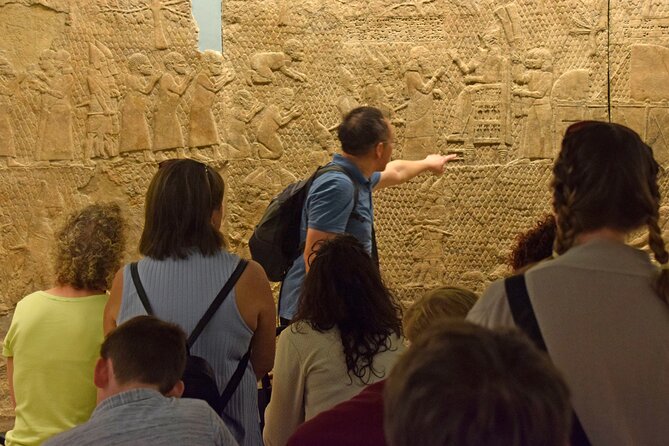
The tour meets at the British Museum on Great Russell St, London WC1B 3DG, and it ends back at the same point. That matters more than you’d think. This museum is big, and getting lost mid-tour wastes energy. A fixed start point plus an intentional route helps you get your bearings fast.
The tour is offered in English, and it runs with a maximum group size of 10. Smaller groups are a practical win here: you can hear the guide, keep up with where you’re walking, and still get your questions answered without the pace turning into a lecture you can’t process.
Also note the tone: the tour is designed for people across backgrounds. The goal isn’t only to point out objects. It’s to connect them to a biblical storyline in a way that stays understandable.
David’s Ground-Floor Route: Assyrian, Egyptian, Greek (3 Civilizations With Biblical Names)
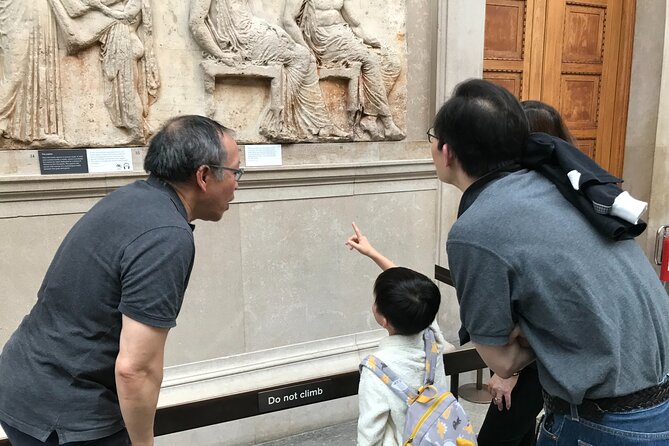
You start on the ground floor, and the opening focus is brilliant for first-timers. You begin with the galleries that set up centuries of context—the kind of political and cultural pressure that sits behind many biblical stories.
Here’s what this part of the route is designed to do:
Assyrian: Power, conflict, and the world around the prophets
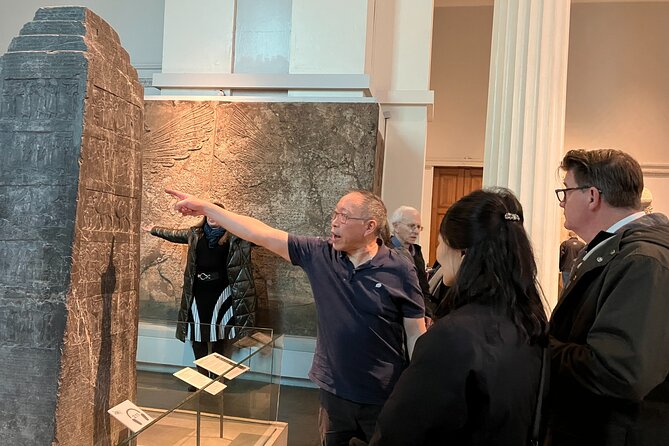
You’ll see major Assyrian works, including those famous 40-ton lamassu beasts. These aren’t small decorative pieces. They’re the kind of monumental guardian figures that communicate how empires displayed authority. With David guiding you, you get the link between imperial imagery and biblical references that name Assyria and its kings.
The biblical connections discussed here include Jonah, Ahab, and Hezekiah. Seeing the Assyrian setting makes these stories feel less like distant text and more like a lived geopolitical reality.
Egyptian: Leaders, symbolism, and biblical figures like Joseph and Moses
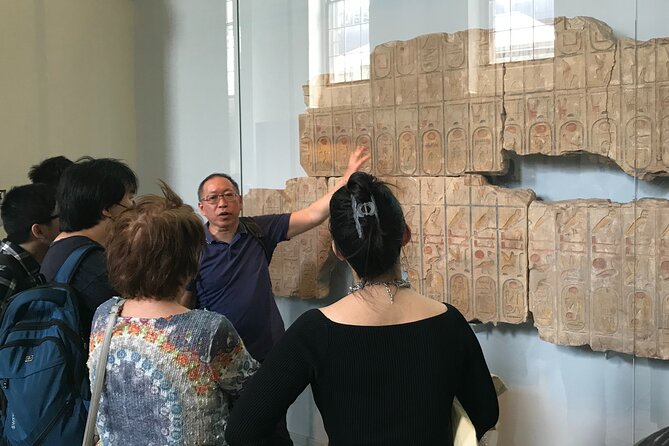
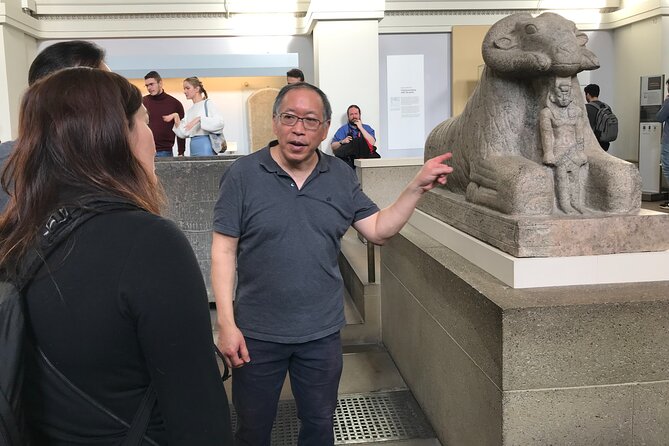
Next comes the Egyptian galleries, where you can encounter statues of famous pharaohs and the visual language of ancient Egypt. Even when the exact match to a single biblical verse isn’t the point, the museum pieces give you a way to understand what the biblical world would have looked like to someone living then.
David includes Joseph and Moses in this segment, which is a smart choice because those stories sit at the crossroads of Egypt and Israelite life.





Greek: The Parthenon sculptures and the background Paul traveled through
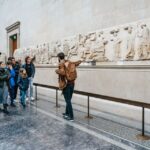
Then you shift to Greek material, including the Parthenon temple sculptures of Athens. This is where the tour adds a useful layer. The Bible doesn’t float in a vacuum; Paul’s world was shaped by Greek culture and the routes that moved ideas around.
David ties the Greek setting directly to Paul. It’s a reminder that reading Acts and Paul’s letters gets easier when you know what kind of city-world he was moving through.
Roman Galleries Upstairs: The Jesus and Paul Thread Gets Specific
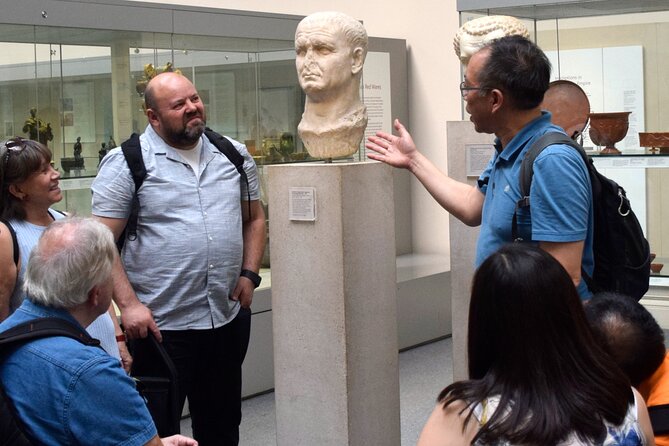
After a break, you go upstairs for the Roman galleries. This is where the tour gets especially satisfying if your goal is Bible-to-object connections rather than general museum education.
You’ll look at Roman emperors and objects that relate directly to Jesus and Paul. In practice, that means David doesn’t just say, Rome was powerful. He points you to the sort of items that would have surrounded Christians and travelers in the Roman world—coins, portraits, and the symbols of imperial rule.
A few of the “aha” moments come from small details like coins and portrait styles. One review notes seeing Roman coins with leaders’ faces connected to the period of the crucifixion. Another mentions the guide pointing out things like reading direction on cartouches and small city-gate metalwork details. Those aren’t trivia for the sake of trivia; they’re the kind of visual literacy that makes the Bible feel more grounded when you revisit it later.
Optional galleries may include Persia and Babylon as time allows and based on your interests. That’s a helpful flexibility feature. If you’re especially interested in Old Testament settings, you can often steer toward the countries tied to those stories.
The Study System: Google Doc Notes + Bible App in Airplane Mode
This tour gives you tools before you even start walking.
You’ll have access to a Google Doc full of study notes and related Bible verses. That matters because it prevents the classic museum problem: you see a lot of objects, but later you can’t remember which idea each one was meant to support. The study notes help you follow David’s timeline with less effort and more retention.
Then there’s the tech support: the tour encourages using a Bible app that works in airplane mode, with YouVersion specifically recommended. Even if you don’t love tech, the airplane-mode piece is practical. It reduces the risk of spotty museum Wi-Fi turning your experience into a scrolling session.
One nice touch: David helps the group use the app at the start. If you’re rusty with the Bible, or you haven’t studied in a while, this kind of hand-holding is a big deal.
Pace, Comfort, and Real-Life Museum Heat
The route is structured, and that’s good. But you still need to plan for museum reality.
Several reviews mention the tour running close to 4 hours at times, depending on questions and how the day unfolds. That’s not bad—it often means you’re not rushed through. Just don’t treat this as a “quick in-and-out.” Wear shoes you can stand in, and plan for breaks.
Comfort tip: optional folding stools are available at the museum if you want them during the tour. That’s a thoughtful option for people who find standing for long stretches difficult. If you think you’ll need it, ask early rather than waiting until you’re stuck.
Also, keep an eye on temperature. One review mentioned parts of the museum feeling uncomfortably warm. If you’re sensitive to heat, you’ll want light layers and a water plan.
The tour is also not recommended for jet-lagged travelers right after a long-haul flight. It’s intellectually active and needs your attention.
Museum Admission + Tour Ticket: Getting Value Out of $77.50
A lot of London museum tickets cost extra. Here, the museum admission is listed as free, which changes the value equation.
So your $77.50 is paying for:
- a guided route through specific galleries
- the Bible-to-artifact tie-ins
- the study support (Google Doc notes and verse use during the tour)
- a small-group teaching style with questions allowed
If you were just paying museum entry, you’d still be free to wander. What you’re buying is direction. And because David repeatedly connects artifacts to Bible events and names, the tour becomes a story you can carry home—something you can revisit when you read again.
If you’re on the fence because it feels pricey, think like this: how much would you pay for a private teacher for 3 to 4 hours who already knows the British Museum layout and can point you to the right objects at the right moment? That’s what this experience is trying to provide—at a group price.
Who This Tour Fits Best (And Who Might Want to Skip)
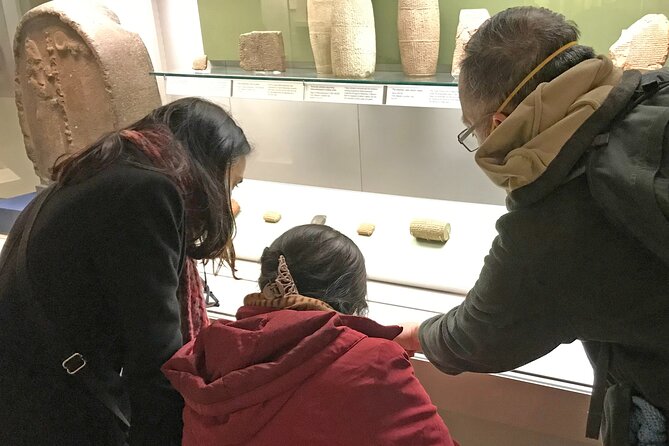
This tour is best for you if you want the British Museum through a Bible lens. It’s also ideal if you like learning in sequence—Old Testament context first, then the Roman world, with Jesus and Paul brought into view through objects and symbols.
It’s also a strong fit if you’re:
- curious about archaeology and how it connects to Scripture
- looking for a guided timeline that reduces overwhelm in a huge museum
- traveling with teens or older kids who can handle some discussion (reviews mention it worked well for teenagers)
- the type who benefits from prep materials and verse lookups
Consider skipping if:
- you’re expecting an easy walk and lots of free time to roam
- you’re strongly jet-lagged
- you want a purely art-focused museum tour without biblical framing
Should You Book This British Museum Bible Tour?
Book it if you want your London museum time to feel like a guided story, not a random exhibit shuffle. With David’s structured timeline, the Google Doc study notes, and the airplane-mode Bible app support, this is one of those tours that helps the artifacts click into meaning fast.
Skip it if your main goal is simply to admire sculptures and galleries at your own pace. This tour is teaching-first. You’ll get more from it if you show up ready to follow the route and use the study tools.
If you do book, do yourself a favor: load up your Bible app ahead of time if you can, and skim the study notes so you’re not trying to decode the timeline from scratch while walking.
FAQ
Where does the tour start and end?
It starts at the British Museum, Great Russell St, London WC1B 3DG, UK, and ends back at the same meeting point.
How long is the tour?
It runs for about 3 to 4 hours.
How large is the group?
The maximum group size is 10 people.
What galleries and themes are included?
You begin with Assyrian, Egyptian, and Greek galleries on the ground floor, then go upstairs to the Roman galleries. Optional time may include Persia and Babylon.
Which biblical people and time periods are discussed?
The tour includes discussion of Joseph and Moses (Egypt), Jonah, Ahab, and Hezekiah (Assyria), and Jesus and Paul (Rome and Greek context).
Is museum admission included?
Admission is listed as free.
Do I need a Bible app?
You’re encouraged to use a Bible app that works in airplane mode, with YouVersion named as a good option.
Are folding stools available?
Optional folding stools are available at the museum if you want them for the tour.
Is free cancellation available?
Yes. Free cancellation is available up to 24 hours before the experience’s start time for a full refund.