REVIEW · LONDON
London: The Beatles Walking Tour of Soho and Mayfair
Book on GetYourGuide →Operated by Brit Music Tours · Bookable on GetYourGuide
Soho and Mayfair feel different after this walk. This is a focused Beatles-themed tour that pairs famous locations with the stories behind them, from on-stage moments to the business side of pop stardom. You’ll spend two hours threading together places you’ve seen in photos, then get the context that makes the details click.
What I like most is how you’re encouraged to look up and notice specifics, like the roof tied to the last time the band performed together. I also love that the tour doesn’t stop at songs and gigs; it includes the music royalties and spin-off companies that helped turn Beatles fandom into a global machine.
One drawback to plan around: this tour does not include an Abbey Road Studios visit, so if that’s your top priority, you’ll need a separate option.
In This Review
- Key Points to Know Before You Go
- Soho and Mayfair: Why These Streets Matter to Beatles Fans
- From Hard Rock Cafe to Green Park: Route Logic in 2 Hours
- The Roofline Stop: When You’re Meant to Look Up
- John and Yoko’s First Meeting at Yoko’s Art Exhibition
- Royal Variety Performance: How the Beatles Made Pop History
- Carnaby Street and Soho’s 1960s Music Pulse
- Ronnie Scott’s Jazz Club: A Beatles Hangout Within London’s Scene
- Recording Studio Stop and the Business of Beatles Royalties
- Price and What $22 Buys You in Central London
- Who Should Book This Tour (and Who Might Want to Skip)
- Should You Book This London Beatles Walking Tour of Soho and Mayfair?
- FAQ
- Where does the London Beatles tour meet?
- How long is the tour?
- How much does it cost?
- Is Abbey Road Studios included?
- What language is the tour guide?
- Is the tour suitable for mobility impairments?
Key Points to Know Before You Go
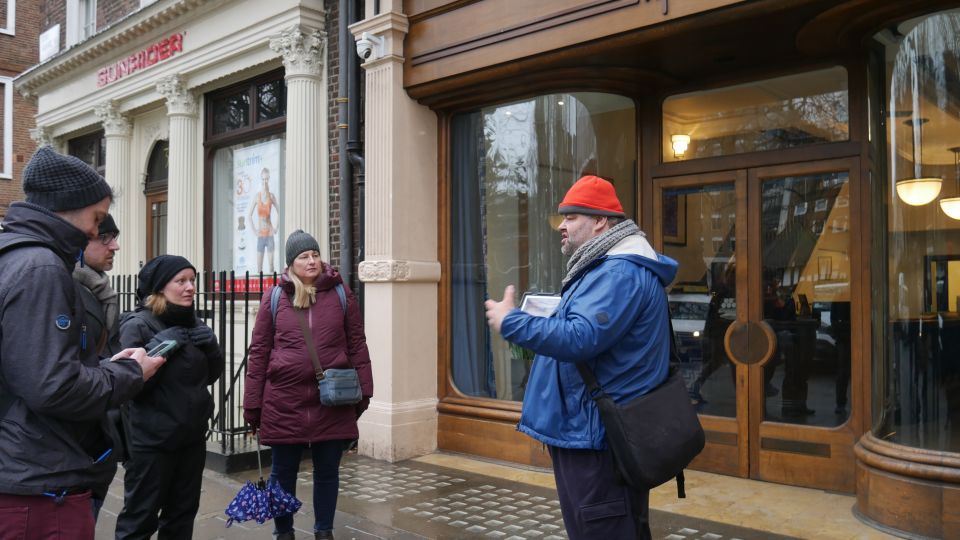
- Roofline moment: You’ll stop and gaze up at the roof where the Beatles performed together for the last time.
- John and Yoko origin story: You’ll hear how John and Yoko first met at Yoko’s art exhibition.
- Pop history at the Royal Variety Performance: You’ll connect a major TV-world event to Beatles impact.
- Carnaby Street fashion stop: Soho’s style center comes with the right 1960s context.
- Ronnie Scott’s jazz club: A Beatles hangout helps explain how the band fit into London’s music scene.
- Business behind the hits: You’ll get a clear look at royalties and Beatles-related companies over 60 years.
Soho and Mayfair: Why These Streets Matter to Beatles Fans
Beatles London works best when you move block by block. Soho and Mayfair aren’t just scenic backdrops here; they’re the stage sets for how the Beatles became a world phenomenon. The tour keeps you in the center of London’s entertainment geography, so each stop feels like a page you can physically point to.
I also like that the tour leans into two sides of the Beatles story. First, you get the art and the performance—where things happened, what was going on around them, and how that shows up in the music. Second, you see the grown-up side: contracts, royalties, and how the Beatles turned into long-lasting brands and companies after the band’s initial run.
If you’re the kind of fan who loves details—where the band stood, what event mattered, what kind of venue shaped the moment—this tour will feel like good homework. It’s not trying to be an all-day museum. It’s a tight walk that gives you enough story to make London’s Beatles landmarks feel usable, not just famous.
You can also read our reviews of more walking tours in London



From Hard Rock Cafe to Green Park: Route Logic in 2 Hours
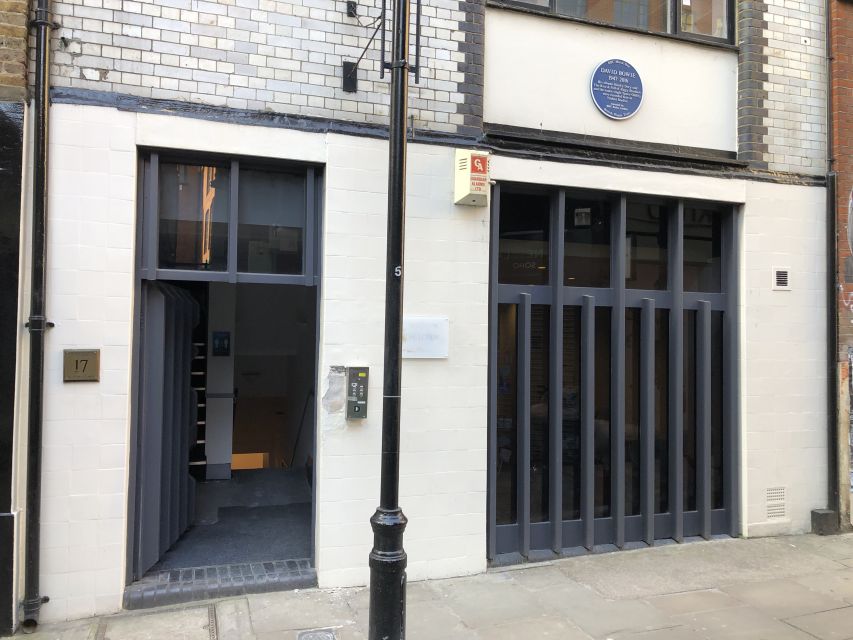
You meet outside Hard Rock Cafe, 225-229 Piccadilly, Criterion Building, London W1J 9HR. The closest Tube is Piccadilly Circus (Bakerloo and Piccadilly lines), and you’ll want to leave the station by the exit for the statue of Eros. The tour ends near Green Park Station.
Two hours sounds short, but that’s exactly the point. This is built around “high signal” stops. You’re not spending your limited time hunting for addresses or waiting around in line. You’re moving through concentrated areas where Beatles references cluster.
Because it’s a walking tour, you’ll be happiest if you wear shoes you can walk in comfortably. Also, plan to look up when the guide asks. One of the standout moments is tied to that roofline stop, and it’s the kind of thing you only notice if you slow down and actually tilt your head.
One more practical note: the tour is live and in English. That matters if you’re planning around your language comfort, and it also means you can listen for the guide’s pacing—some guides make stories land with humor, and the tour examples include guides like Michael and Spencer, both of whom have a reputation for making the locations feel easy to follow.
The Roofline Stop: When You’re Meant to Look Up
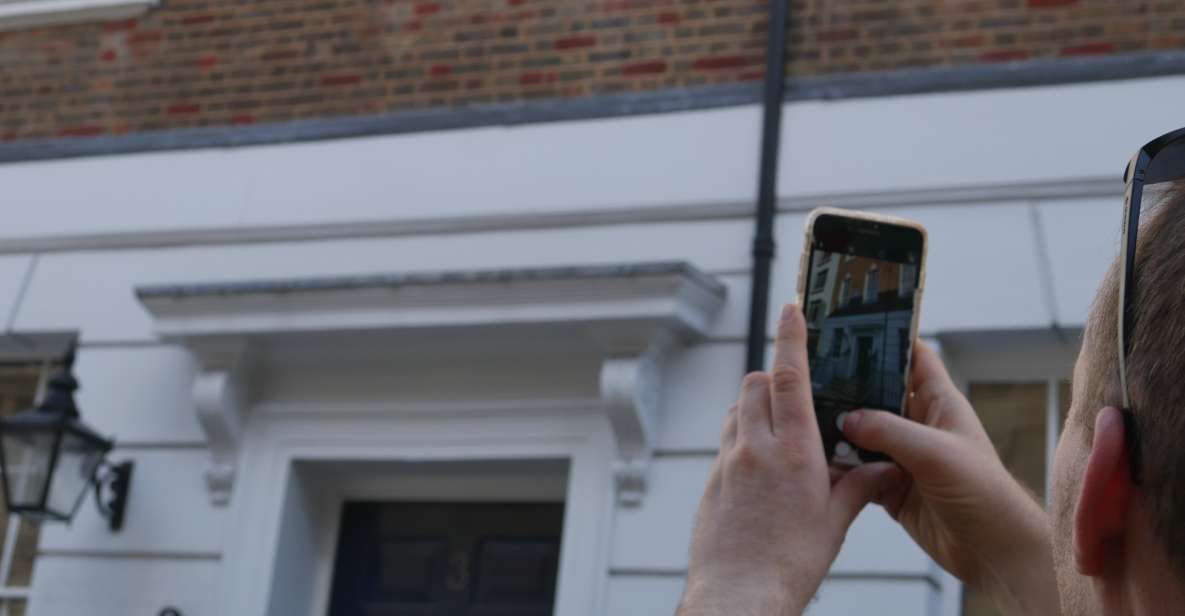
One of the best moments is also the simplest: you’ll stop and gaze up at the roof where the Beatles performed together for the last time. It’s the kind of detail that could easily become a quick photo moment on a generic tour. Here, the guide uses it as a story anchor, so it turns into a mini timeline in your mind.
That matters because the Beatles didn’t become a legend all at once. Their public moments had momentum, and the tour uses that momentum to connect locations to chapters. When you’re standing under a roof like this, you’re not just staring at a building—you’re picturing a real performance context and how the band’s final togetherness fit into what came after.
If you like photos, bring the instinct to zoom in on angles, not just faces. This is the kind of location where a wide shot and a “look up” shot tell different stories. Even if you don’t take a single picture, you’ll remember it because you’ll have used your body to understand where the moment happened.
John and Yoko’s First Meeting at Yoko’s Art Exhibition
The tour also pulls on the thread of John Lennon and Yoko Ono’s relationship at a key point: their first meeting at Yoko’s art exhibition. This isn’t just romantic trivia. It’s a way to understand how the Beatles era overlapped with new kinds of art, new publicity, and new ways of making culture.
Yoko’s exhibition background is important because it places the meeting in a London setting where art spaces and music spaces weren’t completely separate worlds. You get a sense that the Beatles were not living in a bubble. They were part of a wider creative ecosystem, and that ecosystem influenced what people expected from them.
You’ll get more meaning from this stop if you listen for how the guide frames the “why” behind the meeting, not only the “when.” The tour’s style is built around story clarity: connect the location to what changed afterward, and you’ll leave with a stronger understanding of why this moment is remembered.
Royal Variety Performance: How the Beatles Made Pop History
Another memorable stop is the Royal Variety Performance, where you’ll learn how the Beatles made pop history. This is one of those events that sounds like it belongs to the institution side of entertainment, not the youth-driven side. That’s exactly why it matters.
The Beatles didn’t just succeed within one lane. They crossed from record shops into television-style visibility and mainstream attention. The tour uses the Royal Variety Performance as a bridge between the excitement of fandom and the machinery that pushed pop into wider culture.
When you’re listening, try to pay attention to what the guide highlights as the turning point: the event’s audience reach, the kind of visibility it provided, and how the Beatles’ presence signaled change. Even though the stop is tied to one location, it helps you understand why Beatles fame didn’t fade quickly—it adapted, expanded, and kept finding new rooms to enter.





Carnaby Street and Soho’s 1960s Music Pulse
Then you hit the streets where style and music felt like they were talking to each other. Walking down Carnaby Street gives you the Soho fashion angle, and it’s a smart choice because Carnaby is tied to the visual identity of the 1960s. In other words, you see what people wore while you’re learning what people heard.
Soho is described as the beating heart of the music industry in the 1960s, and the tour uses that idea to set your expectations. You’re not just walking past streets. You’re getting a sense of the neighborhood’s role as a meeting place for culture—where performers, audiences, and industry figures overlapped.
If you’re someone who likes “place-making,” you’ll enjoy the way the guide frames the neighborhood. Soho helps you understand why the Beatles didn’t exist in a vacuum: London’s entertainment economy and street-level culture shaped what got noticed, what got sold, and what got copied.
And yes, Carnaby Street can be a busy spot in general. You’ll still get value as long as you keep your attention on the guide’s cues and let the story do the heavy lifting.
Ronnie Scott’s Jazz Club: A Beatles Hangout Within London’s Scene
A standout cultural stop is Ronnie Scott’s jazz club, one of the Beatles’ known hangout spots. This is valuable because it reminds you that the Beatles were not only about rock guitars and catchy hooks. They were also shaped by the broader musical world around them.
Jazz clubs in London weren’t just venues; they were social engines for musicians. When a rock band shares space with jazz culture, you start to see how musical taste and musical craft can cross-pollinate. The tour’s framing helps you connect the dots between listening influences and what you hear later in Beatles arrangements.
You’ll probably get the most from this stop if you treat it as context. Not every Beatles song is “about jazz,” but the musical environment matters. The guide helps you see how a club like Ronnie Scott’s fits into a larger network of ideas that made the band’s sound feel fresh.
Recording Studio Stop and the Business of Beatles Royalties
One part of the tour that I think fans underestimate is the inclusion of the business side. You learn about the music royalties and Beatles spin-off companies that were produced over the last 60 years, with revenue largely generated by millions of loyal fans worldwide. That’s not a random add-on. It’s part of the Beatles story after the band became a global institution.
The tour also includes a look at a recording studio connected to the Beatles, and it notes that the studio was also used by other rock gods. That’s a useful detail because it places the Beatles within a wider rock-and-recording ecosystem. In other words, the Beatles weren’t just a phenomenon onstage; they were part of a professional recording culture shared by other major acts.
If you want practical value, think of this section as a mental model. The Beatles built an audience, and then the industry machinery—publishing, royalties, licensing, and related companies—kept converting attention into income for decades. Once you understand that, you can better appreciate why Beatles references show up everywhere, long after the original timeline.
It’s also a reminder that fandom isn’t passive. It’s a consumer engine. The tour’s focus on royalties helps you see how that engine works in a real-world way, not just as a myth.
Price and What $22 Buys You in Central London
At $22 per person for a 2-hour guided walking tour, this lands in the “good value” category for central London experiences. You’re paying for a live guide, a curated route, and the ability to make sense of famous locations without doing all the research yourself.
The best value here isn’t only the low price. It’s that the tour is organized around stops that connect story themes: rooftop performance context, John and Yoko’s first meeting, pop-history TV visibility, Soho’s fashion culture, a jazz club hangout, plus a studio and the royalties/business angle. Many cheap tours feel like a string of photos. This one uses the photos as prompts for explanation.
So if you’re budget-minded but still want meaning, this is a strong pick. If your priority is a studio visit at Abbey Road Studios, you’ll need to know this tour does not include that. In that case, you can still do this tour for the street context, then add a separate studio-focused option.
Who Should Book This Tour (and Who Might Want to Skip)
This tour fits best if you’re a Beatles fan who enjoys street-level storytelling and wants context in a short time window. It’s also a good match if you like the mix of performance moments and the business side, since the royalties and spin-off companies theme gives you a different kind of Beatles perspective.
It’s not suitable for people with mobility impairments, since it’s a walking tour.
If you’re the type who only wants the biggest headline sites and expects lots of museum time, you might find the outdoor pacing limiting. But if you’re happy to walk, look up, and listen closely, you’ll get a lot more out of London than you would by wandering alone.
Should You Book This London Beatles Walking Tour of Soho and Mayfair?
Yes—if you want a tight, story-driven Beatles tour in central London, this is an excellent use of two hours. The route is designed around recognizable locations, then adds the connective tissue: roofline performance detail, John and Yoko’s first meeting at Yoko’s art exhibition, pop history at the Royal Variety Performance, Carnaby Street style, Ronnie Scott’s jazz club context, plus a clear look at the royalties and companies that kept Beatles culture going.
Book this when you want both the music and the machinery behind the fame. Skip it only if Abbey Road Studios is non-negotiable for your trip, because that stop is not part of this experience.
If you’re considering it, do it with comfortable shoes and a willingness to look up during the roof moment. That small physical cue is exactly the kind of detail that turns a list of names into a London memory.
FAQ
Where does the London Beatles tour meet?
The meeting point is outside Hard Rock Cafe, 225-229 Piccadilly, Criterion Building, London W1J 9HR, near Piccadilly Circus.
How long is the tour?
The tour lasts 2 hours.
How much does it cost?
The price is $22 per person.
Is Abbey Road Studios included?
No. Abbey Road Studios is not included.
What language is the tour guide?
The live tour guide speaks English.
Is the tour suitable for mobility impairments?
No, it is not suitable for people with mobility impairments.