REVIEW · LONDON
London: Victoria and Albert Museum Entry with Guided Tour
Book on GetYourGuide →Operated by Strabo · Bookable on GetYourGuide
London’s V&A can overwhelm fast. This guided highlights tour makes it feel manageable, with top sights you can actually use. I like that you get a plan inside one of the world’s biggest collections, and you’re sent straight to the sections that matter most.
The best part for me is the mix of hands-on-looking design—especially the Jewelry Gallery with its wall-to-wall pieces and the museum’s superstar Renaissance finds like the Raphael Cartoons. My one caution: some bookings have reported problems with the guide not showing up at the meeting spot, so I’d keep an eye on timing and have a backup plan.
In This Review
- Key points at a glance
- First, you’re buying time (not just a ticket)
- Meeting point on Exhibition Road: simple, but watch the clock
- The V&A orientation: 1852 to today, without the textbook
- Jewelry Gallery: 3,000 pieces, and why details matter
- Fashion Galleries: style changes, and society changes
- Cast Courts: famous sculptures, up close—without the plane ticket
- Raphael Cartoons: seven designs and a big Renaissance story
- Global collections: Asian, Islamic, and Europe in the same conversation
- Sculpture Galleries at the end: how to keep the thread
- Value check: is it worth $26?
- Logistics you should plan around
- Who this tour suits best
- Should you book the V&A Victoria and Albert guided highlights tour?
- FAQ
- FAQ
- How long is the V&A guided tour?
- What is the price per person?
- Where do we meet for the tour?
- Is the tour guided in English?
- What parts of the V&A are included?
- What are the highlights of the Jewelry Gallery stop?
- What will we see in the Cast Courts?
- What are the Raphael Cartoons?
- Is the tour wheelchair accessible?
- Can I get a refund if my plans change?
- Can I reserve now and pay later?
Key points at a glance
- Skip-the-line help: You’re guided to key rooms so you don’t waste the first hour hunting.
- Jewelry Gallery strength: You get access to the Gallery’s 3,000+ pieces, not just a quick glance from the hallway.
- Cast Courts and famous plaster casts: Life-sized sculptural landmarks like Michelangelo’s David and Trajan’s Column are built for close viewing.
- Raphael Cartoons focus: Seven large-scale Renaissance designs made for tapestries connected to the Sistine Chapel.
- Fashion + art in one ticket: You see clothing evolution alongside paintings, decorative arts, and global collections.
- Fast but structured timing: You’ll spend about 80 minutes moving through major highlights rather than wandering.
First, you’re buying time (not just a ticket)
At the Victoria and Albert Museum, the challenge isn’t whether it’s good. It’s the opposite: it’s so big and so full that you can burn your best attention just figuring out where to go.
This guided option is built for people who want the V&A’s “greatest hits” in a tight window. For $26 per person and about 80 minutes, you’re paying for direction, timing, and access to specific highlight areas—so you can leave feeling like you saw something real, not like you walked past a few rooms.
If you’re the type who likes museums, but hates aimless wandering, you’ll probably appreciate this setup. It’s also a smart choice in winter or if you only have one museum slot in London.
You can also read our reviews of more guided tours in London



Meeting point on Exhibition Road: simple, but watch the clock
You meet outside the Exhibition Road entrance, with the guide standing next to the café. That’s clear and easy to find—at least on paper—and the duration is short enough that being late can hurt.
Here’s the practical part: because this is a guided group tour, your experience depends on the guide being where they should be, when they should be. Some recent bookings have described situations where a guide didn’t show up at the appointed spot (or showed up at the wrong time), which can throw off your day and scramble plans.
If you book, I’d do two things:
- Arrive a few minutes early and take a quick mental note of the exact meeting area.
- If the guide isn’t there right away, give it a short check period, then ask museum staff for help locating the group contact or the correct meeting spot.
That small habit can save you from turning a museum visit into a frustrating waiting game.
The V&A orientation: 1852 to today, without the textbook
Once you’re inside, the tour starts by framing what the museum is and why it’s different from a lot of art museums. The V&A grew from 1852, and it now holds over 2.3 million objects that stretch across about 5,000 years of human creativity.
The value here isn’t memorizing dates. It’s learning how to read the V&A. The museum is organized so design, fashion, decorative arts, architecture, sculpture, and more all sit in conversation. When someone gives you that lens early, it changes how you experience what comes next.
You also get a structure for your visit. Instead of thinking, Where do I start?, you think, What’s the point of this room? That shift is what makes an 80-minute tour feel worthwhile.
Jewelry Gallery: 3,000 pieces, and why details matter
If you’re choosing one “must-see” stop in the V&A, the Jewelry Gallery is an easy pick. The tour includes access to the Gallery and focuses on what makes it special: over 3,000 pieces across different eras and styles.
What you’ll like about this section is the way it teaches you to look. Jewelry isn’t just about sparkle. It’s craftsmanship, materials, political power, taste, and technology—often all in one object. On the tour, you’re guided to examples that span categories like royal treasures, Renaissance-era designs, and more contemporary work.
Practical tip: take a slow pass over the details, not just the headline items. The Gallery is packed; if you skim, you miss what makes it addictive. A guided format helps because you’re not left deciding what’s worth your attention.
Drawback? Jewelry can be visually similar at first glance if you’re rushing. The 80-minute format means you’ll see many highlights, but you won’t get hours to study everything. If you’re a jewelry specialist, you might want extra unstructured time after the tour.
Fashion Galleries: style changes, and society changes
From jewelry’s precision, the tour moves into the Fashion Galleries, which cover the evolution of clothing through time. You’ll see examples that range from elaborate 18th-century gowns to modern couture.
The key reason this stop works on a highlights tour is that fashion is a fast way to understand history. Clothing shows changes in manufacturing, social roles, wealth, and even changing ideas about what’s considered attractive or proper. When a guide connects an outfit to its era’s norms, fashion stops being just pretty and starts being a cultural record.
One small consideration: fashion galleries can feel crowded or busy depending on the time of day, and 80 minutes is still 80 minutes. If you’re hoping to study specific pieces, you may want to plan a longer visit either before or after the guided portion.
You can also read our reviews of more museum experiences in London





Cast Courts: famous sculptures, up close—without the plane ticket
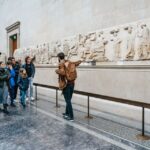
The Cast Courts are one of the V&A’s most dramatic spaces. The tour takes you there for life-sized plaster casts of major sculptures and monuments—an approach that makes world-famous art suddenly feel accessible.
The tour highlights include:
- Michelangelo’s David
- Trajan’s Column
Here’s why this stop is valuable: casts can sound like a compromise until you see the scale and the texture. Life-sized works change your sense of proportion. Even if you’ve heard about a monument all your life, seeing it in person at this size makes it easier to understand why it became iconic.
A quick note on expectations: casts are interpretations. But in the Cast Courts, the point is still clear—technique, form, and history you can study closely in one location.
Raphael Cartoons: seven designs and a big Renaissance story
Then comes one of the V&A’s headline treasures: the Raphael Cartoons. The tour gives you time to see them as the museum presents them—seven large-scale designs by Raphael made for tapestries connected to the Sistine Chapel.
Why this is a big deal: Raphael wasn’t just painting for walls. These designs were meant to be turned into woven images. That means you’re not only looking at composition and drawing—you’re also seeing a work made for translation into another medium.
On a highlights tour, the Raphael Cartoons are the moment that can make the whole ticket feel worth it. You’re looking at Renaissance mastery at a scale that few museums can match.
If you care about how art is made and used—not just how it looks—this stop is where your attention will lock in.
Global collections: Asian, Islamic, and Europe in the same conversation
One of the strengths of this tour is that it doesn’t box you into only European art. It includes access to global collections, including Asian and Islamic art, along with wider European decorative arts.
The tour format points you toward categories like:
- Chinese ceramics
- Indian statues
- Textiles, ceramics, and calligraphy from the Islamic world
- Paintings and furniture across Europe’s artistic golden ages
This part matters because it teaches you to notice patterns. You start seeing how different traditions approach materials, ornament, and meaning. You also notice that design isn’t separate from culture—it’s culture.
Caution: “global collections” in a highlights visit means you’ll be sampling, not mastering. But sampling with context is better than wandering randomly for hours.
Sculpture Galleries at the end: how to keep the thread
The tour ends by taking you into the Sculpture Galleries, which span ancient to modern works. You explore the kinds of techniques and stories that make sculpture more than static stone or plaster.
What I like about finishing here is that it closes the loop. You started with decorative detail in jewelry, moved through design and style in fashion, saw plaster casts of sculptural icons, and then you land back in sculpture where you can see how form carries meaning.
Even if you leave with only a few “favorites,” the galleries help you connect them. That’s how an 80-minute tour becomes more than a checklist.
Value check: is it worth $26?
Let’s talk value without pretending it’s a miracle deal. At about $26 per person, you’re paying for:
- an expert-led guide
- access to multiple high-demand museum areas
- a structured route for a museum that’s easy to get lost in
If you were going to the V&A anyway, the tour can be good value because it reduces wasted time. The museum is so large that your biggest cost is often your energy, not the ticket price.
On the other hand, the tour length is short. If you want deep study, you’ll need extra time on your own. And because guide reliability has been an issue for some bookings, you should weigh that risk if missing time would seriously derail your day.
Logistics you should plan around
The tour is English-language and the duration is 80 minutes. It’s also wheelchair accessible, which is a meaningful plus if mobility is part of your planning.
What you should plan for:
- Dress for London indoor walking. You’ll move.
- Use your phone sparingly for photos if crowds are heavy. Look first; shoot second.
- Have a rough plan for after the tour. The V&A is huge, and finishing with momentum helps.
Also, if you’re traveling with kids, this kind of tour can work because it highlights recognizable categories. Still, an 80-minute structure may feel long for very young kids if they want to stop and sprint every few minutes.
Who this tour suits best
This tour is a strong fit if:
- you want major highlights in a tight schedule
- you love design details like jewelry and fashion
- you want a guided route that helps you avoid decision fatigue
- you’re excited by the Raphael Cartoons and major sculptural references like David and Trajan’s Column
It’s a weaker fit if:
- you prefer quiet museums and long solo pacing
- you’re only interested in one narrow theme and hate splitting attention
- guide timing problems would stress you out (so build in patience, and be ready to get help on-site)
Should you book the V&A Victoria and Albert guided highlights tour?
I’d book it if you want a smart, time-saving way to see the V&A’s best-known rooms—especially the Jewelry Gallery and the Raphael Cartoons—without spending your day trying to map the museum on the fly.
Skip it or think twice if guide timing matters a lot for your schedule. Because some bookings have described instances where the guide didn’t meet as expected, you should be ready to handle a delay or missing guide by asking museum staff for help.
If you’re flexible, this tour can turn a big museum into a clear, satisfying route with the kind of details that make you want to return.
FAQ
FAQ
How long is the V&A guided tour?
The tour lasts about 80 minutes.
What is the price per person?
The price is listed as $26 per person.
Where do we meet for the tour?
You meet outside the Exhibition Road entrance, next to the café.
Is the tour guided in English?
Yes, the live tour guide is English.
What parts of the V&A are included?
The included areas are the Jewelry Gallery, Fashion Collection, Cast Courts, global collections (including Asian and Islamic art), the Raphael Cartoons, and the Sculpture Galleries.
What are the highlights of the Jewelry Gallery stop?
You’ll access the Jewelry Gallery, which has over 3,000 pieces, including royal treasures, Renaissance jewels, and contemporary designs.
What will we see in the Cast Courts?
You’ll see life-sized plaster casts of iconic sculptures and monuments, including Michelangelo’s David and Trajan’s Column.
What are the Raphael Cartoons?
They are seven large-scale designs by Raphael created for tapestries connected to the Sistine Chapel.
Is the tour wheelchair accessible?
Yes, it’s listed as wheelchair accessible.
Can I get a refund if my plans change?
You can cancel up to 24 hours in advance for a full refund.
Can I reserve now and pay later?
Yes, you can reserve and pay later.