REVIEW · LONDON
London’s Alternative History: A Self-Guided Audio Tour
Book on Viator →Operated by VoiceMap Audio Tours · Bookable on Viator
London has a weird past worth walking. This self-guided audio tour uses GPS-based narration so the stories land exactly where you are, not where you guessed. You’ll get little-known facts and offbeat tales while also getting a practical walk through major sights.
I especially like the lifetime access. Once you buy in, you can come back later and replay the route in a new mood, or just stop at the spots you want to revisit. Pair that with offline access to audio, maps, and geodata, and you can keep moving without hunting for cell service.
The main drawback to consider is that you’ll need to bring your own smartphone. The tour includes the VoiceMap app and offline files, but it doesn’t provide the device or any transport, so plan on using your own phone plus walking time.
In This Review
- Key Points You’ll Feel While Walking
- What This Tour Really Does: History Without a Lecture
- Price and Value for a 1–1.5 Hour Self-Paced Walk
- Starting in Covent Garden Piazza and Ending at the Savoy
- How the GPS Audio Works (VoiceMap + Offline Files)
- Stop-by-Stop: Convent Garden to the Savoy’s Electrified Finale
- Stop 1: The Origins of Convent Garden’s Name
- Stop 2: The Actors’ Church and London’s First Recorded Punch-Up
- Stop 3: The Oldest Theatre Site and the Man in Grey
- Stop 4: Quirky Cases and Famous Trials
- Stop 5: The Lion King, and Early Electricity in Theatre Lighting
- Stop 6: A Tudor Palace Turned Navy Office (and Postal Progress)
- Stop 7: The Thames Riverside Promenade and Hidden River Secrets
- Stop 8: Ladies’ Bridge, Built by Women in World War II
- Stop 9: The Victorian Gas Lamp That Lights Itself
- Stop 10 (Finish): The Savoy and London’s First Fully Electrically Lit Public Building
- Pacing Advice: Make It Yours in Real Time
- What Kind of Traveler Will Love This Most
- Should You Book London’s Alternative History Audio Tour?
- FAQ
- How long is this self-guided audio tour?
- What language is the audio available in?
- Do I need an internet connection during the walk?
- What do I need to bring with me?
- Where does the tour start and end?
- Is free cancellation available?
Key Points You’ll Feel While Walking
- GPS-tagged audio tells you what to look at as you reach each location
- Offline VoiceMap access means you can navigate and listen without relying on data
- A compact, on-foot route connects Covent Garden, the theatre world, and the Strand/river area
- Odd history in plain language: actor memorials, punch-ups, ghost stories, and legal quirks
- Real London details like a sewer-gas lamp and early electrified buildings
- Flexible pace with pauses you control, plus lifetime access for repeat visits
What This Tour Really Does: History Without a Lecture
This isn’t a museum-with-a-guide kind of experience. It’s a self-paced walk where the audio acts like a local friend who keeps steering you toward the interesting bits you’d probably miss. And because the commentary is GPS-based, you don’t have to keep checking maps or guessing which stop is next.
What makes it work well is the focus on the strange side of London. You’re not just hearing famous dates. You’re hearing origin stories, workplace weirdness, stage tech, and courtroom curiosities. It keeps the pace lively, even when you slow down to read details around you.
If you like your history a little off-center—more gossip and grit than polished plaques—you’ll enjoy the feel.
You can also read our reviews of more guided tours in London



Price and Value for a 1–1.5 Hour Self-Paced Walk
At $9.99 per person, this is priced like a smart add-on, not a big-ticket tour. The value comes from how much ground it covers for the time: about 1 hour to 1 hour 30 minutes, depending on how often you pause and how fast you walk.
You also aren’t paying for ticketed attractions. The tour is built to be listen-and-look, with no museum entry included. That matters because it keeps your total day budget steadier: you can spend the money you saved on a meal or a quick drink after.
And the lifetime access is a quiet bonus. If you’re visiting London once, you can still come back later in the trip. Or years from now, you can reuse it when you want an excuse to revisit a favorite area.
Starting in Covent Garden Piazza and Ending at the Savoy
The route starts at The Piazza, 1-7 Covent Garden, London WC2E 8HD and ends at the SavoyStrand, London WC2R 0EZ. That end point is a big deal for what you’ll hear near the finish: the story of early electrification and the kind of spectacle London loved when electricity became new.
Because the tour begins in Covent Garden, it’s easy to connect with other sightseeing. You’ll be starting in an area that’s already lively and visually rich, and the walk naturally guides you through theatres, legal curiosities, and then toward the river/Strand zone.
One practical note: there’s no included transport, so treat this as a walk you fit into your day, not something you rely on as your main transportation plan.
How the GPS Audio Works (VoiceMap + Offline Files)
You’ll use the VoiceMap application on your phone. The key is that the audio is tagged to each location, so the narration is timed to where you stand.
You also get offline access to audio, maps, and geodata. That’s great for London, where you can still lose signal if you stray into the wrong street canyon. With offline files, you’re not stuck waiting for data before the next part begins.
What to do before you start:
- Download and set up the tour in the VoiceMap app while you can still get a solid connection.
- Bring a phone charger or a charged battery, since GPS + audio drains power.
- Use earphones so you get the narration clearly, especially in busier street sections.
And if you’re not great at following visual directions, this is one of the friendlier ways to travel around London on foot. The audio-style guidance tells you when to look and where to turn as you move.
Stop-by-Stop: Convent Garden to the Savoy’s Electrified Finale
You can also read our reviews of more historical tours in London


Stop 1: The Origins of Convent Garden’s Name
You’ll start with the story behind the area name: Convent Garden comes from a medieval convent’s garden. It’s the kind of detail that makes the present day feel less random. Instead of treating Covent Garden as just shopping and street energy, you understand it as a place that used to be tied to religious land use.
As you listen, slow down for a moment. Look around the market area with the “medieval garden” idea in mind. It helps you connect the name you hear daily with a very different past.
Possible drawback here: if you’re rushing to “get to the next attraction,” you might miss some of the best name-and-origin storytelling. Give yourself a few calm minutes at the start so the rest of the route lands better.
Stop 2: The Actors’ Church and London’s First Recorded Punch-Up
Next comes the Actors’ Church, known for memorials to famous actors. This stop also includes a story about London’s first recorded punch-up, which is such a wonderfully blunt piece of human history.
It’s a great example of how this tour avoids stiff, overly proper storytelling. You get a sense of actors as people with communities, conflicts, and reputations—then you see how a church became a kind of public memory for performers.
Tip: pause for a second at the church area and let the narration finish its point before you move on. Those details are the kind you don’t want to cut off mid-story.
Stop 3: The Oldest Theatre Site and the Man in Grey
Then you’re in the theatre zone, learning about the oldest theatre site in London. You’ll hear about performances that shaped London’s stage culture, plus ghost stories, including the infamous Man in Grey.
Even if you’re not a big ghost-story person, the value here is the way it connects the theatre’s real-world reputation—people gathering, shows running—to the legends that grew around it. London loves turning public spaces into stories people repeat.
Practical consideration: this is a walking audio experience, so don’t expect a guided tour inside buildings. The “haunting” is part of the narration, not a ticketed event. That’s still fun, just plan accordingly.
Stop 4: Quirky Cases and Famous Trials
After the theatre mood, you’ll shift into the legal side—cases and famous trials that happened in this area. This is where the tour leans into the oddball London theme again: justice, but with characters, drama, and famous names.
This part works well if you like contrast. Theatre offers spectacle; court history offers conflict and consequences. Hearing both in one afternoon makes the city feel like it has multiple personalities, not just one steady tourist script.
Stop 5: The Lion King, and Early Electricity in Theatre Lighting
Next, you’ll connect theatre productions—such as The Lion King—with the early days of electricity in theatre lighting. That mix is surprisingly satisfying because it’s not just “electricity was invented.” It’s electricity becoming a practical show tool.
If you’re the kind of person who enjoys how tech changes culture, this segment is for you. You start thinking about how stage lighting changed what audiences expected, what directors could do, and how quickly a new invention became a status symbol.
Quick tip: if you catch yourself staring at façades or street details, you’re doing it right. The audio is built for those quick glances while you walk.
Stop 6: A Tudor Palace Turned Navy Office (and Postal Progress)
Then comes a grand building stop where you learn about transformation—from a Tudor palace to a Navy office, and its role in the British postal system.
This is one of the more “how cities evolved” parts of the tour. You see how a building can outlive its original purpose and then become part of communication and administration. That’s a big theme in London: the past doesn’t just get preserved; it gets repurposed.
If you’re the kind of traveler who likes to understand how places function(ed), don’t skim this section. The postal angle especially helps you see London as an information network, not only a sightseeing checklist.
Stop 7: The Thames Riverside Promenade and Hidden River Secrets
Now you move to a riverside promenade and hear about construction that involved diverting the River Thames, along with hidden river secrets uncovered in the process.
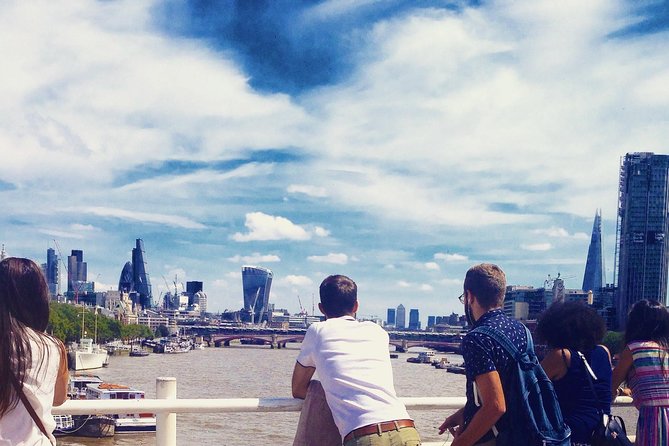
This is where the walk earns its keep. Standing along the river, you can mentally rewrite the city’s geography. You’re not only hearing a story—you’re seeing the results.
If you’re short on time, this is one of the best stops to listen carefully, because it makes the river area feel like engineering, not just scenery. It also gives you a reason to keep looking downward toward the waterline rather than just across the skyline.
Stop 8: Ladies’ Bridge, Built by Women in World War II
You’ll cross toward Ladies’ Bridge, known for views and for being largely built by women during World War II.
This segment feels meaningful because it’s not just a construction fact. It’s a reminder that big public works also carried stories of who was allowed to work, who did the work, and who built the city’s future while the world was at war.
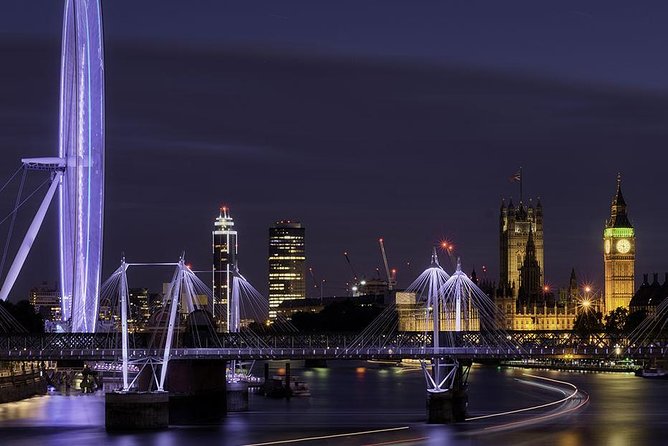
Also: views. The audio nudges you to look around, and the bridge position is made for that. If you like photo stops, this is one to slow down at.
Stop 9: The Victorian Gas Lamp That Lights Itself
Next is a standout street detail: the last remaining Victorian gas lamp in London, powered by sewer gas—nicknamed The Lamp that Lights Itself.
This is one of those moments where you suddenly realize how many invisible systems run under a city. Gas from sewers powering a lamp is exactly the kind of practical weirdness London is good at, and it’s the sort of story you’ll remember long after the rest blurs together.
If you’re standing near the lamp, take a second to actually look. The best part of a self-guided audio tour is when you can match the story to the physical object in front of you.
Stop 10 (Finish): The Savoy and London’s First Fully Electrically Lit Public Building
To wrap things up, the route ends at the SavoyStrand, where you learn about the first public building in the world to be lit entirely by electricity.
The narration also includes the more human angle: luxurious guests and infamous parties. It’s a fun, slightly scandalous way to end a history walk, and it ties back nicely to the theatre electricity earlier in the route.
When you reach the end, you’ll likely want to linger for a moment. Not because you have to, but because the last stop is built for atmosphere—Strand energy plus a reminder that London’s nightlife and big social moments loved new tech as much as big ideas.
Pacing Advice: Make It Yours in Real Time
The whole point here is that you’re in control. You can walk at a normal pace for the full hour to 1.5 hours, or you can stretch it by pausing more often. The tour is designed so you can stop listening and restart without losing the flow.
If you want the best experience:
- Save your fastest walking for the transitions.
- Slow down at origin stories and at the stops with physical objects (the gas lamp, bridges, and prominent building fronts).
- Don’t feel guilty about pausing. These stories are short enough to fit into walking, but they reward attention.
Also, headphones matter. If the audio is hard to hear, it turns into background noise. If you can hear clearly, it feels like the city is talking to you.
What Kind of Traveler Will Love This Most
This is a good match if you:
- Like offbeat history and quirky facts.
- Prefer walking at your own speed over herding with a group.
- Want a way to hit multiple sights without buying tickets.
- Enjoy theatre culture, London legal oddities, and the city’s “how it worked” stories.
It may be less ideal if you:
- Want a traditional guided tour where you can ask questions.
- Expect inside access to theatres or buildings (this is an audio-guided walk, not a ticketed entry experience).
- Don’t want to use a smartphone during sightseeing.
Should You Book London’s Alternative History Audio Tour?
I think it’s worth booking if you want a cost-effective way to learn London without turning your day into a schedule fight. The GPS-based audio, the offline maps and geodata, and the lifetime access are the big reasons it feels like real value.
If you’re the type who enjoys little origin stories and memorable urban details—like the sewer-gas lamp and the bridge built by women in World War II—this route will keep you interested from start to finish.
If you absolutely hate walking or you don’t want to rely on your phone at all, you’ll probably feel constrained. But for most people doing a day in central London, this is a smart, flexible way to turn a simple stroll into a story-driven circuit.
FAQ
How long is this self-guided audio tour?
The tour is approximately 1 hour to 1 hour 30 minutes, depending on your pace.
What language is the audio available in?
The tour is offered in English.
Do I need an internet connection during the walk?
The tour includes offline access to audio, maps, and geodata through the VoiceMap application.
What do I need to bring with me?
You need your own smartphone to use VoiceMap. Transportation, food, and drink are not included.
Where does the tour start and end?
It starts at The Piazza, 1-7 Covent Garden, London WC2E 8HD, and ends at the SavoyStrand, London WC2R 0EZ.
Is free cancellation available?
Yes. You can cancel for a full refund up to 24 hours in advance of the experience start time.