REVIEW · LONDON
London’s Ghosts & Gruesome Past Nighttime Walking Tour
Book on Viator →Operated by Tours by Foot London · Bookable on Viator
Night in London turns dark fast. This 2-hour, guided ghost-and-gruesome walk from Farringdon to the Old Bailey is made for real streets after sunset, with spooky history tied to places you can actually see. I love the small group size (up to 20) and the patient, detail-forward storytelling style shown by guides like Matt and Carolina, but the topics are graphic, so it’s not the right pick if you want light and easy vibes.
Practically, the format is simple: a mobile ticket, a clear meeting point at Cafe Pronto Farringdon, and a route that ends near St Paul’s Underground. You’ll spend the evening moving through historic sites, hearing stories that range from alleged hauntings to executions, grave-robbing, and medical horror.
In This Review
- Key things that make this tour worth your evening
- Why London feels extra haunting on a guided night walk
- Meeting at Cafe Pronto Farringdon, then walking into the story
- Stop-by-stop: what you’ll hear at each historic site
- Stop 1: Farringdon Station and the girl said to haunt the platform
- Stop 2: Smithfield Market, where public executions shaped the square
- Stop 3: Charterhouse Square, peaceful space on top of plague pits
- Stop 4: Cloth Fair, the pre-execution drink stop
- Stop 5: St. Bartholomew the Great, tombstones and a founder’s disturbed rest
- Stop 6: William Wallace Memorial and the long shadow of the triple execution
- Stop 7: St. Bartholomew’s Hospital Museum, medical horror without sanitizing it
- Stop 8: Holy Sepulchre London and grave-robbing empty pits
- Stop 9: Old Bailey, and the worst case saved for last
- What kind of fear you should expect (and what you can control)
- Price and value: is $49 fair for a 2-hour night walk?
- Who this tour fits best
- Practical tips so your night walk stays fun, not stressful
- Should you book this London Ghosts & Gruesome Past night tour?
- FAQ
- FAQ
- Where does the tour start and end?
- What time does the tour run?
- How long is the tour?
- How many people are on the tour?
- Do I need a physical ticket?
- Is the tour suitable for most travelers?
- Is free cancellation available?
Key things that make this tour worth your evening
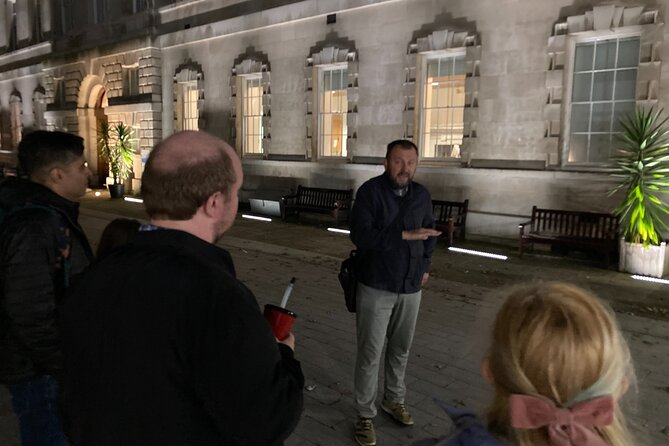
- A 6:00 pm-to-old-bailey route that turns London’s night streets into part of the show
- Stop-and-story pacing across nine major sites, so you’re never standing around too long
- Scholar-style storytelling that mixes folklore with grim historical detail, not just jump-scare theatrics
- Maximum group size of 20, which helps the guide keep control and you hear the stories
- Macabre themes with context: public punishment, plague-era medicine, grave disturbance, and more
- Ends near St Paul’s, so you’re not stranded far from transit after the final stop
Why London feels extra haunting on a guided night walk
This tour leans into the big difference between daytime sightseeing and nighttime walking: at night, you don’t just look at buildings—you experience the mood. You’re walking through areas that still feel tied to what happened there: courthouses, churches, hospital grounds, and old markets. The guide also keeps the stories grounded in location, so each stop feels like a chapter you can connect to the next.
I also like that the tone is consistent with the theme. This isn’t a cheerful ghost story tour where every stop is a cute legend. It’s about London’s grim and ghostly past, with plenty of dark subject matter and a clear “this is why it matters” thread.
The only real caution: if you’re sensitive to violence, disease, or medical procedures described in detail, you’ll want to think twice. The tour doesn’t soften the material just to keep it comfortable.
You can also read our reviews of more walking tours in London



Meeting at Cafe Pronto Farringdon, then walking into the story
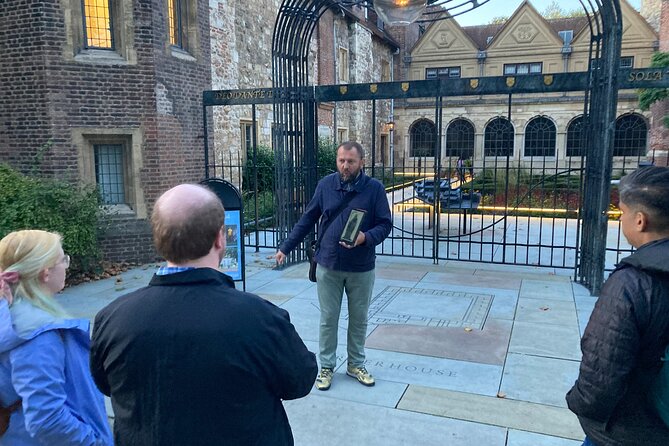
The tour starts at Cafe Pronto Farringdon Station (43 Cowcross St, London EC1M 6BY) with a start time of 6:00 pm. The meeting point matters here because you’ll want to find your group quickly; nighttime walking works best when everyone’s together and moving on schedule.
It runs for about 2 hours, and the group size is capped at 20. That number is important. Too-large groups can swallow the guide’s voice and turn the experience into background noise. With this setup, you’re more likely to actually catch the details—especially in places like Farringdon, which the guide notes can be busy and noisy.
You also get a mobile ticket, which keeps the process low-friction on your end. And you’ll end at 19 Old Bailey (near St Paul’s Underground Station), so you can fold the tour into the rest of your evening without having to backtrack.
Stop-by-stop: what you’ll hear at each historic site
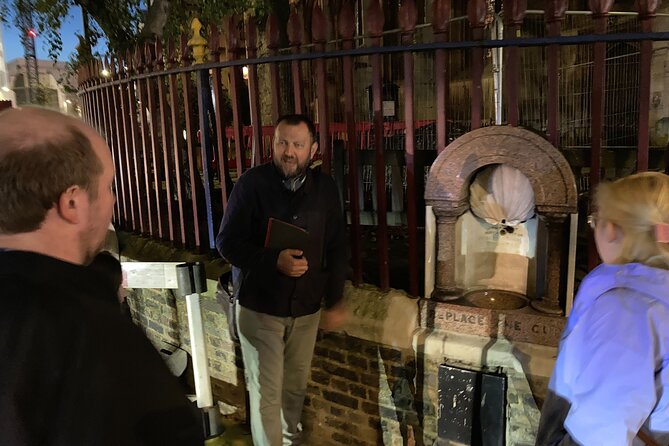
The route is built like a slow build—from alleged hauntings and public spectacle, toward the worst stories saved for the final courthouse stop. Here’s what each stop brings, and what to watch for as you walk.
Stop 1: Farringdon Station and the girl said to haunt the platform
You meet near Farringdon Station and get a warning that feels very London: mind the gap. The story at this first stop is about a girl whose ghost is said to haunt the station. The tour frames her as a tragic figure from the 18th century, and it leans into the folklore of spotting something if you know what to look for.
What I like about starting here: the vibe is eerie without requiring you to handle heavy context immediately. The station setting also gives the guide an easy way to talk about the difference between today’s busy transit and the older, darker layers under it.
Practical note: because Farringdon is busy, bring the expectation that you might need a moment to listen past noise. If you’re the type who gets distracted by crowds, mentally zoom in early.
Stop 2: Smithfield Market, where public executions shaped the square
Next comes Smithfield Market. The focus isn’t the food or the stalls—it’s the site’s role in public executions for centuries. At this stop, the guide has you close your eyes and imagine the place as it was. It’s a deliberate tactic: it slows you down and helps you visualize how brutal public punishment became part of daily life.
The executioners’ methods are described as inventive, and the whole point is not just fear for fear’s sake. The guide uses this stop to show how violence became ritual, and how crowds witnessed suffering as entertainment or warning.
Consideration: this is one of the stops most likely to feel intense. If you prefer your spooky stories to stay in ghost-and-goblin territory, you may want to prepare yourself for the shift here.




Stop 3: Charterhouse Square, peaceful space on top of plague pits
After Smithfield’s public cruelty, the tour pivots to Charterhouse Square, a place that can look calm on the surface. The guide points out that even if you’re standing in something park-like, you’re still near dark ground-level history. You’ll hear how plagues changed London, how deadly they were, what doctors tried, and what happened to survivors.
There’s also a visual cue: the guide asks you to keep an eye on the ground because you’re not far from a skull connected to the idea of plague pits. Even the “snakes” detail (beds made of snakes) is meant to keep you alert and uneasy in a space that usually feels relaxing.
Value for you here: this stop explains how horror wasn’t only about criminals and courts. Disease was another kind of killer that made bodies, medicine, and fear collide.
Stop 4: Cloth Fair, the pre-execution drink stop
Then the tour moves to Cloth Fair, a stop that plays with a grim everyday detail: where people could grab a drink before attending a public execution. It’s a small moment, but it lands hard because it makes the scene feel more real. You’re hearing how normal routines wrapped around abnormal brutality.
This is also a good place to think about your own comfort level. If you want water or a snack, this is the kind of stop where the guide’s hint can help you plan for the rest of the evening—even if the topic is morbid.
Stop 5: St. Bartholomew the Great, tombstones and a founder’s disturbed rest
At Church of St. Bartholomew the Great, the tour shifts to a quieter, older kind of fear. The church served people—both alive and dead—for about nine hundred years, and the guide ties that long timeline to burial stories and haunting folklore.
One standout thread here involves the founder and an idea that his eternal rest was disturbed. You’ll hear what’s missing from him now and how he tried to get revenge. The setting is key: you’re surrounded by centuries-old tombstones, so the stories feel less like a performance and more like something the stones have kept.
If you like your ghost lore with atmosphere and architecture, this stop delivers. The drawback is simply that it’s more reflective than action-based; if you prefer constant movement, you might want to focus on listening and staying engaged while you’re standing among the graves.
Stop 6: William Wallace Memorial and the long shadow of the triple execution
Next is the William Wallace Memorial, taking you back to the conflict between England and Scotland. The guide explains why Wallace became a freedom fighter in memory and focuses on the triple execution—and then the later consequences that followed.
The tour also calls out that film versions are loosely based and may not match the truth. So you get both the historical story and a gentle reality check on what popular culture gets wrong.
This is one of the better stops if you like history that connects to modern identity. The point isn’t just gore—it’s why the story survived and how it shaped later thinking.
Stop 7: St. Bartholomew’s Hospital Museum, medical horror without sanitizing it
At Saint Bartholomew’s Hospital Museum, you’ll wander past another church and end in the hospital yard. The church and hospital share the same patron and long history, and the guide uses that to talk about earlier medical practice—what doctors tried, what tools were used, and how patients were treated.
Expect the details to be uncomfortable. The tour mentions things like doctors not washing hands, sharing beds with other patients, and the idea that an audience could watch surgery or amputation. It also pushes the thought that watching could be deadly on its own.
I like that the tour doesn’t treat “dark medical history” like a weird trivia topic. It frames it as a turning point: you can feel how today’s hygiene and patient care became urgent because earlier practices were genuinely dangerous.
Stop 8: Holy Sepulchre London and grave-robbing empty pits
Then comes Holy Sepulchre London, another historic church and graveyard, but with a twist: you’ll visit empty pits that the guide explains as a reminder of grave robbing. You hear how some people made a living by taking bodies out of graves and selling them, and the tour pushes you to think about the gray area: stealing or taking? legal or profitable?
The guide also nudges you toward a “connect the dots” feeling based on what happens near the route and the nearby pub stop idea. The result is a creepy logic chain that sticks because it makes you picture a market for death as something that really existed.
Stop 9: Old Bailey, and the worst case saved for last
The final stop is the Old Bailey, the famous courthouse. Here the tour promises the worst for the end—and it keeps that tone. The guide introduces a “worst serial killer” story for England, with a specific emphasis that it’s not Jack the Ripper. You’ll hear about an ordinarily looking woman with a piercing, chilling look, and a deadly touch.
You also get details that raise the stakes: she specialized in killing the innocent, was twice caught and still allowed to carry on, and she even had a daughter. The guide builds the story step by step, ending on the most disturbing part (without turning it into melodrama).
Practical payoff: by the time you reach Old Bailey, you’ve already built context. Earlier stops gave you the big themes—public cruelty, plague fear, bodies in motion, and disturbed graves. The final courtroom stories then feel like the culmination, not a random jump.
What kind of fear you should expect (and what you can control)
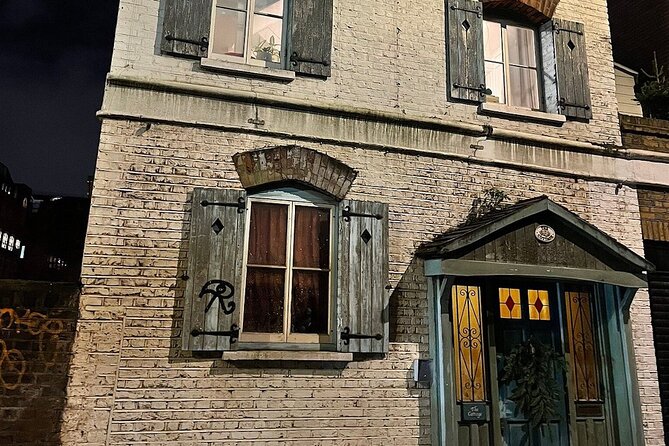
This tour is “scary” in a specific way: it’s based on real locations and real historical brutality, plus alleged hauntings told at nighttime. It’s not just spooky sound effects. The guide uses the setting—stations, courthouses, churches, market squares—to make the stories feel immediate.
If you want to reduce fear, you can control your listening. You don’t have to lean into the ghost-hunting parts. For example, at Farringdon, the guide offers you a choice: look for signs or just listen. That same idea carries through the tour: you can choose how much you visualize.
If you’re easily shaken by graphic topics, plan accordingly. Executions, plague-era disease, grave-robbing, and the mechanics of medical treatment are all part of the route content. Comfortable shoes and a calm mindset help, but they won’t change the theme.
Price and value: is $49 fair for a 2-hour night walk?
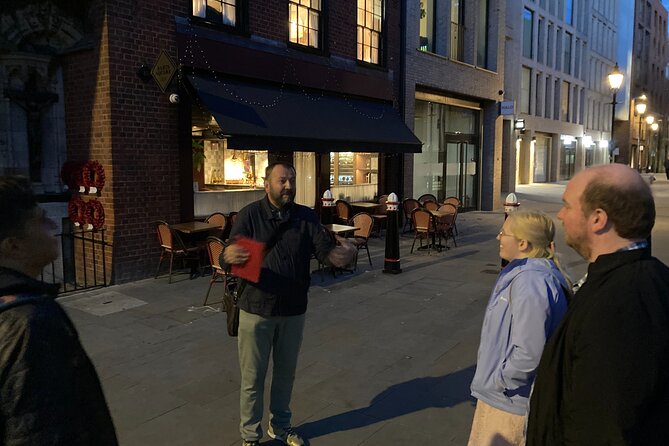
The price is $49.00 per person for about 2 hours. For that, you get a guided walking tour through nine major historic stops, led by a local guide. The tour also uses a mobile ticket, which reduces hassle, and the stops are described with admission ticket as free, meaning you’re not paying site-by-site entry fees along the way.
Value comes from three places:
- Time efficiency: you cover a tight loop from Farringdon to Old Bailey without needing to plan transit between locations.
- Story density: nine stops in two hours means the guide is constantly giving you something to learn or think about.
- Group size: up to 20 travelers is small enough that the guide’s voice and pace feel manageable, not swallowed by crowds.
It’s also a good value type of activity if you want an evening plan that doesn’t depend on museum schedules or long lines. You’re using the city itself as the “site.”
Who this tour fits best
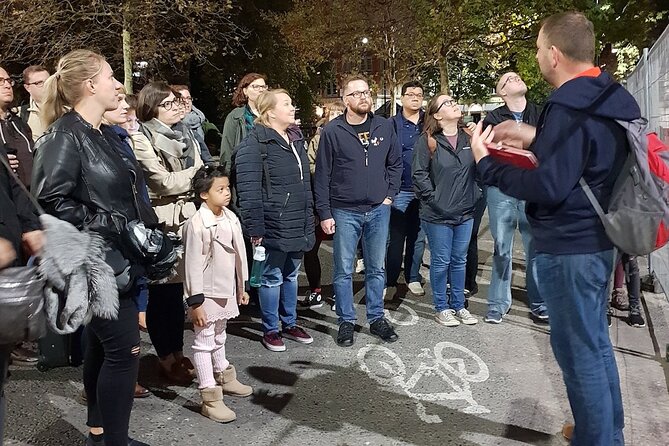
This is a smart match if you:
- Like ghost lore tied to actual places, not only generic folklore
- Enjoy historical stories that don’t skip the ugly parts
- Want an easy nighttime plan with a guide keeping you together
You might skip it (or choose a gentler tour) if you:
- Dislike graphic violence, disease details, or procedures described in medical history
- Want a kid-friendly spooky experience
One more thing: guides like Matt are highlighted for patient group handling and a pleasant walking pace, and Carolina is praised for passion about London’s history. If you care about storytelling quality, this route seems to deliver.
Practical tips so your night walk stays fun, not stressful
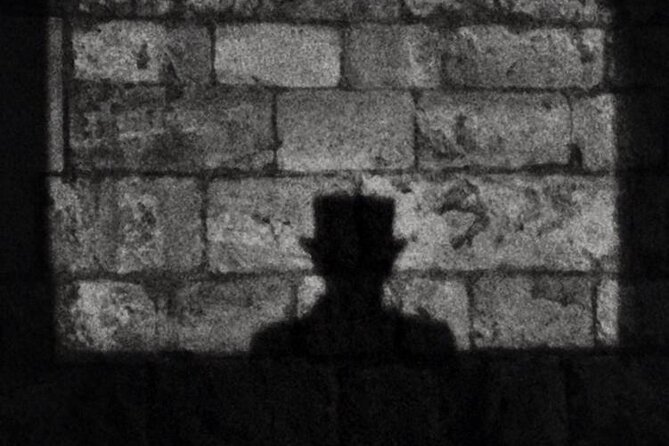
A few small decisions make this type of tour go better:
- Wear solid shoes. You’ll be walking a lot around older streets and church yards.
- Dress for damp London evenings. One review notes drizzle didn’t ruin the experience, but wet streets mean you’ll want grip.
- Come ready to listen. At least one early stop is near busy station noise, so keep your phone away once you’re with the group.
- Bring a light layer. You’re outside for about two hours, and evenings can turn chilly even when daytime feels mild.
- If you like themed nights, plan for Halloween. One guide has shown up dressed for Halloween with mask and cape, which adds extra atmosphere if your dates line up.
Should you book this London Ghosts & Gruesome Past night tour?
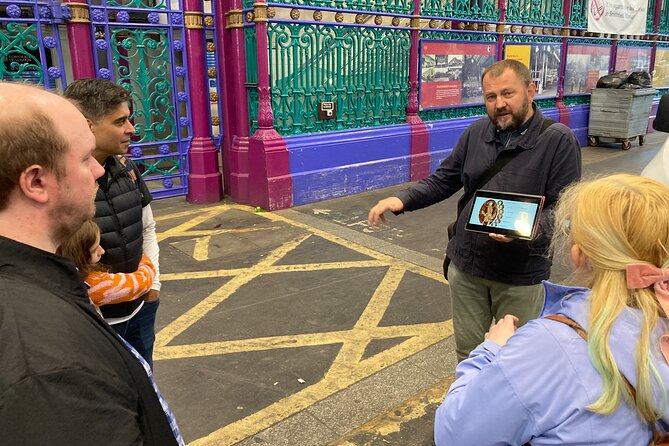
I’d book it if you want a night plan that feels like London itself is part of the story, with a guide who focuses on clear, detailed storytelling and keeps the pace friendly for a small group. The route is efficient, the stops are varied, and the ending at Old Bailey gives you a strong finish point near transit.
I’d hesitate if you’re sensitive to graphic topics. This tour isn’t just “spooky.” It includes executions, plague-era fear, grave-robbing, and rough medical history. If that’s your idea of fun, you’ll likely have a great evening. If not, you may prefer a lighter ghost walk.
FAQ
FAQ
Where does the tour start and end?
The tour starts at Cafe Pronto Farringdon Station, 43 Cowcross St, London EC1M 6BY. It ends at 19 Old Bailey, London EC2A 9EA, near St Paul’s Underground Station.
What time does the tour run?
The start time is 6:00 pm.
How long is the tour?
The duration is about 2 hours.
How many people are on the tour?
The tour has a maximum of 20 travelers.
Do I need a physical ticket?
No. The tour uses a mobile ticket.
Is the tour suitable for most travelers?
The tour states that most travelers can participate. Service animals are allowed.
Is free cancellation available?
Yes. You can cancel for a full refund up to 24 hours before the experience’s start time.