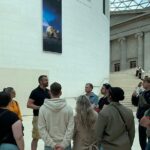
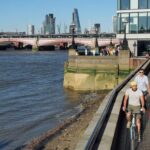
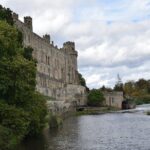
London’s best stories hide in plain sight. This private tour threads together law-courts, crypts, and atmospheric alleys with Dickens and Great Fire stops you rarely see on standard routes. With hotel pickup and drop-off plus a guide who can tailor the day, it feels like getting a local’s map for the oldest parts of the city.
What I like most is the focus on places you’d struggle to find on your own (Middle Temple courts, crypt museum stops, and the market lanes). I also like how the guide stitches history to popular culture, from Shakespeare’s Twelfth Night connections to Dickens-era dining spots and even Holmes links.
One consideration: this is a 3 to 4 hour walk with moderate walking, so wear comfortable shoes and plan for a steady pace (even with occasional comfort breaks).
In This Review
- Key highlights at a glance
- Why this tour works: old streets, not old lectures
- Temple courts and the Middle Temple maze
- St Bride’s Church: crypt museum and press-era London
- Dickens stops: Ye Olde Cheshire Cheese and the courts nearby
- Smithfield Market: executions, Dickens, and the “grisly” turn
- Postman’s Park: quiet memorials in the shadow of office London
- Guildhall and the City’s power center
- Bank of England and the Square Mile’s ghost stories
- George and Vulture: Dickens’s chop house feel
- Leadenhall Market: Roman road lines and film locations
- Monument to the Great Fire: ending with the fire’s starting point
- Price and value: $267.48 for a private, story-heavy route
- What you’ll want to bring (and how to pace yourself)
- Should you book this London secret history tour?
- FAQ
- How long is the tour?
- Is this a private tour?
- Where does the tour start and end?
- Is hotel pickup and drop-off included?
- Are tickets included for the stops?
- What is the cancellation policy?
Key highlights at a glance
- Private, customizable route for just your group, led by Richard
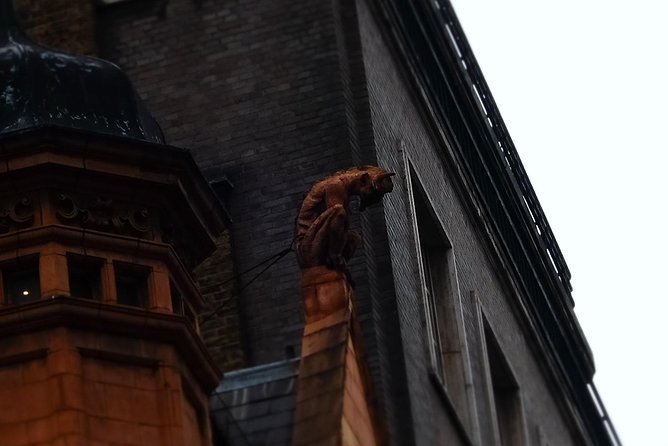
- Hidden City of London lanes around Temple, courts, and passageways
- Dickens-focused stops like George and Vulture and Ye Olde Cheshire Cheese
- Crypt museum storytelling tied to St Bride’s Church and WWII damage
- Great Fire of London landmarks that connect 1666 to what survived
- Optional Monument climb (311 steps) if you want big-city views
Why this tour works: old streets, not old lectures
London has plenty of famous sights. This experience adds something better: the smaller street plan of the City of London, where history looks layered instead of stamped on a postcard. You’ll move from station to station, crossing into areas where the street layout stretches back toward Roman times, then slows down into medieval alleys and court spaces.
The best part is how the guide turns each stop into a mini-story with clear takeaways. I like that the tour isn’t trying to show everything. It picks high-impact places—then gives context you can actually carry with you the rest of your trip.
You’ll also get a practical kind of value: tips on what to do and where to go after the tour, so the walk doesn’t end when you do. And because it’s private, you can steer the focus—more Dickens, more courts, more Roman/medieval layers—without feeling you’re slowing a bus group down.
You can also read our reviews of more guided tours in London



Temple courts and the Middle Temple maze
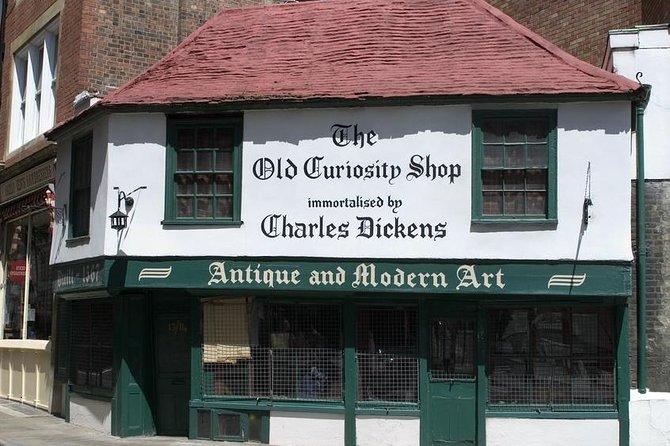
The day starts near Embankment Station, then you head toward Temple Station to escape the main tourist currents. The opening move matters. Before you hit the City of London’s older streets, you’re coached into how to spot the city’s older geometry—why lanes bend, why courtyards feel tucked away, and why certain blocks feel like separate worlds.
At the Honourable Society of the Middle Temple, you get that “how is this here?” feeling. This is part of the Inns of Court area: a legal world built on tradition, ceremonies, and places outsiders almost never wander into. The tour frames it as a hidden ecosystem—ancient pavements, old tavern corners, church crypts, and the kind of tucked-away lanes that don’t exist on most short itineraries.
This stop also leans hard into the fun crossovers:
- You’ll hear about the place where Shakespeare’s Twelfth Night first performed.
- You’ll learn about a fountain said to have inspired Charles Dickens.
- You’ll hear about the English headquarters connection tied to the Knights Templar.
- Tea lovers get a treat too: a shop linked to selling tea for over 300 years.
Plan for around 45 minutes here. It’s long enough to feel the atmosphere, but short enough that you won’t lose the thread. If your travel style likes stories with a location you can picture later, this is a strong start.
St Bride’s Church: crypt museum and press-era London
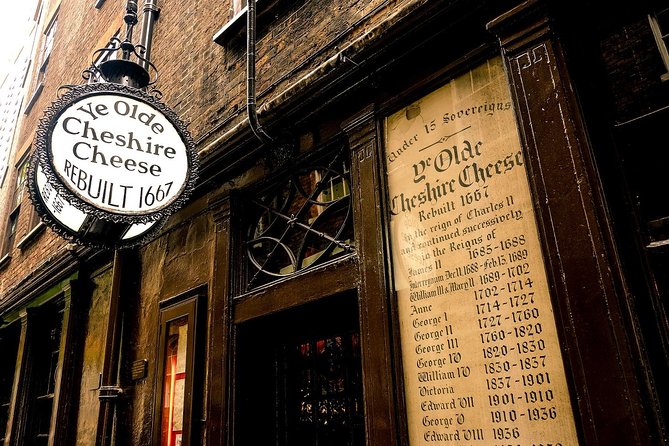
Next you slip through ancient passageways—think narrow lanes like Hanging Sword Alley—to reach St Bride’s Church. This is one of those stops where the building’s damage history becomes part of the museum. The church has a long association with Fleet Street newspapers, which is why it’s often called the Cathedral of the Press.
St Bride’s suffered during the Great Fire of London, was later remodeled by Sir Christopher Wren, and then took another blow in WWII when a bomb destroyed the roof. What’s useful here is how the tour turns destruction into research. The crypts became a place where archaeologists could examine what lay beneath.
In the crypt museum area, you’ll see:
- A hidden medieval chapel
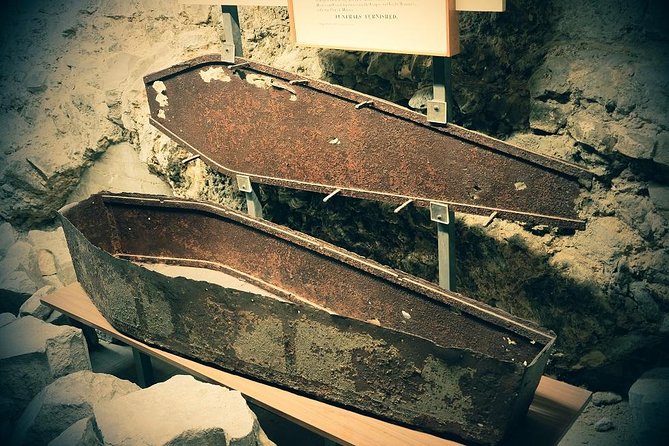
- Charred remains tied to 1666
- Roman pavements uncovered during the excavation work
If you like your history grounded in physical proof—stone layers, burn marks, and buried pavement—this is one of the most satisfying stops of the day. It also comes in at about 20 minutes, with admission handled as part of the tour.
There’s another claim to fame the guide will mention on the day. So if you’re the type who enjoys a mystery being answered in person, you’ll get that payoff here.
Dickens stops: Ye Olde Cheshire Cheese and the courts nearby
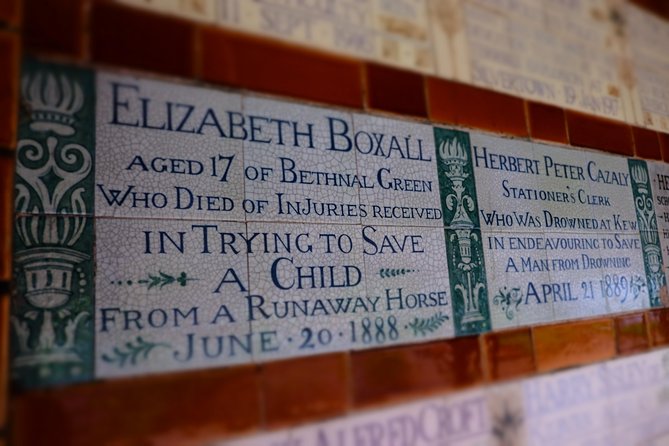
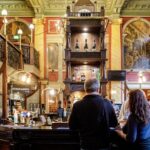
Then you shift to a classic London literary setting: Ye Olde Cheshire Cheese. If you’ve ever wanted Dickens-era streets to feel real (not staged), this stop helps. The cellars date to the 13th century, and the upper rooms were rebuilt in 1667, so the pub carries a long timeline in the same walls.
The interior is wood-paneled and candle-lit by design, and you’re encouraged to slow down and take in the atmosphere before the stories start rolling. The tour also ties the pub to Dickens in a concrete way—Charles Dickens supposedly warmed his feet by the same fireplace.
Expect the guide to connect that to characters and legends like Polly the Parrot and the Hellfire Club, plus a few oddball details you probably haven’t heard before—like the rather naughty tiles found in the 1960s. You’ll have about 20 minutes here, and admission is free.
If you want a second layer of Dickens energy later, don’t tune out yet. The tour builds toward another dining-story stop farther on.
Smithfield Market: executions, Dickens, and the “grisly” turn
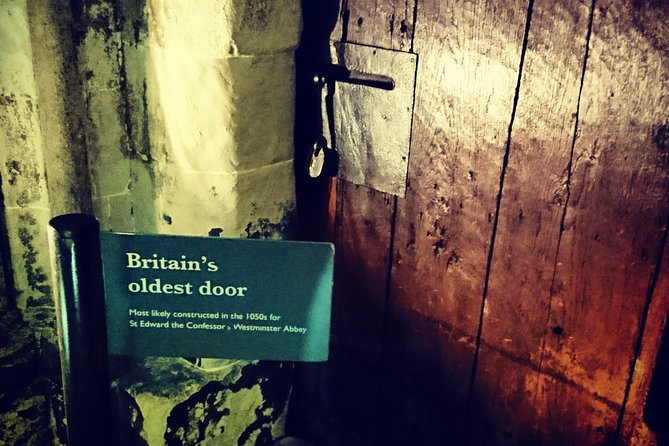
Smithfield Market is the part of the tour that pulls the mood darker. And that’s the point: London’s early modern story includes public punishment, not just pageantry. Smithfield Market is described as London’s oldest market still used for selling meat, and the surrounding area connects directly to the Great Fire and executions.
Here’s what the guide frames in this stretch:
- The Great Fire of London finally extinguished nearby
- Public burning under Bloody Mary
- The execution of William Wallace (the Braveheart figure)
- Literary criminal lore, including Fagin’s Gang’s den
- A Holmes reference via Sherlock meeting Doctor Watson at nearby St Barts hospital
You’ll also be shown two surviving buildings that escaped the Great Fire of 1666. That contrast—what burned versus what remained—is one of the best ways to make the fire feel more than a date in a textbook.
This stop runs around 20 minutes with admission listed as free. If you’re sensitive to violence or grim scenes, you should know the tone shifts here. I’d treat it as a history stop with story weight, not a casual stroll.
You can also read our reviews of more private tours in London





Postman’s Park: quiet memorials in the shadow of office London
After the edge of history at Smithfield, the tour gives you a breather at Postman’s Park. It’s next to the Old General Post Office, and the park got its nickname because postal workers liked to eat their lunch there. That small, everyday detail helps. You’re not just looking at old stones—you’re seeing how working London used space like this.
The tour also notes a deeper origin: this was originally the burial ground for St Botolph’s Church. And it points you toward a memorial to unsung heroes of London. The guide encourages you to pause, find a bench, and read the story as part of the walk rather than as a quick photo.
This part is short—around 10 minutes—but it does something valuable: it balances the heavier City themes with human-scale remembrance.
Guildhall and the City’s power center

Next comes Guildhall, which the tour treats like a condensed version of London’s big turning points. The site holds layers:
- Roman presence, including an amphitheater
- Saxon administration connected to taxes
- Medieval records of the building as a Guildhall
- The current building built around 1411
- Crypts thought to date back to the 13th century
This stop also helps you understand what the City of London Corporation is. It’s described as the Town Hall for the City, and the day-to-day administration happens in modern buildings just north of the historic area.
The guide brings in famous trials and the kinds of people who faced judgment here. It’s a short stop, about 10 minutes, but it gives you the feeling of how governance and law shaped daily life around the City.
If you’re someone who finds plaques boring, you may still enjoy this, because the guide ties the courtroom and the street plan together. You start to see why the Inns of Court feel less like a random cluster of buildings and more like an ecosystem.
Bank of England and the Square Mile’s ghost stories
Now you’re in the “Square Mile,” the ancient heart of London’s financial district. The Bank of England stop is about more than money. It’s about identity, folklore, and how stories attach to powerful buildings.
You’ll hear about highlights like the Royal Exchange and the Cornhill Devils. The tour also leans into a Dickens-style ghost concept: the guide connects the Royal Exchange to the idea of the Ghost of Christmas yet to come visiting colleagues and discussing Scrooge’s funeral.
There’s also a key nickname: why the Bank of England is known as the Old Lady of Threadneedle Street. That’s the kind of detail you can share later, and it’s the kind that makes a building feel less abstract.
Plan on about 10 minutes here, with admission marked free. The practical value is that you’ll understand where you are in the city when you glance up at the building later—this isn’t just a stop photo.
George and Vulture: Dickens’s chop house feel
Then you get one of the tour’s most atmosphere-rich stops: George and Vulture. The guide frames it as a Charles Dickens favorite chop house, and ties it to Pickwick Papers—it’s mentioned over 20 times.
What makes this stop different from a standard “look inside a historic pub” moment is that the tour highlights how the interior is almost unchanged from Dickens time, at least in the way the menu and setting are portrayed. The guide also points you toward the menu connection—Dickens is said to have ordered his favorite food there even in that era.
This is paired with a walk through alleyways and courts in the area, described as among the most atmospheric in London. You’ll get about 10 minutes here, with admission free.
If you’re a Dickens fan, this is likely to be one of your favorite pieces of the day. If you’re not, it still works because it’s about how everyday spaces powered the social world behind the novels.
Leadenhall Market: Roman road lines and film locations
The penultimate stop is Leadenhall Market, one of London’s oldest and prettiest markets. The tour emphasizes its location on a Roman cross road. That detail helps you see the market as an ongoing thread instead of a “tourist photo” spot.
You’ll learn how Leadenhall Market appears in famous films and novels. The tour specifically ties it to Harry Potter filming and to the Christmas story connection where Ebenezer Scrooge sends a boy to get the biggest Turkey on Christmas morning.
This is around 15 minutes, admission free, and it’s a good point in the day to slow down slightly. Markets are where London feels most like itself: vendors, ironwork, and that sense of a street being used, not just preserved.
Monument to the Great Fire: ending with the fire’s starting point
The tour finishes at the Monument to the Great Fire of London, near Monument Underground Station. The guide puts the fire on the map: the fire started in 1666 just nearby and destroyed about 80% of old City of London.
This stop is also where the “what survived” theme becomes concrete. The tour ends here, and the guide is said to know areas that escaped the fire—so you leave with a sense of which parts of London were spared.
You’ll have about 15 minutes at the Monument itself. There’s an optional payoff if you still have energy: climb 311 steps for views over London. Admission for the climb is marked as not included.
If you want one final takeaway, make it this: the fire isn’t a sad footnote here. It’s a shaping force that explains why certain streets and buildings look the way they do today.
Price and value: $267.48 for a private, story-heavy route
This tour is priced at $267.48 per group (listed for up to 1 person), for about 3 to 4 hours. On the surface, that can sound steep. But private guided tours in central London get expensive fast—especially when you’re walking through stops that include historic buildings and guided interior access at least at one site.
Here’s why it can still feel like a good deal:
- You’re paying for a real guide narrative, not just a “show up and walk” situation.
- The route stacks multiple themed eras—Roman/London foundations, medieval courts, Dickens literary spaces, and the Great Fire—so the time adds up.
- Hotel pickup and drop-off is included, which can save you time and hassle if you’re staying in central areas.
Because it’s private, you can also steer the content. In the best tours, that customization matters. With Richard, the feedback highlights that the guide can adjust what he stresses based on your interests and skip less relevant bits without turning it into a random walk.
If you’re traveling with a second person and can share the cost, you may get even better value. If you’re solo, the price is less of a bargain and more of a “pay for convenience and focus” decision—and this tour’s format is built exactly for that.
What you’ll want to bring (and how to pace yourself)
No food or drinks are included, so plan for water and a snack if you’ll need it. The stops are short, and you’ll be moving steadily between them, so you don’t want to rely on finding a café on the fly.
Wear comfortable shoes. This is moderate walking, and some areas are tight and passageway-like. Your guide may be able to add comfort pauses, and the format is flexible enough to keep the day enjoyable rather than frantic.
Also consider layers. London weather can change fast, and you’ll spend time outdoors between church, markets, and lanes.
If you’re into literature, bring a tiny list of your favorite Dickens or Sherlock moments. The guide ties those references to physical locations around the City, and having that anchor can make the stories feel extra satisfying.
Should you book this London secret history tour?
Book it if you want London’s older layers with a guide who connects real locations to stories—Shakespeare, Dickens, and the Great Fire—without turning the day into a crowd marathon. It’s especially worth it if you like the City of London theme and you’ve already seen the big-name landmarks and want the roads less taken.
Skip it if you want a very relaxed, minimal-walking morning or if you only care about the most famous monuments, with no interest in courts, crypts, and the less cheerful parts of London’s past.
FAQ
How long is the tour?
It runs about 3 to 4 hours.
Is this a private tour?
Yes. It’s a private experience with only your group participating.
Where does the tour start and end?
It starts at Embankment Station (Embankment Pl, WC2N 6NS) and ends at Monument Station (King William St, EC4R 9AA).
Is hotel pickup and drop-off included?
Yes. Hotel pickup and drop-off from your London hotel is included.
Are tickets included for the stops?
Some admissions are free, and St Bride’s Church has admission included. The optional climb of the Monument’s 311 steps is not included.
What is the cancellation policy?
You can cancel for a full refund up to 24 hours before the experience starts. After that, the amount paid is not refunded.