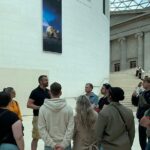
REVIEW · LONDON
Marvels at the British Museum: Rosetta Stone, Parthenon, Mummies
Book on Viator →Operated by MOVE VENEZIA · Bookable on Viator
Two hours, three ancient worlds, zero guesswork. This tour is a smart way to see the British Museum’s big-ticket highlights without trying to do everything at once, thanks to priority queuing and a guide who explains what you’re looking at, not just what’s written on the wall. I especially liked how you get front-and-center time with the Rosetta Stone and the Parthenon sculptures, while the story-focused pacing keeps it fun. The main drawback is simple: the museum is huge, so you’ll walk.
I also like the small-group feel, with a maximum of 25 people. That matters because you’ll actually get room to ask questions as you go. Plus, the mobile ticket helps you get moving fast once you’re at the entrance.
If you’re the type who wants to linger in every gallery, this won’t be your full answer. At about 2 hours, it’s best thought of as a curated hit list of must-sees, not a museum marathon.
In This Review
- Key Things to Know Before You Go
- Why a 2-Hour British Museum Route Works
- Entering Faster: Priority Queuing and Getting Started
- Rosetta Stone: More Than a Famous Stone
- Parthenon Sculptures: Seeing Ancient Greece at Human Scale
- Egyptian Mummies: The Strange, Sobering Surprise
- How the Guide Makes Labels Feel Like Stories
- Itinerary Reality Check: One Stop, Lots of Ground
- Price and Value: Is $102.43 Worth It?
- Who Should Book This Tour
- Should You Book It?
- FAQ
- How long is the British Museum highlights tour?
- What is the price per person?
- Is the admission ticket included?
- Does the tour include priority queue access?
- How many people are in the group?
- Where do we meet for the tour?
- Is hotel pickup included?
- Are food and drinks included?
- What should I wear or bring?
- What is the cancellation policy?
Key Things to Know Before You Go
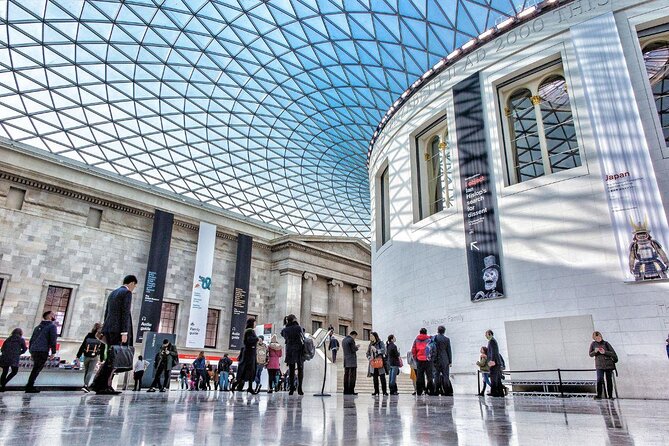
- Priority queue entry cuts down the slow part of museum visiting
- Rosetta Stone and Parthenon highlights get real explanation, not just label reading
- Egyptian mummies are part of the focus, not an afterthought
- Small group size (max 25) keeps questions and pace manageable
- Mobile ticket makes check-in straightforward
- On-foot tour means comfortable shoes are worth it
Why a 2-Hour British Museum Route Works
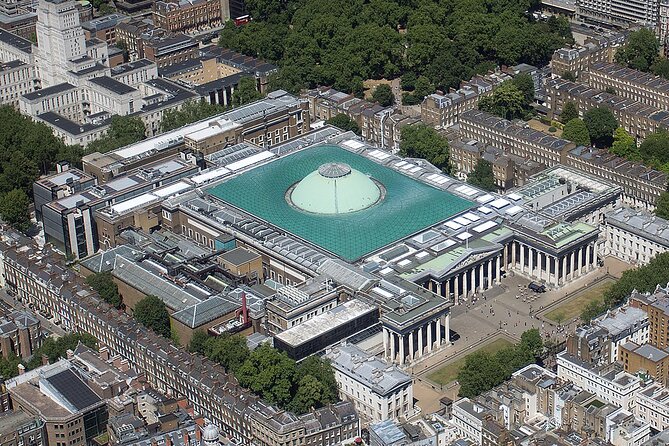
The British Museum can eat an entire day. It has millions of objects, across centuries of human history. So when you only have a short window in London, this kind of tour makes sense. You’re not trying to conquer every gallery. You’re trying to see the reasons people come here.
What makes this experience practical is the balance between famous pieces and storytelling. You still get the big names—Egyptian artifacts, the Rosetta Stone, Parthenon sculptures, and mummies—but a guide helps you connect them. Labels can be helpful, sure. A good guide helps you notice what matters.
The second thing I like is time control. In roughly two hours, you move through high-impact stops instead of drifting. You leave feeling oriented, like you could now explore on your own if you had more time.
You can also read our reviews of more museum experiences in London



Entering Faster: Priority Queuing and Getting Started
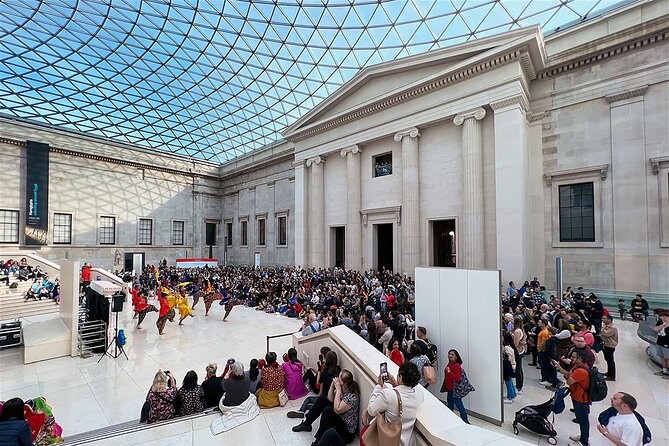
Meet at the British Museum on Great Russell Street. The tour starts at the museum itself, and you’ll want to arrive at least 15 minutes early so you’re not stressed when the group funnels in.
Skip-the-line here doesn’t mean you never wait. It means you use a faster, priority queue rather than the normal long line. In a museum this popular, that difference is real. It’s also less exhausting, because waiting time is usually where your mood drops.
Also keep in mind the tour is on foot. The museum is huge, and the route covers a lot of ground even though it’s short. Comfortable shoes are strongly recommended, and you should plan for steady walking rather than slow browsing.
Rosetta Stone: More Than a Famous Stone
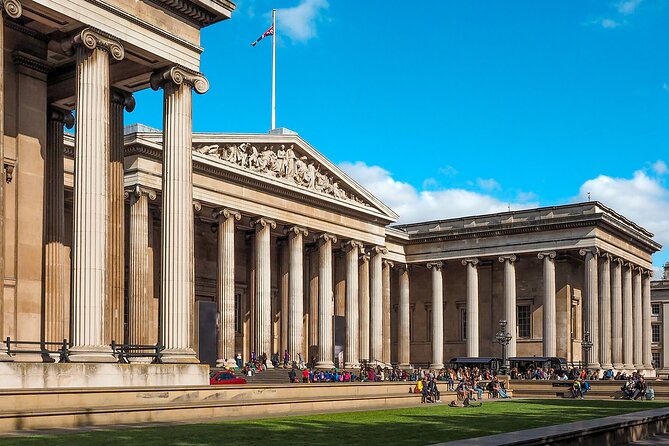
The Rosetta Stone is the kind of object you’ve seen in photos a hundred times. But when you’re standing in front of it, what hits is how much power a single artifact can have.
On this tour, you get beyond the basic idea of it being key to language. Your guide’s role is to explain why it matters and what it represents in the bigger story of communication across cultures. You’re not meant to just look and move on. You’re meant to understand why the stone became a turning point for reading and interpretation.
This is also where a guide helps you notice details you might miss when you’re going solo. Instead of scanning quickly, you slow down for the points that connect the stone to history you can actually follow.
Parthenon Sculptures: Seeing Ancient Greece at Human Scale
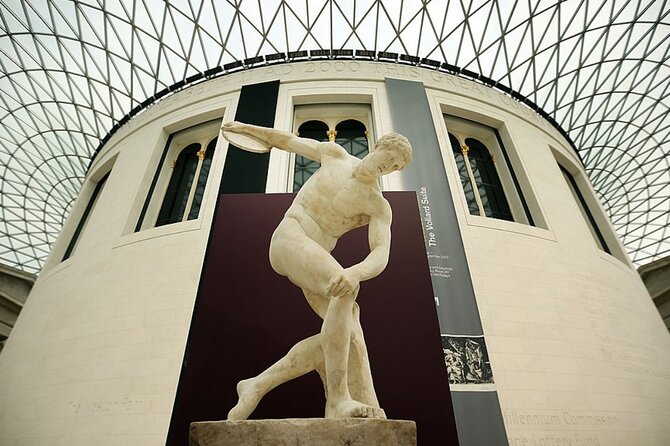
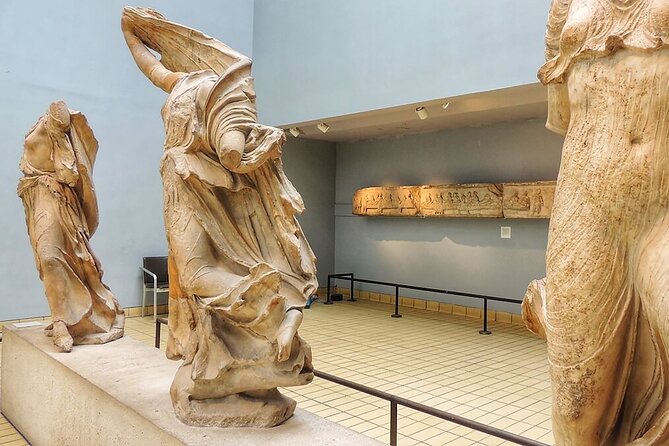
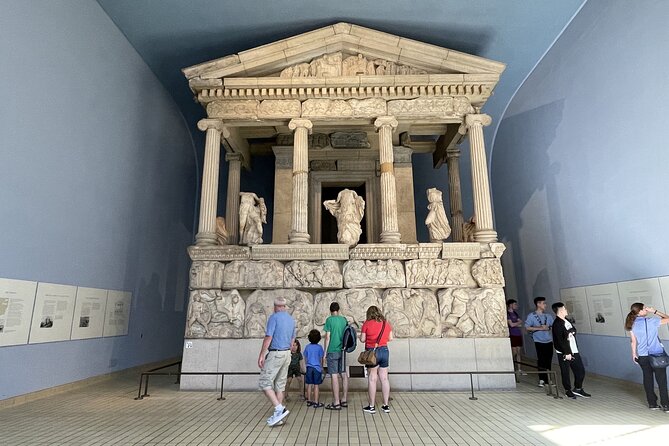
The Parthenon sculptures are famous for a reason, but they can feel distant if you only read the display text. That’s the value here: the guide gives context that turns marble fragments into something you can picture.
You’ll focus on the Parthenon-related pieces that people often come to see. The guide’s storytelling helps you connect the art to the culture that produced it. You also get hints about how to look: what to pay attention to in form, figure, and setting, even when the museum display format can make things feel like separate items.
A big plus is that you’re not stuck trying to interpret everything alone while crowds press in. With a guided route, you’re nudged toward the meaning behind the objects, not just their fame.
One practical note: the British Museum crowd flow can be intense. Your best strategy is to listen closely during the stop, then take a quick re-look after your guide moves you onward.
Egyptian Mummies: The Strange, Sobering Surprise
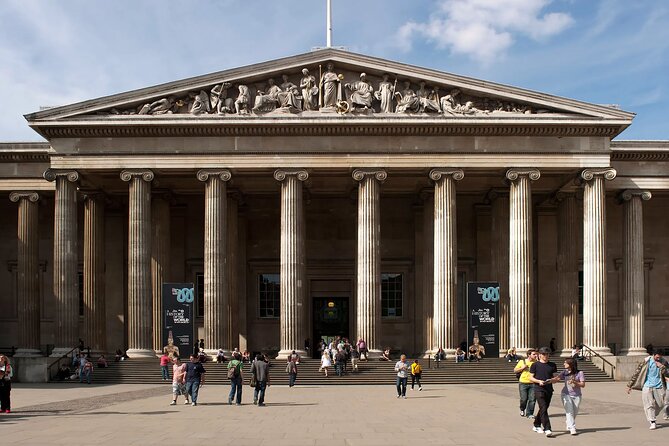
The tour includes Egyptian highlights, and that can mean mummies. This is one of those “the museum’s real, not just decorative” moments.
Mummies can come off as either too scary or too mythy if you approach them without context. A guide helps you keep it grounded: what these objects are, why they were made, and how they fit into Egyptian beliefs and practices. You don’t need a PhD. You just need a clear thread, and that’s what the guide provides.
The best part is tone. Instead of turning it into a spooky ghost story, the guide treats it as history and material culture. You come away thinking about how people tried to preserve identity, not as a modern spectacle, but as a set of beliefs that made sense in their world.





How the Guide Makes Labels Feel Like Stories
The overall strength of this experience is the way the guide talks. You’re encouraged to ask questions, and you’re guided beyond the display text.
In reviews, the guide name Joe shows up with praise for leading a small group through the museum’s busy flow. That kind of guidance matters because the British Museum can feel overwhelming fast. When you’re moving past “important-looking things,” it’s easy to lose the thread.
On this tour, you’re given that thread: from Egyptians to Anglo-Saxons, the guide builds connections instead of listing eras like a textbook. The result is that you remember what you saw and why it mattered, instead of just remembering the names.
And because the group stays small (up to 25), the dynamic is better than a long bus tour where everyone gets left behind. You get time for “wait, what exactly am I looking at?” questions.
Itinerary Reality Check: One Stop, Lots of Ground
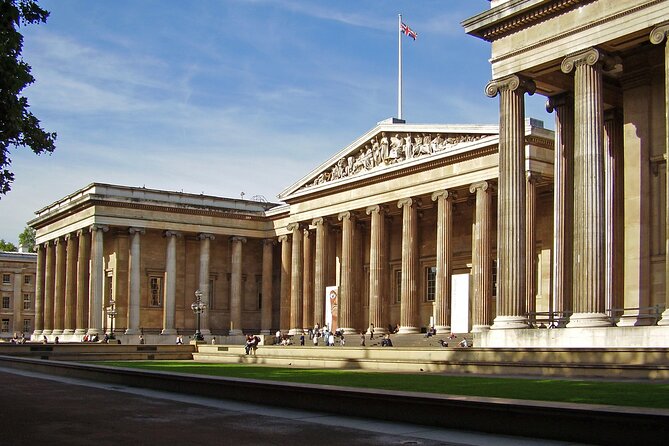
This experience lists one main stop: the British Museum. That’s not a red flag; it’s how the tour keeps things tight. Within that building, you’ll bounce between highlight areas tied to the focus list—Rosetta Stone, Parthenon pieces, Egyptian mummies, and broader coverage that reaches Egyptians through Anglo-Saxons.
What you should expect is a route that moves from “wow” to “wait, there’s more” quickly. If you love museums, you’ll likely find the pacing energizing. If you’re easily fatigued by crowds, you may want to build in a buffer by arriving on time and taking short water breaks after the tour ends (food and drinks aren’t included).
The tradeoff is depth. Two hours can’t replace an all-day visit. It’s designed to give you the best hits and enough context to enjoy a second pass later, on your own schedule.
Price and Value: Is $102.43 Worth It?
At $102.43 per person, this isn’t a budget impulse buy. But the value comes from three things that are hard to get when you DIY it:
- Priority queuing saves time in one of the busiest London museums. That’s not just convenience; it changes your whole experience.
- You get a guided route focused on major artifacts, so you aren’t wasting your limited time scanning for what’s actually worth seeing.
- The tour includes the British Museum guided tour ticket (admission is part of the package), so you’re not juggling separate museum entry math.
If you’re the type who loves museums but hates the guesswork, this price can feel fair. If you already know the museum well and you want total freedom, you might prefer a self-guided visit. But for first-timers or time-crunched visitors, the guided structure is what you’re paying for.
Who Should Book This Tour
I think this fits best if you:
- have limited time in London and want a concentrated British Museum visit
- like famous artifacts but also want real context, not just captions
- prefer a small group where questions are welcome
- don’t want to spend your trip waiting in long lines
It might not be your match if you:
- want to linger in every gallery for an hour at a time
- hate walking in crowds
- are looking for a private tour experience
Should You Book It?
Yes, if you want the British Museum’s biggest draws in a focused format. The priority queuing helps you start faster, and the guide’s storytelling turns iconic pieces—like the Rosetta Stone and Parthenon sculptures—into something you understand, not just something you pass.
If your heart is set on a museum marathon, you’ll still enjoy this, but you’ll probably want a second visit later to go deeper. Think of this tour as the great opening chapter, not the whole book.
FAQ
How long is the British Museum highlights tour?
It runs for about 2 hours.
What is the price per person?
The price is $102.43 per person.
Is the admission ticket included?
Yes, admission is included as part of the tour.
Does the tour include priority queue access?
Yes. Skip-the-line here means you enter a fast, priority queue instead of the normal long queue.
How many people are in the group?
The tour has a maximum of 25 travelers.
Where do we meet for the tour?
Meeting is at The British Museum, Great Russell St, London WC1B 3DG, UK.
Is hotel pickup included?
No, pick up from your hotel is not included.
Are food and drinks included?
No. Food and drinks are not included.
What should I wear or bring?
Wear comfortable shoes, since the tour is on foot and the museum is huge.
What is the cancellation policy?
You can cancel for free up to 24 hours in advance for a full refund.