REVIEW · LONDON
Misfits of Covent Garden Walking Tour
Book on Viator →Operated by Rebel Tours · Bookable on Viator
Covent Garden has a fun secret side. This tour strings together Covent Garden theatre landmarks, real markets, and the gritty Seven Dials backstory with a small-group feel that keeps the walking easy to follow. I especially liked the story-telling focus and the fact that you get into St Paul’s Church (Actor’s Church) when it’s available.
The only real drawback to plan around is that St Paul’s mini entry is subject to availability, so you may not always get inside if something special is scheduled. Still, the rest of the route is packed with recognizable names and lesser-seen corners that make the whole area click into place.
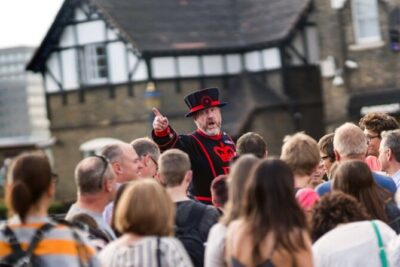
If you’re lucky, you’ll be guided by a speaker like Ellie or Cecily (both have led this walk), and that matters here. Good guides turn a postcard neighborhood into a place with people, motives, and odd little moments you’ll remember on your next London day.
And with a maximum of 15 people and a scheduled start at 3:00 pm, it’s a great mid-afternoon option when you want a guided walk without burning your whole day.
In This Review
- Key things I’d mark on my map
- Getting started at Covent Garden Underground (and why timing helps)
- St Paul’s Church (Actor’s Church): what’s included and what can change
- Covent Garden market building: seeing how the neighborhood evolved
- Jubilee Market and the “traders run it” feel
- Drury Lane theatre stories: what you learn without buying tickets
- Royal Opera House: from theatre legacy to year-round performances
- Neal Street to Seven Dials: the Gin Craze and prostitution trade, explained as a place’s story
- Neal’s Yard: a color break with a purpose
- Drury Lane Gardens: Dickens, graveyard roots, and a National Trust first
- Seven Dials finish: turning a walk into a mental map
- Price and value: what $34.45 really buys you here
- Who this walk is best for (and who might want a different option)
- Should you book Misfits of Covent Garden Walking Tour?
- FAQ
- How long is the Misfits of Covent Garden Walking Tour?
- What time does the tour start?
- Where does the tour start and where does it end?
- Is the tour in English?
- What’s the group size limit?
- Is a mobile ticket used?
- Are any entry tickets included?
- Does the tour run in bad weather?
- Are service animals allowed?
Key things I’d mark on my map
- Actor’s Church inside visit when available: admission included, but entry depends on events and services
- Working markets on the route: Covent Garden market building and Jubilee Market add a real local feel
- Theatre district context: Drury Lane and the Royal Opera House help you understand what you’re seeing
- Seven Dials with the human backstory: prostitution and the Gin Craze are handled as part of the neighborhood story
- Neal’s Yard and Drury Lane Gardens: a color break and a National Trust heritage site stop
- Small-group pacing: with up to 15 people, the guide can answer questions and keep the group together
Getting started at Covent Garden Underground (and why timing helps)
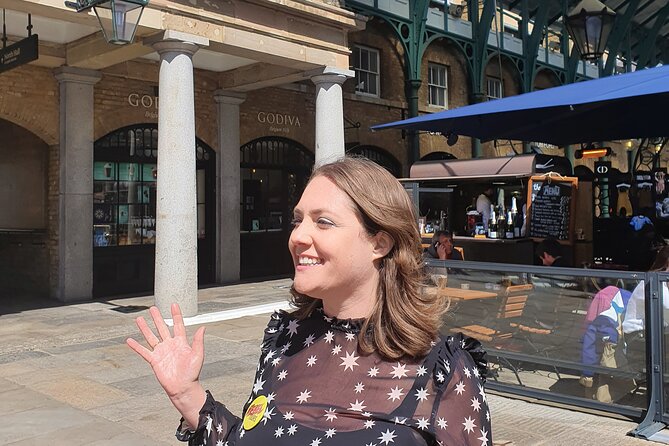
This walk begins near Covent Garden Underground Ltd on Long Acre (WC2E 9JT) and finishes at the sundial monument in Seven Dials. The set start time is 3:00 pm, which I like because it lands you in a classic London afternoon window: daylight for pictures, energy for walking, and enough time afterward to grab dinner in the area.
The meeting location is very central, so you can usually arrive by public transport without stress. Also, because it’s a mobile-ticket style experience, you’re not juggling paper vouchers in busy stations—just your phone and your plans.
With a maximum of 15 on the tour, the pace tends to feel more like a guided walk with a friendly group than a school-field scramble. That small cap is a real quality signal for a central London tour, where crowded streets can quickly turn “fun stories” into “can’t hear the guide.”
You can also read our reviews of more walking tours in London



St Paul’s Church (Actor’s Church): what’s included and what can change
Stop one is St Paul’s Church Covent Garden, often called the Actor’s Church. This matters because it’s one of the remaining buildings tied to the original Covent Garden Piazza. In other words, you’re not just looking at a church façade—you’re connecting to the early identity of the area.
Here’s the practical part: you get a special mini tour inside the church if it’s available, and an admission ticket is included. The catch is also spelled out clearly—entry isn’t guaranteed if the church has an event or a special service. That’s not a deal-breaker, but it is a reason to keep your expectations flexible for that first stop.
Why I like this setup for you:
- You start with a building that anchors the rest of the stories. Once you’ve seen the setting, the theatre streets and market history feel less like trivia.
- Even if inside access is limited on a given day, you’re still launching from a meaningful point, not just a generic photo spot.
If you’re the type who cares about how places evolve over time, this church stop gives you a “before” moment before you hit the market and theatre layers.
Covent Garden market building: seeing how the neighborhood evolved
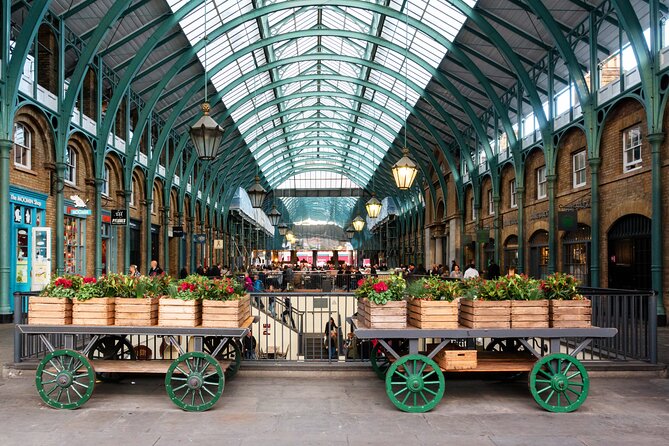
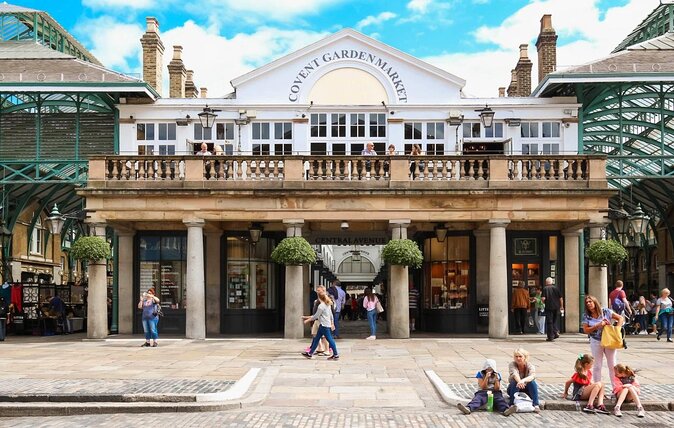
Next you’ll be around Covent Garden, with time spent looking inside and around the market building. This stop is short—about 20 minutes—but it’s aimed at giving you the big idea: how the market changed through the centuries.
That “how it changed” angle is useful. Covent Garden is easy to treat like a single modern scene—tour buses, shops, street performers. But when someone explains the market’s role shifting over time, you start noticing details you’d normally skip: the market’s setting, how the space gets used, and why it became tied to both commerce and entertainment.
Practical tip for you: at this stop, look for what people are doing in the space right now. Then let the guide’s timeline question it. That combo turns “I saw a market” into “I understand why this market lives here.”
Jubilee Market and the “traders run it” feel
Then you’ll step to Jubilee Market, described as the only market in London run by traders. You also get a quick lesson in Covent Garden nightlife and its famed live entertainment.
This isn’t a long stop (about 10 minutes), so don’t expect a full market sweep. But it’s timed well: after the Covent Garden market context, Jubilee Market gives you the working-market reality and the entertainment link that makes the area feel distinctly alive.
I’d call this a “texture” stop—one of those moments that helps the neighborhood feel like it still has a pulse. If you’re visiting London and you don’t want only static sightseeing, this is one reason the tour scores so well for people who like local color.
Drury Lane theatre stories: what you learn without buying tickets
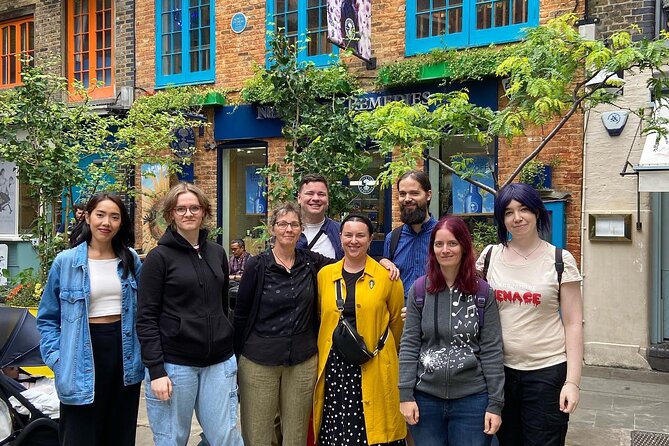
Stop four is Theatre Royal Drury Lane, mainly from the outside. The guide talks about the theatre scene and the eccentric characters connected to London’s stage culture.
One important note: admission isn’t included for this stop. That’s fine because the goal isn’t to get you into another building—it’s to help you understand what you’re already looking at. Drury Lane is one of those names that shows up in London conversation forever, and a good guide helps connect that reputation to actual people and social scenes.
For you, this is a nice balance point:
- You’re getting theatre context without paying for extra entry.
- You can keep your energy for the walking rhythm and the next stops.





Royal Opera House: from theatre legacy to year-round performances
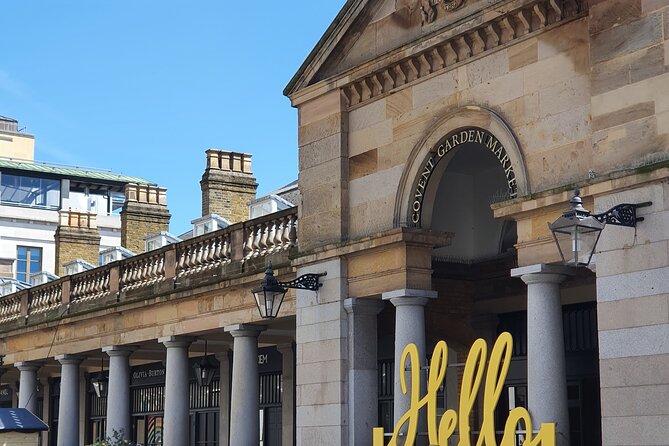
At stop five, you’ll visit Royal Opera House. The tour frames it as a beautiful building that shows opera and ballet all year round, and it also notes its earlier identity as the Theatre Royal Covent Garden.
This is a good “see the continuity” moment. London theatre isn’t just a one-era hobby. It’s a long-running institution with changes over time—different companies, different roles, different audience expectations. Even if you don’t go inside, you’ll leave with a better grasp of why this address matters.
If you’re trying to decide what to do later in your trip—opera, ballet, or even just catching a show in another venue—this stop helps you understand the scale of what’s happening nearby.
Neal Street to Seven Dials: the Gin Craze and prostitution trade, explained as a place’s story
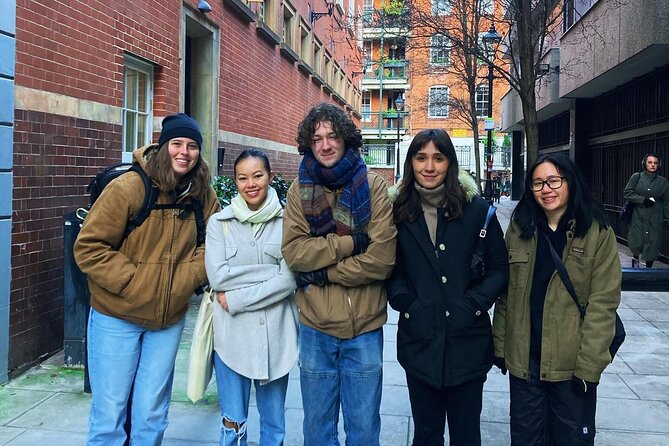
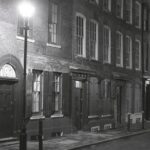
Stop six is Neal Street, where you’ll learn about prostitution trade history and the famous Gin Craze as you enter Seven Dials, described here as once one of London’s great slum areas.
I respect how this kind of content is handled in a tour like this: it’s not presented as shock value. It’s used to explain the street pattern and the neighborhood’s history. That’s the key. In cities like London, the streets you walk through can be shaped by social forces you’d never guess from a quick glance.
For you, this stop is about taking off the tourist filter:
- You look at Seven Dials and it stops being just a landmark shape.
- You understand why that pocket of London had such a hard reputation in the past.
It’s also why small-group tours work well. When a guide has space to explain and you can ask questions, the darker topics don’t feel like random facts—they feel integrated into the geography.
Neal’s Yard: a color break with a purpose
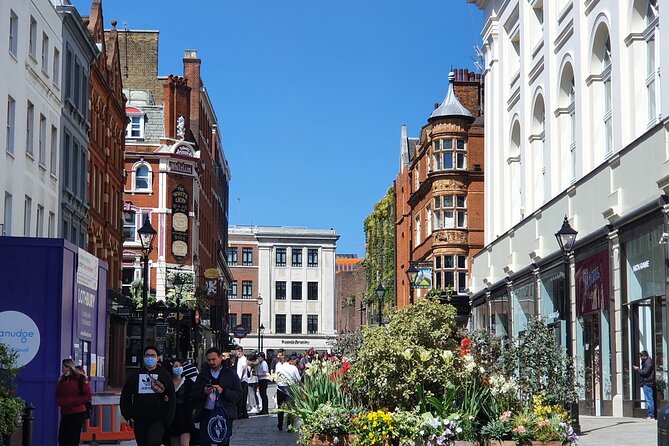
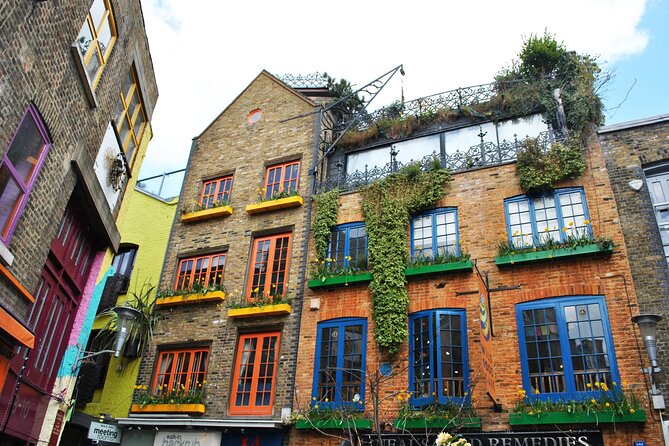
Stop seven is Neal’s Yard, described as a colourful hidden pocket. It’s short (about five minutes), but it’s doing an important job: it breaks up the heavier street topics with something you can enjoy without homework.
This kind of contrast is part of what makes walking tours effective. You don’t want every stop to feel like a lecture. A quick stop like this refreshes your eyes and your feet, and it also helps you remember the route as a sequence of moods: sacred building, market energy, theatre glamour, and then the edge-of-respectability history, ending with a more playful courtyard moment.
Drury Lane Gardens: Dickens, graveyard roots, and a National Trust first
Stop eight is Drury Lane Gardens. The tour describes it as a former graveyard and includes a scene connection to Dickens’ Bleak House. It also notes that it’s a children’s playground and heritage site, and that it was the first ever project by the UK’s National Trust.
This is one of those stops where the “why should I care?” question answers itself once you hear the context. A green space in central London often feels like a surprise. Add the graveyard origin, the Dickens link, and the National Trust fact, and suddenly you’re standing in a layered place—literally built on earlier use, later protected and repurposed.
One practical note: because it’s a playground environment, you may see families around. That’s normal and part of the site’s modern identity. If you’re after quiet moments for photos, you might want to time your picture-taking for when the space is less busy.
Seven Dials finish: turning a walk into a mental map
The tour ends at Seven Dials, at the sundial monument. This is a smart closing choice. It’s visible, easy to find, and it ties together the route’s themes: market life, theatre edges, and the street-history context of Seven Dials itself.
Finishing at a single landmark also gives you something practical: a clear “drop-off point” that’s useful for your next move. You’re not left wandering through a maze of streets trying to figure out where your guided portion ended.
Price and value: what $34.45 really buys you here
At $34.45 per person for about 2 hours, you’re paying for three things: a guide, a tight route design, and at least one included admission.
That included admission is at St Paul’s Church (Actor’s Church). Even if you treat the rest as “mostly outside” sightseeing, you still get:
- a guided explanation of theatre and market identity
- real stop time at multiple points, not just photo stops
- a small group limit of 15, which improves both listening and comfort
When London tours run long or feel crowded, the value drops fast. Here, the format stays compact and the route is centralized. Also, it’s common for people to book ahead—this tour averages 38 days in advance—so if your dates are fixed, plan early rather than assuming you’ll get the time you want.
For me, the best “value” detail is the guide-driven cohesion. The route isn’t random. It’s designed so the misfit stories connect street by street.
Who this walk is best for (and who might want a different option)
This tour fits you if:
- you like theatre and want context around places like Drury Lane and the Royal Opera House
- you want markets, not only monuments
- you enjoy local stories, including the rougher social history of older London
- you prefer a small group where you can actually hear the guide
You might consider another type of tour if:
- you hate any discussion of prostitution trade and the Gin Craze topics
- you’re mostly chasing indoor museum-style time and you dislike outdoor-and-street stops
One more tip for your expectations: because the first church entry depends on events, think of St Paul’s as a bonus-included moment rather than a guaranteed “must-see inside.” The rest of the walk is still strong even if entry is limited that day.
Should you book Misfits of Covent Garden Walking Tour?
Yes, I’d book it if you want an afternoon that turns Covent Garden from a shopping-and-theatre blur into a story you can follow. The small-group size, the chance of an inside visit at St Paul’s, and the route linking markets, theatre, and Seven Dials history make this a smart way to get traction fast in central London.
If you’re the type who enjoys getting the human side of a place—who lived here, what changed, and why certain streets had reputations—this walk is built for you. And if you’re hoping for a guide who can connect details without getting lost in facts, keep an eye out for names like Charlotte, Cecily, or Ellie that have shown up in the tour experience.
FAQ
How long is the Misfits of Covent Garden Walking Tour?
It runs for about 2 hours.
What time does the tour start?
The start time listed is 3:00 pm.
Where does the tour start and where does it end?
It starts at Covent Garden Underground Ltd, Long Acre, London WC2E 9JT, and ends at the sundial monument in Seven Dials (London WC2H).
Is the tour in English?
Yes, it is offered in English.
What’s the group size limit?
The maximum group size is 15 travelers.
Is a mobile ticket used?
Yes, the tour uses a mobile ticket.
Are any entry tickets included?
Admission is included for Stop 1 at St Paul’s Church (Actor’s Church). Other stops are listed as free except Theatre Royal Drury Lane, where admission is not included.
Does the tour run in bad weather?
The tour requires good weather. If it’s canceled due to poor weather, you’ll be offered a different date or a full refund.
Are service animals allowed?
Yes, service animals are allowed.