London’s finance district has stories you can walk through. This 2-hour, small-group City tour turns landmarks into a timeline of money, policy, and influence, with on-foot stops that keep things concrete and easy to follow. You’ll hear the behind-the-scenes talk—gossip, ambition, and scandal—linked to the places where decisions were made, not just where photos are taken.
What I like most is the way the tour connects eras into one clear line: Roman and medieval beginnings, then the East India Company’s footprint, and onward to the modern financial world you see today. I also love that guides like Terry are described as meeting people where they are, so first-timers and history buffs both get something—plus the answers to questions don’t feel rushed. The one thing to keep in mind is that this is a walking tour and it’s weather-dependent, so plan for pavement and a brisk pace, and dress for the day.
If you want a high-energy, story-first way to understand the City, you’ll likely enjoy this. But if you’re expecting lots of seated time or big museum interiors, the outdoor route and short duration may feel a bit tight.
In This Review
- Key highlights to look for
- Entering the City of London: why this tour feels different
- Good for
- Not ideal for
- Meeting at Emperor Trajan and finishing at the London Stock Exchange
- Stop-by-stop: the City’s story from Romans to St Paul’s
- Roman and medieval beginnings of the Financial District
- East India Company: the trade machine behind the money
- Royal Exchange, Bank of England, Mansion House: neo-classical authority
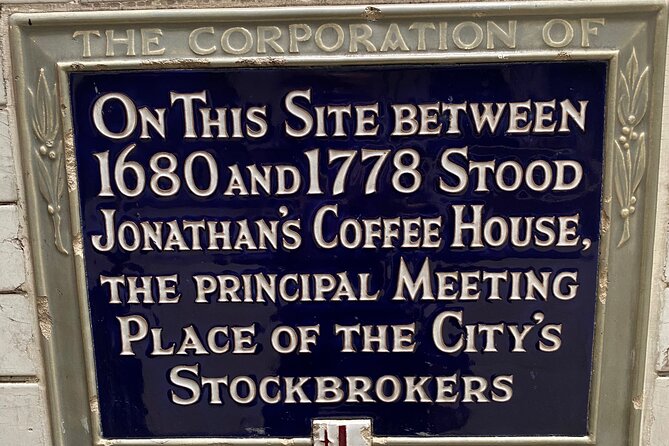
- The coffee shop where the stock market was first based
- Exchange Alley / Change Alley: power in a narrow lane
- Guildhall and nearby guild buildings: civic order and celebration
- St Paul’s Cathedral: where the City’s story looks upward
- The guide factor: why storytelling matters on a “finance” tour
- How long it lasts, and how to get the most out of it
- Price and value: is $41.14 worth it?
- Who should book this tour (and who might want a different one)
- Quick FAQ
- FAQ
- How long is the Money and Power in the City sightseeing tour?
- How many people are in the group?
- What language is the tour offered in?
- Where does the tour start and end?
- Do I get a mobile ticket?
- What happens if the weather is poor?
- Should you book Money and Power in the City?
Key highlights to look for
- A max of 8 people keeps the tour personal and question-friendly
- Roman to modern City links make the financial district feel logical, not random
- Exchange Alley/Change Alley shows how small streets mattered to big business
- Royal Exchange, Bank of England, and Mansion House get explained as power buildings, not just architecture
- The St Paul’s skyline moment ties the whole walk back to today’s London view
- Mobile ticket and a clear start/end at major City locations keeps things simple
Entering the City of London: why this tour feels different
The City of London has a way of looking confident even when it’s centuries old. Stone, narrow lanes, and big institutions sit side by side, so it can feel like you’re stepping into a living timeline—if someone gives you the right map for what you’re seeing.
That’s where this tour shines. It’s built for understanding, not just sightseeing. Instead of handing you a list of monuments, the route threads together the logic of money and power: who controlled trade, who influenced policy, how institutions branded themselves, and how business culture grew in tight spaces. The guide approach also matters. Reviews emphasize a guide who can answer questions and explain ideas in a way that works whether you know London already or you’re brand new to it.
And because it’s a small group—up to 8—you’re more likely to get real back-and-forth. That’s a big deal on a topic like finance and governance, where people often want context like: How did it start? Why that building? What changed? A larger bus-style tour can’t always handle that.
You can also read our reviews of more city tours in London


Good for
If you like stories, you like architecture when it has a purpose, and you want to understand why the City became the way it is, this is a strong match. It’s also a good first London book-end: you get a grounded view of the “business end” of the city early on.
Not ideal for
If you’re looking for a slow, relaxed wander with lots of free time, or you hate walking through working streets, plan differently. This is a structured two-hour walk.
Meeting at Emperor Trajan and finishing at the London Stock Exchange
The tour starts at Emperor Trajan A100, London EC3N 4DR, with the practical detail that you’ll want to locate the right spot quickly. The itinerary ends at London Stock Exchange, 10 Paternoster Sq., London EC4M 7LS, and the meeting point note points you toward Paternoster Square by the main column.
The start time is 2:00 pm, which is useful for planning your day. You can do morning sights elsewhere, then come into the City as the light and street activity change. It also helps that the tour is described as near public transportation, so you’re not forced into a long trek from the nearest station.
A mobile ticket is included, which tends to make life easier. No printer scramble, no paper issues—just have your phone ready on the spot.
Stop-by-stop: the City’s story from Romans to St Paul’s






Roman and medieval beginnings of the Financial District
You kick things off by grounding the area’s early roots. That’s not just trivia—it changes how you see everything afterward. If you understand that the City wasn’t always a skyscraper cluster, you can better appreciate why today’s power structures fit into older street lines and plot patterns.
In plain terms: early London had to solve real problems—security, trade, administration, records. When the guide explains the Roman and medieval foundations, you start to notice the City’s sense of continuity. You’re not just watching a “modern finance” parade; you’re watching the long build-up to it.
East India Company: the trade machine behind the money
Next comes the location tied to the East India Company—presented as the most important historic site connected to it after you’ve already seen other linked spots.
This is one of the clever parts of the route. The East India Company wasn’t simply a business. It helped shape global trade systems, and those systems fed back into Britain’s wealth, politics, and influence. So when you stop at its key location, you’re not only learning about a company. You’re learning how commerce became policy, and how policy became power.
If you’ve ever wondered why old trade names keep showing up in British institutions, this is the point where it clicks.
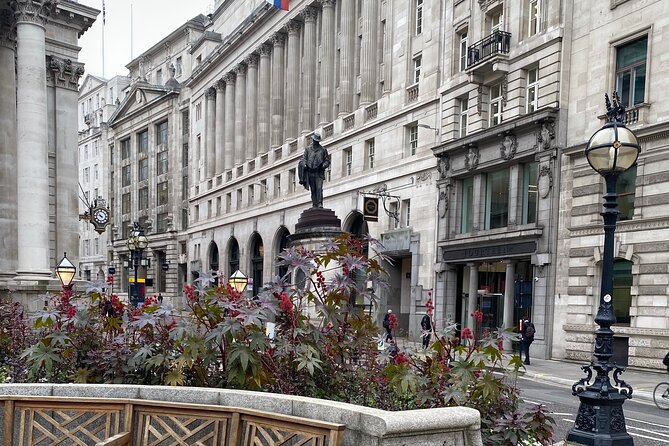
Royal Exchange, Bank of England, Mansion House: neo-classical authority
Then you get a cluster moment: neo-classical splendour at the Royal Exchange, the Bank of England, and Mansion House.
These buildings are designed to communicate trust and strength. That sounds simple, but it’s worth paying attention to details like scale and style. The City uses architecture as a kind of credibility engine. The guide’s framing helps you read these places the way people likely read them when they were new: not just as pretty structures, but as statements about legitimacy.
Possible drawback here: if you’re hoping for lots of interior time, two hours means the stops are mostly about what you can see from the street. Still, you’ll get the context to understand why the exteriors matter.
The coffee shop where the stock market was first based
After that, the tour turns to a smaller, human-scale landmark: the coffee shop area where the stock market was first based.
This is the moment that makes the topic feel real. Markets don’t start as formal machines. They start as gatherings—people trading information, ideas, and terms. Coffeehouses were where news traveled fast and strangers became business contacts. When the guide ties that story to the later institutional buildings, you get a strong sense of evolution: from conversation to systems.
It’s also a good mental reset mid-walk. Big institutions can feel abstract; a coffee shop story brings you back to daily life.
Exchange Alley / Change Alley: power in a narrow lane
From there, you move through one of the City’s narrow connectors: Exchange Alley or Change Alley. The idea here is practical and smart. This alley served as a convenient shortcut from the Royal Exchange on Cornhill to the Post Office on Lombard Street, and it still links the streets much the same way today.
Walking through a tight passage like this helps you understand how the City worked day-to-day. It wasn’t all grand halls. It was speed. People needed routes for messages, paperwork, and quick meetings. Narrow lanes like this are part of why commerce could operate efficiently in a dense urban core.
If you’re sensitive to tight spaces, this is worth noting. It’s not meant to scare you, but it is narrow, and it’s outdoors.
Guildhall and nearby guild buildings: civic order and celebration
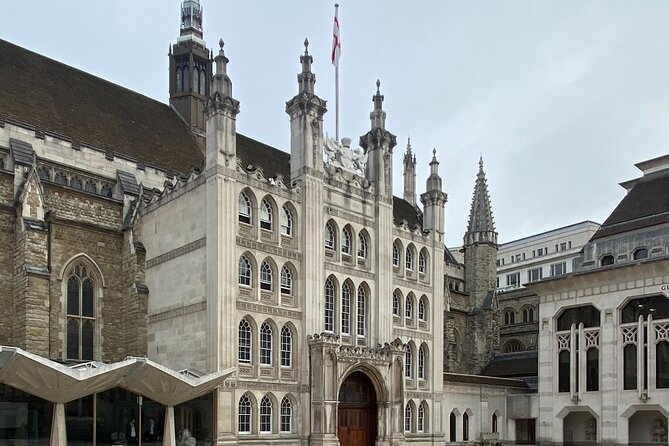
Next comes the medieval Guildhall and selected nearby guild buildings.
Guild halls were used to store goods and host events. That mix—practical storage and public celebration—matters. It shows you that “business” and “community” were not separate categories. When the guide mentions how the hall could become a venue for entertainments like Passion plays when it wasn’t needed for guild members, it signals something important: the City’s institutions were woven into social life, not tucked away behind closed doors.
This stop also helps you broaden from finance into governance. Guilds weren’t just about trade; they were about rules, standards, and civic influence. You’ll see why later institutions could claim authority and why people accepted it.
St Paul’s Cathedral: where the City’s story looks upward
Finally, you land at the modern skyline anchor: St Paul’s Cathedral, described as towering over the stock market area.
This is a strong finishing move. After you’ve learned about trade, companies, exchanges, and alleys, the view from the top of that story becomes the present-day City. St Paul’s sits on Ludgate Hill at a high point in the City and serves as the seat of the Bishop of London. In other words, it’s not only a famous landmark; it’s a symbol of long-standing authority.
So the tour ends with a balancing act: you started with the earliest foundations of the district, and you finish with a landmark that still shapes the City’s identity in the sky.
The guide factor: why storytelling matters on a “finance” tour
It’s easy to underestimate how hard it is to teach finance-and-power history on foot. You can’t skim with facts alone. You need pacing, humor, and a way to connect institutions without turning it into a lecture.
The tone described in the experience is consistent: the guide Terry (and other guides referenced by name like Mr. Silvers) is highlighted as very knowledgeable and great at making the background click for people with different levels of understanding. That’s what you want here. If you’re new to the topic, you need simple threads. If you know a bit already, you need fresh links.
Also, the guide style seems built for questions. People mention getting answers and staying engaged. On a route that spans Romans, medieval guilds, major financial institutions, and the origins of market trading culture, stopping to ask something halfway through can make the second half make more sense.
How long it lasts, and how to get the most out of it
The duration is about 2 hours, which is a good target for this kind of tour. You get a full mini-education without being stuck for a half day. The trick is staying focused on the “why” behind each location.
Here’s a practical way to play it:
- Look at each stop and ask what kind of power it represents: trade, governance, credibility, or community.
- Notice how the route moves from formal institutions to small streets and back up to St Paul’s.
- If you’re traveling with kids or non-specialists, this tour is described as a family-friendly learning experience when the guide pitches the story clearly.
Because it’s a walking route and the tour requires good weather, it’s also smart to plan for a day that won’t be miserable outside. If the weather turns, you may be offered a different date or a refund.
Price and value: is $41.14 worth it?
At $41.14 per person for around two hours, this tour sits in the “worth considering” zone for London, especially if you value guided interpretation over self-guided wandering. Here’s why the value holds up:
- You’re paying for synthesis. The City can look like a bunch of named buildings unless someone connects the dots.
- The small group size (up to 8) can make it feel more like a private history walk than a mass tour.
- The route covers multiple layers—Roman and medieval beginnings, the East India Company thread, major financial institutions, market origins in coffeehouse culture, guild life, and a skyline finish.
If you only want photos or you already know the City’s story, you might not need a guide. But if you want a clear framework for what you’re seeing, this price tends to make sense.
Who should book this tour (and who might want a different one)
Book it if:
- You want to understand why London’s financial district became influential in the way it did.
- You like short, story-driven walking tours.
- You enjoy architecture when it’s tied to real power and real decisions.
- You’re the type who asks questions and wants answers on the spot.
Consider a different option if:
- You dislike walking for extended stretches.
- You want museum-style interior time rather than street-level context.
- You need long breaks or lots of seated time.
Quick FAQ
FAQ
How long is the Money and Power in the City sightseeing tour?
It lasts about 2 hours.
How many people are in the group?
The tour has a maximum of 8 travelers.
What language is the tour offered in?
It’s offered in English.
Where does the tour start and end?
It starts at Emperor Trajan A100, London EC3N 4DR, and ends at London Stock Exchange, 10 Paternoster Sq., London EC4M 7LS.
Do I get a mobile ticket?
Yes, the tour includes a mobile ticket.
What happens if the weather is poor?
The experience requires good weather. If it’s canceled due to poor weather, you’ll be offered a different date or a full refund.
Should you book Money and Power in the City?
If you’re trying to understand London beyond postcard highlights, this is a smart pick. The City can feel overwhelming because it mixes eras and institutions in a small space. This tour makes the area readable. You walk through Roman and medieval beginnings, get the East India Company thread, see how major financial buildings communicate authority, learn how market culture started in places like coffeehouses, and finish with St Paul’s as the visual anchor.
Book it if you want a clear story in a short time and you like learning from a guide who can explain the ideas in an engaging, question-friendly way. Skip it if you want lots of interior time or a slow, low-effort stroll.