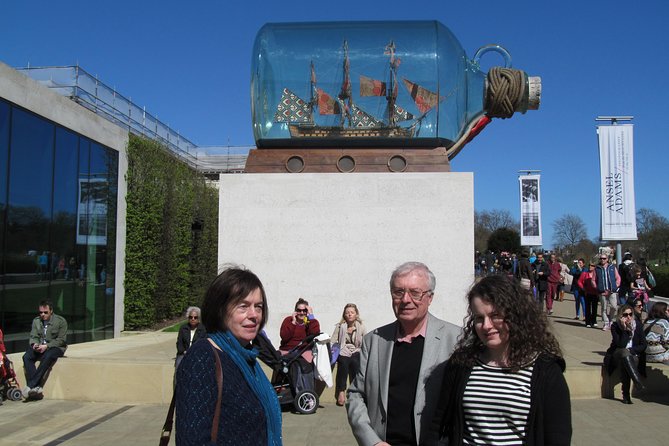
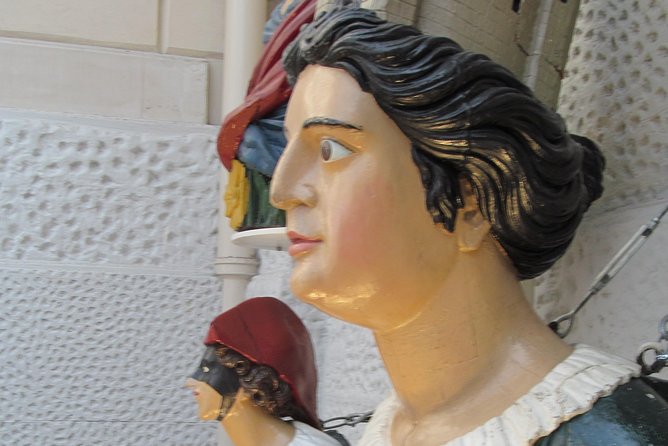
A statue called Ship in a Bottle sets the tone. This private tour has you moving through key Greenwich landmarks with a local guide, with limited group time that keeps the pacing human and the stories easier to follow. You’ll also get close to a UNESCO World Heritage area that feels like a real working waterfront history lesson, not a rushed checklist.
I especially like the way the guide ties big-name events to specific objects. You’re not just looking at Nelson memorabilia and famous art; you’re getting the why behind it, and guides such as Graham have been praised for making the explanations click for families and history fans. One watch-out: if you want nonstop high-tech screens and show-stopping visuals, you may find parts of the museum presentation feel more traditional, with glass cases and room-by-room viewing.
In This Review
- Key highlights to know before you go
- Greenwich maritime classics start at the Ship in a Bottle statue
- Inside the National Maritime Museum: Trafalgar, Nelson, and the big turning points
- Why these stops are a smart use of 3.5 hours
- Trade Gallery and the East India Company: follow the money and the routes
- A mid-tour cafe break helps you keep your energy (and patience)
- Atlantic Slavery and lighthouses: honest topics, guided through
- Queen’s House visit: the Armada Portrait in a 45-minute slot
- What a private group changes in Greenwich
- Price and value: what $237.59 buys you in real terms
- Practical tips so your tour feels smooth
- Who should book this tour?
- Should you book this National Maritime Museum private tour?
- FAQ
- What time does the tour start?
- How long is the experience?
- What language is the tour offered in?
- What’s included, and what isn’t?
- Where does the tour begin?
- Is there free cancellation?
Key highlights to know before you go
- Private-group pacing: you won’t fight crowds or feel swept along.
- Nelson’s jacket stop: a tangible link to HMS Victory and a tragic moment.
- Turner’s Battle of Trafalgar painting: a recognizable art anchor to maritime history.
- Atlantic Slavery gallery: clear-eyed coverage of England’s role in the trade.
- Queen’s House + Armada Portrait: a focused 45-minute art-and-history visit with admission included.
- A mid-tour cafe break option: use the time to reset before the heavier galleries.
Greenwich maritime classics start at the Ship in a Bottle statue
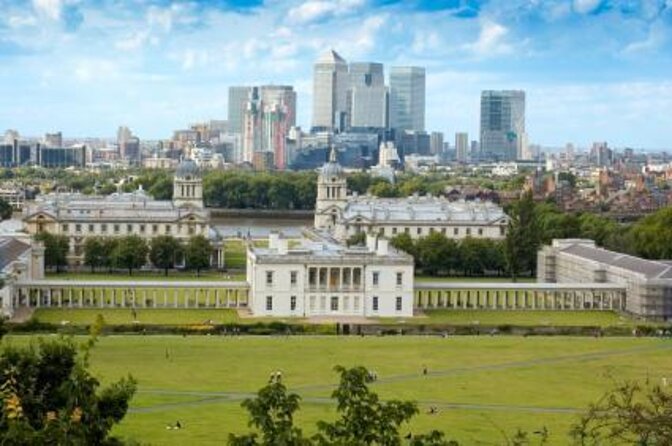
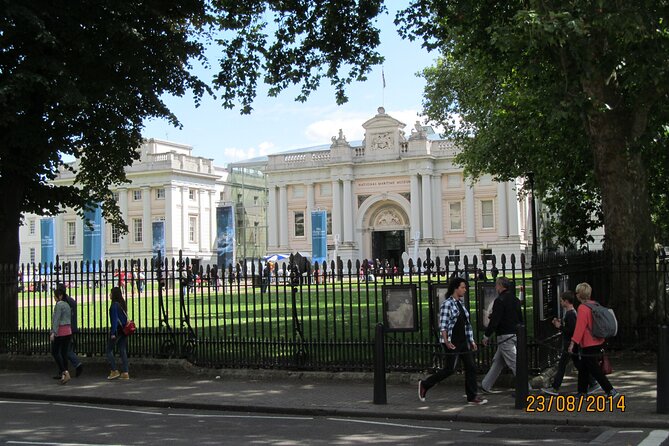
Your tour starts at the Ship in a Bottle Herbaceous Border at the southern entrance of the National Maritime Museum area. It’s an easy landmark to orient yourself, and it matters because Greenwich can feel like you’re walking between sites without a clear storyline. This tour gives you one.
The flow is designed for real-time understanding. You begin where you can picture the world the museum covers: ships, navigation, empire-era trade, and the people caught inside those systems. Then your guide moves you from sight to story, so the exhibits don’t blur together.
This is also one of those locations where walking a little at the right moments makes a big difference. You’ll get that classic Greenwich feel—waterfront history in the air—even if your actual time inside is mostly museum galleries.
This experience is best if you like context more than collecting facts. The objects and artworks matter more when somebody helps you read them.
You can also read our reviews of more private tours in London



Inside the National Maritime Museum: Trafalgar, Nelson, and the big turning points
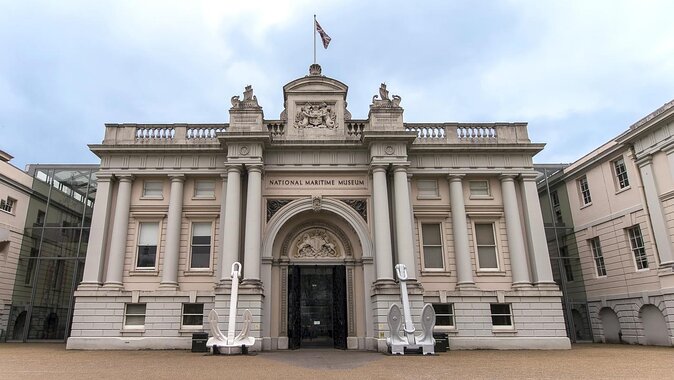
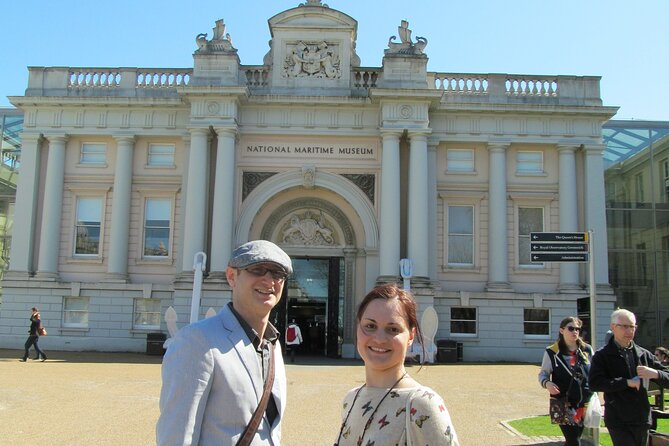
The National Maritime Museum portion is where you’ll spend most of your energy. The guide’s plan highlights a few key stops that work like story chapters.
First up is Turner’s Battle of Trafalgar painting, created in the early 1820s. If you recognize the artist, it’s a great entry point because it bridges art and naval history without getting technical. The painting becomes a visual shorthand for the moment Britain became more dominant at sea—at least in the way people wanted to remember it.
Then you move to the Nelson, Navy, Nation gallery. One standout object is the jacket Nelson wore when he was mortally wounded aboard HMS Victory. That kind of item changes how you experience the gallery. Instead of thinking of famous figures as names in a textbook, you get a physical detail that makes the story feel closer—and heavier.
Why these stops are a smart use of 3.5 hours
You might think a maritime museum would be endless. Here, the guide focuses on anchors:
- A major artwork (Turner)
- A personal artifact tied to a specific crisis (Nelson’s jacket)
That’s a strong formula for families and first-timers. It also helps if you’re short on time and want the best signal without wandering into whatever is currently on the far end of a large building.
Trade Gallery and the East India Company: follow the money and the routes
Next you’ll visit the Trade Gallery, focused on trade with the Far East and the origins tied to the East India Company. This is one of the most practical parts of the tour to pay attention to, because it explains how maritime power wasn’t only about battles. It was about movement—goods, systems, and influence.
What I like about this stop is that it turns the museum from a war story into a network story. Ships are the transportation tool, but the real subject is demand and control: who profited, who handled the logistics, and how routes shaped politics.
For families, this is often where kids stop asking are we done yet and start asking how did they… The trade angle gives concrete examples that are easier to picture than strategy maps alone.
If you’re the type who enjoys cause-and-effect, this section will feel extra satisfying.
A mid-tour cafe break helps you keep your energy (and patience)
You’ll have a coffee/tea break halfway through at the museum cafe. No, it’s not automatically included, but the timing is worth it.
In museums, a break changes everything:
- You process what you just saw
- You avoid the late-tour energy crash
- You come back ready for the darker sections
Some visitors have also said the cafe stop for food—like fish and chips—is a nice add-on if you want something genuinely British without planning a detour.
Plan to bring a little patience anyway. Even with a private tour, Greenwich museums are still museums: you’ll be walking and reading labels for a bit. The break is your reset button.
You can also read our reviews of more museum experiences in London





Atlantic Slavery and lighthouses: honest topics, guided through
The Atlantic Slavery gallery is brutally honest about the slave trade and England’s role in it. This is not the kind of section you skim. If your group needs a moment, your guide can help you slow down without losing the thread of the story.
This part of the tour is valuable because maritime history isn’t only battles and ships. The same sea routes that carried trade and naval power also carried human suffering. The museum’s approach forces you to acknowledge that link instead of treating it like a side note.
After that, you’ll also explore lighthouses and their history in the UK. That shift can feel sudden, but it works. Lighthouses are about safety and navigation—how people tried to manage risk at sea. Put next to slavery and trade, it becomes a reminder that maritime progress can reduce danger while other systems still create harm.
If you care about how the past connects to the present, this pairing will stick with you.
Queen’s House visit: the Armada Portrait in a 45-minute slot
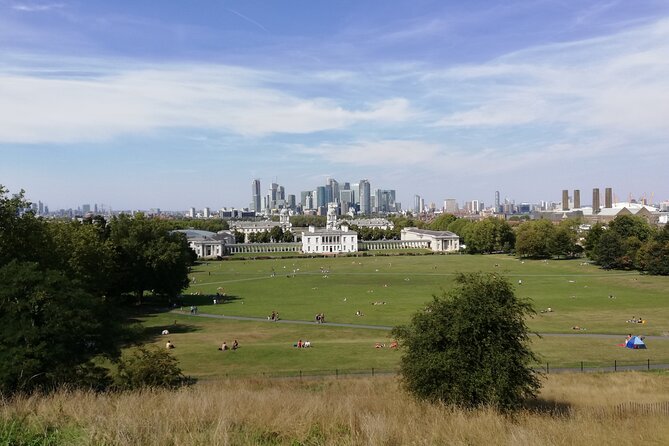
After the National Maritime Museum galleries, the tour includes a visit to the Queen’s House, with a 45-minute window and admission included.
Here, you’re seeing the world-famous Armada Portrait of Queen Elizabeth. This is a tight, focused art-and-power stop. Instead of getting another long gallery walk, you get a concentrated chance to look and understand what people wanted to project during times of conflict.
Queen’s House also helps you broaden the idea of maritime Britain. Sea events weren’t isolated from culture and monarchy. They shaped image-making and national identity, and the portrait is an example you can actually see.
For families, 45 minutes is often the sweet spot. Long enough to feel like you did something meaningful, short enough that nobody melts down halfway through.
What a private group changes in Greenwich
This is a private tour. Only your group participates. That matters more than people realize, especially in busy areas like Greenwich where it’s easy to get stuck in a slow-moving crowd.
In a private setting, you can go at a pace that suits:
- kids who need more explanation
- adults who want the story behind an object
- anyone who learns better by stopping and asking why
The feedback around guides is a big part of the value. Guides such as Graham have been described as helpful and full of stories, with clear explanations that make sense rather than just reciting dates. Another guide named Wendy has earned praise for being informative and helping create a fun day that includes more Greenwich highlights like the general meridian area and nearby landmarks (in at least one reported version of a similar guided outing).
To be clear: the core plan you should expect is the museum highlights and the Queen’s House slot. But the guide’s skill affects how smooth your time feels across both lighter and heavier topics.
Private also means you can ask for practical pointers on what to see next while you’re still in the neighborhood.
Price and value: what $237.59 buys you in real terms
At $237.59 per person for about 3 hours 30 minutes, the price isn’t cheap. But it also isn’t just paying for time inside a museum.
Here’s what you’re really buying:
- a local guide (the biggest component)
- a private group format
- focused museum anchors instead of aimless wandering
- Queen’s House admission included
- a tour route that hits major maritime themes without wasting time
Also, the National Maritime Museum portion is described as admission free for this experience, which shifts the value heavily toward the guided experience itself. If you were to do the stops independently, you might spend hours trying to decide what to prioritize. With a guide-led plan, you spend that time learning and looking at the right objects.
Best value angle: If your group wants structure and story, this price starts to make sense fast. If you’re the kind of traveler who loves wandering and reading everything slowly with no guidance, a self-guided plan could feel cheaper.
Practical tips so your tour feels smooth
A few practical things will help you enjoy it more.
First, wear comfortable shoes. You’re moving between Greenwich sites and walking inside museums, and you’ll likely spend time standing while looking at key displays.
Second, set expectations for museum pacing. Even with a private guide, galleries take time. You’ll likely spend more moments reading and listening than moving quickly.
Third, if you’re bringing kids, pick the right mindset. The museum has interactive elements, and families have enjoyed focusing on the more hands-on parts during their visit. A guide can also help steer attention toward what will hold interest longer.
Finally, plan your day around the start time of 12:30 pm. Greenwich feels better when you’re not rushing to catch trains immediately after a long museum block.
Who should book this tour?
This experience fits best if you:
- like history with real objects, like Nelson’s jacket
- want a structured way to experience Greenwich in a half-day
- are traveling with families and want guide narration to keep things understandable
- care about honest maritime-era topics, including the Atlantic Slavery gallery
It may feel less satisfying if you:
- mainly want flashy visuals and lots of screens
- prefer totally free-form museum wandering with zero guidance
- dislike galleries that cover heavy topics without a lot of playtime balance
Should you book this National Maritime Museum private tour?
If you want Greenwich to make sense fast, book it. The private format plus focused stops turns a large museum day into a coherent story—especially when you’re interested in the big maritime names and the uncomfortable truths tied to sea routes.
I’d especially recommend it for families, first-time visitors, and anyone who learns best when a guide explains how artifacts connect to events.
If you’re budget-minded and don’t mind navigating on your own, you could visit the museum and Queen’s House independently. But for the time you have—about 3.5 hours—this guided plan is the efficient way to get the most meaningful highlights without feeling lost.
FAQ
What time does the tour start?
The tour starts at 12:30 pm.
How long is the experience?
It’s about 3 hours 30 minutes.
What language is the tour offered in?
The tour is offered in English.
What’s included, and what isn’t?
You get a local guide, and the Queen’s House admission is included. Food and drinks are not included (a cafe break is planned, but you’d pay for what you order).
Where does the tour begin?
The meeting point is at Nelson’s Ship in a Bottle Herbaceous Border, London SE10 8QY, UK.
Is there free cancellation?
Yes. You can cancel up to 24 hours in advance for a full refund.