REVIEW · LONDON
Private Archaeologist Guided Tour Stonehenge, Salisbury & Avebury
Book on Viator →Operated by Archaeologist Guided Tours · Bookable on Viator
A prehistoric day that feels personal, not rushed. This private archaeologist-guided outing strings together Woodhenge, Stonehenge, Salisbury, Silbury Hill, West Kennet Long Barrow, and Avebury, with real time for your questions.
I love that you’re not stuck with a script—you can ask anything and get context for what you’re seeing. I also love the comfort factor: you ride in a luxury Mercedes (E–Class, V–Class, or Sprinter) with a dedicated driver so the guide can stay focused on you, not traffic.
One possible drawback: it’s a full 11-hour day with moderate walking on uneven ground, so it may not be ideal if you want a mostly seated sightseeing experience. Also, while the guide is meant to be an archaeologist, one account noted the depth can vary depending on who leads your day (one guide was named Benjamin, another mention was Dr. Shepherd in a comparison).
In This Review
- Key highlights worth getting excited about
- Why a private archaeologist changes Stonehenge (and your whole day)
- Getting the day right: start time, time pressure, and the value of comfort
- Woodhenge: the wooden rings that explain the bigger idea
- Durrington Walls: seeing the builders’ world around Stonehenge
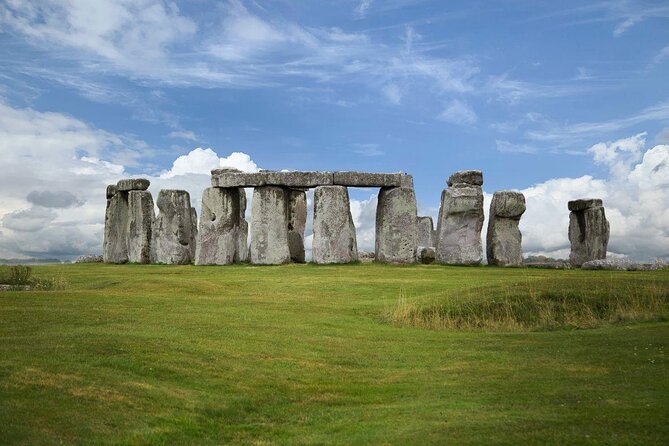
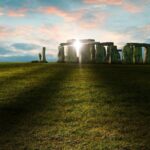
- Stonehenge: how to get more from the stones than the famous photo
- Salisbury Cathedral and Magna Carta: a sharp contrast with the prehistoric day
- Alton Barnes White Horse: quick countryside flavor that doesn’t feel filler
- Silbury Hill: the engineering that shocks you even before you know the details
- West Kennet Long Barrow: the one with the most “you’re inside it” feeling
- Avebury stone circles: where the stones feel more like a village’s heartbeat
- So… is it worth paying for this style of tour?
- Before you go: practical tips that make this day smoother
- Should you book the Private Archaeologist Guided Tour?
- FAQ
- How long is the Stonehenge, Salisbury and Avebury private tour?
- What’s included in the price?
- Are Stonehenge and Salisbury Cathedral tickets included?
- Does the tour include pickup from London?
- Is the West Kennet Long Barrow stop included year-round?
- Is there a lot of walking and is the ground uneven?
Key highlights worth getting excited about
- Ask questions freely: this tour is built for back-and-forth with your archaeologist, not one-way lecturing.
- Private pace, not herding: you control how long you linger, within a sensible day schedule.
- Luxury transport plus a separate driver: the guide can focus on interpretation while you get comfortable door-to-door.
- You’ll hit the “related” sites: Woodhenge, Durrington Walls, Silbury Hill, and West Kennet Long Barrow make Stonehenge feel less isolated.
- Avebury ends with local life: you finish at the UNESCO site area and have time for a drink at the Red Lion pub.
Why a private archaeologist changes Stonehenge (and your whole day)
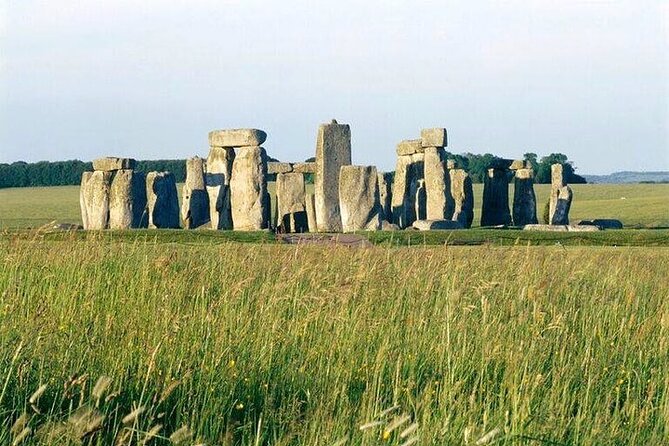
Stonehenge isn’t just a view. It’s an argument—about people, belief, engineering, and why humans keep showing up for the same big questions. On a group bus, you get facts. On this kind of private archaeologist-guided day, you get meaning, plus the chance to ask why one theory seems more convincing than another.
You’ll also notice something important: the day doesn’t treat Stonehenge like a standalone star. It frames it as part of a wider prehistoric world in Wiltshire. When you first step into the rings and avenues of these sites, you start seeing patterns—timelines, building choices, and how ceremonial space might have worked.
And because it’s private, you can match the day to your energy level. If you want to spend extra time at Avebury’s stone circles, you can. If Stonehenge hits you emotionally and you want a slower look at the stones and surrounding paths, your guide can work with that.
You can also read our reviews of more guided tours in London



Getting the day right: start time, time pressure, and the value of comfort
This tour starts at 7:30am and runs about 11 hours. That early departure matters: you’re getting into the countryside and major sites while crowds are still building, and you’re less likely to feel like you’re constantly chasing the clock.
Transport is part of the appeal. You’ll ride in an air-conditioned Mercedes E–Class, V–Class, or Sprinter, with a separate professional driver so your archaeologist isn’t multitasking while driving. That’s not a luxury-only detail—it directly affects the quality of the commentary, because the guide can settle into a steady rhythm of explanations during transit.
Value-wise, the price is $1,782.05 per group (up to 6). If you fill all seats, that works out to roughly $297 per person, before you add the two paid entrance fees listed for Stonehenge and Salisbury Cathedral. In other words, you’re paying for privacy, expert interpretation, and a smoother logistics load than you’d get by coordinating public transport plus multiple admissions on your own.
Woodhenge: the wooden rings that explain the bigger idea
Woodhenge is the warm-up act, but it’s not small in importance. You’ll see a prehistoric monument from the Late Neolithic period made of six concentric rings of wooden posts—168 posts total—with a symmetrical arrangement. The key detail is that this was originally wood, and wood doesn’t survive unless the evidence is carefully preserved and interpreted. That’s why Woodhenge feels like archaeology in motion: you’re looking at a plan, not a fully intact structure.
You’ll also get the chance to connect it to the solar and lunar angle ideas. The site is thought to have been aligned with the movements of the sun and moon, and it may have been ceremonial. When I think about what makes this stop worth it, it’s the way it trains your eye for how these builders used space—rings, symmetry, and deliberate placement.
Practical note: admission here is listed as free, so this is a good stop when you’re trying to maximize value without feeling like you’re paying repeatedly.
Durrington Walls: seeing the builders’ world around Stonehenge
Next comes Durrington Walls, often described as the builder’s village associated with the Stonehenge landscape. Instead of a stone monument, this one is a huge circular earthwork: over 500 meters in diameter. Inside are two large timber circles, linked to ceremonial activity.
The date range given is around 2600 BC, and the idea is that it served as a ceremonial center for the local population. That shift—away from a single famous site and toward a broader community context—is one reason this tour feels more satisfying than the typical “Stonehenge only” day.
Timing is tight but manageable: it’s a short drive from Durrington Walls to Stonehenge and a brief stop length. That means you won’t get to do everything in deep detail everywhere, but you will get enough structure to understand how Durrington Walls and Stonehenge relate.
Again, admission is listed as free, which helps keep the day’s costs more predictable.
Stonehenge: how to get more from the stones than the famous photo
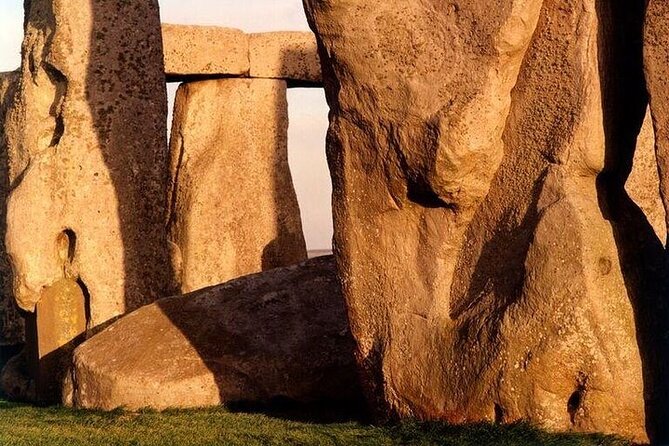
Stonehenge is still Stonehenge. The iconic shape pulls you in fast. But the point of the tour isn’t just to look—it’s to walk through the landscape with interpretation that makes the mystery feel human instead of abstract.
Your archaeologist guide frames the monument as something that draws people across distances, echoing evidence that Neolithic and Bronze Age peoples may have traveled for weeks or months from across Britain and even continental Europe. Even if you don’t buy every theory, that idea changes the emotional temperature of your visit. It’s less like visiting a landmark and more like reenacting a pilgrimage.
Practical heads-up: Stonehenge entrance is not included. The listed cost is £12.70 per person. I’d treat this as the one “big-ticket” admission for the day, so if you’re budgeting tightly, this is the line item that matters most.
Also, plan for outdoor walking. Weather changes quickly in England, and you’ll want layers. This tour operates in all weather conditions, so you’ll be outside even if it’s gray or breezy.
You can also read our reviews of more private tours in London




Salisbury Cathedral and Magna Carta: a sharp contrast with the prehistoric day
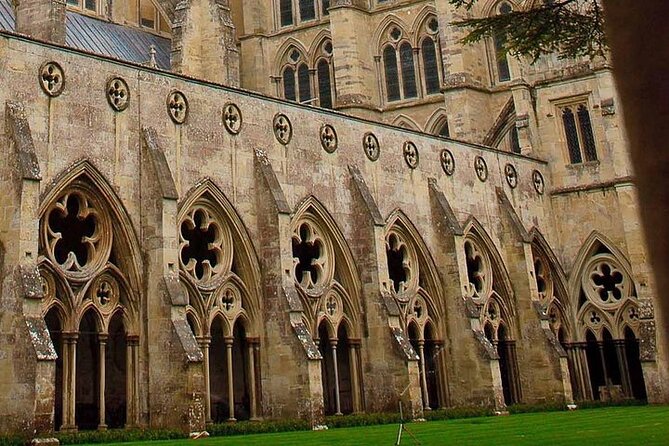
After the prehistoric sites, Salisbury Cathedral is a gear shift. You’ll spend time exploring the city of Salisbury and its Gothic cathedral, plus you’ll get context on the Magna Carta—what it said, how it was interpreted over the next 800 years, and why it still matters for culture, laws, and rights.
This stop is surprisingly useful after Stonehenge because it reminds you how long societies keep building legitimacy and meaning. Prehistoric monuments show ritual space and collective effort. Magna Carta shows how later England argued about rights and governance. Same human urge. Different tools.
Cathedral admission is not included, and the listed cost is £5.50 per person. If you love history that connects through time, this part of the itinerary earns its place.
Alton Barnes White Horse: quick countryside flavor that doesn’t feel filler
Alton Barnes White Horse on Milk Hill is short and simple, but it’s a nice palate cleanser between major prehistoric stops. This is one of those places where you get moving scenery and a local landmark, not another megalithic monument.
The important thing is that it’s listed with free admission. That matters on a day like this because you can spend money where it counts—Stonehenge and Salisbury—while still getting a fuller sense of the Wiltshire countryside.
If you’re the kind of traveler who doesn’t need every stop to be a deep museum lesson, you’ll appreciate this one for what it is: a quick breather.
Silbury Hill: the engineering that shocks you even before you know the details
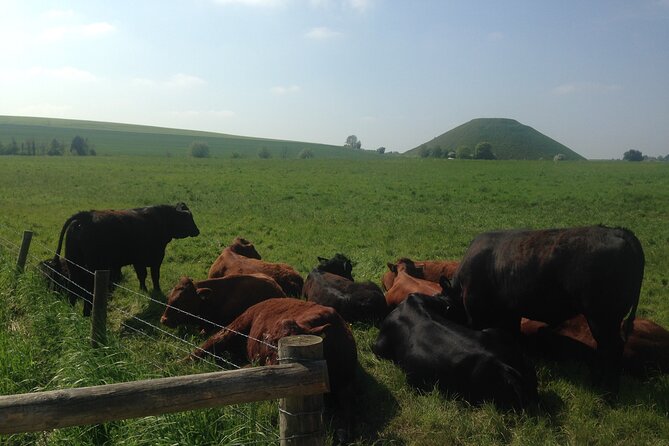
Silbury Hill is the largest man-made tumulus in Prehistoric Europe, and the scale is hard to grasp until you’re looking at it. You’re going to 37 meters (130 feet) high with a base diameter of 160 meters (520 feet). That’s not just big—it’s stubbornly impressive.
It’s made from chalk and clay, built using a technique described as terrazzo, or pounded earth: mixing water with dry chalk and clay and pounding it into place with wooden beams or stone hammers. The idea that builders created something this durable without modern materials makes the place feel like a live lesson in planning and labor.
Admission here is free. That’s a great combo: a genuinely major site, without another ticket price.
One caution: even though this stop is listed at about an hour, it’s still outdoors and you’ll be on uneven terrain. Bring shoes you trust.
West Kennet Long Barrow: the one with the most “you’re inside it” feeling
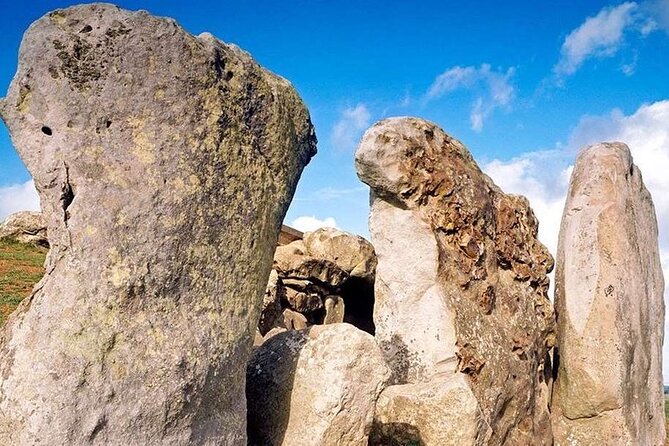
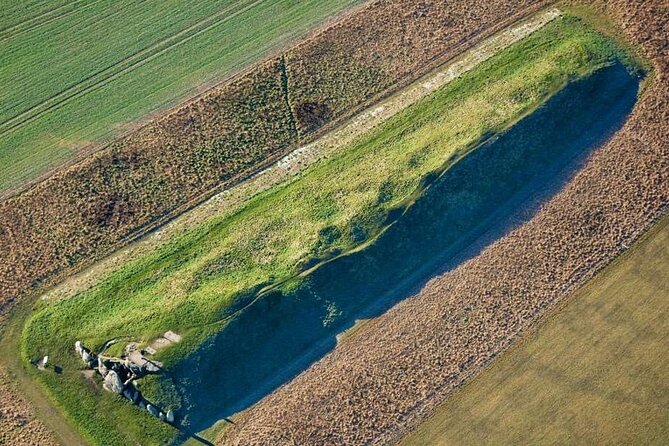
West Kennet Long Barrow gives you a very different experience from viewing stones. This is a Neolithic tomb in Avebury, described as about 5,500 years old, built around 3750 BC. The burial chamber has an attached passageway and side chambers, and it’s roofed with large slabs of stone.
You’ll enter a space that feels enclosed compared to open stone circles. Two massive upright stones flank the entrance, and that framing makes the whole thing feel designed, not accidental.
This stop has an important seasonal detail: visits occur between March 1st and October 31st. So if you’re traveling outside that window, you might not get the same access. That’s worth checking early because the tour date controls whether you get into this particular kind of interior experience.
Admission is listed as free, and it’s one of the spots where private interpretation really pays off. You can ask how the passageways and chambers likely shaped movement and ritual.
Avebury stone circles: where the stones feel more like a village’s heartbeat
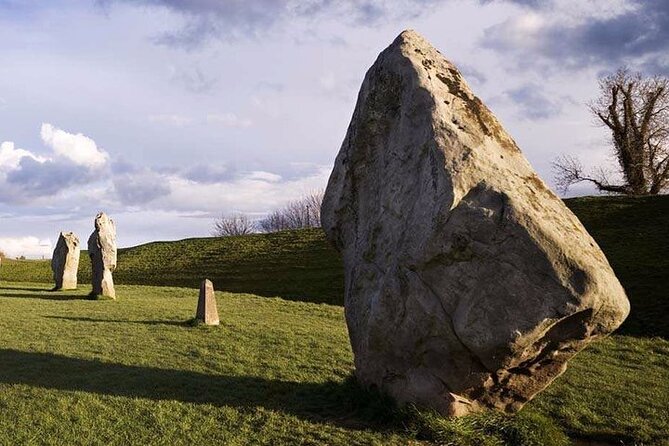
The finale is Avebury, described as the world’s largest stone circle, with a medieval village sitting inside. It’s also designated a UNESCO World Heritage Site, and the site is made of three stone circles plus an avenue: the outer circle (the largest), two smaller circles (northern and southern), and the avenue.
The stones are thought to date to 2600 to 2400 BC, with possible astronomical and ritual uses. What you’ll do here is practical: you’ll explore the stone circles, walk along the avenue, and finish the day with a drink at the Red Lion pub.
I like this ending because it turns the visit into something social and human, not just a museum closure. Avebury’s stones can feel less like a single monument and more like a living setting where buildings, paths, and community sit right alongside deep time.
Admission for the Avebury stop is listed as free, and the drive back to London is about 1 hour 45 minutes—so plan for a late-day pace.
So… is it worth paying for this style of tour?
If you’re the kind of traveler who likes to understand what you’re seeing, this tour tends to justify itself fast. You’re paying for an expert guide, private questions, and the comfort of a dedicated driver plus time to explore at your own pace.
The strongest value angle is the lineup. You’re not just paying for the “headline” sites. You’re also getting Woodhenge, Durrington Walls, Silbury Hill, and West Kennet Long Barrow—places that add context and make Stonehenge make more sense.
The one thing to watch is guide variation. One booking comparison in the available feedback mentions Dr. Shepherd as a benchmark for detail, and says their actual guide wasn’t Dr. Shepherd. Another account names a guide named Benjamin and says he was educated and friendly, but the on-site information didn’t match the depth they expected from earlier described experiences. That doesn’t mean the day is bad—it means you should choose based on whether you truly want heavy interpretation, and you should feel comfortable asking lots of questions the moment you meet your archaeologist.
Who should book this?
- Couples and small groups who want a real conversation, not a headset lecture.
- History lovers who like being outside, but also want explanation to “land.”
- Travelers who want Stonehenge plus the surrounding Wiltshire sites in one organized day.
Who might skip it?
- If you want mostly seated, low-walking sightseeing.
- If you only care about Stonehenge’s basic photo moment and nothing else.
Before you go: practical tips that make this day smoother
- Wear shoes for uneven outdoor ground. You’ll cover moderate walking, and some surfaces won’t be flat.
- Bring layers and a rain shell. The tour runs in all weather conditions.
- Keep luggage minimal. Large items aren’t allowed because the luggage compartment is limited.
- If you’re visiting in the March–October window, you stand a better chance of including the West Kennet Long Barrow entry experience.
- Since this is private and runs once per day, consider booking ahead—this one is typically booked about 55 days in advance on average.
Should you book the Private Archaeologist Guided Tour?
Yes, if your goal is to understand the Stonehenge world, not just stand in the right spot for a famous photo. This itinerary is built for connection: wooden rings into stone circles, builder communities into royal-looking cathedrals, and engineering scale into tomb interiors.
If you’re price-sensitive, do your math for your group size and remember Stonehenge and Salisbury Cathedral admissions aren’t included. And if you strongly care about very detailed interpretation, make peace with the fact that the archaeologist leading your day shapes the depth. You can usually fix that by asking more questions early and often—this tour is designed for that.
FAQ
How long is the Stonehenge, Salisbury and Avebury private tour?
It runs for about 11 hours.
What’s included in the price?
You get an expert-led archaeologist guide, transport in an air-conditioned luxury vehicle, parking fees, and a separate professional driver.
Are Stonehenge and Salisbury Cathedral tickets included?
No. Stonehenge costs £12.70 per person, and Salisbury Cathedral costs £5.50 per person. Both are listed as not included.
Does the tour include pickup from London?
Pickup is offered, and the meeting start time is 7:30am.
Is the West Kennet Long Barrow stop included year-round?
No. Visits to West Kennet long barrow occur between March 1st and October 31st.
Is there a lot of walking and is the ground uneven?
There’s a moderate amount of walking, and some surfaces are uneven, so sturdy shoes help.