REVIEW · LONDON
Private Rock ‘n’ Roll Music Tour of Central London
Book on Viator →Operated by Tours Of The UK · Bookable on Viator
London runs on music trivia.
This private Central London walking tour strings together rock ’n’ roll landmarks into one easy half-day loop, with a guide who can answer questions as you go. I like how it moves beyond famous band names and points you to the exact corners where the stories started to take shape.
What I like most is the mix of major icons and specific locations—from the London Palladium and Beatles’ rooftop at 3 Savile Row to Bowie’s Ziggy Stardust connections. I also love the pacing: each stop is short (often around 5–15 minutes), so you’re not stuck standing in one place too long.
One consideration: most stops are seen from the street, and a few places list admission as not included—so if you want to go inside certain venues, you may need to plan for that separately.
Private means questions are encouraged. You’re not sharing your pace with strangers.
Three hours, many stops. Expect frequent short walks between standout sites.
Street-level Beatles, Bowie, and Stones stories. You’ll connect names to real addresses.
Photo moment at Heddon Street. You can recreate the Ziggy Stardust cover-style photos.
Soho is the core. You’ll get the pocket of music business, studios, pubs, and publishing in one stretch.
Mostly free stop locations. Many sites are ticket-free, with a few exceptions noted.
In This Review
- Rock ’n’ Roll in Central London, Without the Museum Lines
- Starting Outside the London Palladium on Argyll Street
- Broadcasting House and the John Peel Wing: When BBC Didn’t Always Play Along
- Where Pink Floyd Took Form: The London Polytechnic Basement Story
- Carnaby Street and Kingly Street: Swinging London Meets the Bands
- Heddon Street Ziggy Photos and the 3 Savile Row Beatles Rooftop
- Cordings Ltd and Eric Clapton’s Clothes-Shop to Boardroom Arc
- Hotel Café Royal: Bowie Retiring Ziggy Stardust, Then Turning It Into a Bar
- Wardour Street’s Marquee Club and the Keith Moon Plaque Detail
- Sounds of the Universe and Soho Pub Rehearsals: When the Stones Started
- The Ship Pub, Trident Studios, and Soho Square’s McCartney Publishing Power
- Ronnie Scott’s Jazz Club and ODEON Covent Garden’s Brian Epstein Plans
- Foyles Bookshop’s Sex Pistols First Gig and Denmark Street’s Music-Deal Wall
- Price and Value: Is $205.67 Worth It for Up to 15?
- Who This Tour Fits Best (and Who Might Want Something Different)
- Should You Book Private Rock ’n’ Roll Music Tour of Central London?
- FAQ
- How long is the private rock ’n’ roll music tour?
- How much does the tour cost?
- Is the tour private?
- Where does the tour start and where does it end?
- What language is the tour offered in?
- Do I get a mobile ticket?
- Is admission included at every stop?
- What fitness level do I need?
- Is the meeting point near public transportation?
- Can I cancel for a full refund?
- Are service animals allowed?
Rock ’n’ Roll in Central London, Without the Museum Lines
A private walking tour like this works because Central London is already laid out like a greatest-hits album. In about three hours, you cover a smart route through Soho and nearby music landmarks, and each stop has a story tied to real people, real venues, and real turning points in British pop culture.
The value here is that you get context you can’t easily pick up from a map. You’re not just looking at plaques. You’re learning why certain places mattered to bands, managers, broadcasters, and even the fashion machine that helped sell the look of the era. And since it’s private (up to 15 people), you can set the tone—ask music-history questions, steer toward your favorite band, or just enjoy the walk at a relaxed pace.
This tour is offered in English, uses a mobile ticket, and is near public transport. You should have a moderate fitness level since you’ll be walking between stops for the full half-day.
Starting Outside the London Palladium on Argyll Street
Your walk kicks off at the London Palladium, a big, classic theater address on Argyll Street. This is a strong first stop because the Palladium connects celebrity TV with the live music world. You’ll hear how it was the home of the popular television show Sunday Night at the London Palladium, and how that kind of mainstream exposure fed the moment when UK pop exploded.
Two specific details make this start feel alive. First, it’s linked to the beginning of Beatlemania. Second, the Rolling Stones are tied to a moment of attitude at the end of a show. Those are the kinds of bits that help the city feel less like a collection of sites and more like a stage where real decisions were made.
Practical note: you’ll likely spend about 10 minutes here, and since it’s outside, you’ll get the landmark feel without needing to buy entry.
You can also read our reviews of more private tours in London
Broadcasting House and the John Peel Wing: When BBC Didn’t Always Play Along
Next up is Broadcasting House, the BBC headquarters, where you can feel the power of radio broadcasting even without stepping indoors. The tour points out a wing named after DJ and music pioneer John Peel—an immediate hint that radio wasn’t just background noise. It was part of the cultural engine.
This stop also adds balance. The BBC did major things for popular music, but the relationship between mainstream broadcasters and rock and pop wasn’t always smooth. You’ll learn that the BBC at times banned records from its airwaves. That’s a key theme for this tour: London didn’t just host music—it also regulated, shaped, and sometimes fought with it.
If you care about why certain songs became hits (or didn’t), this is a good place to slow down and listen closely. It gives you a framework for the rest of the walk, especially when you move into studios and publishing.
Where Pink Floyd Took Form: The London Polytechnic Basement Story
You’ll then head toward a university building used to be the London Polytechnic. The story here is sharply defined: in September 1962, Roger Waters, Nick Mason, and Richard Wright enrolled to study architecture. The band’s early setup comes next—rehearsing in a tea room in a basement as part of a group called Sigma 6. Then Syd Barrett joins, and the band becomes Pink Floyd.
What makes this stop work is how it turns rock mythology into a timeline you can hold. It’s not just “Pink Floyd happened.” You learn the who, the early location, and how the group grew from student life into something bigger. For first-time visitors, it also adds a different angle on London: it’s not only about venues and nightlife. It’s also about classrooms, basements, and creative formation.
Expect around 10 minutes at this location.
Carnaby Street and Kingly Street: Swinging London Meets the Bands
Now you get into the fashion side of rock ’n’ roll. Carnaby Street was the centre of fashion in swinging London, and the tour explains why it became so cool. You’ll connect the flamboyant clothing associated with bands like the Small Faces, The Who, and the Rolling Stones to the street’s reputation, which helps explain why style became part of the music brand.
From there, you move to Kingly Street and the site of the former Bag O’Nails. This is the kind of stop music fans love because it’s loaded with names: the Jimi Hendrix Experience, The Who, The Animals, and Tom Jones. The tour also highlights a little social magic—at least three musicians met their future wives here, including Paul McCartney meeting Linda in 1967.
If you’re thinking, Cool, but is this just trivia? That’s the point: these streets were where careers and personal lives crossed. Fashion and romance weren’t separate worlds from rock music. They were part of the same orbit.
This section is still light on logistics: short walks, quick orientation, and a steady stream of stories.
Heddon Street Ziggy Photos and the 3 Savile Row Beatles Rooftop
Two of the most iconic stops on the route sit close together in spirit, if not in walking time.
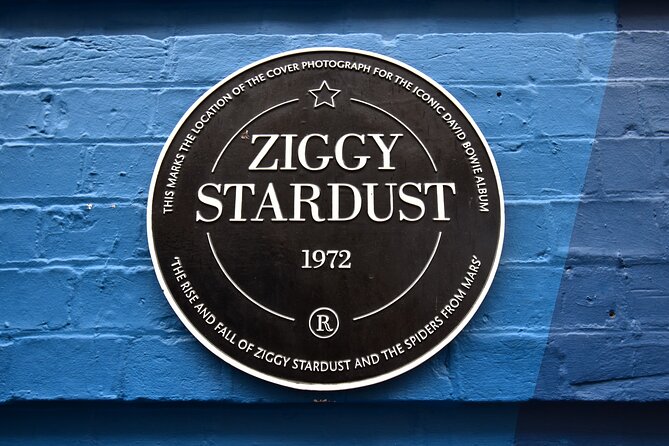
At Heddon Street, you’ll visit the legendary location tied to the front and back cover of The Rise and Fall of Ziggy Stardust and the Spiders From Mars. The tour even sets the scene with the context of a cold and wet January night in January 1972. Then it gives you an experience lever: you’ll have a chance to recreate the iconic photos. For photographers or just people who enjoy stepping into pop-culture moments, this is a rare hands-on stop on a walking tour.
Then you shift to 3 Savile Row, a must for Beatles fans. The guide points out the building where the legendary rooftop concert took place in 1969, a moment shown in Let It Be and Get Back. You’ll also hear that this site was the headquarters of Apple and a magnet for Beatles fans worldwide. And yes, it’s tied to the Beatles’ final performance.
This is a great place to ask questions, because the story invites follow-ups: why a rooftop, what Apple meant as a business move, and how the city’s visibility helped shape the myth.


Cordings Ltd and Eric Clapton’s Clothes-Shop to Boardroom Arc
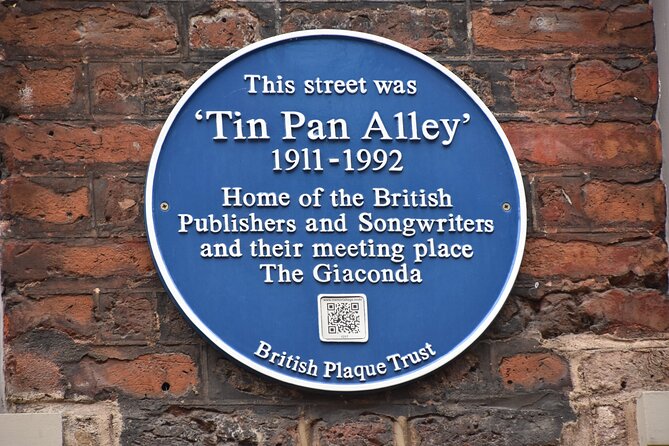
Cordings Ltd is a quick stop but a satisfying one because it shows rock star life isn’t only about stages and studios. The tour traces Eric Clapton’s connection to the shop: as a teenager, he window shopped and dreamed of affording the clothes. Years later, he became a regular customer and eventually invested in the business and became its design director.
This matters because it adds a real-world detail to the idea of influence. Celebrities don’t just wear fashion—they can help steer it. And you get to connect the music spotlight to the economics behind the scenes.
You’ll spend roughly 10 minutes here, so keep your questions simple and focused.
Hotel Café Royal: Bowie Retiring Ziggy Stardust, Then Turning It Into a Bar
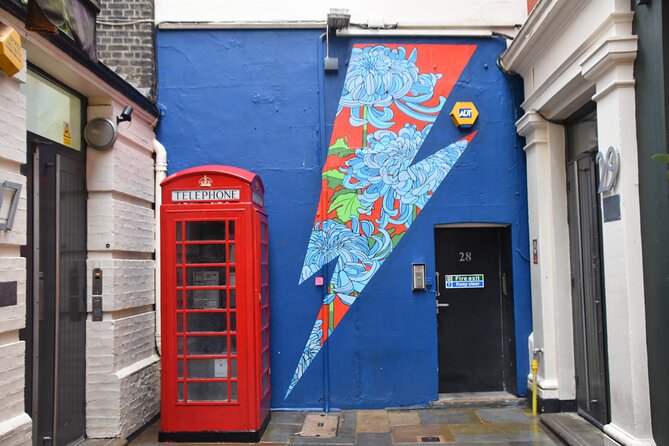
At Hotel Café Royal, the tour ties together history and a very specific cultural moment. The building began as a cafe in 1865, and in 1973 David Bowie retired the character of Ziggy Stardust during an expensive, star-studded bash.
The story doesn’t end at the event. The tour also connects it to how the hotel inspired a Ziggy Stardust cocktail bar inside the property. That’s a useful reminder for you as you walk: London pop culture often leaves traces that survive long after the music moves on.
This is another stop that works for two types of people: hardcore Bowie fans, and anyone who likes how a city keeps recycling its own legends into new experiences.
Wardour Street’s Marquee Club and the Keith Moon Plaque Detail
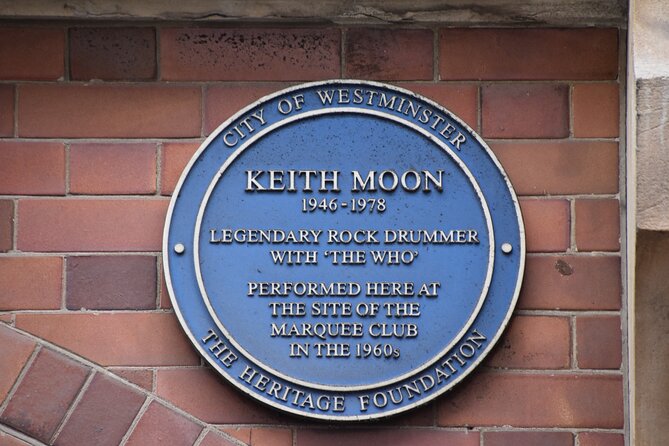
Wardour Street is where the tour leans into venue lore. The Marquee Club was a major music venue here, open for 26 years, and it helped launch early careers of The Who and David Bowie. As you’re outside, you’ll learn why it mattered and what to look for—there’s also a dusty plaque to Keith Moon over the door.
That last detail might sound tiny, but it’s exactly the kind of London specificity that makes a walking tour worth your time. It gives you something to notice beyond “here’s a building.” It turns a doorway into a clue.
Expect about 5 minutes here, but you’ll likely want those minutes because the Marquee story pulls in a lot of names and context.
Sounds of the Universe and Soho Pub Rehearsals: When the Stones Started
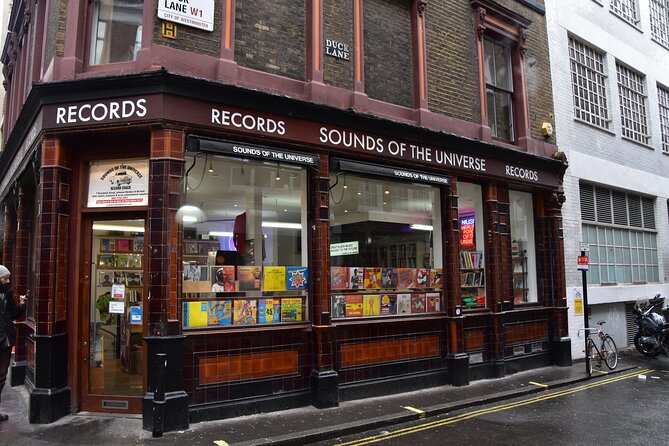
This part of Soho gets extra fun because it connects record culture to early rehearsal life. At Sounds Of The Universe, the tour explains that the record shop occupies the site of the old Bricklayers Arms pub. That’s where the Rolling Stones had their very first rehearsal.
If you like how history lives in everyday places—like modern shops sitting on older stages—this is a strong stop. You’re seeing an everyday address that once helped a band practice its sound before it became famous.
Again, it’s about 15 minutes, so it’s enough time to absorb the story without losing momentum.
The Ship Pub, Trident Studios, and Soho Square’s McCartney Publishing Power
Next comes three stops that form a mini-theme: music nightlife, studio work, and publishing money.
At The Ship pub, the tour explains that when the Marquee Club lost its alcohol licence, music fans chose to drink here. Singers and musicians followed. You’ll learn about the offstage atmosphere and why the Ship became part of the music ecosystem.
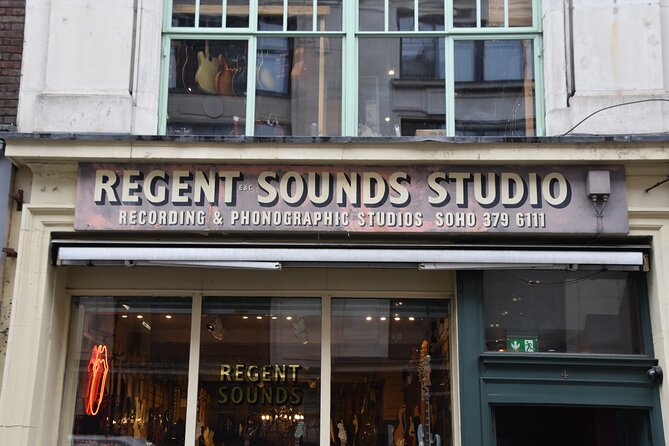
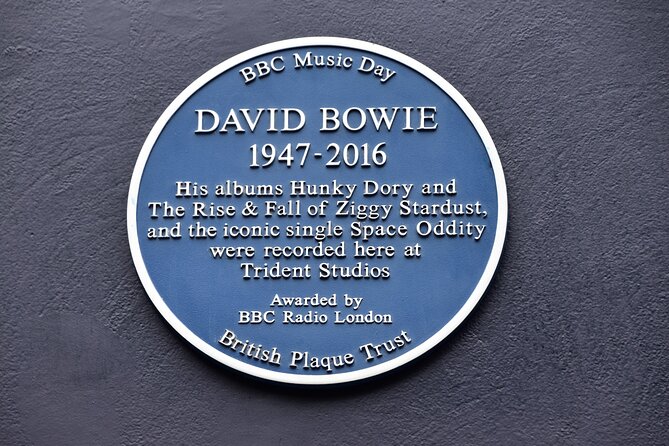
Then you get the studio story with the Trident Studios plaque tucked away in a tiny alley near The Ship. The tour notes Trident Studios was active between 1968 and 1981 and was used by artists including David Bowie, The Beatles, Queen, Elton John, Rolling Stones, and Black Sabbath.
Finally, Soho Square shifts the focus from art to business. You’ll visit MPL – McCartney Publishing Limited, tied to Paul McCartney’s music empire. The tour explains that McCartney became a billionaire partly due to his publishing business, and you’ll learn how he got there.
This cluster is excellent if you want more than band names. It shows how bands succeed through studios, venues, and contracts. London isn’t only where people perform—it’s where people get paid and protected.
Ronnie Scott’s Jazz Club and ODEON Covent Garden’s Brian Epstein Plans
Then you move into two culture anchors with a broader music timeline.
At Ronnie Scott’s Jazz Club, you’ll learn about the move to Frith Street in 1965. The tour includes names of performers who played there and highlights a surprise performance by Lady GaGa, plus the final performance of Jimi Hendrix. There’s a note that admission is not included for this stop, so if you want to go inside, plan for tickets separately.
ODEON Covent Garden is the other stop with star-manager DNA. The tour explains that in 1966, Brian Epstein bought a theatre and had grand plans for it. You’ll learn what he did with the venue and how the 60s era is tied to the artists that played there. Admission is also not included for this stop.
This pair of stops gives you contrast: rock ’n’ roll is the headline, but London’s music scene has jazz roots and show-business infrastructure. Even if you’re mainly chasing Beatles/Bowie/Stones, these stops broaden your sense of how the industry operated.
Foyles Bookshop’s Sex Pistols First Gig and Denmark Street’s Music-Deal Wall
Two final stops close the story with punk energy and commercial music beginnings.
At Foyles Bookshop, the tour links the building’s past to punk origins. Foyles was once a university building, and the tour shares that the Sex Pistols’ first gig was here. You’ll also learn about Malcolm McLaren and how he initially booked the band only for student gigs, plus how Steve Jones got their guitars from there. It’s a small place with outsized origin power.
Then the walk ends on Denmark Street, often considered central to British 20th-century music. The tour connects the street to multiple milestones: the Beatles’ first music publishing deal, where The Rolling Stones recorded their first album, and where the Sex Pistols crashed, rehearsed, and where John Lydon drew rude pictures on a wall that are apparently visible to this day. You’ll also hear how Denmark Street mattered to early days of Elton John and David Bowie.
This finish is satisfying because it brings you back to the business and the everyday infrastructure: publishing deals, rehearsal spaces, guitar shops, and the street that kept feeding musicians.
Price and Value: Is $205.67 Worth It for Up to 15?
Here’s the simple math. The tour costs $205.67 per group, up to 15 people, and it runs about three hours. That means the price works best when you’re splitting costs with family or friends, or when you’re a small group that wants a private guide without the usual private-tour markup per person.
Is it worth it for just two people? It can be, especially if you care about music history tied to addresses. But if you’re traveling solo and you’re mainly looking for a casual stroll, you may decide the premium for a private group is more than you need.
Where it shines is this: the tour includes guidance for all those stops, and many sites are free to view from the street. The only times you might pay extra are places where the tour notes admission not included (like Ronnie Scott’s and ODEON Covent Garden). If you’re okay with seeing the exteriors and focusing on the stories, you can keep costs under control.
You’ll also be walking through an area where you can easily spend more money on transport, snacks, and spontaneous indoor stops. So having a guide route you efficiently is a real value lever.
Who This Tour Fits Best (and Who Might Want Something Different)
This tour fits you if you’re one of these people:
- You love rock ’n’ roll and want it tied to exact London stops, not vague stories.
- You want a private experience and plan to bring a music-loving group (up to 15).
- You enjoy short, story-heavy walks with frequent photo moments.
You might want a different format if:
- You expect a full-on museum experience with lots of interiors. This is mostly a street tour with outside viewing.
- You’re hoping every stop includes entry tickets. A few do list admission as not included.
If you’re visiting London for the first time and you want a high-impact way to understand Soho and the wider music machine, this tour is a strong choice.
Should You Book Private Rock ’n’ Roll Music Tour of Central London?
I’d book it if your idea of a great London day is walking with a guide who can turn famous names—Beatles, Bowie, Rolling Stones—into real locations and real context. The route is concentrated, the stories are specific, and the private setup makes it easy to steer the conversation.
If your budget is tight and you don’t plan to share with others, compare it to alternatives. But if you like knowing where things happened, and you’d rather spend three hours absorbing stories than hours hopping on your own, this one earns its cost.
FAQ
How long is the private rock ’n’ roll music tour?
The tour is about 3 hours.
How much does the tour cost?
It costs $205.67 per group (up to 15 people).
Is the tour private?
Yes. It’s a private tour for your group only.
Where does the tour start and where does it end?
It starts outside the London Palladium at 8 Argyll St, London W1F 7TF, UK, and it finishes on Denmark Street (Denmark St, London WC2H).
What language is the tour offered in?
The tour is offered in English.
Do I get a mobile ticket?
Yes, the tour provides a mobile ticket.
Is admission included at every stop?
Most stops are listed as free, but some stops note admission tickets not included (including Ronnie Scott’s Jazz Club, ODEON Covent Garden, and Denmark Street).
What fitness level do I need?
You should have a moderate physical fitness level.
Is the meeting point near public transportation?
Yes, it is near public transportation.
Can I cancel for a full refund?
You can cancel for free. For a full refund, you must cancel at least 24 hours before the experience’s start time.
Are service animals allowed?
Service animals are allowed.