REVIEW · LONDON
Private Tour : 3 Amazing London Art Galleries 1 tour 1 guide
Book on Viator →Operated by Top Sights Tours Group LLC · Bookable on Viator
London art feels different with a guide.
This private 3-hour tour is built for people who want the stories behind major works and the practical know-how to actually look at them. You get a private guide for three stops, including the National Gallery’s masterpieces and Tate Modern’s famous Turbine Hall, all with admission tickets included. I especially like how the guide helps you connect paintings across centuries, and how you can ask questions instead of relying on audio. One thing to keep in mind: you’re responsible for getting between galleries, so you’ll want an Oyster/Travelcard or a debit/card ready.
The pace is friendly. Each museum gets around an hour, which is long enough to see key rooms without turning the visit into a sprint. It also works well for mornings or afternoons, depending on what you want your day to feel like.
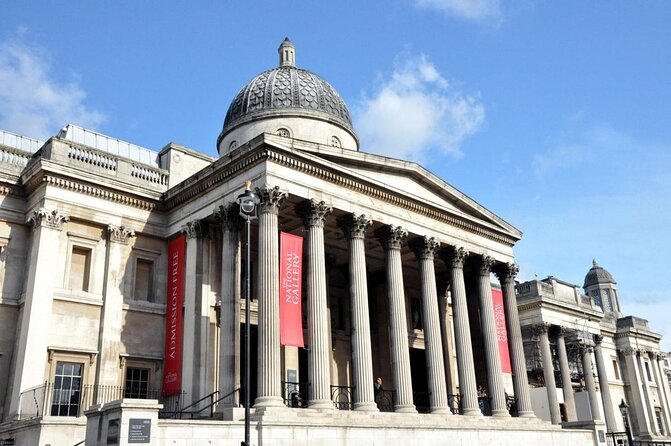
The starting point is easy to reach. You meet at the National Gallery in Trafalgar Square, a classic central spot with plenty of transport options.
In This Review
- Key things to know before you go
- A Private Guide That Turns Looking Into Understanding
- National Gallery: Da Vinci, Rembrandt, Van Gogh, and the Botticelli Thread
- National Portrait Gallery: Faces, Power, and 500 Years of Personal Stories
- Tate Modern Turbine Hall: Modern Masters in One Big Space
- Getting From Stop to Stop: Central Means Easy Transport, Not Free Transit
- Mobile Tickets, Real-Time Updates, and a Smooth Flow
- Price and Value: What $307.96 Per Group Really Buys
- Who Should Book This Art Tour (and Who Might Not)
- Should You Book It?
- FAQ
- How long is the tour?
- How much does the private tour cost, and what group size is it for?
- Which museums are included?
- Are museum admission tickets included?
- Where does the tour start and end?
- Is the tour wheelchair accessible?
- Can I cancel and get a full refund?
Key things to know before you go
- Three top museums, one coherent art story: National Gallery, National Portrait Gallery, and Tate Modern in one streamlined route.
- Ask questions all day, not just when you find the mic: no audio guide handcuffs; your guide can steer the conversation.
- Museum time is planned for real looking: about an hour per stop means you can absorb details instead of ticking boxes.
- Admission is included at each museum stop so you can focus on the art, not the ticket math.
- Wheelchair users can join at all three locations.
A Private Guide That Turns Looking Into Understanding
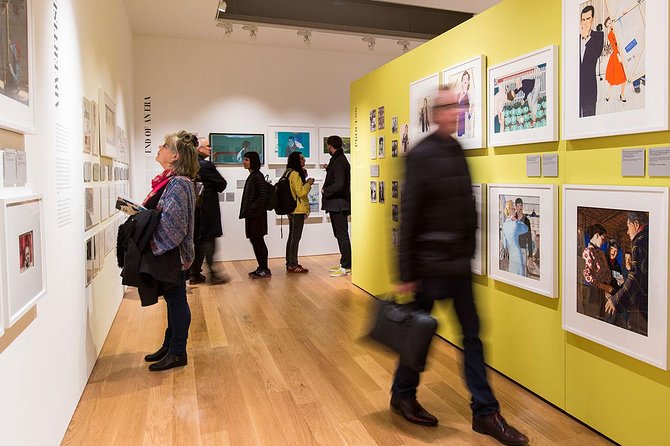
When you walk into London’s biggest art museums, it’s easy to stare at walls and still feel like you missed the point. This tour fixes that with a real human guide standing beside you. Instead of telling you what to think, the guide gives you ways to notice what matters—composition, setting, symbolism, and why a painting was made the way it was.
I like this format because it respects your pace. If you want to pause at a Leonardo da Vinci work and ask why something is portrayed a certain way, you can. If you’re more curious about portraits and power, the guide can pivot. That flexibility is the big advantage of a private tour, and it shows in how people talk about the experience’s communication and vivid descriptions.
It’s also a smart way to use limited vacation time. In 3 hours, you hit three institutions that can each swallow half a day on their own. You’re not just seeing famous names; you’re getting a guided path through the collections.
One practical note: this isn’t a door-to-door car tour. Getting between stops uses public transport or taxis at your expense, so you’ll want a card system ready.
You can also read our reviews of more guided tours in London



National Gallery: Da Vinci, Rembrandt, Van Gogh, and the Botticelli Thread
Your first museum is the National Gallery at Trafalgar Square. It’s an ideal opener because it’s big on the kind of art that most people recognize instantly, yet it’s also full of surprises if you know what to look for.
Expect the guide to focus on works by major masters—this stop includes the National Gallery’s paintings by da Vinci, Rembrandt, and Van Gogh, plus highlights connected to artists like Botticelli. The tour style here is story-forward. You’re not simply standing in front of a painting; you’re learning what the painting is saying, who the subjects are, and how the image was constructed.
Why that matters: the National Gallery can feel intimidating because you’ll see hundreds of works. With a guide, you’re more likely to understand why one painting is a turning point or how an artist’s choices shape what you feel. It also helps if you’ve seen famous paintings in books or online; seeing them in person becomes more than a photo moment.
The potential drawback is simple: one hour goes quickly in the National Gallery. If you’re the type who wants a long, unbroken wander—every side gallery, every quiet corner—this stop might feel structured. But for most people, that’s the point of a 3-hour plan.
National Portrait Gallery: Faces, Power, and 500 Years of Personal Stories
Next up is the National Portrait Gallery, and it’s a different kind of museum energy. Instead of walking through landscapes and mythological scenes, you’re tracking people—faces, identities, and roles in history.
Here, the guide frames the collection as a timeline of personalities, from the late Middle Ages to the present day. You’ll see portraits by artists such as Holbein to Hockney, with a special emphasis on the British Monarchy and portraits going back about 500 years. That means you get a sense of how royal imagery was used—how authority was performed through paint.
What makes this stop especially valuable is that portraits are naturally about storytelling. Even if you’re not an expert in art, your brain understands a face: who it is, what they might represent, and why they were portrayed in a particular style. With the guide beside you, those connections become clearer—who commissioned what, how the sitter is presented, and what details reveal about status and personality.
It’s also a great stop if you’re curious about history but don’t want a lecture. The paintings carry the lesson. You’ll come away with a better sense of how art documents identity over time, not just how it looks.
Possible consideration: if portraits don’t usually grab you, you might feel a little more restless here than at the National Gallery or Tate Modern. Still, the guided approach helps you find meaning fast instead of feeling stuck searching for it.
Tate Modern Turbine Hall: Modern Masters in One Big Space
Your third stop is Tate Modern, in the old Bankside Power Station building. The moment you enter the Turbine Hall, you understand why this location matters. It’s huge—long, open, and designed for large-scale modern art experiences.
This is where the tour pivots from historic painting to modern and contemporary art. You’ll walk through the Turbine Hall and see works by artists listed across the modern canon, including Cézanne, Bonnard, Matisse, Picasso, Rothko, Dalí, Pollock, Warhol, and Bourgeois.
The value of the guided format here is that modern art can feel slippery if you don’t have a set of starting questions. Your guide can help you read the work through the lens of form, emotion, and technique—why color is used this way, how shapes interact, or what kind of idea the artist is pushing. The result is less uncertainty and more appreciation for what you’re actually seeing.
Also, this stop works well as a finale. You end your tour with a sense of range: from classic masters to portraits to modern art all in one flowing arc. It’s a smart way to leave London museums feeling broader, not just busier.
One practical caution: Tate Modern is popular. Even during your guided time window, you may still need to navigate foot traffic around major artworks and high-demand zones.
Getting From Stop to Stop: Central Means Easy Transport, Not Free Transit
The tour starts at the National Gallery, Trafalgar Square (WC2N 5DN), and it ends back at the meeting point. Getting there is straightforward because this is a central location. You can use the London Tube, bus, or taxi to reach Trafalgar Square.
Between galleries, you’ll need to handle transport yourself. The tour doesn’t include travel between stops, so plan to use an Oyster card, Travelcard, or debit/card. The simplest approach is to make sure you have enough money loaded before you start. If you’re using a phone payment or bank card, double-check it works for contactless transit in London.
Why this matters for your enjoyment: it prevents that awkward scramble mid-tour. When you know how you’ll pay and what transit option you’ll use, you can stay focused on the museums instead of the logistics.
A small timing tip: because the tour is roughly 3 hours, your travel segments can’t stretch too long. Pick a transit option that’s reliable, not just cheap. This tour is about momentum.
You can also read our reviews of more private tours in London






Mobile Tickets, Real-Time Updates, and a Smooth Flow
This experience uses mobile ticketing, which is handy for quick entry and fewer paper hassles. You also get pre-tour updates from your guide, which helps you avoid the common London problem of arriving, looking around, and not knowing what comes next.
I like this because it reduces anxiety and keeps the tour feeling calm. When you know what to expect—where you’ll start inside the museum, how the guide plans to order the works—you can relax and enjoy the art.
There’s also a practical vibe to the tour structure: each stop is about an hour, and the guide’s job is to keep you moving at a pace that still leaves room for questions. That combination of guided direction and personal Q&A is exactly what makes a private tour worth paying for.
Price and Value: What $307.96 Per Group Really Buys
The price is $307.96 per group for up to 4 people, for an approximately 3-hour private tour. If you have a full group of four, that’s around $77 per person—and admission to each museum stop is included.
Here’s why the value can be strong:
- You’re paying for one guide handling three major museums in a short window.
- Admission tickets are included, so you’re not adding extra costs on top.
- It’s private, so you’re not competing with a large crowd for attention or using earbuds to guess what you missed.
Is it the cheapest way to see these museums? No. But it’s one of the smarter ways to see them with meaning, especially if you’re traveling with family members who want answers and not just a list of famous paintings.
If you’re coming solo, the cost per person is higher. In that case, it becomes more about whether you want a guided art narrative over a self-guided museum marathon. If you’re the kind of person who enjoys asking why a painter made certain choices, the private guide tends to pay off quickly.
Who Should Book This Art Tour (and Who Might Not)
This tour is a great fit if you want:
- a private guide who can explain art in plain language
- a mix of classic painting and portrait storytelling, plus modern art in the Turbine Hall
- a schedule that doesn’t eat your whole day
- help choosing what to focus on when you’re surrounded by masterpieces
It might be less ideal if you prefer:
- long free-roaming museum time without structure
- a slower pace that allows detailed visits across many additional galleries
- a tour style that doesn’t depend on walking between key areas and asking questions
Also, it’s useful if you’re curious about multiple art worlds in one go. The National Gallery gives you the canon of painting, the Portrait Gallery gives you identity and power through faces, and Tate Modern gives you modern experiments in one dramatic space.
One more plus: the experience notes that each gallery is accessible to wheelchair users, which is not always true across London’s museum scene.
Should You Book It?
Yes, if you want a fast, high-impact art plan with a guide who can connect the dots between works. This is especially worth it for groups of up to four, because the pricing spreads nicely while you still get a truly private experience.
Book it if you like paintings with context—why the subject is shown that way, what details reveal, and how the art fits into larger ideas. And if you’re the type who finds museums overwhelming, this tour helps you aim your attention so you leave feeling like you actually understood more than you expected.
Don’t book it if you’re hoping for a long, wandering museum day with no structure. This is guided and focused by design, and that’s the trade-off.
FAQ
How long is the tour?
The tour is about 3 hours.
How much does the private tour cost, and what group size is it for?
It costs $307.96 per group and is for up to 4 people.
Which museums are included?
You visit the National Gallery, the National Portrait Gallery, and Tate Modern (in the Turbine Hall area).
Are museum admission tickets included?
Yes. Admission tickets are included for each of the three stops.
Where does the tour start and end?
It starts at the National Gallery, Trafalgar Square, London WC2N 5DN, UK, and ends back at the same meeting point.
Is the tour wheelchair accessible?
The tour notes that each gallery is accessible to wheelchair users.
Can I cancel and get a full refund?
Yes. You can cancel for free up to 24 hours in advance for a full refund.