REVIEW · LONDON
Roman Ruins to Blitz Bombings: London’s Fiery History
Book on GetYourGuide →Operated by Historic London Tours · Bookable on GetYourGuide
London turns every corner into a timeline. This 2-hour walking tour threads together Roman Londinium, the Tower’s darker legends, and later London’s fire-and-war survival. You’ll love how much ground it covers in a short distance, and how the guide mixes clear explanations with stories you’ll remember.
My only caution: it’s a steady stroll with about 2.5 miles total, so comfortable shoes matter. Also, it focuses on outdoor sights, so you won’t be doing museum entrances along the way.
In This Review
- Key moments worth your attention
- Tower Hill to Blackfriars: the two-hour walking route that makes history make sense
- Roman Wall of Londinium: seeing Rome without leaving the City of London
- Tower of London: the city’s dark center, explained with real bite
- St Dunstan in the East and London Stone: small stops with big symbolism
- The Monument to the Great Fire: fire that reshaped the City
- Bank of England and the vaults story: the City’s power, told your way
- Guildhall and Lord Mayor: where civic power becomes personal
- St Paul’s Cathedral and Christopher Wren: the story behind the skyline
- Ye Olde Cheshire Cheese: finishing with a bit of London atmosphere
- What the guides get right (and why it matters on a short tour)
- Value check: is $26 a good deal for a 2-hour City of London history walk?
- Who should book this Roman Ruins to Blitz Bombings tour?
- Should you book it?
- FAQ
- How long is the walking tour?
- What’s the walking distance?
- Where does the tour start and how do I find my guide?
- Where does the tour end?
- Is museum entrance included?
- How many people are on the tour?
- What’s the price?
- What should I bring?
- Is cancellation available?
Key moments worth your attention
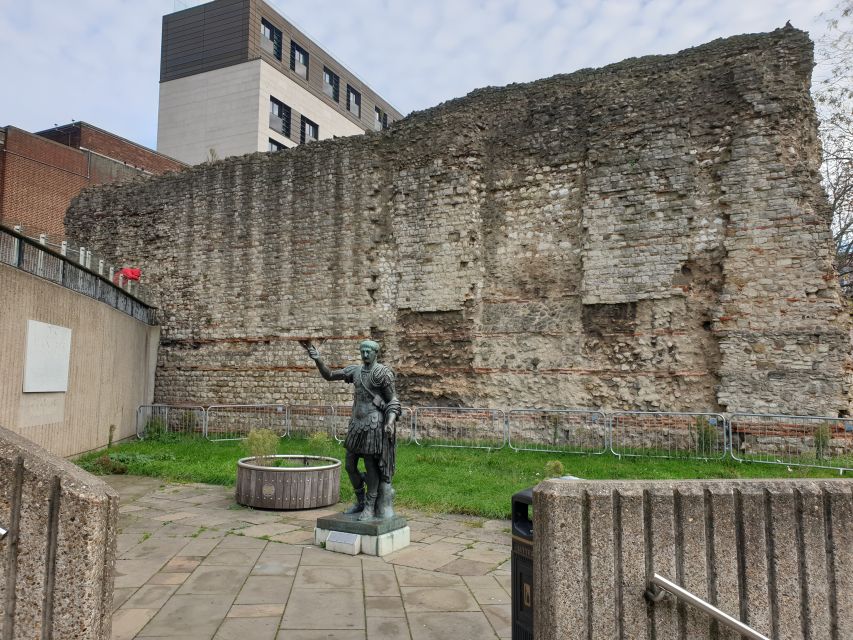
- Roman remains you can still see in the City of London
- A tight route with big-name landmarks packed into two hours
- Tower of London stories that lean into the creepy and bloody
- London’s survival through fire and war, from the Great Fire to Blitz-era tales
- A guide style that answers questions well, with clear diction and humor
Tower Hill to Blackfriars: the two-hour walking route that makes history make sense
This tour is built for people who want the City of London in a hurry, without turning it into a blur. It starts outside Tower Hill Station, where you’ll spot your guide holding an Historic London Tours sign near the base of the steps leading up to the sundial. The walk ends near Blackfriars Station and covers about 2.5 miles in roughly two hours.
What I like is the pacing. It’s a short stop at each key point, so you get enough context to connect the dots, but you’re not stuck in one place for ages. And because ticket sales are limited to about 15 attendees, it feels more like a conversation on foot than a large group march.
One practical note: this is a walking tour with no museum entry included. You’re seeing what you can see from streets, church gardens, and major landmarks, then hearing how the pieces fit into one long London story.
You can also read our reviews of more historical tours in London


Roman Wall of Londinium: seeing Rome without leaving the City of London
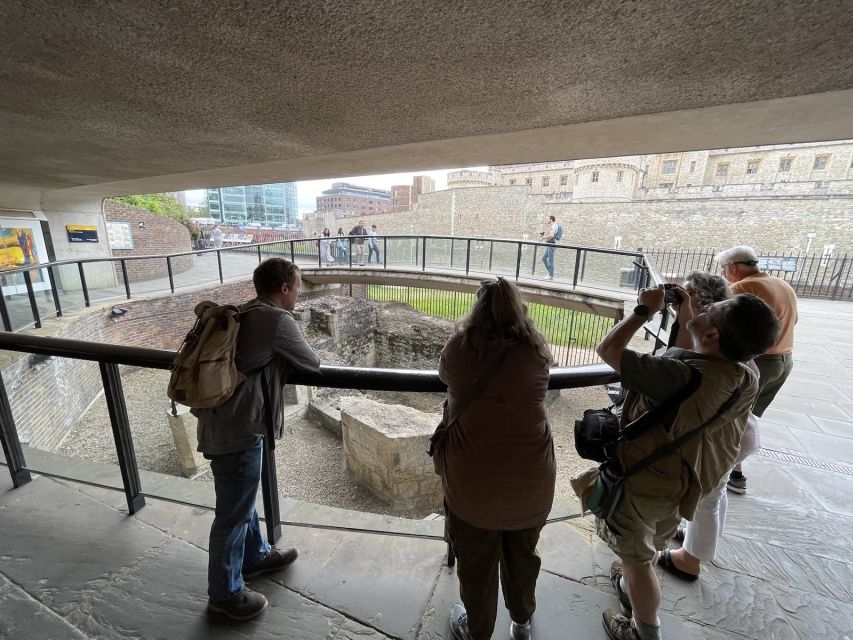
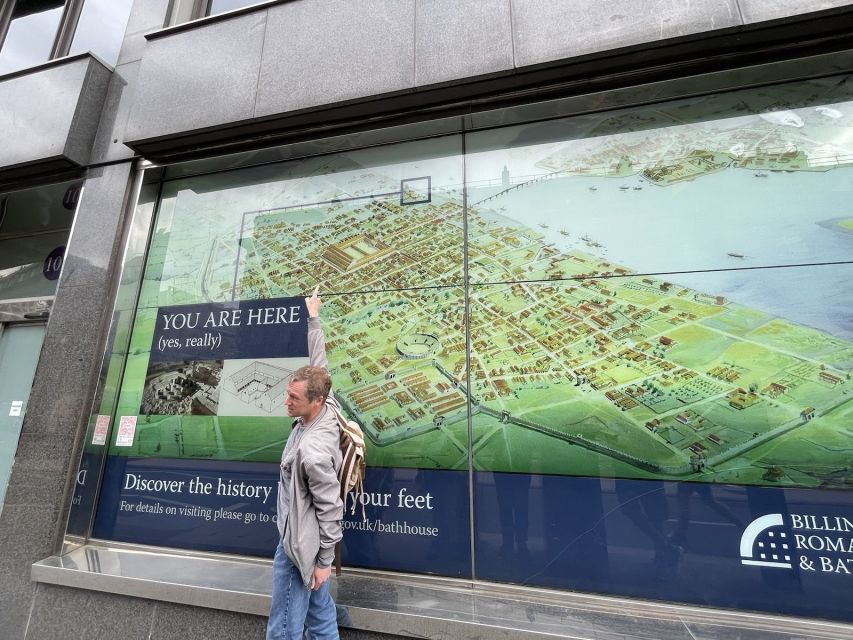
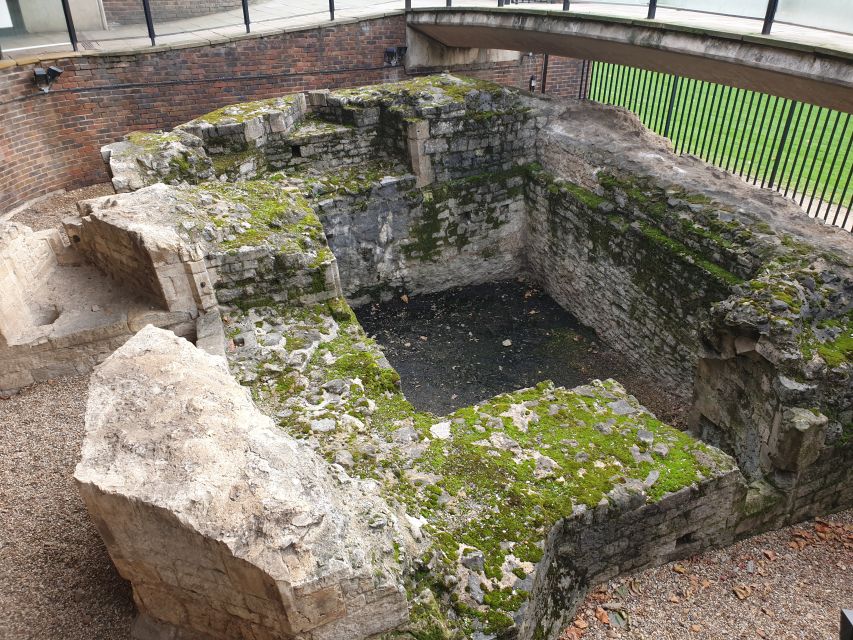
The tour kicks off with the Roman Wall of Londinium, which is a smart way to start because it grounds the whole trip. You’re not just hearing Roman facts in the abstract—you’re getting a physical reminder that London’s oldest layers didn’t vanish.
This is also where the tour’s theme really clicks. The City of London is often treated like a modern business district from a distance, but up close it’s a place where later centuries built around older ones. You’ll hear how the City was founded about two thousand years ago, and you’ll learn where Roman ruins still show up today.
If you like history that you can point to—stone, streets, and recognizable corners—this opening makes the rest of the tour easier to follow. It sets the tone: London didn’t just change; it kept getting rewritten over itself.
Tower of London: the city’s dark center, explained with real bite
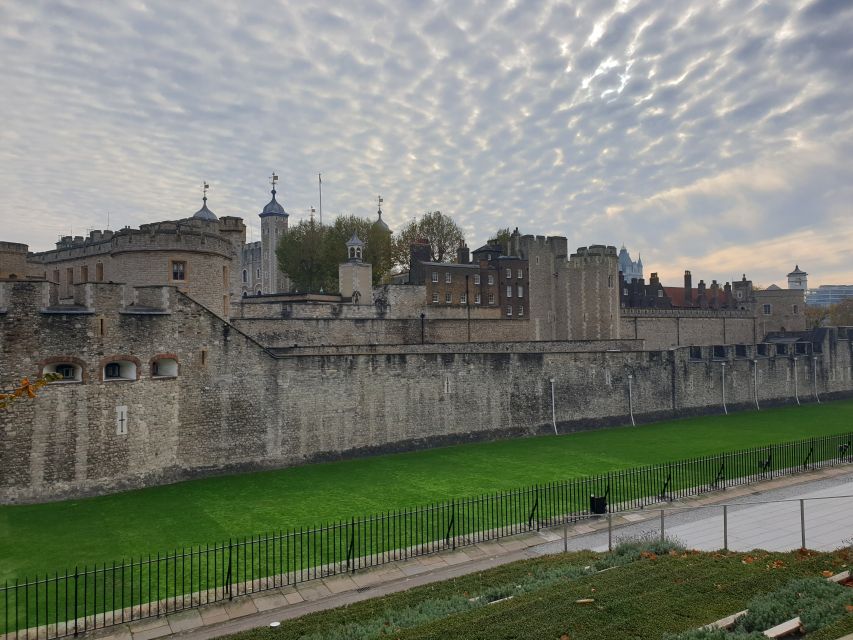
Next comes the Tower of London, and the tour doesn’t treat it like a polite postcard stop. The story leans into the sinister, bloody past, and it’s one of those places where you can feel why rulers needed control—and fear.
This is also where you’ll hear names that pull the Tower’s legacy into later storytelling: Anne Boleyn’s ghost is part of the mix, along with the wider sweep of who shaped England’s power. You’ll also get the sense that London’s major sites aren’t isolated. They’re connected by politics, belief, and punishment—sometimes in ways that still echo in popular culture.
One reason this stop works so well on a short walking tour: it’s memorable. Even if you only catch a few details at street level, you leave with an understanding of why the Tower has stayed in the spotlight for centuries.
St Dunstan in the East and London Stone: small stops with big symbolism
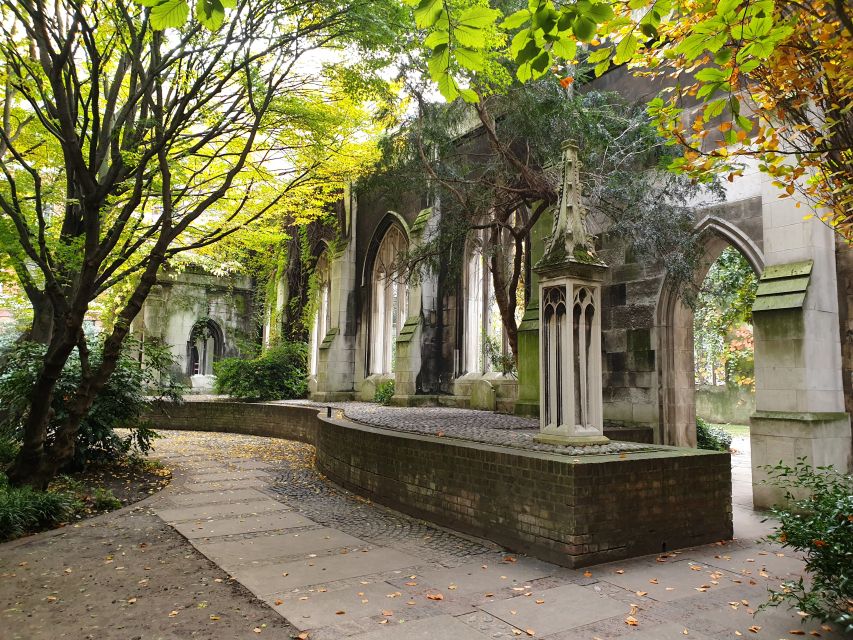
Between headline landmarks, the tour takes you to quieter, more specific places: Saint Dunstan in the East Church Garden and London Stone (the remaining part). These are the stops that reward people who like “the evidence is right here” history.
Saint Dunstan in the East is brief in time, but it helps balance the darker Tower scenes. It gives you a sense of everyday continuity—church space, garden space, a pocket of calm—while still staying inside London’s long timeline.
Then there’s London Stone, which is short and dramatic in meaning: it’s a surviving fragment, the kind of object that makes you think, someone cared enough to keep it. The tour uses moments like this to show how the City’s identity didn’t rely only on palaces and executions. It also lived in smaller anchors that people referenced and remembered.
The Monument to the Great Fire: fire that reshaped the City
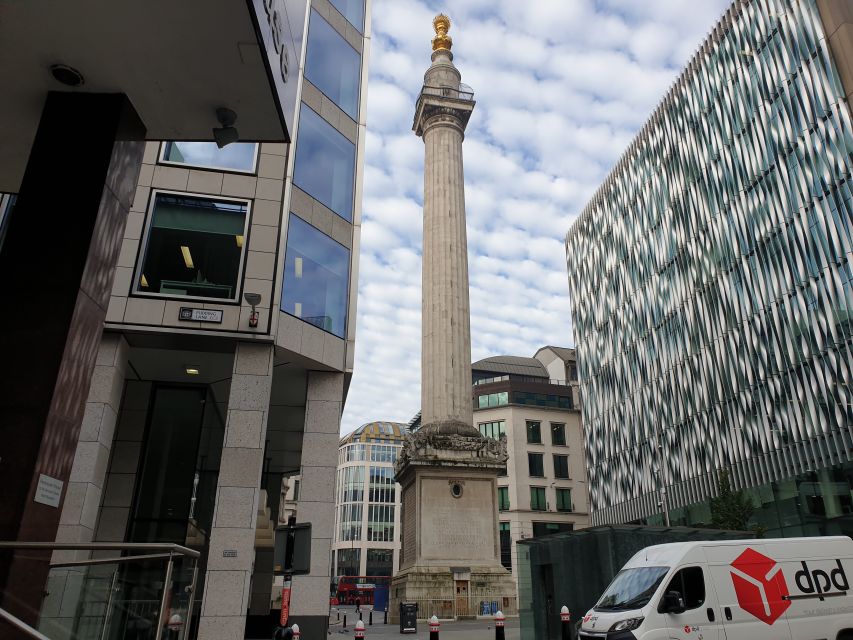
The route also includes the Monument to the Great Fire of London, and this stop is where the tour’s “survival through fire and war” message becomes more than a tagline. You’ll hear how London had to recover, rebuild, and reorganize after devastating destruction.
Even though you’re standing outdoors and moving through quickly, the guide’s job here is to connect the monument to what came next: how the City’s layout, power, and priorities kept shifting after disaster. That context helps you see the monument as a marker of change, not just a notable structure.
If you’re the kind of traveler who likes a story arc, this is a key turning point. The tour shifts from ancient and medieval layers into a London that’s constantly being damaged and rebuilt.






Bank of England and the vaults story: the City’s power, told your way
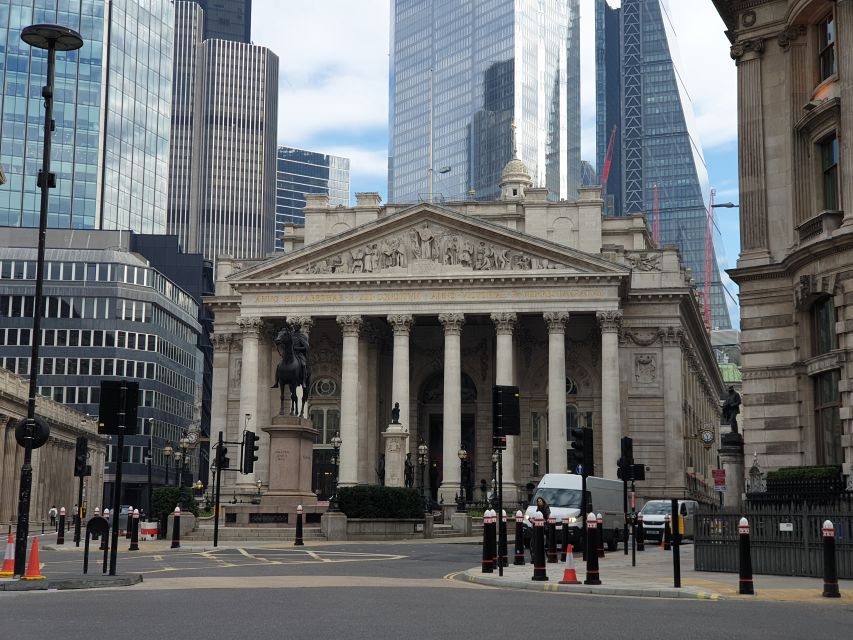
One of the highlights is the Bank of England, where the tour includes a story about the easiest way to tunnel into the Bank of England’s vaults. It’s delivered as part of the show-and-tell approach the guide uses throughout—half explanation, half narrative.
The practical reality: this is still an outdoor walking tour. So you’re not going inside anything, and you’re not doing a museum-style visit. What you are doing is learning how London’s institutions grew into their roles, and how the City’s power isn’t only in palaces like the Tower—it’s also in finance and control.
This stop also works well because it changes your perspective. Many visitors see the Bank of England as modern infrastructure. With the tour’s framing, you’ll start noticing the City as a system that has been running on history, fear, and reinvention for a very long time.
Guildhall and Lord Mayor: where civic power becomes personal
You’ll also stop at Guildhall, London, and this is tied to a detail that stands out in the tour’s overall story: the eight-century-old position of Lord Mayor. That’s exactly the kind of information that makes a place feel less like a name on a map and more like a living tradition.
Guildhall is the sort of location that helps explain governance in a grounded way. It’s where rules, authority, and public roles meet, and you’ll get a clearer picture of how power moved through the City across centuries.
This is also a good moment to slow down mentally. The tour is fast on the ground, but the stories give you a chance to reflect on how civic leadership shaped what London became.
St Paul’s Cathedral and Christopher Wren: the story behind the skyline
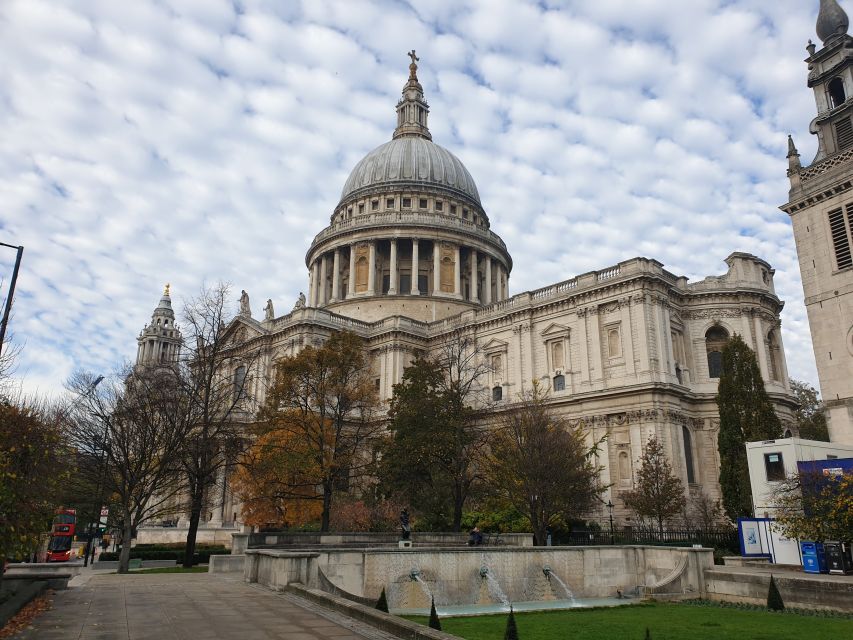
Later, you reach St Paul’s Cathedral, and the tour folds in Christopher Wren while you’re there. Even without museum access, it’s a strong capstone because St Paul’s is the kind of landmark people recognize instantly, but many don’t understand as part of London’s chain of rebuilding and reinvention.
The guide’s approach here is important. You’re not just getting a quick name drop—you’re getting the role the person played in the wider London story the tour has been building toward. It makes the cathedral feel like a chapter, not just a stop.
If you like seeing how one famous figure connects to multiple eras, this part helps. It also gives your eyes something to do while you listen, which makes the whole two hours feel easier.
Ye Olde Cheshire Cheese: finishing with a bit of London atmosphere
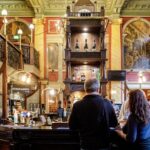
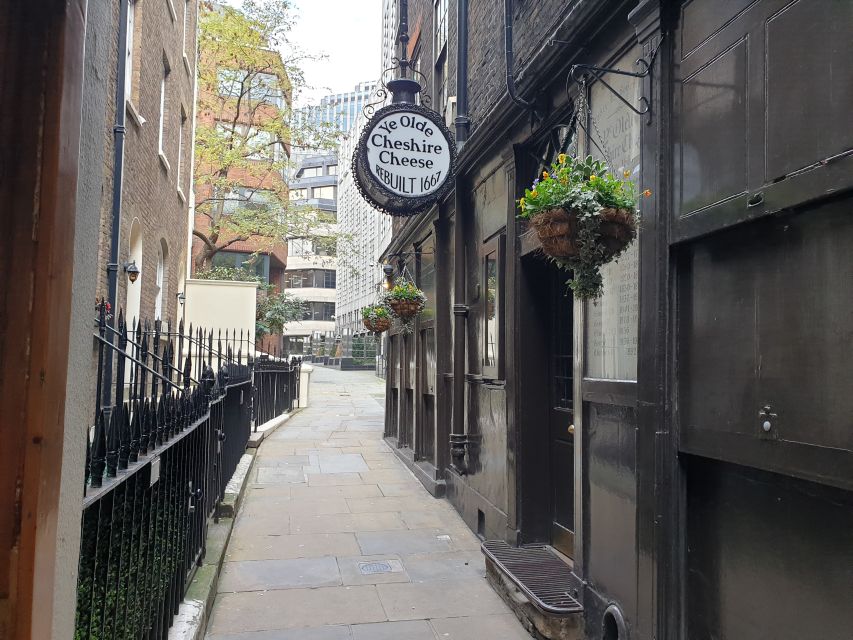
The tour ends at Ye Olde Cheshire Cheese, a classic place to stop after a walking circuit like this. It’s the right kind of final punctuation: somewhere you can sit down, refuel, and look back at what you’ve just learned without rushing to the next activity.
This ending location is also practical. Since the tour finishes near Blackfriars, you can keep moving afterward or simply take a breather and enjoy the sense that London’s past doesn’t require a ticketed museum.
What the guides get right (and why it matters on a short tour)
The biggest strength is the way the guide communicates. The feedback on guides like Tom is consistent: clear delivery, strong command of details, and a habit of keeping the pacing readable. One review highlighted that Tom doesn’t overload you even though his knowledge is extensive, and that his diction is easy to follow without shouting.
You’ll also want that question-friendly atmosphere. A good walking tour lives or dies on dialogue, not monologue, and here the guide is set up to answer questions and keep things moving. That mix of trivia-flavored stories and harder historical points is the exact balance that makes a tour like this work in only two hours.
Value check: is $26 a good deal for a 2-hour City of London history walk?
At $26 per person for about two hours and roughly 2.5 miles, you’re paying for a guided interpretation, not entry fees. That’s important because the tour doesn’t include museum entrances, so you’re not paying extra to get into buildings.
Instead, you’re paying for:
- A guided route that hits major landmarks in the City of London
- Roman, medieval, and modern war-era storytelling in one continuous thread
- A small-group format capped around 15 attendees
- A guide who communicates clearly and stays responsive
If you’re planning multiple stops anyway, this tour can function like an orientation layer. It helps you see what you’ll enjoy later—whether that’s the Tower again, a churchyard, or a monument you thought you already understood.
If you only want to stand and look, and you’re not interested in explanations, it might feel like too much story for too little time. But if you like walking and learning with a plan, the value holds up.
Who should book this Roman Ruins to Blitz Bombings tour?
This is a great fit if:
- You want the City of London’s layers without spending all day
- You’re drawn to the Tower of London, the Great Fire, and wartime-era storytelling
- You like your history told as connected events, not isolated facts
- You appreciate small-group walking tours with lots of chances to ask questions
It’s less ideal if:
- You hate walking or aren’t comfortable with about 2.5 miles total
- You expect museum interiors, because this tour is focused on outdoor sights
Should you book it?
Yes, if you want a smart, story-driven way to understand London’s core. The route is tight, the group size stays small, and the guide’s style is built for clarity. You’ll walk away with a mental map of Rome to the Tower, through the Great Fire, past the Bank of England, and into the later wartime atmosphere the tour promises.
If you’re deciding between a self-guided stroll and a guided one, pick guided. In London, the difference is what you know to look for—here, you get that built in.
FAQ
How long is the walking tour?
It takes about 2 hours.
What’s the walking distance?
The total distance is about 2.5 miles.
Where does the tour start and how do I find my guide?
Meet outside Tower Hill Station exit. Look for your guide standing at the base of the steps leading up to the sundial, holding an Historic London Tours sign.
Where does the tour end?
It ends near Blackfriars Station, at Ye Olde Cheshire Cheese.
Is museum entrance included?
No. Entrance to museums is not included.
How many people are on the tour?
Ticket sales are limited to 15 attendees.
What’s the price?
The price is $26 per person.
What should I bring?
Wear comfortable shoes for the walking portion.
Is cancellation available?
Free cancellation is available up to 24 hours in advance for a full refund.