REVIEW · LONDON
Secrets of the London Underground Small Group Walking Tour
Book on Viator →Operated by Evan Evans Tours · Bookable on Viator
Tube stations have stories most people miss. This small-group Underground walk gives you a station-by-station history view of London that most visitors never get, from Baker Street’s early network to tales of disused and even haunted parts of the system. The main thing to weigh is logistics: it’s a walking tour with steps and you’ll need to cover your own Zone 1–2 Tube travel with an Oyster/contactless or day pass.
Expect about 2 hours 30 minutes from a 1:00 pm start at Baker Street to a finish at Westminster, capped at 25 people, which keeps the pace friendly and the guide’s directions easy to follow. It runs Tuesday, Thursday, and Sunday (with the listed holiday skips), and it’s in English with a mobile ticket.
I like the way the format is built for people who care about how the London Underground was actually made and used over time. Guides such as John, Peter, and Angela are praised for lively pacing, clear storytelling, and adding color like World War II context, politics, and even photos, but the best experience still depends on coming prepared for weather and your own transit ticket.
In This Review
- Key things I found most compelling
- Tube secrets in real stations, not behind glass
- Starting at Baker Street: where the network’s story begins
- Oxford Circus and the Victoria line opening plan (1962 to 1969)
- Green Park and the closed Down Street station story
- Piccadilly Circus: how multiple rail visions met
- Embankment and the Thames land-reclamation angle
- Westminster Station: from Westminster Bridge to the Tube hub
- Price and what you truly get for $41.13
- What’s included, and what you’ll still need to plan
- Tips to make the 2.5 hours go smoothly
- Who this tour fits best (and who should skip it)
- Should you book Secrets of the London Underground Small Group Walking Tour?
- FAQ
- Where does the tour start and end?
- What time does the tour start?
- How long is the tour?
- Is the tour offered in English?
- How big is the small group?
- Do I need a travel card or Oyster/contactless for the day?
- What zones should my ticket cover?
- Are station admission tickets included?
- What days does the tour operate?
- Is the tour suitable for reduced mobility?
- Can I cancel for a full refund?
Key things I found most compelling
- You start at Baker Street, one of the Underground’s original anchors tied to early Metropolitan Railway history
- You get Victorian-era engineering stories focused on how the Tube was built before modern tech
- Disused and haunted-station tales are part of the tour’s core theme, not a side note
- You pass major lines that show how London expanded underground (Victoria line, Piccadilly line connections, and more)
- It’s intentionally small (max 25), so you can actually track where you’re going
- You’re moving between multiple stations, so plan for walking and occasional Tube time, not just photos in one place
Tube secrets in real stations, not behind glass
This tour is for the kind of traveler who can’t stop staring at old brick, tiled station halls, odd platform layouts, and the way cities grow around infrastructure. Instead of treating the Underground like a backdrop, it turns stations into the main character—how they opened, why lines were built where they were, and what happened when demand didn’t match the plan.
What I like best is that you get stories you can see. Baker Street isn’t just a stop on a map; it’s tied to the Underground’s earliest era. And when you reach places like Green Park (with a connection to a station that later closed), the history feels less like trivia and more like a reason the network looks the way it does today.
The one caution: because this is a walking tour with many steps, it’s not the easiest day for anyone with mobility limits. It also means the weather matters more than you’d think from an “Underground tour” name. If it’s a wet day, you’ll feel it.
You can also read our reviews of more walking tours in London



Starting at Baker Street: where the network’s story begins
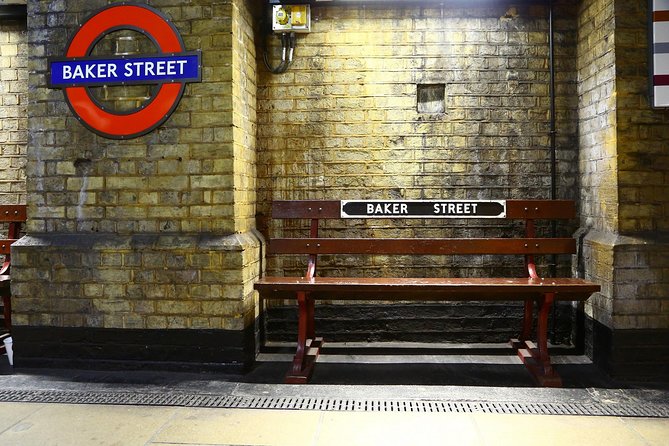
Baker Street is a strong start because the station itself is historically tied to the Underground’s earliest underground railway era. The tour begins here at the Underground Ltd meeting point on Marylebone Road, and the station is highlighted as one of the original stops on the Metropolitan Railway—described as the world’s first underground railway.
This matters for your experience because it sets the frame early. You’re not starting with a modern interchange that feels generic. You’re starting with the system’s origin point, which makes the later stops feel connected instead of random.
You’ll also be in a place where station design and rail-era infrastructure are still visible, so the guide can point out why Victorian builders made certain choices. If you like civil engineering and big construction stories, Baker Street is where that interest clicks into focus.
Practical tip: give yourself time to find the exact meeting spot at Baker Street. You’re starting a 1:00 pm tour, and this route works best when everyone is together.
Oxford Circus and the Victoria line opening plan (1962 to 1969)
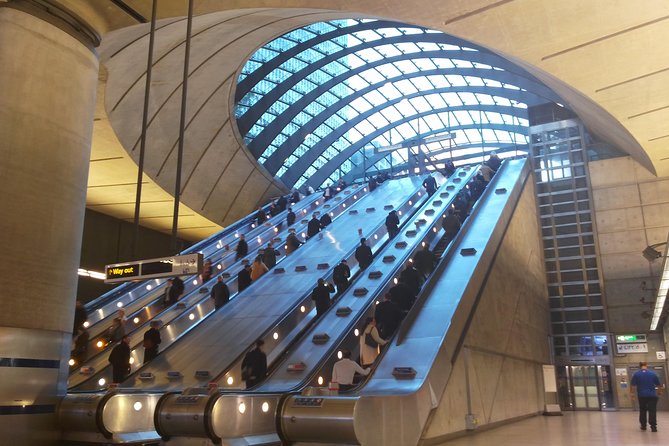
From Baker Street, the tour moves to Oxford Circus Station, near Oxford Street. Here the story shifts from the earliest underground to the way London kept expanding line by line.
You’ll hear details tied to the Victoria line’s beginnings: construction starting in 1962 on the initial Walthamstow to Victoria section, with cross-platform interchange planned at Oxford Circus. Then the line platforms open date comes in: 7 March 1969, with the station described as part of a second extension from Warren Street to Victoria.
This stop is valuable because it explains the logic behind a station many people use without thinking. Oxford Circus is busy, but the tour helps you see it as a deliberate design for transferring passengers efficiently.
Downside? Because Oxford Circus is a major hub, it can feel crowded. The tour’s small group size helps, but you’ll still want to listen closely when the guide signals the next move.
Green Park and the closed Down Street station story
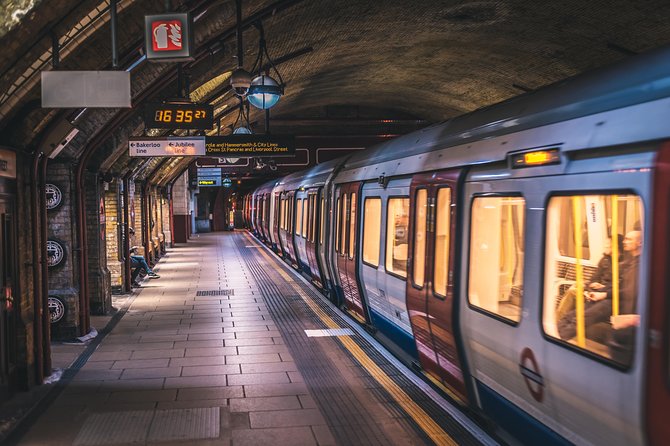
Green Park, via Down Street Station, is one of the most interesting stops on paper—and likely one of the most memorable if you enjoy “how plans change” stories.
The tour connects Green Park to an opened-in-1907 station linked to the Great Northern, Piccadilly and Brompton Railway. It also notes the later Piccadilly line service, plus a key turning point: the station closed in 1932 due to lack of patronage, and because it was close to other stations.
I love this kind of stop for one simple reason: it shows that the Underground wasn’t built as a single perfect blueprint. It evolved. It tried ideas. Some worked. Some didn’t, and the city adjusted.
At the same time, this stop may feel less “wow” if you’re expecting dramatic access to a disused area. The tour theme includes haunted and disused-station stories, but this is still a walking tour in active city spaces. You should expect storytelling and context more than you should expect secret doors.
Piccadilly Circus: how multiple rail visions met
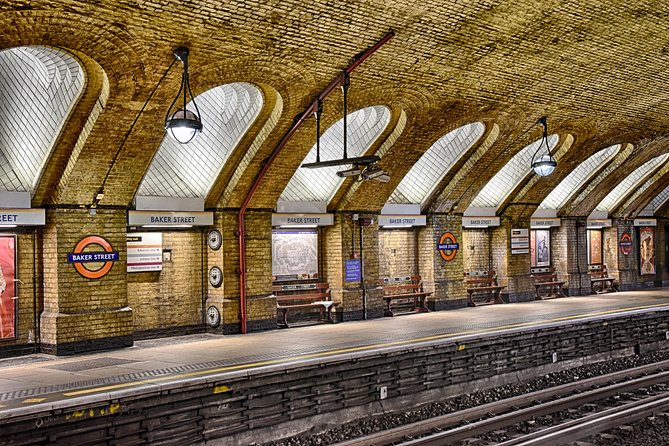
Piccadilly Circus Station is a classic “how the system layered itself” stop. The tour points to the station’s opening details: opened on 10 March 1906 by the Baker Street and Waterloo Railway (now part of the Bakerloo line), with the connected platforms from the Great Northern, Piccadilly and Brompton Railway (now the Piccadilly line) opened later on 15 December 1906.
Why this is worth your attention: it highlights the Underground as a network built from overlapping ambitions. Stations like this became junction points because different rail projects converged, and the Underground grew by connecting what was already planned (or already under way).
If you’re an architecture and transport layout fan, Piccadilly Circus is the kind of stop where the explanation can make the street-level chaos feel organized.




Embankment and the Thames land-reclamation angle

Next up is Victoria Embankment area, tied to Embankment Station. This stop brings the focus back to how London changed physically, not just how trains ran.
You’ll hear that Embankment runs from the City of Westminster toward the City of London along the north bank of the River Thames. It was developed in the 19th century to reclaim marshy land from the river banks.
This is one of those details that makes the whole Underground story feel more real. The Tube doesn’t exist in a vacuum. It’s built into a city that reshaped its coastline, its land, and its major corridors. The guide’s job here is to connect engineering decisions to the river-adjacent geography you can still see today.
This stop also tends to work well for people who aren’t just transit-nerds. Even if you mainly came for station history, the Thames angle gives you a broader London context.
Westminster Station: from Westminster Bridge to the Tube hub
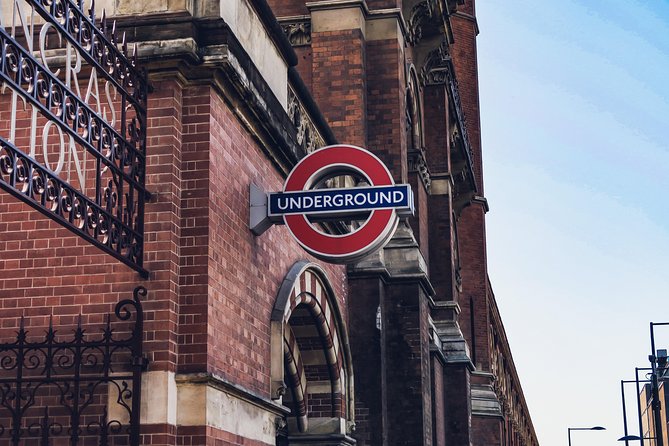
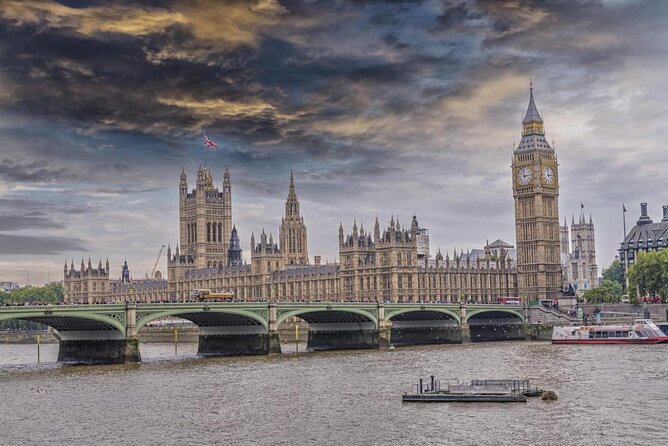
The tour finishes at Westminster Tube Station, with the itinerary describing its origins as Westminster Bridge on 24 December 1868, opened by the steam-operated District Railway (now the District line). It also explains a detail about access: initially via a passageway from Bridge Street and a pedestrian subway under the road.
The station’s age and the way it was accessed matter here because it reinforces how early rail networks were tightly linked to pedestrian movement and street design. Today, Westminster feels like a gateway to major sights and a major travel junction. The tour helps you understand that it became that way through older infrastructure constraints and solutions.
One more practical point: since the tour ends at Westminster, you’ll likely find it convenient to continue on foot or connect to other Tube lines right away. That’s helpful if you want to turn the historical walking route into the first leg of a bigger day.
Price and what you truly get for $41.13
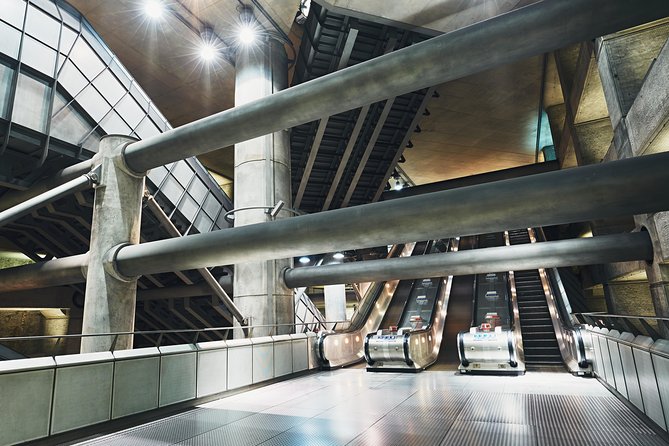
At $41.13 per person for about 2 hours 30 minutes, this tour sits in the “short but story-heavy” category. You’re paying for a guided route through multiple Underground stations plus the themed content: Victorian construction context, the roles the system has played over time, and the haunted/disused-station storytelling style.
Also, it’s capped at a maximum of 25 travelers, which usually improves the experience compared with large group formats. You get a real sense of following a guide rather than being swept along.
Here’s the catch: Tube travel costs are not included in the sense that you must have the right ticketing method. The tour notes that travel cards are not provided, and it also states that contactless/Oyster/Travel Cards (valid for Zone 1) are required. Another note advises buying a day travel card for Zones 1–2.
So the real value equation depends on what you already have. If you arrive with an appropriate Zone 1–2 ticket, you’ll likely feel the $41.13 price more clearly as what you paid for storytelling and guided pacing. If you show up needing to buy transport that day in addition to the tour, the total spend can feel heavier than expected.
What’s included, and what you’ll still need to plan
Included highlights are clearly themed around the Underground’s evolution:
- A visit to one of the Underground’s original stations opened in 1863
- Stories about how the Underground was built during the Victorian era before later technological advances
- Haunted and disused station tales from parts of the network left behind
- Learning how the Underground has played different roles over time
Not included is mainly about how you pay to move: there’s no travel card provided, and the admission ticket detail is listed as not included for several early stops, with Westminster marked free.
In plain terms: you’ll get the guide, the route, the station-focused explanations, and the thematic content. You’ll bring your own transit fare for the day.
One more thing I’d take seriously: the tour includes many steps. Even if you’re generally fine walking, steps inside stations can slow you down. If you’re traveling with mobility needs, this format probably won’t be the best match.
Tips to make the 2.5 hours go smoothly
Here’s how I’d set yourself up for the best run at this tour.
1) Bring your Zone 1–2 ticketing solution
The tour explicitly says travel cards aren’t provided, and Zone 1 coverage is required. If you’re unsure, plan to buy a day travel card for Zones 1–2 so you don’t get stuck doing math mid-tour.
2) Wear shoes for lots of steps
This is not a flat promenade. Between stations and inside stations, there will be steps. If your feet get tired fast, you’ll feel it.
3) Plan for weather
One downside that shows up when the day is wet: the tour still involves walking. Bring an umbrella or a rain layer you can manage while staying close to the group.
4) Arrive early enough to start calmly
The meeting point is Baker Street Station, and the start time is 1:00 pm. If you’re 10 minutes late, it can mess with your pace for the whole 2.5 hours.
5) Expect a brisk guided pace
The tour is designed as a multi-stop storyline. Even when each stop is short, you’re moving. That’s part of the value for many people, but it can be a mismatch if you want long time sitting with one location.
Who this tour fits best (and who should skip it)
This tour fits you if you want a quick, structured way to see London through Underground history. It’s a good match for history buffs, architecture fans, and anyone who likes the nuts-and-bolts side of cities.
It also works well for people who use the Tube all the time but feel like they only know the system functionally. After this kind of route, you’ll start noticing design decisions and historical reasons for station quirks.
You might want to skip it if your goal is a super-long, slow station-by-station deep dive with lots of time at only one or two stops. This tour is built as a route, so you cover many locations and keep moving.
Should you book Secrets of the London Underground Small Group Walking Tour?
I’d book it if you like transit history and want your London sightseeing to feel practical and locally grounded. Starting at Baker Street gives the tour a strong historical anchor, and stops like Green Park and Embankment add variety beyond the usual “see the sights” approach.
But if you hate walking, dislike steps, or don’t want any additional Tube-fare planning, pass. Also, if you want secret access or behind-the-scenes entry, this is still a walking tour through public station spaces with guided storytelling.
If you arrive prepared with the right Zone 1–2 ticketing and comfortable walking shoes, this is a solid way to turn the Underground from a tool into a story you can picture.
FAQ
Where does the tour start and end?
The tour starts at Baker Street Underground Station (Undergound Ltd, Marylebone Rd, London NW1 5LJ) and ends at Westminster Station (Underground Ltd, Bridge St, London SW1A 2JR).
What time does the tour start?
The start time is 1:00 pm.
How long is the tour?
It runs for approximately 2 hours 30 minutes.
Is the tour offered in English?
Yes, it is offered in English.
How big is the small group?
The tour has a maximum of 25 travelers.
Do I need a travel card or Oyster/contactless for the day?
Yes. Contactless cards, Oyster Cards, or Travel Cards (valid for Zone 1) are required, and travel cards are not provided.
What zones should my ticket cover?
The tour advises you should purchase a day travel card for Zones 1–2.
Are station admission tickets included?
Admission ticket information is listed as not included for the first stops (Baker Street, Oxford Street/Oxford Circus, Green Park/Down Street, and Piccadilly Circus, plus Embankment). Westminster is listed as free.
What days does the tour operate?
It operates Tuesday, Thursday, and Sunday from April through March, excluding 24–26 December and 1 January.
Is the tour suitable for reduced mobility?
No. It’s a walking tour with many steps and is not suitable for guests with reduced mobility.
Can I cancel for a full refund?
Free cancellation is available up to 24 hours in advance of the experience start time. If you cancel less than 24 hours before, the amount you paid is not refunded.