REVIEW · LONDON
Semi Private Guided tour at British Museum
Book on Viator →Operated by LivTours · Bookable on Viator
6,000 years of objects in 2.5 hours. This semi-private British Museum tour is built for fast orientation: you get a guide’s eye, a small group pace, and a route through big-name highlights without wandering aimlessly.
I especially like two things: the small-group size (max 6 per guide, capped at 15 overall) and the way the tour pulls you from the famous classics (like the Rosetta Stone) into the connecting stories across cultures. One note: the museum is huge, so you won’t cover every room, and your guide tailors the route to key highlights and your interests.
In This Review
- Key things to know before you go
- A 2½-hour route through the British Museum that actually fits your morning
- Where you meet and why that location matters for your start
- Semi-private guide power: how Luca and Cecily make the museum make sense
- The itinerary is one stop, but it breaks into a clear museum story
- Egypt and the “big wow” objects: mummies to the Rosetta Stone
- Greece and Rome anchors: Parthenon Marbles and the feel of imperial art
- Mesopotamia and Assyria: the Standard of Ur and objects with authority
- Britain’s past in a London museum: Sutton Hoo and Roman Britain
- Anglo-Saxon and medieval Europe: Lewis Chessmen and the feel of everyday craft
- Beyond the classics: Aztec, Mayan, and Easter Island’s Hoa Hakananai’a
- Roman Britain, Portland Vase, and the satisfaction of seeing “the famous stuff”
- What’s included, what isn’t, and how to plan your day
- Price and value: Is $142.98 worth it?
- Who this tour suits best (and who might prefer a slower plan)
- Practical things to know before you arrive
- Should you book this semi-private British Museum tour?
- FAQ
- Where is the meeting point for the British Museum tour?
- How long is the tour?
- What is the price per person?
- What language is the tour offered in?
- How large is the group?
- What are the main highlights included?
- Is food included?
- Do I need to tip the guide?
- Can I cancel for a full refund?
Key things to know before you go
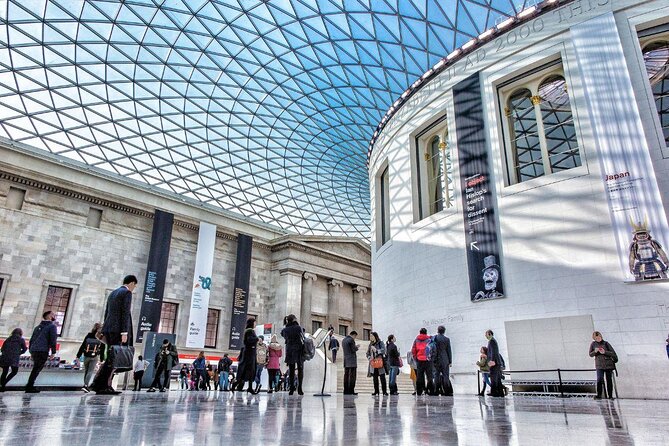
- Max 6 per guide means more time for your questions and fewer shoulder-to-shoulder bottlenecks.
- Mobile ticket keeps you from hunting paperwork.
- A focused highlights route covers major collections, not a random walk through the entire museum.
- Your guide personalizes the pacing, including where you start and what gets emphasized.
- Admission ticket free is included, so you’re paying mainly for the guided experience.
A 2½-hour route through the British Museum that actually fits your morning
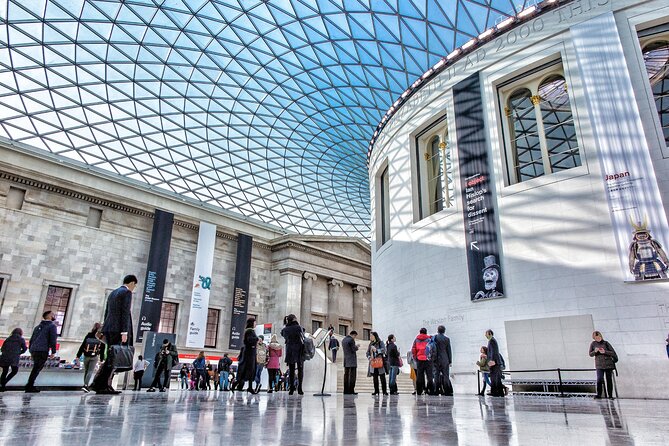
The British Museum can feel like you step into a giant maze. This tour is useful because it gives you a plan that matches the time you have. In about 2 hours 30 minutes, you get a guided overview that helps you understand what you’re looking at—fast.
The semi-private setup also helps. With a maximum of 6 participants per guide, your guide can slow down when you have a question, and you’re not stuck watching the back of someone else’s phone screen. You’ll see headline artifacts, but the goal is more than photos. You get the “why this matters” story as you move room to room.
You can also read our reviews of more guided tours in London



Where you meet and why that location matters for your start
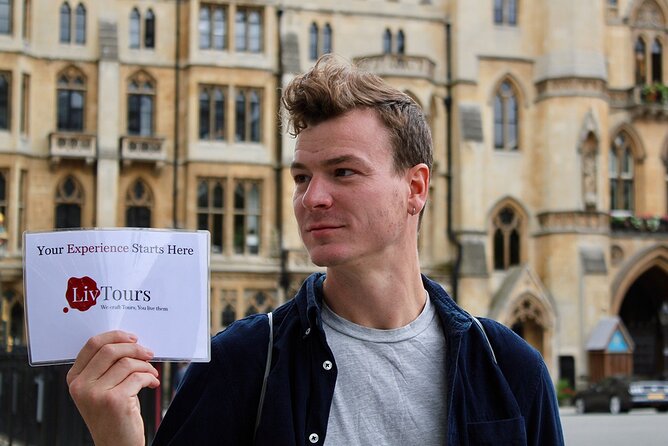
You meet at 52 Great Russell St, London WC1B 3BA. It’s a very central spot, and the tour runs with a mobile ticket, which keeps your arrival simple. The tour also ends back at the same meeting point, so you don’t need to worry about re-figuring your route at the end.
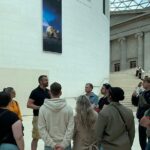
One small detail that can make or break a museum morning: line pressure. In the best-run versions of this tour, your guide helps you manage the start so you spend more time inside and less time queuing. The reviews mention guide Cecily saving a spot in line and getting the group found quickly, which tells me the meeting process is taken seriously.
Tip: show up a few minutes early. Even when things run smoothly, the museum area is busy and it’s easy to lose each other without a clear start time.
Semi-private guide power: how Luca and Cecily make the museum make sense
The strongest part of this experience is the human element. The guides aren’t just reciting labels. They guide you like someone who knows what will catch your attention and what will leave you confused.
The reviews are consistent on this. Guide Luca is called out for deep knowledge across what you see, with real context rather than quick facts. Guide Cecily is praised for answering questions and adding meaningful comments, plus personal attention that keeps the tour from feeling like a rushed conveyor belt.
What you should expect as a result: you’ll get a guided narrative. You’ll notice connections—how Egypt, Greece, Rome, and later European collections relate through themes like power, trade, belief, and everyday life. That turns a museum from a pile of objects into a story you can follow.
The itinerary is one stop, but it breaks into a clear museum story
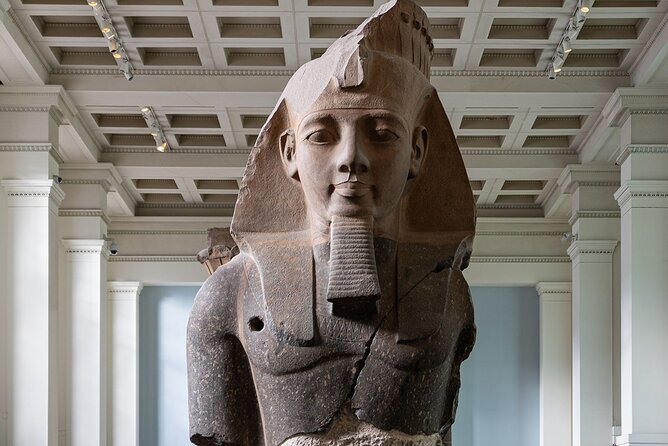
This tour is listed as one main stop: the British Museum. That’s true in logistics. But inside, the visit works like several mini-lessons stitched together.
Your guide’s route is flexible. The museum is too big for any one route to include everything, so your guide tailors the highlights you see based on your preferences. The tour still aims to hit major anchors, especially the most famous pieces.
Below is the practical way to think about the experience—what you’ll likely spend time on, and what to watch for as you go.
Egypt and the “big wow” objects: mummies to the Rosetta Stone
Ancient Egypt sets a high bar at the British Museum, and this tour makes sure you hit it early in the story. You’ll spend time with Ancient Egypt and mummies and come face-to-face with one of the world’s most recognizable artifacts: the Rosetta Stone.
Why that matters for your experience: the Rosetta Stone isn’t just famous; it’s a key to how we understand ancient languages. A guided explanation helps you see it as a bridge between worlds rather than a carved stone you stand next to.
You’ll also encounter other Egypt-related anchors in the broader highlights list, and the tour’s structure is built so you don’t just look—you learn what to look for. With a guide, even short stops become worthwhile, because you know what question to ask your own eyes.
You can also read our reviews of more private tours in London





Greece and Rome anchors: Parthenon Marbles and the feel of imperial art
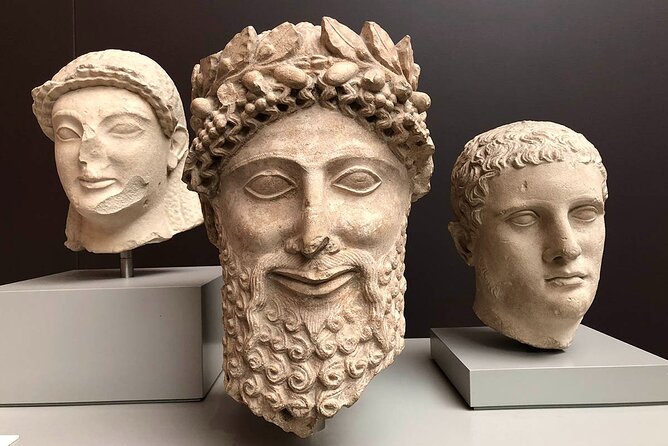
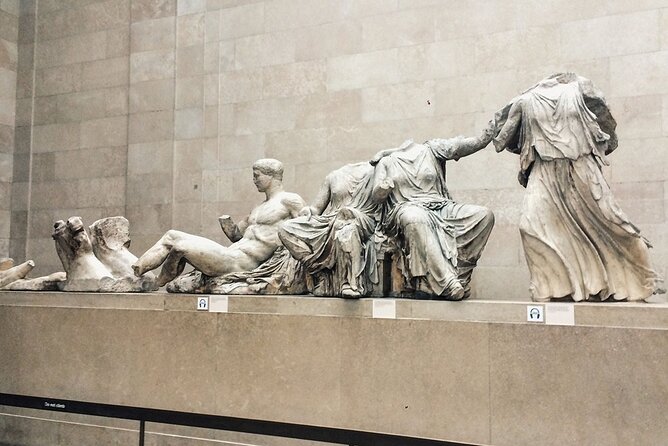
Next comes the Greek and Roman side of the museum’s heavyweight collection. The tour highlights Parthenon Marbles and also includes a deep look into the Ancient Greece collection and Ancient Rome collection.
These objects can feel emotionally distant if you approach them as pure archaeology. With a guide, the experience shifts. You start paying attention to composition, reuse, and what power looks like when it’s carved in stone. You also get the chance to understand how these classical forms influenced later European art and collecting.
This matters because the British Museum’s collections span time and place in a way that can be overwhelming. A guided push through Greece and Rome helps you build a mental map: you’ll see how the museum’s themes connect rather than treating each wing like a separate universe.
Mesopotamia and Assyria: the Standard of Ur and objects with authority
The British Museum’s Mesopotamian holdings are famous for a reason: the craftsmanship often feels intensely human, even when the subjects are kings, conquest, and empire.
On this tour, you’ll be pointed toward standout highlights such as the Standard of Ur and included coverage of the Assyrian collection. You’ll also get attention to major “anchor” pieces from the Assyrian and wider early civilization sections.
The practical value here: these artifacts help you see what “state power” looks like across different cultures. In a self-guided visit, it’s easy to miss that thread and treat objects as unrelated displays. A guided route keeps the themes connected so you understand what you’re looking at while you’re still looking at it.
Britain’s past in a London museum: Sutton Hoo and Roman Britain
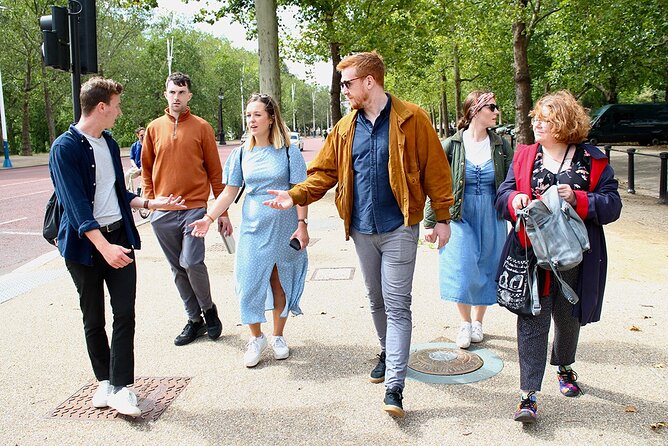
One of the most satisfying parts of this tour is how it pulls British material into the same conversation as the bigger ancient world. Included highlights include the Sutton Hoo ship burial and the Roman Britain collection.
Sutton Hoo is especially good for perspective. It’s local history, but it also opens the door to broader questions about trade, status, and contact between peoples. You’re not only seeing what’s in the museum; you’re learning how Britain fits into the larger ancient picture.
If you’re a fan of early medieval England, this tour is a smart use of time. It gives you a guided start in the space between Roman Britain and later periods, so the next time you read or watch anything about that era, you’ll have a mental image ready.
Anglo-Saxon and medieval Europe: Lewis Chessmen and the feel of everyday craft
This tour doesn’t ignore later periods. It includes the Medieval Europe collection, plus it highlights memorable pieces that people often don’t know what to do with unless someone explains.
One example mentioned in the tour framing is the Lewis Chessman set. Whether you’re into chess or not, it’s the kind of artifact that can surprise you. With guidance, you’ll understand why it’s significant and how it’s made to be read as more than just a game set.
The tour also calls out the Anglo Saxon Helmet as an example of the kinds of standout highlights you can see. That’s exactly the kind of object that changes your experience from “museum visit” to “I get it now.”
Beyond the classics: Aztec, Mayan, and Easter Island’s Hoa Hakananai’a
The British Museum isn’t only Egypt and Greece. This tour includes Aztec and Mayan collection and also an Easter Island highlight: the Easter Island head and the tour description references the Hoa Hakananai’a statue.
This part of the route is where the museum’s global reach becomes real. You start comparing how different cultures express identity—through art, ritual objects, and representations of leadership. It’s also where guided context really helps, because objects from far away can be harder to interpret without help.
One practical upside: these sections often feel more interesting than you expect. They create variety in your morning and keep the visit from becoming a single-note classic-ancient routine.
Roman Britain, Portland Vase, and the satisfaction of seeing “the famous stuff”
The tour also includes the Portland vase—one of those objects that seems to carry a reputation before you even reach it. Guided explanation can turn that reputation into clarity: you’ll know what you’re seeing and why it attracted attention.
You’ll also see coverage across multiple themed collections listed for the experience, including:
- Enlightenment Gallery
- Ancient Egypt & mummies
- Roman Britain collection
- Ancient Rome collection
- Ancient Greece collection
- Assyrian collection
- Medieval Europe collection
- Plus the standout named items already mentioned above
That’s a lot of ground for one morning. And it’s still focused: you’re not expected to understand everything at once. You’re meant to leave with a mental shortlist of what matters most and what to look for if you come back.
What’s included, what isn’t, and how to plan your day
Included in the tour are the guided experience and admission for the time at the museum (marked admission ticket free). It also includes a clear list of highlights you’ll see, like the Rosetta Stone, Parthenon Marbles, and Sutton Hoo ship burial.
Not included is food and beverages, plus gratuities, and hotel pickup/drop-off. So plan on eating on your own schedule before or after. The tour is short enough that you can grab something nearby, then come back rested.
If you care about snacks, bring a simple one or plan a quick stop after the tour. Your brain will still be chewing on the artifacts as you walk out, and a food break helps avoid the late-day museum letdown.
Price and value: Is $142.98 worth it?
At $142.98 per person, this isn’t a “casual stroll” add-on. You’re paying for a short guided route through one of the world’s largest collections. The best value shows up if you want structure, context, and time savings.
Here’s where the price becomes easier to justify:
- Small-group format (max 6 per guide) means better interaction than large group tours.
- You get guided coverage of major “anchors” like Rosetta Stone and Parthenon Marbles, plus major supporting collections across time.
- The tour is fast enough to fit a morning, which is valuable in London where time and walking add up quickly.
- Since admission ticket free is included, you’re not paying extra just to get into the museum for this time block.
Is it worth it if you love wandering? If you want to spend hours exploring at your own pace, a guided route can feel restrictive. But if you want a curated overview and you’d rather have someone point out what to pay attention to, this price starts to look fair.
Who this tour suits best (and who might prefer a slower plan)
This tour is ideal if you:
- Want a guide-led overview rather than a solo marathon
- Like big-name objects but also want the stories behind them
- Are traveling with limited time and want a strong morning plan
- Enjoy asking questions and getting answers in real time
It may feel less ideal if you:
- Plan to photograph everything for hours on end with no guidance
- Want to cover every room regardless of time limits (because your guide will tailor what you see)
- Need a full-day, slow-burn museum experience
Practical things to know before you arrive
The British Museum doesn’t have a cloakroom service, so plan for your bag situation. Bags exceeding 40x40x50 and weighing 8 kilograms or more are prohibited. Service animals are allowed, and children must be accompanied by an adult.
Also expect some limits simply because the building is large. The tour notes that it may not be possible to cover every room, and your guide will tailor the route to key highlights and your preferences. That’s not a flaw—it’s how you keep the experience high-value in a limited time window.
Should you book this semi-private British Museum tour?
If you’re on a London schedule and you want the museum to make sense quickly, I’d book it. The format is built around interaction, not just movement. And the reviews point to guides like Luca and Cecily delivering real depth, answering questions, and keeping the tour personal even while covering major highlights.
Book it if you want a structured morning that includes the heavy hitters—Rosetta Stone, Parthenon Marbles, Sutton Hoo, and more—without turning your visit into a confusing map-less sprint.
Skip it (or consider a different style) if you’re the type who likes to disappear into museum wings for hours and doesn’t want a guided route. This tour gives you direction. If that’s what you want, it’s a strong way to get your bearings and leave with a clear sense of what you just saw and why it matters.
FAQ
Where is the meeting point for the British Museum tour?
The tour meets at 52 Great Russell St, London WC1B 3BA, UK.
How long is the tour?
It runs for about 2 hours 30 minutes.
What is the price per person?
The price is $142.98 per person.
What language is the tour offered in?
The tour is offered in English.
How large is the group?
The tour operates with a maximum of 6 participants per guide, and a maximum of 15 travelers in total.
What are the main highlights included?
Highlights include the Rosetta Stone, Parthenon Marbles, Sutton Hoo ship burial, and collections such as Ancient Egypt and mummies, Ancient Greece, Ancient Rome, Assyrian, and Medieval Europe, plus other listed items.
Is food included?
No. Food and beverages are not included.
Do I need to tip the guide?
Gratuities are not included.
Can I cancel for a full refund?
Yes. You can cancel up to 24 hours in advance for a full refund.