REVIEW · LONDON
Stand up Paddleboarding on the beautiful Thames at Richmond
Book on Viator →Operated by Paddle Richmond · Bookable on Viator
The Thames gets sporty near Richmond Bridge. A small-group SUP session turns a famous river into a hands-on lesson in balance, steering, and confidence. Expect clear instruction, buoyancy aids from the start, and a route that follows the tide for real variety on the water.
I especially like two things: first, the safety setup. You get buoyancy aids and they’re compulsory, which lowers the stress level for a first paddle. Second, you’re not shuffled off to fend for yourself; coaches like Nigel, Sarah, and Sophie are there to guide your stance and turns, and they’ll even capture a few snapped photos.
One possible drawback is physical: learning requires balance and mobility. You should be comfortable with falling while wearing a buoyancy aid, and you need enough flexibility to get up to standing from kneeling as you practice.
In This Review
- Key Highlights You Should Know Before Booking
- Richmond Bridge Boathouses: the Launch Point With Real Thames Energy
- The 15–20 Minute Safety Briefing That Makes or Breaks a First SUP
- Upstream or Downstream: How Tide Changes Your Thames Route
- Your On-Water “Mini Class” Through Real River Scenery
- Coaching That Gets You From Kneeling to Standing
- Gear, Buoyancy Aids, and the One Comfort Thing People Forget
- Cost and Value: Why $89.13 Can Make Sense in London
- Who This SUP Session Fits Best (and Who Might Reconsider)
- Timing, Weather, and Day-of Reality on the Thames
- Should You Book SUP on the Thames at Richmond?
- FAQ
- What’s the meeting point for the Richmond Thames SUP session?
- How long is the SUP experience?
- Do I need to know how to swim?
- Are buoyancy aids provided?
- How does the route work?
- Is bottled water included?
- What group size should I expect?
- What language is the tour offered in?
Key Highlights You Should Know Before Booking
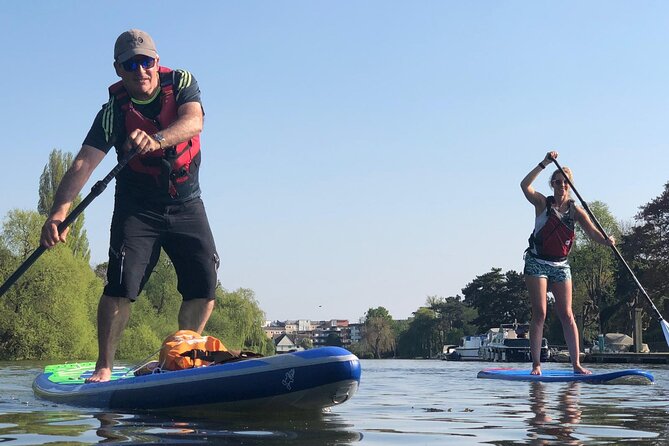
- Small group size (max 6) for more one-on-one coaching and faster learning
- Buoyancy aids included and compulsory so you can focus on technique
- Guided route chosen by tide (upstream to places like Eel Pie Island, or downstream toward Kew and Chiswick)
- Paddling time on water: 90–105 minutes inside a ~2-hour session
- A few instructor photos to help you remember the day (and show what your first “good stance” looked like)
Richmond Bridge Boathouses: the Launch Point With Real Thames Energy
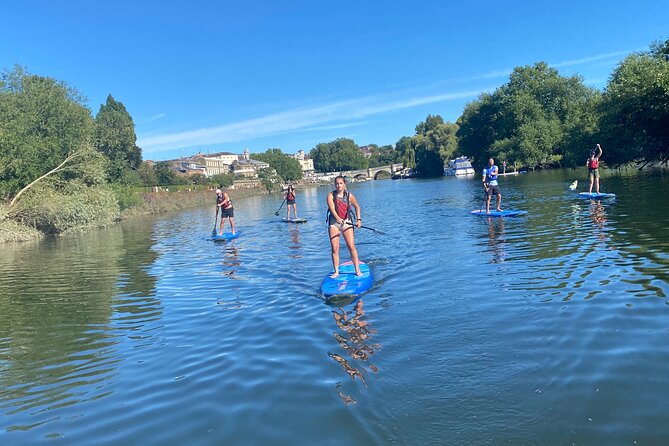
Your SUP starts at Richmond Bridge Boathouses by the riverside in Richmond (TW9 1TH). This location matters because Richmond is where the Thames feels both iconic and manageable: you’re close to central sights, yet you’re not stuck in a maze of city logistics.
Sessions run in the 9:00 AM to 6:00 PM window (Monday through Sunday) across the given operating season dates. Plan to arrive a bit early so you’re not rushing when gear is being fitted and everyone’s doing the same safety check.
The fact that the activity ends back at the launch point is a quiet win. No guessing where to meet later, and it helps keep the whole experience focused on learning the water skills, not transportation.
You can also read our reviews of more tours and experiences in London.



The 15–20 Minute Safety Briefing That Makes or Breaks a First SUP
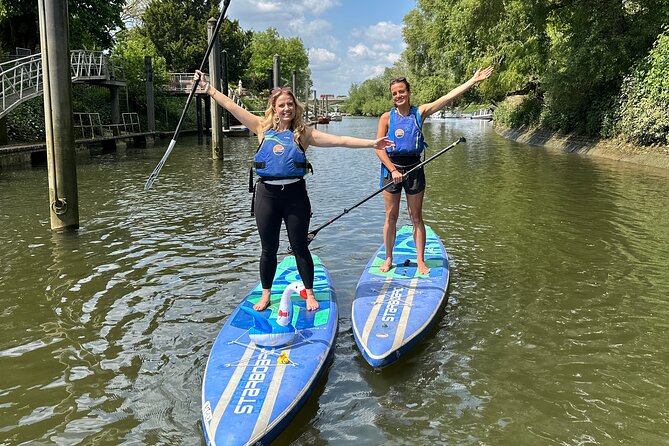
Before you head out, you’ll get kitted out and then receive a safety briefing plus some land-based practice on the riverbank near Richmond Bridge. This usually takes 15–20 minutes depending on the group size, and it’s not wasted time.
What you’re really learning here is how to move as a beginner: how to balance, how to handle the board, and what to do if you tip. The training is designed for people who are not proficient swimmers, as long as you’re comfortable with falling into the water while wearing the buoyancy aid.
You also need a specific kind of body control. There’s a flexibility requirement for the technique work—getting up to standing from kneeling. If mobility is a concern for you, this is worth thinking through before you book.
Upstream or Downstream: How Tide Changes Your Thames Route
After training, you head onto the river and the plan shifts based on tide. You’ll either paddle upstream toward areas like Eel Pie Island and Teddington, or downstream toward Richmond Lock, Isleworth, Kew Gardens, and Chiswick.
This is one of the smartest choices the operator makes, because it turns what could be a generic lesson into a real outing. Tides affect current and ease of paddling, so matching direction helps keep your energy for learning rather than fighting the water.
The trade-off is also honest: the distance you cover depends on wind and tide conditions on the day. You’re going to spend 90–105 minutes on the water, but don’t treat that as a guaranteed route length. Think of it as “time plus conditions,” not a fixed checklist of miles.
Your On-Water “Mini Class” Through Real River Scenery
Once you’re out on the Thames, the focus becomes practical: stance, steering, turning, and learning how your board behaves when the river has chop or wind.
That’s why this kind of SUP feels different from renting a board for an hour. You’re not just trying to stay upright; you’re being taught how to act on the water. In past sessions, people have described a mix of technical tips plus moments that felt like a mini safari along the river corridor.
Wildlife can also be part of the day. Keep your eyes open for river birds, and you may even spot larger animals like seals when conditions are right. The Thames can surprise you when you slow down and look.
The downstream side can feel more “urban-river,” with sights like Kew Gardens and Chiswick in view. Upstream can feel calmer and more back-to-nature, with the river stretching toward places like Teddington. Either way, you’re paddling in a corridor that makes sense geographically, so it’s easy to understand where you are as you go.
Coaching That Gets You From Kneeling to Standing
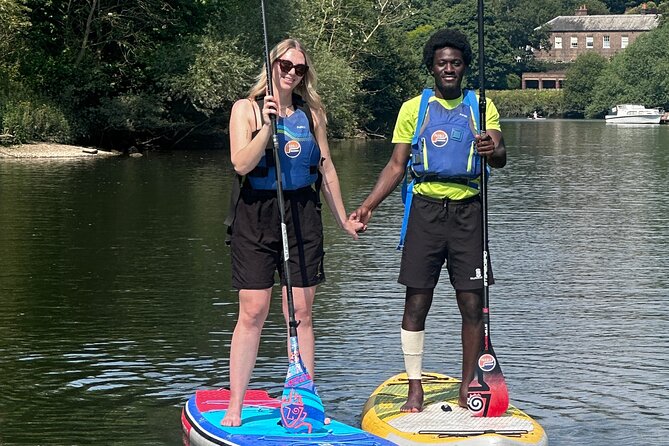
What makes or breaks a first SUP lesson is whether the coach can explain things clearly in the moment. In this setup, you have a small group and an instructor working actively with you, not just giving a one-time lecture.
I like that the operator’s approach shows up in the way people report the experience: clear, patient coaching and steady correction. Coaches such as Nigel, Peter, Sarah, and Sophy are named in the feedback, which is a good sign that the instruction is consistent rather than random.
You should expect to learn basics like stopping and turning methods, plus how to adjust to wind and waves. That’s where confidence comes from. The goal isn’t to make you fearless on day one—it’s to make you capable.



Gear, Buoyancy Aids, and the One Comfort Thing People Forget
You’ll use the operator’s paddleboard and paddle, with buoyancy aids provided and treated as compulsory. This matters more than it sounds. When safety gear is included, you don’t waste mental energy worrying about comfort or flotation; you spend that energy learning technique.
One small item to note: bottled water is not included. Bring water or plan to refill near where you’re starting. When you’re actively paddling for 90+ minutes, you’ll want it.
Also think about footwear and clothing. You’re likely to get wet. Even if you manage to stay mostly dry, splashes happen. Dress like you expect river water to show up, because it does.
Cost and Value: Why $89.13 Can Make Sense in London
At $89.13 per person for roughly 2 hours, this is not a “cheap activity.” But it also isn’t just board rental. You’re paying for a guided lesson on a real river, plus gear (board, paddle, and buoyancy aid) and active coaching in a group capped at 6.
In London, that combination is often the value driver. Stand-up paddleboarding is equipment-heavy, and safety training takes staff time. Here, you get both, plus a short land-based training block built into the session, which keeps it organized and efficient.
So the value math is simple: if you want to learn properly instead of struggling alone, you’re paying for the instruction overhead. If your goal is just to see the Thames from a board with no coaching, you might feel this is pricier than you need. But if you want the technique and confidence built in, the price feels fair.
Who This SUP Session Fits Best (and Who Might Reconsider)
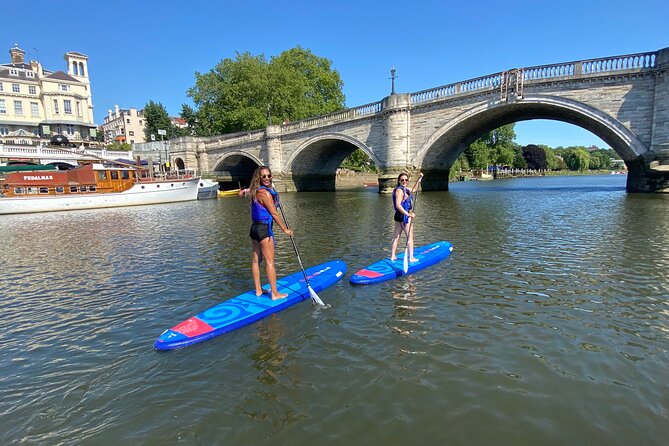
Most travelers can participate, and you do not need to be a proficient swimmer. That said, you should be okay with falling into the water while wearing a buoyancy aid. This isn’t “no-fear” SUP, but it is “supported” SUP.
You’ll also want enough balance and flexibility for the kneeling-to-standing practice. If getting up from kneeling is hard for you, you may find the learning curve frustrating.
This is a great option if you:
- want a safe introduction to paddleboarding
- like small-group formats where questions get answered
- want a Thames experience that’s more active than a typical sightseeing walk
Timing, Weather, and Day-of Reality on the Thames
This experience requires good weather. If it’s canceled due to poor weather, you’ll be offered a different date or a full refund. That’s the right call for a river activity, because wind and rain can turn a learning paddle into a miserable one.
The session is about 2 hours total, including the safety briefing and training. You’ll be on the water for 90–105 minutes, so when you book, treat it like a real block in your day, not a quick add-on.
Because route direction depends on tide, your day-to-day plan isn’t something you should try to micromanage. Instead, show up ready for the river to set the pace.
Should You Book SUP on the Thames at Richmond?
If you want a first-time-friendly SUP with real coaching, I’d say yes. The biggest strengths are the small-group guidance, the compulsory buoyancy-aid safety setup, and the fact that the lesson includes land training before you paddle.
Book it if you’re willing to learn the basics and you’re comfortable with the idea of getting wet and practicing a few stance drills. Skip it or ask questions before booking if kneeling-to-standing mobility is an issue, or if you’re uncomfortable with falling even with a buoyancy aid.
And if you love the idea of swapping a standard London stroll for time on the water—plus the possibility of river wildlife—this is exactly the kind of activity that turns a recognizable place into a personal memory.
FAQ
What’s the meeting point for the Richmond Thames SUP session?
You’ll meet at Richmond Bridge Boathouses, Riverside, Richmond TW9 1TH, UK.
How long is the SUP experience?
The session is about 2 hours total, and you can expect 90–105 minutes paddling on the water.
Do I need to know how to swim?
No, you do not need to be a proficient swimmer. You should be comfortable with falling into the water while wearing a buoyancy aid.
Are buoyancy aids provided?
Yes. Buoyancy aids are provided and are compulsory on all sessions.
How does the route work?
Depending on tide, you may paddle upstream toward Eel Pie Island and Teddington, or downstream toward Richmond Lock, Isleworth, Kew Gardens, and Chiswick. You return to the launch point at the end.
Is bottled water included?
No, bottled water is not included.
What group size should I expect?
This activity has a maximum of 6 travelers.
What language is the tour offered in?
The experience is offered in English.