REVIEW · LONDON
London Soho District Guided Walking Tour Semi-Private 12ppl Max
Book on Viator →Operated by Babylon Tours London · Bookable on Viator
Soho changes block by block. This 2.5-hour guided walk links Piccadilly Circus to Chinatown with story-driven stops that go way past the usual sightseeing checklist.
I like the semi-private size (never more than 12 people). It keeps the guide’s explanations clear, and—when the headcount is small—it can even feel more private than advertised. I also like how the tour connects big ideas to street corners: music legends, philosophy, women’s suffrage, and LGBT history are all tied to places you can actually point at.
One consideration: it’s still a solid walking tour with a moderate fitness level requirement, and it’s not designed for wheelchair users or people with walking disabilities.
In This Review
- Key things I’d plan around
- Meeting at the Criterion Theatre and Making Sense of Soho Fast
- Piccadilly Circus to Eros Fountain: The Famous Start With Real Meaning
- Golden Square to Greek Street Themes: Suffrage, Epidemiology, and Marx
- Carnaby Street to the London Palladium: Style and Show Business in the Same Block
- The Blue Posts Pub and Berwick Street Market: Drink, Snack, and Watch London Live
- Soho Square to Chinatown: From Old Squares to Dumpling Payoff
- Guides Can Make or Break It: What to Expect From the Storytelling
- Price and Value: What You’re Paying For at $62.54
- Who This Tour Suits Best (and Who Should Choose Another Plan)
- Practical Tips to Keep Your Walk Comfortable
- Should You Book This Soho Walking Tour?
- FAQ
- How long is the London Soho guided walking tour?
- Where does the tour start and where does it end?
- Is this tour private?
- Are there any ticketed admissions included?
- Is the tour wheelchair accessible?
- What if the tour doesn’t meet the minimum number of guests?
Key things I’d plan around
- Small-group pace (max 12) so questions don’t get swallowed by the crowd.
- Pop-culture meets politics—you’ll connect Soho’s music story to real historical movements.
- Mostly outside viewing at major stops, with some interiors limited by security.
- Food-focused landing in Chinatown, with time to grab dumplings at the end.
- Flexibility built into the route, including an alternate path if celebrations affect streets.
Meeting at the Criterion Theatre and Making Sense of Soho Fast
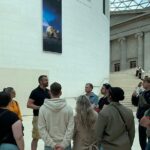
The tour starts at the Criterion Theatre on Piccadilly (218–223 Piccadilly, W1J 9HR). From there, the vibe shifts quickly: big signs, traffic noise, and a very London mix of tourists and locals. The first win here is orientation. Even if you’ve never been to Soho, you’ll start to understand where everything sits relative to Piccadilly, Oxford Street, and Chinatown.
This is a semi-private walking tour with a maximum of 12 guests, rain or shine. You’ll want comfortable shoes; you’re on foot for about 2.5 hours, with short stops along the way. Also note the practical rules: no large bags or suitcases during the walk. That’s not fussy theater etiquette—it just keeps things moving on narrow sidewalks and crowded areas.
And yes, you’ll need to use your phone for the mobile ticket, and you must provide a mobile phone number (with country code). That’s one of those “do it now” details that can save you stress later.
You can also read our reviews of more walking tours in London



Piccadilly Circus to Eros Fountain: The Famous Start With Real Meaning
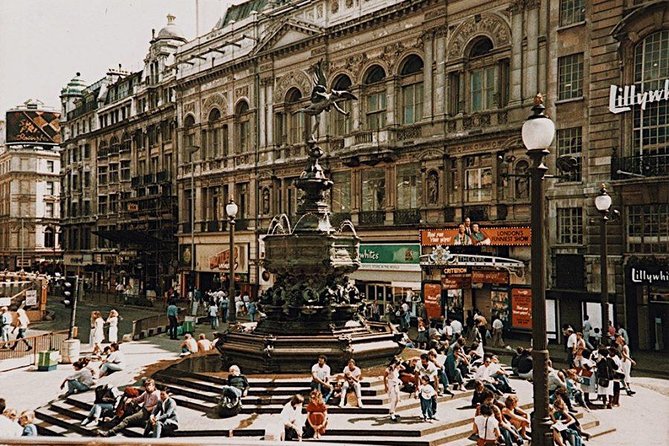
You begin at Piccadilly Circus, one of the world’s most recognizable intersections. The guide uses it as a starting line for context: the way the road connects different parts of central London, and how the architecture and billboards turn the place into an instant stage. Piccadilly Circus was built in 1819, linking Regent Street with Piccadilly.
A short walk later, you’ll see the Shaftesbury Memorial Fountain and its statue of Eros. This isn’t just a photo stop. It’s tied to philanthropy—Anthony Ashley Cooper, the 7th Earl of Shaftesbury. The guide focuses on the Victorian-era push that replaced child labor with schooling, which gives you a surprising angle on a very commercial-looking corner.
The drawback here is simple: Piccadilly Circus can be crowded and loud. The tour’s value is that you don’t just stand there; you move through the area with a guide explaining why it matters.
Golden Square to Greek Street Themes: Suffrage, Epidemiology, and Marx
From the big intersection energy, the tour leans into Soho’s “thinky” side. Golden Square is the first major square you’ll hit, and it’s easy to miss its importance if you’re just passing by. Historically, it goes back to plans from the 1670s, and it quickly became a political and ambassadorial district in the late 1600s and early 1700s.
Then the tour brings in women’s suffrage. Golden Square is tied to the movement, so the square feels less like a backdrop and more like a place with consequences. It’s a good example of what this tour does well: it grabs a specific historical theme and keeps it tied to what you see around you.
The guide also connects Soho streets to major intellectual and scientific threads. You’ll hear about the earliest study of epidemiology along Broad Street, and you’ll consider philosophy through Karl Marx on Greek Street. Those are the kinds of details that transform “cool neighborhood” into “I get why this place shaped people and ideas.”
One more theme the guide covers: when the LGBT community began calling Soho home. The exact story is guided by what the group is able to focus on that day, but the point is clear—Soho isn’t just nightlife. It’s social change, too.
Carnaby Street to the London Palladium: Style and Show Business in the Same Block
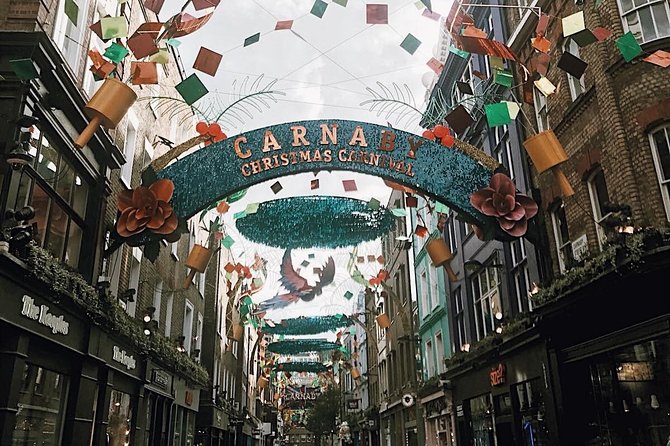
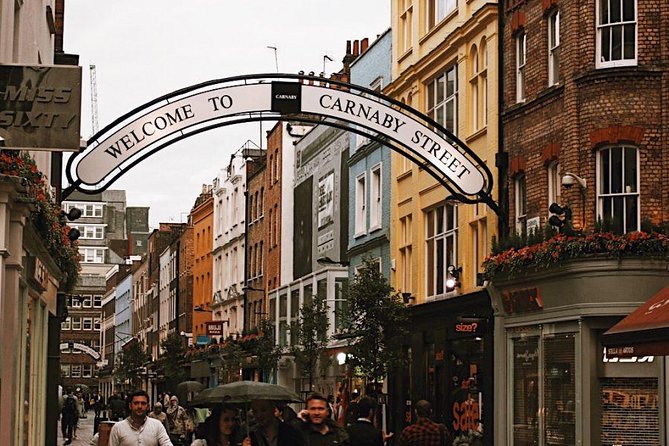
Next up is Carnaby Street, a pedestrianized shopping street near Oxford Street and Regent Street. You’ll get a sense of how Soho keeps reinventing itself. The street is associated with fashion and lifestyle retailers, and the numbers are part of the pitch: Carnaby connects you to 100+ international British heritage labels, plus independent boutiques and one-off concepts.
If you like places that show modern trends without feeling totally generic, Carnaby Street is a strong stop. It’s also a good “reset” after the heavier topics earlier in the walk. You can look, browse with your eyes, and let the tour breathe.
Nearby is the London Palladium, a famous West End theatre built in 1910. The guide points out that it was built to compete with the London Hippodrome and London Coliseum. You’ll also hear that it retains original features, including a revolving stage and its own telephone system.
Practical note: the tour’s overall rule is that some attractions can’t be entered from the inside due to security measures. So treat the Palladium as an exterior-style stop unless your day includes entry options that are explicitly offered for that specific tour.
The Blue Posts Pub and Berwick Street Market: Drink, Snack, and Watch London Live
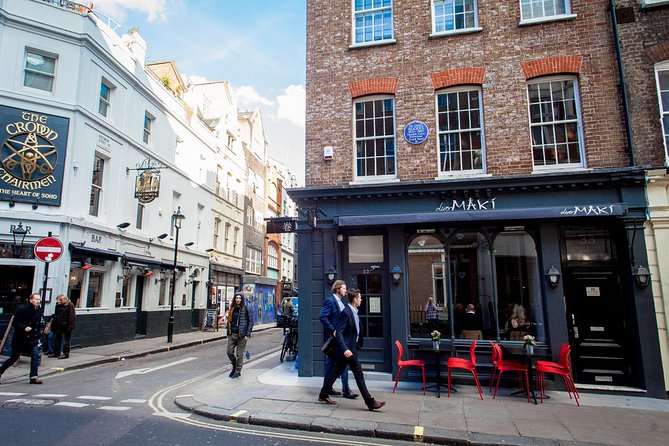
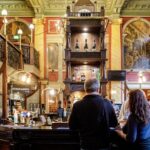
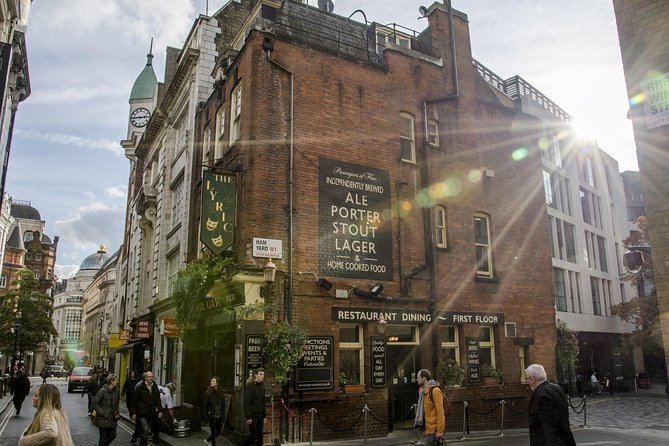
This is where the walk starts to feel like a neighborhood visit. The Blue Posts is an old-school English pub that’s been revamped. You’ll recognize the classic elements—high ceilings and large windows—and the guide ties it to a long timeline, including that it’s been around for about 275 years. It’s known for independently brewed cask ales, plus craft beers and ciders.
Next comes Berwick Street Market, one of Soho’s oldest markets, dating back to 1778. The focus here is street food energy. You’ll see traditional fruit and vegetable stalls alongside the kind of quick bites that make markets feel like a living part of the neighborhood, not a museum display.
The trade-off: markets and pub streets can get tight and busy. If you’re someone who hates crowds, keep your expectations realistic. You’re here for atmosphere and local rhythm, not a calm stroll.
You can also read our reviews of more guided tours in London






Soho Square to Chinatown: From Old Squares to Dumpling Payoff
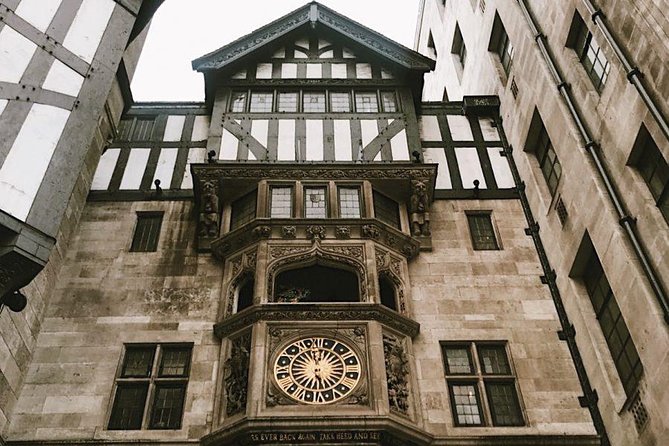
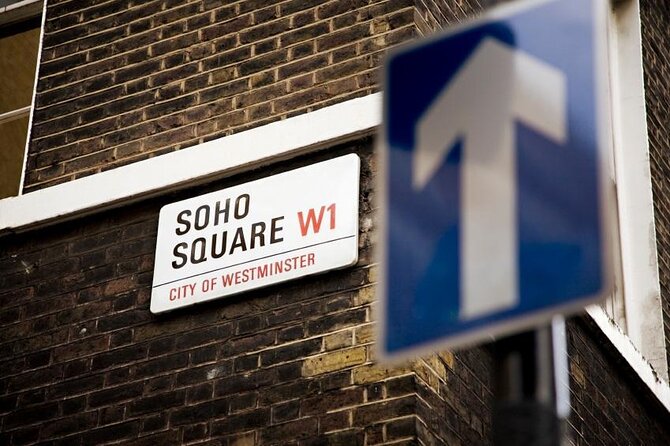
Soho Square is the quiet beauty moment in the middle of all that nightlife chaos. It dates to around 1681, and it has a traditional layout with a central mock-Tudor building. In its early years, it was one of the more fashionable places to live in London. The guide uses that history to explain how Soho’s “good address” past fed into the neighborhood’s later transformations.
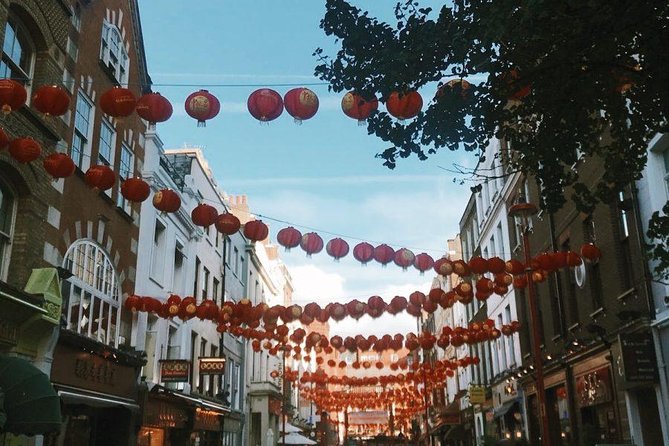
Then the tour shifts to the finish: Chinatown. You’ll learn how the area started forming in the 1950s when a handful of Chinese restaurants opened, and how by the 1960s and 1970s it became a hub for Chinese culture. Today, Chinatown is where you can explore restaurants and shops for a very different London mood.
The tour ends in Chinatown with time to get dumplings. This is a smart way to close: you’re leaving on a full stomach, not wandering hungry through the most tempting streets.
Guides Can Make or Break It: What to Expect From the Storytelling
One of the most praised parts of this tour is the guide experience. You might get someone like Laurence, who is noted for being friendly and kind—and, on days when the group shrinks, he’s been known to tailor the walk to the interests of the remaining guests and add food stops you’d likely skip on your own. If you get Becky, the emphasis is on engaging, inclusive explanations that make Soho’s history feel connected to today. Nathan is described as delivering a great, fascinating walk with strong information. Sheldon is remembered for helping people understand Soho’s vibe, especially with a Chinatown tie-in. Anthony is flagged for being witty and very good at linking sights to stories.
Even if you don’t know the guide name on your booking, the pattern is consistent: the best tours aren’t just facts. They’re direction—what to notice, what to remember, and how to connect street scenes into a coherent narrative.
Price and Value: What You’re Paying For at $62.54
At $62.54 per person for about 2.5 hours, you’re paying for three things: a professional guide, a small-group setting (max 12), and a guided route that strings together multiple famous spots without you having to plan every turn.
Most of the listed stops are free in terms of admission—you’re not buying tickets to view basic streets, squares, and architecture. The London Palladium stop is noted as not included for admission, so if you want theatre tickets, you’d handle that separately. The bigger value is that you’re getting context for what you would otherwise treat as “just places.”
In plain terms: if you’d normally wander Soho with a map, this is a way to turn that wandering into a story with purpose. If you already know Soho well and just want shopping time, it may feel less necessary. But for first-timers, culture-curious travelers, and music-history fans, the guide storytelling can be worth every step.
Who This Tour Suits Best (and Who Should Choose Another Plan)
This tour is ideal if you’re the type of traveler who likes history and contemporary culture mixed together. You’ll enjoy it if you want to connect music venues, philosophical threads, political movements, and neighborhood identity to specific streets—rather than scanning landmarks and moving on.
You’ll also like it if you value group attention. With no more than 12 people, the guide can keep your questions in the conversation.
Skip it (or plan another option) if you:
- Need wheelchair access or have walking disabilities. This tour isn’t available for those using a wheelchair or with walking disabilities.
- Are traveling with large bags or suitcases. You’ll need to travel light for this route.
- Prefer fully indoor attraction time. Some stops may be exterior-only due to security rules.
Practical Tips to Keep Your Walk Comfortable
A few details matter here.
Bring comfortable shoes. The route is a walking loop across busy Soho streets, including market and entertainment areas. Pack a bottle of water, an umbrella if rain is in the forecast (the tour runs rain or shine), and a hat during warmer months.
Plan to arrive near public transportation. The starting area is in central Piccadilly, so transit access is handy.
Also, be ready for the fact that the route can change due to national celebrations. The tour notes that an alternate route is used to still see the highlights, but it doesn’t come with refunds or discounts for those changes.
One more small planning reality: the tour needs a minimum group size of 3 guests to run. If it doesn’t meet that requirement, you’ll be offered an alternative date or a full refund.
Should You Book This Soho Walking Tour?
Book it if you want Soho with structure. This isn’t just “look at the street signs.” It’s a guided walk that connects pop culture and real social history, from Golden Square’s political links to music-era references and the philosophical and scientific threads tied to specific streets. The semi-private limit helps the guide actually talk to you, not at you.
Don’t book it if you need step-free access or you want mostly indoor attractions with long stops. Also skip if your idea of Soho is mostly shopping and nightlife and you don’t care about the story behind the neighborhood.
If you’re balancing first-time London energy with a desire to understand how Soho became Soho, this is a solid pick.
FAQ
How long is the London Soho guided walking tour?
It’s about 2 hours 30 minutes.
Where does the tour start and where does it end?
The tour starts at Criterion Theatre, 218–223 Piccadilly, London W1J 9HR and ends in Soho/Chinatown.
Is this tour private?
It’s a semi-private walking tour with a maximum group size of 12 people.
Are there any ticketed admissions included?
Most stops list free admission, but the London Palladium is marked as ticket not included.
Is the tour wheelchair accessible?
No. The tour is not available for those with walking disabilities or using a wheelchair.
What if the tour doesn’t meet the minimum number of guests?
The tour requires a minimum of 3 guests to run. If it doesn’t, you’ll be offered an alternative date or a full refund.