REVIEW · LONDON
London: Best Landmarks Walking Tour
Book on GetYourGuide →Operated by Vox City Walks · Bookable on GetYourGuide
London can feel huge. This walk makes it make sense. You start at Trafalgar Square and, in just 2 hours, you’ll line up the Royal showpieces and the Big Ben view with an energetic live guide (names like Lou and Jess have led groups) bringing in stories, fun facts, and plenty of time for questions. I also like that you get both the guided route and a complimentary sightseeing app so the experience doesn’t end when the walk does.
One possible drawback: you won’t go inside the major sights. If you’re hoping for ticketed, inside-the-building experiences, you’ll need to plan those separately.
Vox City Walks land mark walk highlights
- Trafalgar Square start at the 4th Plinth steps, next to the white cube statue and opposite Canada House
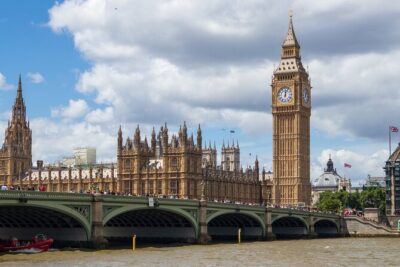
- Royal and Westminster focus: Westminster Abbey, the Palace of Westminster, and views tied to Big Ben
- West End and Soho finish with theatre street scenery plus quick ideas for where to eat and drink
- Photo-friendly guiding and frequent stops for questions so you’re not just marching past
- Included mobile app with self-guided routes after the tour wraps up
In This Review
- Trafalgar Square to Nelson’s Column: Starting With Icons and Easy Photos
- Big Ben and the Palace of Westminster: Coronations, Power, and Photo Angles
- Westminster Abbey and St James’s Park: Royal Backdrops Without the Ticket Stress
- The Mall and Buckingham Palace: Watching Ceremony From the Pavement
- Horse Guards Parade and Churchill War Rooms: Government Buildings With Human Stories
- Regent Street, Burlington Arcade, and Piccadilly Circus: Shopping Streets and Theatre Streets
- West End to Soho: Where the Tour Hands You the Night
- The Vox City Walks Guide and the Included Sightseeing App
- Pacing, Timing, and Practicalities for a 2-Hour Walk
- Value for $20: What You Get (and What You Don’t)
- Who This Tour Fits Best in Your London Plan
- Should You Book This London Landmarks Walking Tour?
- FAQ
- How long is the London landmarks walking tour?
- Where does the tour start?
- What are the major landmarks you pass during the walk?
- Are attraction tickets included?
- What language is the live tour guide?
- Is there anything included besides the guided walking tour?
- Will I be able to explore on my own after the guided part ends?
- Is free cancellation available?
Trafalgar Square to Nelson’s Column: Starting With Icons and Easy Photos
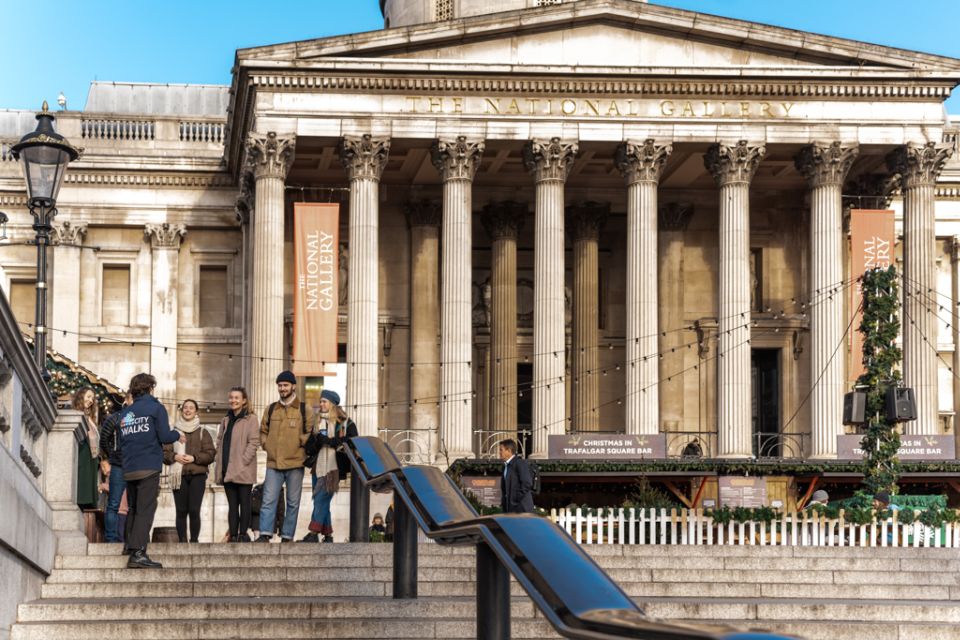
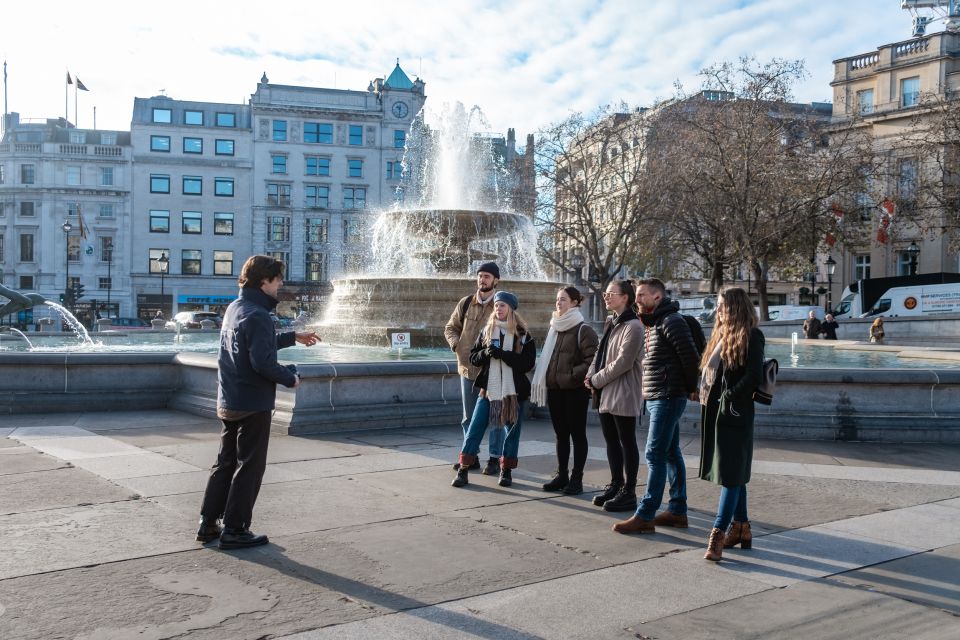
The tour begins at 5 Trafalgar Square, right on the north-west corner at the top of the steps. Look for the guide holding a blue umbrella near the large white cube statue on the 4th Plinth, opposite Canada House and close to the National Gallery entrance.
This is a smart start point. Trafalgar Square is open, wide, and full of landmark sightlines, so you get oriented fast. Within minutes, you’re looking out at the National Gallery frontage and Nelson’s Column rising up like a compass needle for central London. Even if this is your first trip, you’ll start to recognize the city’s geometry: squares, bridges, and those long, straight streets that funnel you toward Royal landmarks and theatre districts.
I like the way this early section sets expectations. Your guide doesn’t just list famous names. They connect the landmarks to the bigger story of how London projects power, culture, and public life—without turning it into a lecture. Expect “look up” moments, plus quick context that makes what you’re seeing feel less random.
Big Ben and the Palace of Westminster: Coronations, Power, and Photo Angles
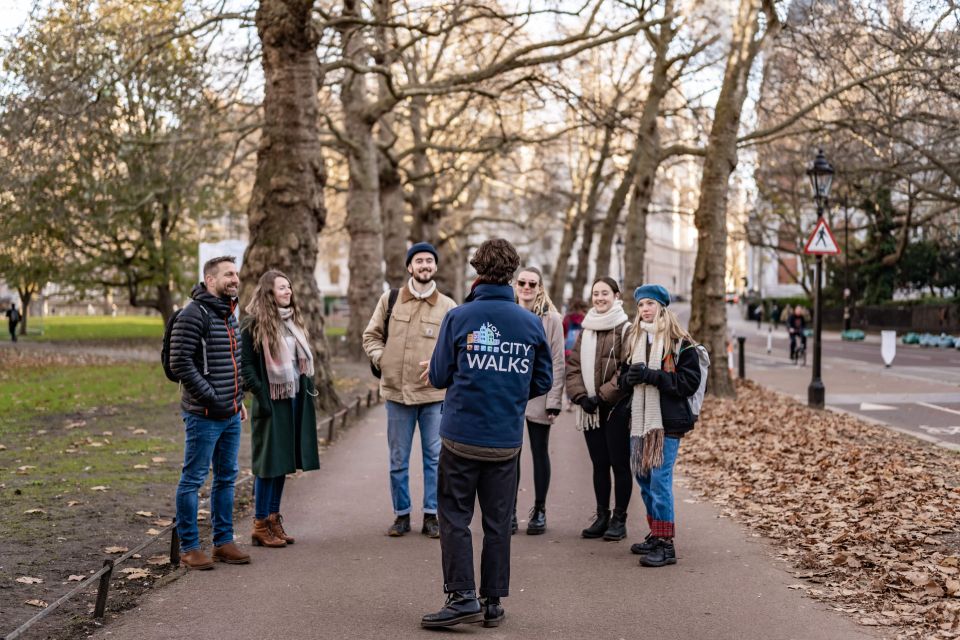
From Trafalgar Square you move into the heart of London’s political theatre: the Palace of Westminster and the Big Ben area. This stretch is where a guide’s storytelling matters most, because it’s easy for big, famous places to blur together if you’re only watching for postcards.
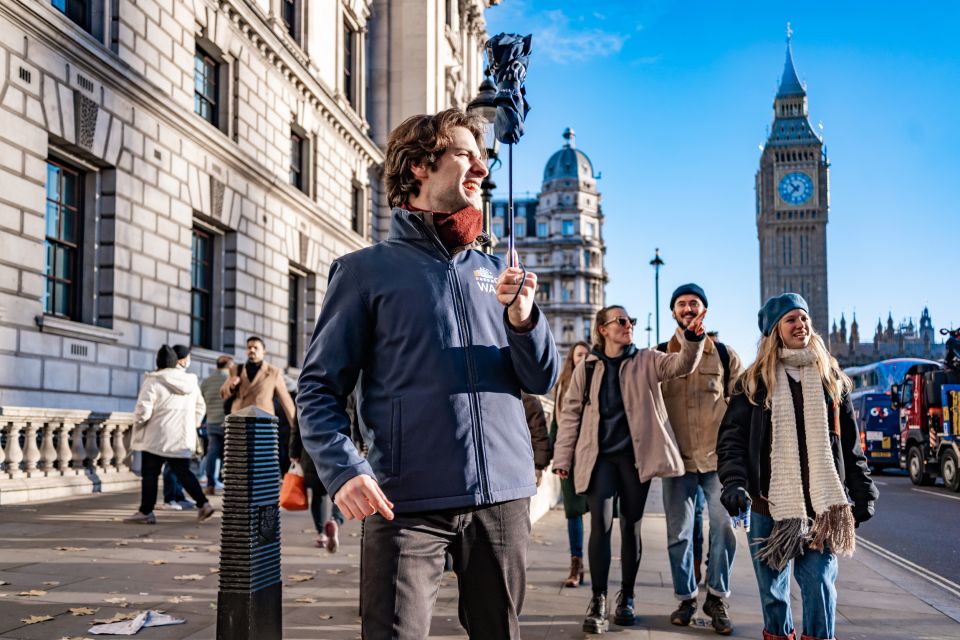
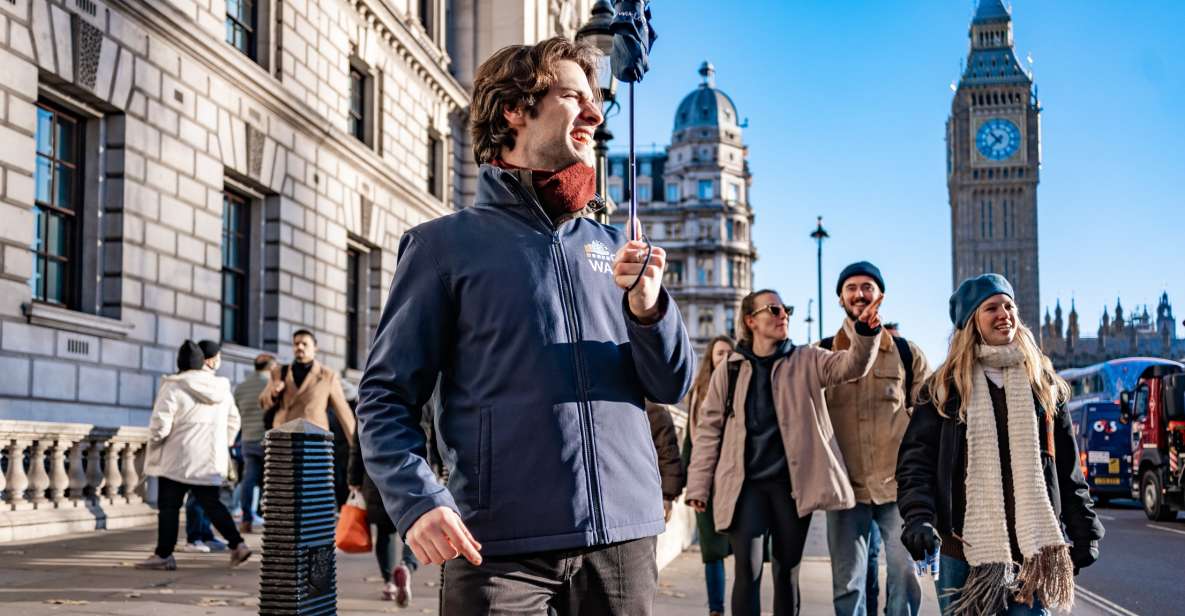
You’ll get the famous views tied to Big Ben and the Houses of Parliament as you walk past. Your guide also frames what makes this area unique: it’s not only architecture. It’s the backdrop for major national rituals, including the monarchy’s public moments and the kind of ceremony people associate with coronations.
If you care about photos, this is a practical stop. It’s a built-in photo corridor where you can angle shots without rushing into ticket lines. The tour approach is paced for walking, so you’re not stuck waiting to reassemble the group after every single stop.
One thing to keep in mind: the exterior experience is the point here. You’ll get context and clear views, but you won’t be doing an inside tour of the Parliament complex.
You can also read our reviews of more walking tours in London



Westminster Abbey and St James’s Park: Royal Backdrops Without the Ticket Stress
Your route continues into the Westminster orbit with Westminster Abbey as a key moment. The Abbey is one of those places where you already recognize the name—then a good guide gives you the “why it matters” behind the façade. You’ll hear about the monarchy’s history and coronations as you pass, which helps you understand what people mean when they talk about royal tradition in London.
Right after that, the tour keeps you moving through the Royal corridor: St James’s Park and onward toward St James’s Palace. Even from the sidewalk, these areas feel like more than scenery. They connect the monarchy to the daily urban flow—how public space, ceremony, and government sit side by side in the same tight geographic cluster.
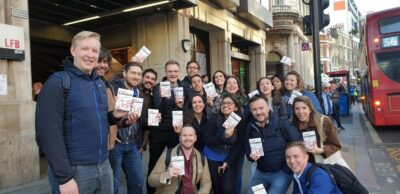
One of the most praised parts of this kind of tour is that the guide keeps the energy up and stays patient with questions. In past groups, guides such as Sebastian and Matt have been described as funny, relaxed, and good at answering queries without rushing. That matters here because you’ll likely want to ask about what you’re seeing, why it looks the way it does, and how the buildings relate to each other.
The Mall and Buckingham Palace: Watching Ceremony From the Pavement
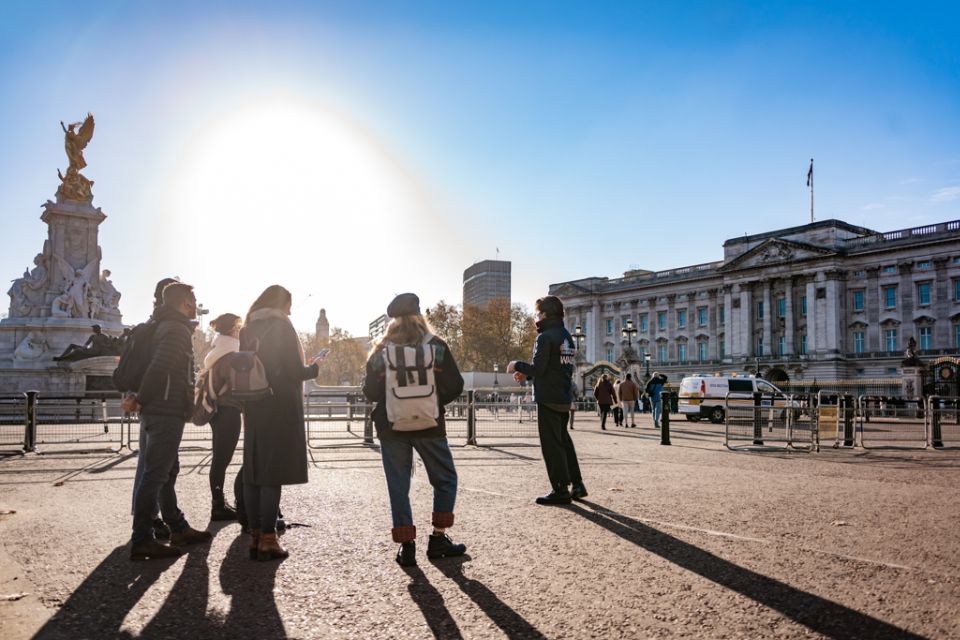
Then you hit the grand runway: The Mall leading you toward Buckingham Palace. This is where London does pageantry in plain sight. The route is designed to let you absorb scale—wide streets, long sightlines, and that unmistakable palace setting that looks like it belongs in a film scene.
The best part is how the walk turns the palace into something more than a single photo. As you follow the path, your guide ties the view to the monarchy’s public role and to the rhythms of central London. It’s the difference between seeing a landmark and understanding the setting that makes it famous.
If you’re traveling with family, this is often a favorite stretch because it’s visual and easy to explain. A couple of reviews even mention doing the tour with kids and appreciating that it gives a solid overview without requiring inside tickets or long waits.
Practical note: the tour is about moving. You’ll get time at the sights, but it’s not a slow stroll where you can wander off for extended photo sessions.
Horse Guards Parade and Churchill War Rooms: Government Buildings With Human Stories
Your walk heads through Whitehall, passing Horse Guards Parade and continuing toward Churchill War Rooms. These aren’t just “other government buildings.” They’re part of the London story people remember when they think of the city during wartime and national crisis.
The Supreme Court also appears along the way, adding variety. Westminster and the Royal sites can dominate your attention, so having another kind of civic architecture keeps the walk balanced. Your guide’s commentary helps you see this as a single connected map: monarchy, parliament, and public institutions all threaded through one central area.
What I like about this layout is that it avoids the common first-day mistake of trying to do too much inside too fast. Here, you’re getting the big picture while still experiencing the street-level feel of London.
And if you’re the type who likes small details—tiny symbols, design choices, and how places were used—this is where those “fun facts” can make the buildings click.
Regent Street, Burlington Arcade, and Piccadilly Circus: Shopping Streets and Theatre Streets
After the serious civic stretch, the tour shifts into the London you shop, snack, and people-watch through: Regent Street, Burlington Arcade, and Piccadilly Circus. This part of the walk is a change of pace, and it matters. It keeps the tour from feeling like a never-ending line of official buildings.
You pass streets where London’s theatre culture becomes visible in the surroundings. The route also takes you past theatre areas tied to stops such as Piccadilly and places associated with major productions, and it ends up near Apollo Theatre. Even if you don’t buy tickets the day you do the walk, you’ll leave knowing where the theatre energy lives.
Burlington Arcade is particularly interesting if you like the contrast between classic London charm and modern city motion. Regent Street sets the scale; the arcades offer the feeling of London as a place with layers.
If you’re thinking of the “what should I do tonight?” question, this portion is the warm-up. The scenery starts leading you toward West End dinner plans and evening shows.





West End to Soho: Where the Tour Hands You the Night
The last section leans into pure location-based planning. You move through West End and then toward Soho, with the tour ending back at Trafalgar Square.
Soho is where the night options expand fast: bars, eateries, and club energy. Your guide specifically encourages you to ask for recommendations once you reach the area. That’s a big deal for value because it turns your guided time into actionable follow-ups, not just a list of places you already know.
This ending also gives you a useful skill: learning how London neighborhoods feel. If you can recognize where Soho’s vibe starts compared to the quieter edges of Westminster or St James, you’ll navigate the city with more confidence later.
One more practical perk: several groups mention guides helping with pictures and taking the extra step to get people posed. When your tour wraps, you’ll usually be in better shape for photos and for moving on to the next plan.
The Vox City Walks Guide and the Included Sightseeing App
This experience lives or dies by the guide. The most praised themes from recent groups are consistent: guides were engaging, funny in a way that doesn’t kill the mood, and competent at holding attention through a lot of stops.
Names that have shown up in recent groups include Lou, Jess, Sebastian, Ollie, Matt, and Sam. The common thread is storytelling that stays relevant to what you’re seeing. Guides were also described as patient with questions and helpful with photos—especially when people asked them to direct angles or keep the group moving in the most efficient way.
Then there’s the app, which you shouldn’t ignore. Your ticket includes a complimentary sightseeing mobile-app. You use your own phone, scan a QR code on your voucher to download it, and then access self-guided walking routes after the guided portion finishes.
I like this setup because it fixes a common problem on highlights tours: you learn the route, then you’re stuck wondering what to do next. With the app, you can keep walking while you’re still in “orientation mode.”
Pacing, Timing, and Practicalities for a 2-Hour Walk
This tour is about 2 hours, so pace matters. You’ll cover a lot of ground without feeling like you’re sprinting, but you should still plan for steady walking. It’s the kind of route that works best when you wear comfortable shoes and accept that you won’t linger long at every curb.
Arrive about 5 minutes early so you don’t miss the start. The meeting point is easy once you know what to look for: top steps at Trafalgar Square’s north-west corner, by the white cube statue and near the National Gallery entrance. The blue umbrella is your key visual.
Group size can vary. One review mentioned a small group of only two people, which can make a difference for Q&A and photo help. Even when groups are larger, the format is designed for frequent commentary and clear sightlines.
Language is English, which helps if you want explanations that are direct and easy to follow.
Value for $20: What You Get (and What You Don’t)
At $20 per person for a 2-hour guided highlights walk, the value is mostly in three places:
- Time-saving context. You’re seeing a concentrated cluster of London’s biggest names—Westminster Abbey, Big Ben area, Buckingham Palace, and the West End—without needing to research each one.
- Live storytelling. A guide turns architecture and monuments into something you can remember.
- A built-in follow-up. The included sightseeing app lets you continue on your own right away.
What’s not included is also important. Attraction tickets aren’t part of the price. That means you’re doing the exterior and street-level viewing and interpretation. If you want indoor access—chapels, museums, or ticketed interiors—you’ll need separate reservations.
For first-time visitors, this is often the sweet spot: you get the “greatest hits” without exhausting yourself or burning your day on ticket lines.
Who This Tour Fits Best in Your London Plan
This tour makes the most sense if you:
- want a first-day orientation to central London
- prefer walking with live commentary instead of doing everything solo
- like photo opportunities but don’t want inside-ticket commitments
- want a simple plan that ends with practical ideas for food and evening entertainment
It’s also a strong choice if you’re traveling with family and want an overview that kids can handle. The route concentrates on recognizable scenes and keeps things moving.
If you’re already a London expert who wants deep museum-level detail or ticketed access, you might feel constrained by the exterior-focused format. In that case, treat this as your orientation layer, then build your specialized day around the stops you care about most.
Should You Book This London Landmarks Walking Tour?
Yes—if you want a smart, efficient way to see London’s top landmarks in one short session with a guide who keeps it fun and question-friendly.
Book it when:
- you want royal and Westminster highlights plus theatre streets in one sweep
- you value an included follow-up app so you can extend the day
- you’d rather pay for guided context than spend hours mapping your own route
Skip it (or plan around it) if:
- you want to go inside the big attractions during the same trip
- you’re trying to fit many ticketed experiences into only two hours
If you’re deciding between doing nothing but wandering and doing a structured highlights route, this is the middle path that usually works best: you get the big landmarks, you learn why they matter, and you still have energy left to explore on your own.
FAQ
How long is the London landmarks walking tour?
The tour lasts about 2 hours.
Where does the tour start?
It departs from the north-west corner at the top of the steps of Trafalgar Square, next to the large white cube statue on the 4th Plinth, opposite Canada House and near the entrance to the National Gallery. The guide holds a blue umbrella.
What are the major landmarks you pass during the walk?
You’ll see highlights such as Trafalgar Square and Nelson’s Column, Big Ben and the Houses of Parliament, Westminster Abbey, St James’s Park and St James’s Palace, Buckingham Palace, and you continue through areas like Whitehall, Regent Street, Piccadilly Circus, the West End, Apollo Theatre, and Soho.
Are attraction tickets included?
No. Attraction tickets are not included in the tour price.
What language is the live tour guide?
The live tour guide speaks English.
Is there anything included besides the guided walking tour?
Yes. Your ticket includes a complimentary sightseeing mobile app with self-guided walking routes.
Will I be able to explore on my own after the guided part ends?
Yes. Once the guided tour finishes, you can use the mobile app on your own with the self-guided routes.
Is free cancellation available?
Yes. You can cancel up to 24 hours in advance for a full refund.