REVIEW · LONDON
Sweeney Todd The Demon Barber of Fleet St Night Walking Tour
Book on Viator →Operated by Jack the Ripper Walks · Bookable on Viator
Sweeney Todd’s London feels different at night. This 2-hour Fleet Street walk mixes the gory legend with real London locations, and I love the way you’re pushed to ask whether Sweeney Todd is a true figure or pure fiction. I also like the photo-friendly stops and the classic Fleet Street vibe, including a look at Ye Olde Cheshire Cheese. The one thing to plan for is the physical side: the tour is rated for moderate fitness and includes a steep flight of stairs, and it’s not suitable for under 16s.
You’ll move through Central London with a small group (up to 30) at a night-walking pace, using a mobile ticket. You start at Temple Station and finish at St Bride’s Church, both easy to match up with tube stops afterward, so you can keep the rest of your evening flexible.
In This Review
- Key things to know before you set out
- Fleet Street After Dark: why this Sweeney Todd walk hits
- Price and value: listed as $0.00, but still take it seriously
- Before you go: timing, walking, and group size
- Stop-by-stop: Temple Station to the Astor-built house at 2 Temple Place
- The Thames, cholera, and Joseph Bazelgette: where grime meets explanation
- Milford Lane’s steep stairs and the story thread from The String of Pearls
- Devereux Court and the 1979 Sondheim version: how myths change names
- Entering the Temple: hidden-from-view London, Templars, and Temple Church
- Middle Temple Hall to Temple Church: the moment you’ll want to slow down
- From Temple Bar Memorial to the Law Courts area: Fleet Street starts to snap into focus
- St Dunstan-in-the-West: tunnels, remnants, and the church that ends the myth-forward walk
- The Daily Courant plaque and Dr Johnson’s House: crime stories sharing the street with literature
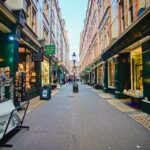
- Ye Olde Cheshire Cheese: the pub stop that makes the whole night feel human
- St Bride’s Church and the Wedding Cake nickname: closing the Sweeney debate
- Who will enjoy this most (and who should pick something else)
- Should you book this Sweeney Todd night walking tour?
- FAQ
- How long is the Sweeney Todd The Demon Barber of Fleet St Night Walking Tour?
- Where does the tour start and end?
- Is the tour really free and what ticket do I need?
- Is this tour suitable for kids?
- Is it hard to walk, and are there stairs?
- What’s the cancellation policy?
Key things to know before you set out
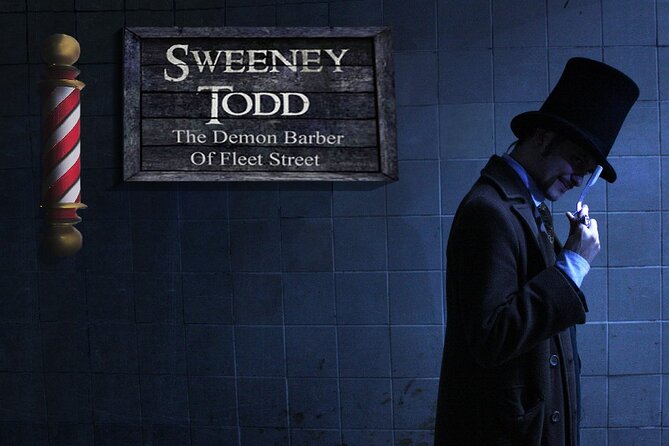
- Fleet Street at night: dark legends, street-level atmosphere, and a route that keeps you looking down side lanes as much as forward
- Sweeney Todd, real or invented?: the guide actively weighs possibilities instead of treating the story as settled fact
- Penny dreadful storytelling: you hear how the character and barbershop tale was framed in original serial-style sources
- A real London anchor in sewage and cholera: the walk ties grim legend-era storytelling to Joseph Bazalgette and 1850s sewer work
- Temple complex access and surprises: the tour takes you into the enclosed Temple area and shows why it feels hidden from view
- Ye Olde Cheshire Cheese: a Great Fire-era pub stop with a board outside listing monarchs, plus famous writers tied to the place
Fleet Street After Dark: why this Sweeney Todd walk hits
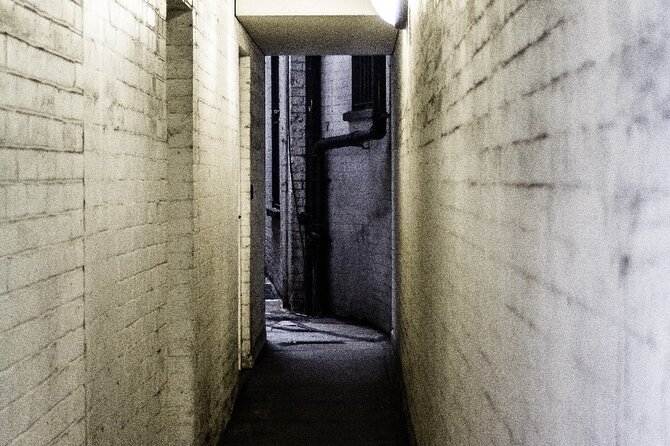
London has a way of letting you pretend you’re walking in the past. At daytime, that trick is harder. At night, with streetlights bouncing off old stone, the idea of a murderous barber and pie-linked panic feels less like trivia and more like a story you could step into.
This tour is built around a single big question: was Sweeney Todd a real person, or did penny dreadful writers make him up and let the myth grow legs? You don’t just hear the legend—you get the locations that people point to, then you’re asked to weigh what might fit and what doesn’t.
Two things made me enjoy it right away. First, the guide keeps the pace lively while connecting the Sweeney Todd tale to other nearby London darker corners, including links to Jack the Ripper-era thinking and general crime-story overlaps around the same stretch of town. Second, the stops are practical: you’ll see exact street corners, church fronts, and gateways you can actually find on your own afterward.
You can also read our reviews of more walking tours in London



Price and value: listed as $0.00, but still take it seriously
The price shown is $0.00 and the ticket is described as a mobile ticket. If this is a promotion at the time you book, it’s a heck of a deal for a night walking tour that covers multiple major stops across Temple and Fleet Street.
Even at any normal price, what you’d be buying is not just “story time.” You’re paying for:
- a route that’s easier to follow at night than a DIY walk,
- context that helps the places make sense (Temple history, 1850s public works, and the way crime stories spread), and
- a guided “is it real?” debate as you go, using the streets as your evidence board.
Do note the vibe: this is not a stroller-friendly evening. The physical requirements include steep stairs, and the tour is unsuitable for under 16s.
Before you go: timing, walking, and group size
This is about 2 hours (approx.) of night walking. You’ll cover a good chunk of Central London on foot, with several turns into side streets and enclosed spaces.
A small group matters here. The tour caps at 30 travelers, which helps keep the experience more personal. Still, narrow lanes and stair moments mean you should stay alert to the guide’s pace—if you drift, it’s easier to lose the thread.
Bring:
- comfortable shoes with grip (night + stairs is not the time for slick soles),
- a charged phone for photos (you’ll likely want pictures at the “supposed” barbershop-related spots), and
- a jacket or warmer layer. The end of the walk is still on the Fleet Street side of things, where the evening can feel colder than you’d expect.
Stop-by-stop: Temple Station to the Astor-built house at 2 Temple Place
You start at Temple Station. The guide sets the mood fast: you’re introduced to Sweeney Todd and immediately asked to consider whether he was a real person. That framing sticks for the whole walk, so every later stop feels like another clue—or a reason to doubt.
From there you move toward 2 Temple Place, a handsome building now used for museum and event purposes. The talk here isn’t about the legend first. It’s about a different kind of London story: the American William Waldorf Astor, why he settled in England after a family conflict, and how he inherited a fortune amassed by his grandfather John Jacob Astor. It’s a useful contrast. You see how London became a magnet for money and power, which is the kind of context that helps you understand why stories could spread and why certain names and places got attached to them.
Practical note: this section is mostly easy walking and street viewing. It’s a good time to get oriented and settle into the tour rhythm.
The Thames, cholera, and Joseph Bazelgette: where grime meets explanation
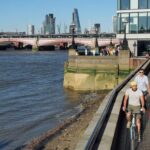
Next you head to Milford Lane, where the guide brings in the River Thames and the docks. This part feels like a shift from gothic fiction to city engineering, but it works.
You learn about the 1850s situation after years of cholera epidemics, when the government finally funded sewer work. The featured name is Joseph Bazelgette, described here as the Chief Engineer. The point of the story is bigger than one man: London’s infrastructure shaped real lives, and crime legends often grew alongside these periods of shock and public fear.
Even if you’re not a history nerd, this stop pays off because it gives you a grounded London “why” under the scary “what.” It’s one thing to hear about tunnels and basements in legend. It’s another to understand the literal city projects that were happening when people were desperate for answers.
You can also read our reviews of more evening experiences in London




Milford Lane’s steep stairs and the story thread from The String of Pearls
You’ll return to Milford Lane, then deal with the steep steps. The tour explicitly flags that stair climb as part of the experience, so treat it like the tour’s physical moment—not a minor inconvenience.
Once you’re up, you get the first real dive into the storytelling tradition behind Sweeney Todd. The guide connects him to The String of Pearls, presented as the original series tied to penny dreadful-style magazines and the barbershop thread. This is where the tour helps you understand why the legend is so sticky: it wasn’t delivered as a single polished work of fiction. It grew through serialized storytelling, the kind that keeps readers waiting for the next installment.
It’s also a moment where the guide’s job is harder. Penny dreadful material can sound wild on paper. Here, you’re seeing real streets while hearing how the story got shaped—so your brain gives the tale permission to feel “possible,” then yanks the permission back when you’re asked to consider fiction vs. fact.
Devereux Court and the 1979 Sondheim version: how myths change names
The tour then turns toward Devereux Court toward the gateway to the Temple. This stop is about another version of the Sweeney Todd story: the 1979 Stephen Sondheim musical.
The guide points out that Sondheim altered the story and gave Sweeney Todd a different real-name framing—Benjamine Barker. That detail matters because it shows you how each retelling rearranges the legend to fit its era. The “same character” becomes a new kind of message each time.
Even if you already know the musical, I think this stop is worth it because it puts a spotlight on adaptation. London is full of layers like this: buildings change hands, streets get renamed, and stories get rewritten for the moment they’re told.
Entering the Temple: hidden-from-view London, Templars, and Temple Church
One of the most atmospheric parts of the night walk is when you enter the Temple, described as an enclosed area hidden from view unless you know London well.
The guide connects the Temple’s origin to the Knights Templar in the 12th century, after the Crusades. You’re not just hearing dates. You get a sense of how a place could feel like a private world inside a loud city, which fits the tone of a story involving secret tunnels and hidden actions.
From there you move to Middle Temple Hall, a 16th-century baronial hall. Today it’s used for dining and celebrations, but you’re also told how this area is heavily filmed and photographed—and how you can visit this kind of place yourself. The value here is practical: it’s one thing to see a dramatic building from across the road. It’s another to learn how people access these spaces in real life.
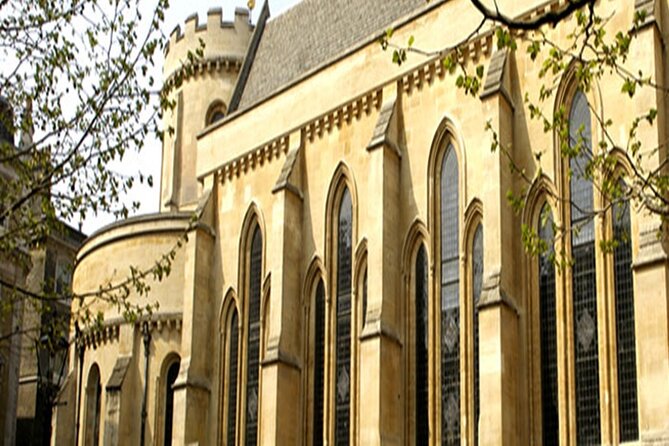
Then comes Temple Church, where you see the Master of the Temple’s house and walk to the church still standing from the 12th century. Behind it are graves of Knights Templar from that time. Whether you’re thinking in “legend” mode or “urban archaeology” mode, this stop makes the night walk feel anchored in something real.
Middle Temple Hall to Temple Church: the moment you’ll want to slow down
There’s a point in the walk where you’ll stop rushing and just watch. The Temple area does that to you. The street noise drops behind you. The shapes of the buildings feel older than the surrounding blocks.
This is the section where your photos can improve if you slow your pace and look for angles. The route gives you those moments, not just marching instructions. Use them.
If you’re traveling with someone who prefers facts to fright, this is also where you’ll get them nodding along. It’s strong enough history on its own that you don’t feel like you’re forcing the group to “enjoy the spooky.”
From Temple Bar Memorial to the Law Courts area: Fleet Street starts to snap into focus
When you come back out into Fleet Street, it gets loud again. You stop by the Temple Bar Memorial, and the guide asks a simple question: do you know why it has this name?
This kind of prompt is smart. It turns you into a participant rather than a passive listener. If you’ve walked Fleet Street before, it might have felt like a continuous strip of “historic London.” Here, you start to recognize it as a series of named boundaries and stories layered onto the same sidewalks.
Next you cross to Bell Yard, passing the huge building of the Royal Courts of Justice (called the Law Courts today). This is where the tour ties the legend into a specific shopkeeper-style claim: the guide links Mrs Lovette to a pie shop here and even talks about the recipe for juicy meat pies.
Again, treat it as story-location connection. But that’s exactly what makes it satisfying. You’re not just hearing “there were pies.” You’re seeing the kind of area where a shop could have existed and why the story would place her business nearby.
St Dunstan-in-the-West: tunnels, remnants, and the church that ends the myth-forward walk
The tour then walks down Fleet Street to St Dunstan-in-the-West, described as a stone’s throw from where Sweeney’s barbers shop supposedly stood.
This is where the legend gets its sharpest detail in a way that also feels grounded in geography: the guide talks about how Sweeney murdered victims, and that the remains were taken to Mrs Lovette’s basement bakery via tunnels that passed through this area.
It’s the kind of claim you can’t verify on the sidewalk. But that doesn’t make the stop pointless. It shows you how the legend uses the city like a board game—church here, shop there, “secret” route between.
If you like dark London lore, this is a high-voltage moment.
The Daily Courant plaque and Dr Johnson’s House: crime stories sharing the street with literature
Next you stop at a corner on Fleet Street near Crane Court to look at a plaque for the first Daily newspaper, the Daily Courant. You also connect this to the larger storytelling world of the era—how people learned about crime and scandal.
Then you turn into Johnson’s Court and go to Dr Johnson’s House in Gough Square. The guide reminds you he compiled a famous dictionary and was a major wit in the 18th century, and you’ll hear a quote attributed to him: When a man is tired of London he is tired of life, for there is in London all that life can afford.
That’s a fun pivot, and I appreciated it. It keeps the tour from becoming a one-note horror ride. London wasn’t only crime and misery. It was also language, publishing, and big personalities making the city feel alive.
Ye Olde Cheshire Cheese: the pub stop that makes the whole night feel human
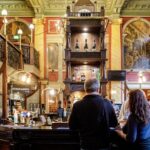
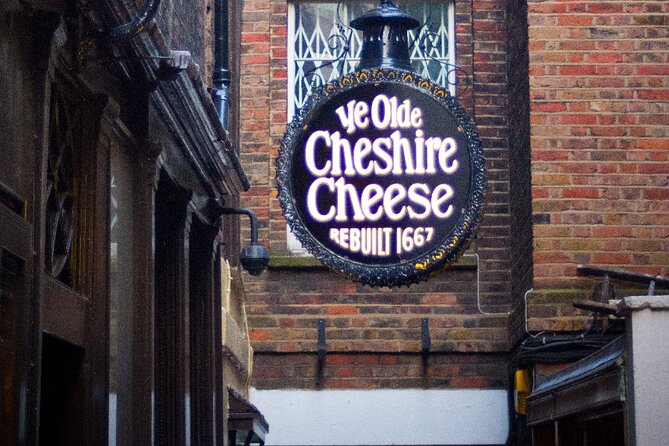
Your next big checkpoint is Ye Olde Cheshire Cheese. The tour describes it as a pub built just after the Great Fire of London, in the reign of King Charles II, and notes that there’s a board outside listing monarchs over time.
You also learn that writers and poets drank there, including Charles Dickens, Mark Twain, and W. B. Yeats (spelled that way in the tour notes you provided). This is a strong stop because it gives the legend a “normal” counterweight. After a walk filled with tunnels and barbershop horror, stepping into a place linked with poets and writers makes the night feel less like a nightmare and more like London’s long habit of turning even grim stories into culture.
This is also the easiest place to decompress if your feet are tired. Even if you don’t sit down with a drink, the pub’s presence helps you land the story in the real world.
St Bride’s Church and the Wedding Cake nickname: closing the Sweeney debate
The final stop is St Bride’s Church on Fleet Street. The guide explains why it’s called the Wedding Cake Church, then sums up everything you’ve learned and asks the same big question again: is Sweeney Todd a real character or a fictional one?
That return-to-question structure is one reason this tour works. You don’t end feeling like someone spoon-fed you an answer. You end with a set of places, clues, and context—and you get to decide what fits best.
Logistically, it’s also a nice landing point. St Bride’s is described as about a 5-minute walk from Blackfriars Underground (District and Circle lines) or about 8 minutes from St Paul’s Underground (Central line). That makes it easy to continue your night without backtracking.
Who will enjoy this most (and who should pick something else)
This tour is a great match if you like:
- night walking in the center of London,
- crime-story lore that points to real places,
- the tension between legend and history,
- and small-group tours where you pay attention to details because the route is active.
It may not be the best match if:
- you need fully flat ground. The steep steps are part of the experience,
- you’re traveling with kids under 16, since it’s not suitable for under 16s,
- you want a low-key sit-and-stare tour. This is a moving, looking, listening walk.
Should you book this Sweeney Todd night walking tour?
If you want a London night that feels smart and story-driven, this is a solid pick. The route connects Temple landmarks, public works context around cholera and sewers, and Fleet Street locations tied to the legend—all while keeping the central question alive. For the price shown as $0.00, it’s especially tempting because you’re getting a structured evening with a clear start at Temple Station and a clean finish near St Bride’s.
Book it if you’re comfortable with stairs and you’ll stay engaged with the guide. Skip it (or choose a different tour) if you’d rather avoid steep climbs or if the idea of a darker theme makes you uncomfortable.
If it helps: wear good shoes, keep your group position tight, and let the myth question do its work. London at night has a way of making even “maybe” feel worth hearing.
FAQ
How long is the Sweeney Todd The Demon Barber of Fleet St Night Walking Tour?
It’s about 2 hours (approx.).
Where does the tour start and end?
You start at Underground Ltd, Temple Station, Victoria Embankment, Temple, London WC2R 2PH, UK. You end at St Bride’s Church, Fleet Street, London EC4Y 8AU, UK.
Is the tour really free and what ticket do I need?
The price shown is $0.00. You receive a mobile ticket.
Is this tour suitable for kids?
No. It’s listed as unsuitable for under 16s.
Is it hard to walk, and are there stairs?
It’s for travelers with a moderate physical fitness level, and it includes a very steep flight of stairs to climb.
What’s the cancellation policy?
Free cancellation is available. You can cancel up to 24 hours in advance for a full refund. If you cancel less than 24 hours before the start time, the amount paid is not refunded.