REVIEW · LONDON
The British Museum: a highlights tour with a TV historian
Book on Viator →Bookable on Viator
Mummies meet the Rosetta Stone. On this private tour, I love the acquisition stories that explain how objects ended up in the British Museum, and I love the guide’s skill at making the visit work for both history fans and kids using Harry Potter-style pop references.
One practical catch: even though entry to the museum is free, you still need timed entry tickets booked directly from the British Museum website, and you should plan about 30 minutes to get through entry.
In This Review
- Key highlights at a glance
- A TV historian turns the British Museum into a story you can follow
- Meeting at the British Museum Reading Room (11:00am start)
- Rosetta Stone and cuneiform translation: the moment writing becomes power
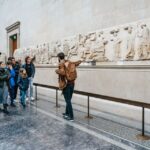
- Elgin Marbles and Parthenon Sculptures: art, politics, and acquisition stories
- Ancient empires in 3 hours: Rameses II, Assyrian war, and Montezuma’s jewellery
- Fakes, myths, and the crystal skull moment (and why it’s worth your time)
- Sutton Hoo, Lewis Chess pieces, and Anglo-Saxon signals
- A global sweep: Benin Bronzes, Chinese Buddha, Shiva statue, and Easter Island
- Pace, breaks, and making it work for families
- Price and value: free entry, paid expertise, and what you get for 3 hours
- Should you book this British Museum highlights tour?
- FAQ
- How long is the British Museum highlights tour?
- What time does the tour start, and where do we meet?
- Where does the tour end?
- Is the tour private?
- What language is the tour offered in?
- Do I need to buy a British Museum ticket?
- What is included in the tour price?
- What are some of the highlights you will see?
- Are service animals allowed?
- What is the cancellation policy?
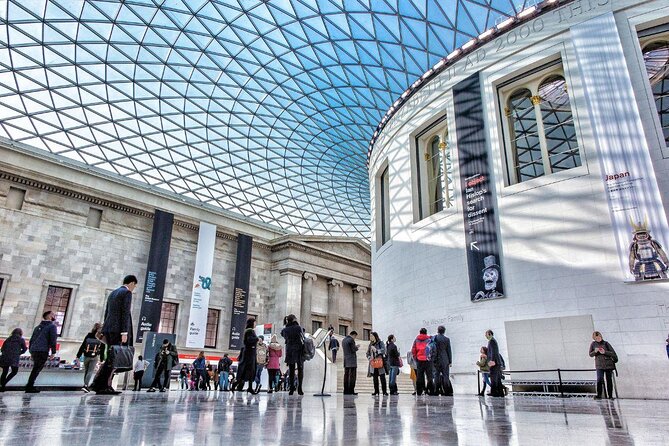
Key highlights at a glance
- Rosetta Stone and hieroglyph deciphering: learn how scholars cracked the code, not just that it exists
- Elgin Marbles and Parthenon Sculptures: see how ancient art and modern collecting collide
- Cuneiform translation and the oldest epic story: writing systems that changed what humans thought they knew
- Sutton Hoo and Anglo-Saxon finds: a strong stop if you like England’s early medieval roots
- Skeptic mode for fakes: crystal skulls and mermaids, treated as clues in how myths spread
- World-spanning objects: from Aztec jewellery to an India Shiva statue in one focused 3-hour loop
A TV historian turns the British Museum into a story you can follow
The British Museum can feel like a choose-your-own-adventure, but this tour adds a voice and a path. You get a TV historian style guide who knows the galleries well enough to steer you past the obvious and toward the objects with better backstories. The tour is built around the kind of details most people miss when they’re reading labels at speed.
I also like the guide’s pacing. He keeps the tone lively without turning it into a lecture. In the same breath you might hear mummies-related campfire lore and then get a serious explanation of how ancient scripts were decoded—Rosetta Stone first, then cuneiform later.
And one more thing I appreciate: the tour is designed to work for kids. The guide can make it fun and relevant with Harry Potter references and comparisons to Hollywood and everyday life. That matters because a museum visit with kids can otherwise become an endurance test.
You can also read our reviews of more museum experiences in London



Meeting at the British Museum Reading Room (11:00am start)
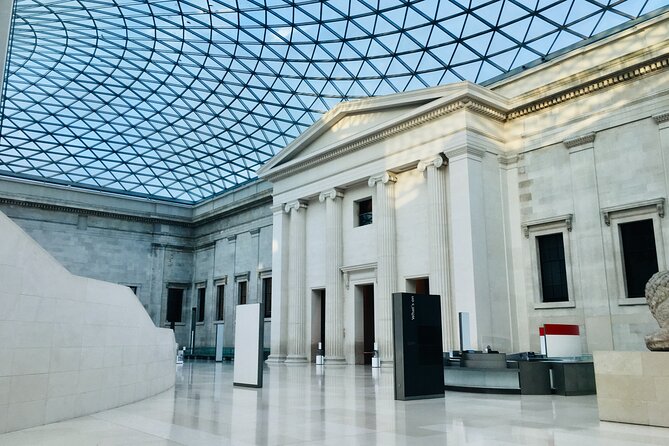
The experience starts at the British Museum Reading Room, Great Russell St, London, with a start time of 11:00am. You’ll finish back at the British Museum area near the mummies gallery, so the tour loops through the museum without making you chase it across London.
Plan your arrival with the real-world entry rhythm. Even though museum admission is free, you need a timed entry ticket from the British Museum website, and you should budget about 30 minutes to get in. If you arrive late, your tour time can get squeezed, and the whole point is seeing the highlights with space to actually look.
Good news: the tour is near public transportation, and it’s set up as a private activity, so only your group goes. The guide is also confirmed at booking, so you don’t arrive wondering if the person will show.
Rosetta Stone and cuneiform translation: the moment writing becomes power
The tour’s language-focused stops are where the museum gets genuinely brainy—in the best way. You’ll spend time at the Rosetta Stone, with an explanation of how hieroglyphs were deciphered. It’s not just a wow object; it’s the story of how researchers learned to read an entire visual language again.
Then the tour keeps that momentum with cuneiform and how it was translated. Cuneiform can feel like a wall of wedges until someone explains what to look for, how comparisons helped, and why the breakthrough mattered. In a 3-hour highlights format, these are the stops that make you feel like you understand the process behind the display.
If you’re into literature, you’ll also come across the world’s oldest epic story and the oldest library. The effect is like watching the museum switch from art objects to evidence of thinking: people recording, organizing, and passing ideas forward long before modern alphabets.
Elgin Marbles and Parthenon Sculptures: art, politics, and acquisition stories
One thing I like about this tour is that it doesn’t treat objects as untouchable museum trophies. You’ll hear the rarely told stories behind major displays, including how and why the museum acquired them.
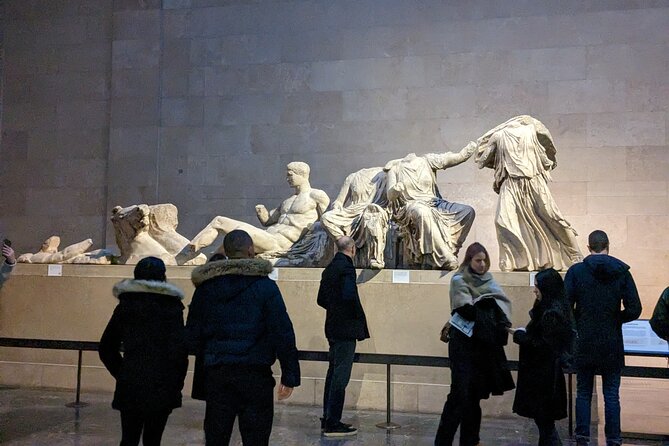
That’s especially relevant for the Elgin Marbles and the Parthenon Sculptures. These are masterpieces, but they also sit inside a bigger debate about collecting, removal, and ownership. With a guide, you don’t just look at the craftsmanship; you also learn what the display is saying—and what it leaves out.
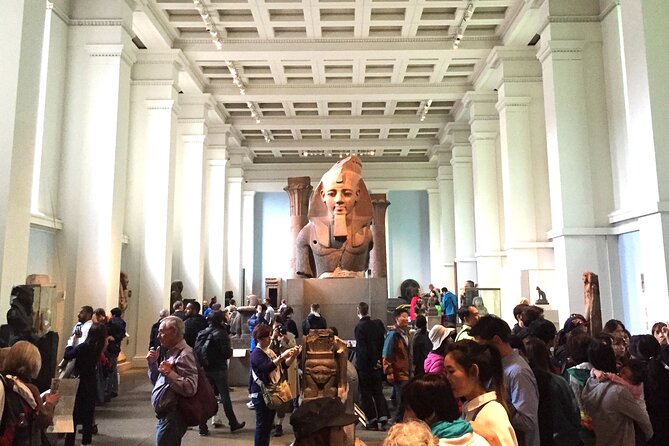
The same approach carries over to other items in the collection. For example, the bust of Rameses II is more than a face in stone. You’ll get context about ancient Egypt, plus the human story of how such an artifact ended up behind museum glass. The acquisition angle gives you something to think about as you walk.
Ancient empires in 3 hours: Rameses II, Assyrian war, and Montezuma’s jewellery
This tour moves quickly through major civilizations, but it still tries to make the objects feel human. You’ll see the bust of Rameses II and learn where it fits in the story of power in Egypt. Then you’ll shift gears to the Assyrian war machine, which is a strong reminder that ancient history wasn’t only art and poetry. It was also strategy, fear, engineering, and empire-building.
From there, you’ll hit Aztec jewellery worn by Montezuma. That stop is a great example of why a guide helps. Without context, jewellery can look like decoration. With it, the object becomes part of identity, rank, and ceremony—something that mattered in everyday life as much as in political life.
The tour also includes Mayan carvings, and that’s a good pairing for anyone who likes to compare how different cultures expressed big ideas in visual form. You come away with a sense that the museum isn’t one story; it’s many stories, stacked in one building.




Fakes, myths, and the crystal skull moment (and why it’s worth your time)
Not all museum highlights are ancient. A surprisingly fun stop focuses on fakes—things like crystal skulls and mermaids. This is where the tour earns its keep, because it teaches you how myths spread and how people end up believing the wrong story about what they’re seeing.
The guide’s job here is tricky. You need skepticism without killing the fun. The best part is that it trains your eye for patterns: what questions to ask, what evidence matters, and how experts separate spectacle from substance.
In a museum full of old things, this serves as a reality check. You start looking at labels with more intention, and you notice how claims are supported—or not supported—across time.
Sutton Hoo, Lewis Chess pieces, and Anglo-Saxon signals
If you’re drawn to Britain’s early medieval era, you’ll probably like the Anglo-Saxon Sutton Hoo stop. You also get Celtic jewellery and the Lewis Chess pieces, which are the kind of objects that make history feel oddly personal.
Sutton Hoo is one of those collections that helps you understand that the past isn’t frozen. It was messy, traded, and full of symbolism. Celtic jewellery adds that visual language of identity, showing how style can be social and political at once.
Then the Lewis Chess pieces bring a different kind of drama: play. Chess wasn’t just entertainment; it could reflect status and culture. Seeing it as part of the museum’s bigger story helps you feel the human side of ancient life.
A global sweep: Benin Bronzes, Chinese Buddha, Shiva statue, and Easter Island
The British Museum collection is famously worldwide, and this highlights tour uses that strength to give you a broad mental map. You’ll see Benin Bronzes, which often make people pause because they look both artistic and purposeful. The guide’s context helps you see them as more than decorative metalwork.
You’ll also come across a Chinese Buddha and a Shiva statue from India. These are religious and cultural objects, and the guide’s explanations help you understand how belief, form, and meaning connect. Even if you don’t share the faith, you can still appreciate how the physical object is built to carry ideas.
And then there’s an Easter Island statue. That stop helps you widen the lens again. In one 3-hour visit, you can go from language breakthroughs to belief objects and then back to everyday human expression—like making art in a place far from where you live.
Pace, breaks, and making it work for families
A tour like this is only worth it if you don’t feel rushed. The pace here is designed for a highlights approach with time to actually look. You can expect breaks during the walk, which helps when you’re standing in galleries with strong lighting and lots of detail.
This is also where the guide’s background matters. He’s known for firsthand British Museum experience and deep familiarity with what’s where. That shows in how efficiently he navigates you from one topic to the next without leaving you stuck staring at your phone.
Most importantly, the guide knows how to adjust. If you bring kids who aren’t into history, you’re not stuck trying to sell the day to them. The tour can shift to references they recognize—Harry Potter-style storytelling, Hollywood comparisons, and contemporary life analogies—while still keeping the facts moving forward.
Price and value: free entry, paid expertise, and what you get for 3 hours
Here’s the practical math. The museum admission itself is free, but you must book your timed entry ticket from the British Museum website. The tour price is for guiding services only, meaning you’re paying for context, interpretation, and a tight route that makes the time count.
For me, the value comes down to three things:
- You get guided acquisition stories instead of reading them piecemeal.
- You spend time on breakthroughs like deciphering hieroglyphs and translating cuneiform, which are hard to grasp from labels alone.
- You get a focused highlights set across many cultures, rather than spending half your visit deciding what to see.
If you’re the kind of person who loves wandering and likes slow reading at your own pace, you can absolutely DIY it with a timed ticket and a good map. But if you want the museum to feel like a guided narrative—especially with stops that raise the big questions about collecting and meaning—this is a strong use of your limited time in London.
Should you book this British Museum highlights tour?
I’d book it if you want a 3-hour plan that feels more like a guided story than a museum checklist. It’s especially worth it if you’re traveling with kids who need relevance and momentum, because the guide can use pop-culture references without losing the serious content.
I’d skip or change plans if your schedule is tight around timed entry. The museum slot matters, and entry can take time—about 30 minutes—so you’ll want to arrive early and keep your start time protected. Also, since it’s a highlights tour, you won’t see everything; you’ll see the best-selected objects and the stories tied to them.
If you want the British Museum to feel understandable and alive, this guided route is an efficient way to do it.
FAQ
How long is the British Museum highlights tour?
It lasts about 3 hours.
What time does the tour start, and where do we meet?
The start time is 11:00am, and the meeting point is the British Museum Reading Room, Great Russell St, London.
Where does the tour end?
It ends at the British Museum area near the mummies gallery.
Is the tour private?
Yes. Only your group will participate.
What language is the tour offered in?
The tour is offered in English.
Do I need to buy a British Museum ticket?
The museum admission is free, but you are advised to book your own free timed entry ticket directly from the British Museum website for entry.
What is included in the tour price?
The guiding services are included. Souvenirs are not included.
What are some of the highlights you will see?
You’ll see highlights such as the Rosetta Stone, Elgin Marbles, Parthenon Sculptures, cuneiform, the Sutton Hoo collection, Benin Bronzes, Lewis Chess pieces, and more.
Are service animals allowed?
Yes, service animals are allowed.
What is the cancellation policy?
You can cancel for a full refund if you cancel up to 24 hours in advance of the experience start time. If you cancel less than 24 hours before, the amount paid is not refunded.