REVIEW · LONDON
The History of London City Center Exclusive Guided Walking Tour
Book on Viator →Operated by Babylon Tours London · Bookable on Viator
London makes sense on foot. This guided walk from Covent Garden to Westminster Abbey strings together the people and power behind the city’s biggest landmarks, with an attentive guide to keep facts clear and your route efficient. I like the small-group feel and the fact that you can match the pace to what you actually want to see, and I love the expert storytelling about monarchs, prime ministers, and war-era Britain.
One possible catch: you’ll spend a lot of time viewing famous spots from the outside. Some sites also have security limits, so expect mostly street-level sightseeing rather than lots of inside access.
In This Review
- Key Highlights Worth Marking on Your Map
- Getting Your Bearings: Covent Garden to Trafalgar Square
- Whitehall and 10 Downing Street: Power You Can See (and Mostly Can’t Enter)
- Royal Stops: St. James’s Palace to Buckingham Palace
- War-Era Britain to Parliament: Churchill War Rooms, Big Ben, Westminster Views
- Westminster Abbey Finish: Entry Included, Interior Is Unguided
- Price and Value: Is $59.28 Worth 2.5 Hours?
- What to Expect on the Ground: Walking Pace, Weather, and “Outside Views”
- Should You Book This London City Center Walking Tour?
- FAQ
- Where does the tour start and where does it end?
- How long is the walking tour?
- Is the tour guide included in the price?
- Does the tour run rain or shine?
- What’s included for Westminster Abbey?
- Are tickets included for Churchill War Rooms, Big Ben, or the Houses of Parliament?
- Is hotel pickup or drop-off included?
- Do I need moderate physical fitness?
- Is there any limit on luggage?
- Do I need to provide a mobile phone number?
Key Highlights Worth Marking on Your Map
- Covent Garden start with a sense of place that goes back to early settlement days
- Trafalgar Square, Nelson’s Column, and Admiralty Arch in one easy sweep
- Whitehall and 10 Downing Street: government power, right on the sidewalk
- St. James’s Palace and Buckingham Palace with a chance to catch a royal moment if timing lines up
- Churchill War Rooms, Big Ben, and the Houses of Parliament viewed as a connected story
- Westminster Abbey entry included at the end, but the interior is unguided
Getting Your Bearings: Covent Garden to Trafalgar Square
The tour starts in Covent Garden, a great choice because it’s instantly recognizable and easy to meet. You’ll get an overview of the area right away, and you’ll likely notice the street performers and the mix of shopping and theatre around you. Covent Garden also has serious roots: the area’s story stretches back to early Saxon settlement days (as far as the 7th century), which helps you understand why London keeps reinventing the same spots instead of making a whole new city.
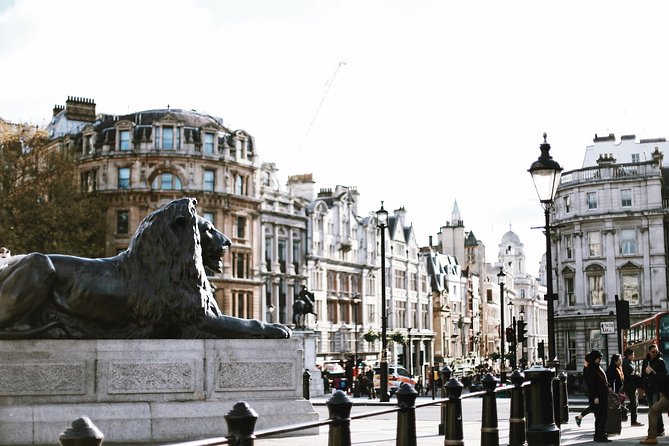
From there, you move into Trafalgar Square, and the guide’s job is to turn a view into a story. This square isn’t only about statues. It commemorates the Battle of Trafalgar, a major British naval victory in the Napoleonic Wars, and it’s also been used as a place for protests and demonstrations over time. That mix matters. It helps you see London as a political city, not just a postcard city.
Next up is Nelson’s Column, built to memorialize Admiral Horatio Nelson after his death at the battle in 1805. It’s a classic landmark, but the value is in what it symbolizes and how it fits the square’s larger meaning.
Then you’ll walk to Admiralty Arch, commissioned by King Edward VII in memory of Queen Victoria. It’s the kind of building you might pass by without thinking. Here, it becomes a reminder that even the grand approaches and ceremonial gateways have a reason to exist.
A practical note: many of these stops are short on purpose. You’re not trying to win an architecture marathon. You’re getting the big picture fast—then moving on while your legs still feel fresh.
You can also read our reviews of more walking tours in London



Whitehall and 10 Downing Street: Power You Can See (and Mostly Can’t Enter)
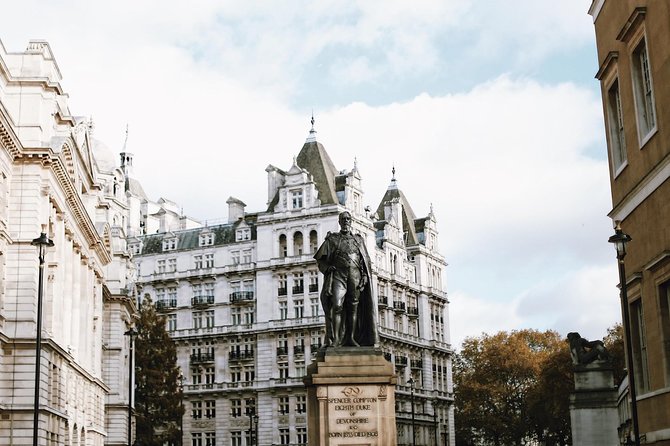
Walking along Whitehall is one of the most useful parts of this tour for first-time visitors. Whitehall is the street between Charing Cross and the Houses of Parliament, and the name also covers the cluster of small streets and squares nearby. Since the 1530s, it has been known for principal government offices, starting with Henry VIII’s court at Whitehall Palace.
This section works because it connects the dots. The guide helps you connect monarch-era decisions, political leadership, and the way modern government still occupies the same general area. It’s an easy way to understand why London feels like it runs on continuity.
Then you reach 10 Downing Street, the official residence and offices of the UK Prime Minister. You’re viewing it as the working landmark it is: you’ll learn what it represents and why this address matters. Just don’t expect to wander inside. The tour is built around seeing key areas and landmarks from the outside, and security rules mean you may not get inside access at many attractions.
You’ll also pass by St. James’s Palace, described as the most senior royal palace in the UK. Royal history here stretches over 300 years, which is exactly the sort of time scale that makes London feel bigger than it looks.
If you like your sightseeing grounded in how power actually worked (and still works), this stretch is one of the best uses of your 2.5 hours.
Royal Stops: St. James’s Palace to Buckingham Palace
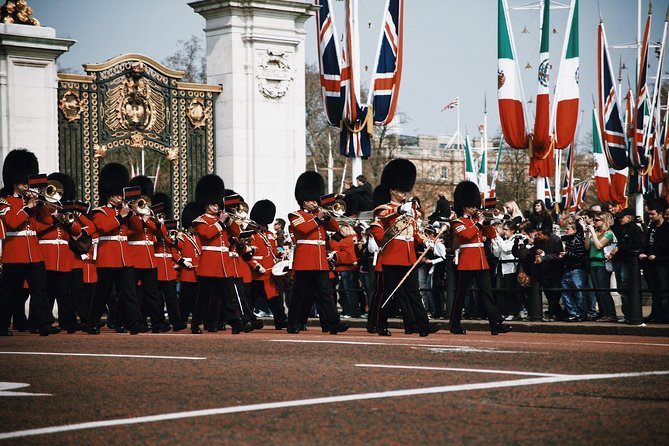
The tour’s royal segment is less about ticket lines and more about context. You’ll move through the area near Buckingham Palace, and along the way you’ll get explanations of how the monarchy fits into London’s layers of leadership—past and present.
This is also where timing can add extra value. In one of the standout guide experiences, Sheldon was noted for timing the tour so the group could see the changing of the guard. You shouldn’t count on it like a guaranteed calendar appointment, but it’s a great example of how a well-run walk can line up with a classic London moment.
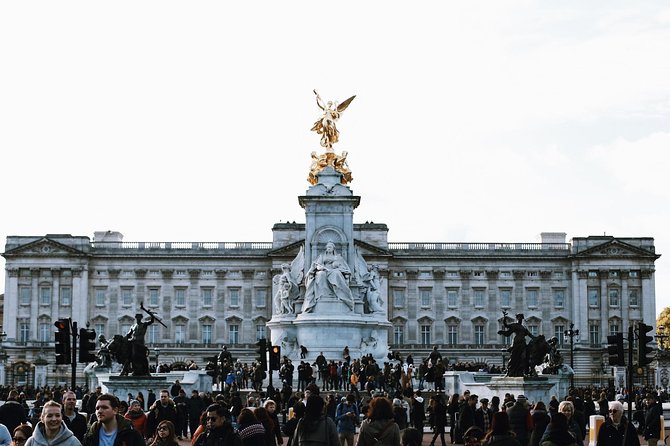
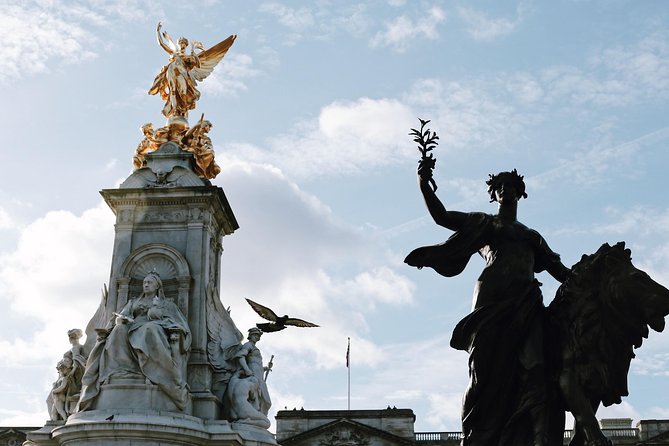
At Buckingham Palace and nearby areas, the tour approach is simple: look, listen, and take photos without rushing yourself. Since entry to the palace itself is not included here, your time is about understanding what you’re seeing from the street and appreciating the scale.
Think of this part as your “royal orientation.” After this, you’ll recognize the roles different sites play, instead of treating them as isolated monuments.
War-Era Britain to Parliament: Churchill War Rooms, Big Ben, Westminster Views

Next the tour shifts into modern Britain’s toughest chapter. You’ll pass by the Churchill War Rooms, part of the Imperial War Museum group. This stop matters because it connects the surface of London—the buildings you recognize—with the hidden operations that shaped wartime decision-making.
The War Rooms include the Cabinet War Rooms, an underground complex that served as a British government command center during the Second World War, plus the Churchill Museum focused on Winston Churchill’s life. In other words, this isn’t just a war stop; it’s a leadership and decision-making story—what happens when the city’s daily life is pushed into crisis mode.
Admission isn’t included for the War Rooms, and you won’t be going inside as part of this walk. Still, even seeing the exterior and understanding what’s under the ground helps you decide whether you want to come back later for a ticketed visit.
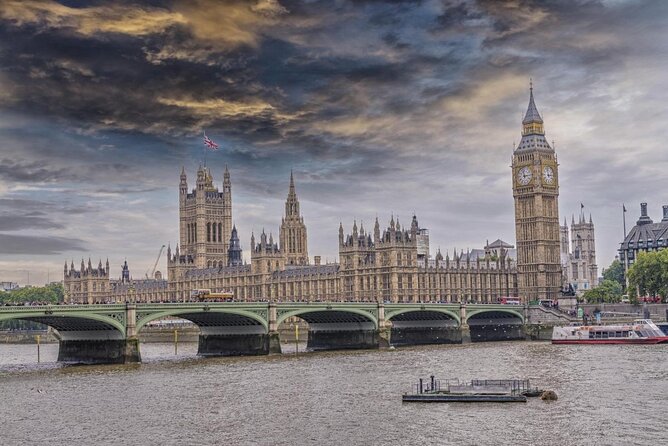
Then you’ll see Big Ben, the clock tower at the end of the Palace of Westminster. Big Ben is one of those names people know, but it’s easy to forget it’s part of a bigger governmental complex. With a guide, you get the tie-in to Parliament right away.
After that, you’ll view the Houses of Parliament (Westminster Palace). The building is Gothic and its history spans over 900 years. This is where the tour helps you understand the system, since it’s the meeting place for the House of Commons and the House of Lords.
Again, this is primarily an outside-and-explain setup. If you want to sit in chamber seats or go deep into interiors, you’ll need a separate timed ticket elsewhere. But if your goal is to grasp the main political geography in one hit, this section is a strong payoff.
Westminster Abbey Finish: Entry Included, Interior Is Unguided
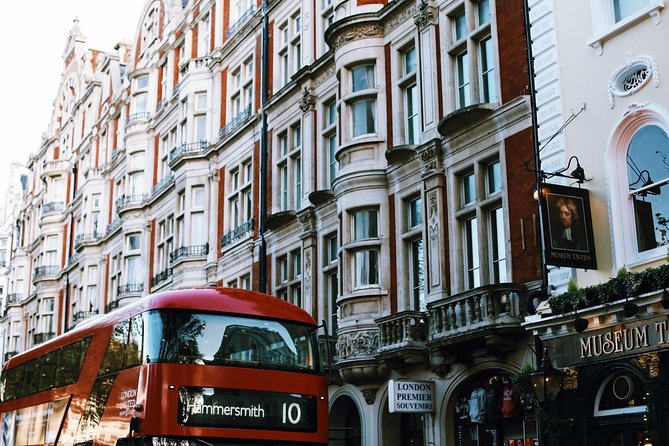
The tour ends at Westminster Abbey, with the final stop set at the exterior. You’ll get about 30 minutes at the end, and this is the only major inside option mentioned: entry to Westminster Abbey is included, but a guided tour of the Abbey interior is not included.
So here’s how to make this work well for you. Plan to treat those 30 minutes as a self-guided visit. That means you should decide in advance what you want most—architecture, memorials, or the feeling of stepping into a place that’s been central to English (and British) ceremonial life for generations.
Your guide’s role ends at the finish, and that’s a good thing. It gives you freedom to move at your own pace once you’re inside, instead of being rushed by explanations.
If you’ve ever felt museum tours are either too fast or too scripted, this mixed format can be a nice compromise: guided learning where it matters on the street, then independent time where you can slow down.
You can also read our reviews of more guided tours in London






Price and Value: Is $59.28 Worth 2.5 Hours?
At $59.28 per person for roughly 2 hours 30 minutes, this tour sits in a very practical middle lane. You’re paying for speed, organization, and a guide who can interpret what you’re seeing. That’s the big value piece. London’s center is packed with landmarks. Without a guide, you can still do the route—but you’ll mostly be collecting photos. With a guide, you’re collecting meaning.
What’s included:
- A guided walking tour that runs rain or shine
- A tour guide included for your group (with a note that some semi-private options may not include exclusive guide time)
- Westminster Abbey entry at the end
What’s not included:
- Hotel pickup or drop-off
- Gratuities
- Entry/tickets for several major spots you pass by (like Churchill War Rooms, Big Ben, Houses of Parliament interiors, and Westminster Abbey guidance)
This is also a good price point because many of the core sites on this walk are free to view. What you’re really buying is the handrail through the stories. That’s why the tour tends to attract first-timers and history lovers: you’re paying to avoid the confusion of trying to piece together centuries of monarchy and government on your own.
One more value clue: this tour is commonly booked about 54 days in advance, which usually signals it’s a popular way to see central London without planning a full day of separate tickets.
What to Expect on the Ground: Walking Pace, Weather, and “Outside Views”
This is a walking tour, and the provider notes moderate physical fitness is needed. Expect steady walking with short stops, not long museum-style breaks.
It operates in all weather conditions, so you’ll want to dress like the day might surprise you. Bring:
- Comfortable shoes
- Water
- Umbrella if rain is in the forecast
- Hat in summer
Also, no large bags or suitcases are allowed. If you’re traveling light, great. If you’re dragging luggage around town, you’ll want to leave it somewhere secure and keep this trip pack-free.
One more small but important detail: you need to provide a mobile phone number (including country code). That’s usually tied to communication from the operator—especially if routes need adjusting.
Speaking of which: national celebrations can change the route. In those cases, you’ll still see the main highlights, but refunds or discounts aren’t offered. That’s normal for crowded cities. The good part is the tour is designed with alternate routing in mind, so you’re not left guessing.
Should You Book This London City Center Walking Tour?
Book it if you want:
- A fast, organized way to see Covent Garden, Trafalgar Square, Whitehall, royal landmarks, Big Ben, and Parliament
- A guide who explains what you’re looking at, not just where to stand for photos
- A plan that ends with Westminster Abbey entry so the day isn’t only exterior views
Skip it (or consider a different option) if you strongly prefer:
- Lots of interior time at multiple museums and government buildings
- A trip that is mainly about ticketed attractions beyond Westminster Abbey
For most visitors, this tour hits the sweet spot. It’s a tight route with a strong interpretive payoff. You leave with a clearer sense of how London’s power centers—royal, political, and wartime—sit side by side in the city.
FAQ
Where does the tour start and where does it end?
The tour starts in Covent Garden, London and ends at Westminster Abbey.
How long is the walking tour?
It runs for about 2 hours 30 minutes.
Is the tour guide included in the price?
Yes. The tour includes a guided walking experience. The notes also indicate that the exclusive guide benefit may not apply if you choose a semi-private option.
Does the tour run rain or shine?
Yes, it runs rain or shine.
What’s included for Westminster Abbey?
Entry is included at the end. A guided tour of the Abbey interior is not included, and the interior visit is unguided.
Are tickets included for Churchill War Rooms, Big Ben, or the Houses of Parliament?
No. The tour notes that admission for those stops is not included. You’ll be seeing them as part of the walking route.
Is hotel pickup or drop-off included?
No. Hotel pickup or drop-off is not included. The guidance is to use Uber or Taxi.
Do I need moderate physical fitness?
Yes. The tour asks for a moderate physical fitness level since it’s a walking tour.
Is there any limit on luggage?
Yes. No large bags or suitcases are allowed.
Do I need to provide a mobile phone number?
Yes. You must provide a mobile phone number (including country code).