REVIEW · LONDON
The Roman City of St Albans Private Tour
Book on Viator →Operated by Ye Olde England Tours · Bookable on Viator
Roman ruins are a short train ride away. In St Albans, I love how you can still trace Roman walls in real space, and I love that your visit ends in St Albans Cathedral, one of England’s oldest Christian sites. This private tour strings Roman, Anglo-Saxon, medieval, and modern moments together with your own guide and round-trip transport from your London hotel.
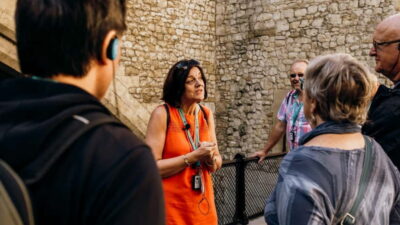
The guiding is the secret sauce here. Kevin (your guide) meets you at your London hotel, then keeps the day moving with clear explanations and lots of story links—from the Holy Well to Uther Pendragon and King Arthur. One thing to plan for: it’s a full 6-hour day with multiple stops, some of them short, and you’ll want comfortable shoes plus smart casual clothes for the cathedral.
In This Review
- Key things I liked about this private St Albans day
- From London Hotel to Roman St Albans: how the day really runs
- Holy Well, and the Arthur link you can actually picture
- Verulamium Park and Roman Walls: seeing the ancient city under the modern one
- Hypocaust and the Roman mosaic: the highlight most people remember
- St Michael’s Church and the Roman Theatre: two eras, one walk
- Verulamium Museum: where the stones get names
- Ye Olde Fighting Cocks and the monastery gateway: old England in small doses
- St Albans Cathedral: the pilgrimage core of the day
- Verdun Tree, Clock Tower, and time in the market town
- Price and value for a private 6-hour day from London
- Who should book this St Albans Roman day—and who might not
- Should you book the Roman City of St Albans Private Tour?
- FAQ
- How long is the Roman City of St Albans private tour?
- What time does the tour start?
- Is hotel pickup included?
- Is this a private tour?
- What language is the tour offered in?
- Are entry tickets included?
- What’s not included in the tour price?
- What should I wear for the cathedral?
- Does the tour run in bad weather?
- Can I cancel for a full refund?
Key things I liked about this private St Albans day
- Hotel pickup and guided day-trip pacing so you don’t spend your energy figuring out transit
- Roman Verulamium Park + surviving walls where the ancient city is literally under your feet
- A stand-out Roman mosaic and hypocaust experience (this is a highlight)
- St Albans Cathedral plus older worship sites like Holy Well and St Michael’s Church
- Time to roam the old town for pubs, shops, and market energy
From London Hotel to Roman St Albans: how the day really runs
This is designed as a true day trip. You start in the morning (8:30am) and finish back where you started, with hotel pickup and drop-off. The tour is private, so it’s only your group, not a mixed crowd you have to navigate around.
Transport is handled for you, and in practice it can involve public options (like the underground and train) rather than you just hopping into a car and staying there the whole way. The practical upside is simple: you spend less time on logistics and more time at the stops, where the guide can explain what you’re seeing.
The tour lasts about 6 hours, with a lot of “micro-stops.” Each location is brief, so you get movement and variety instead of one long museum slog. That said, it also means you’ll see many places on your schedule—not in your own slow wander mode—so go in with that mindset.
One more detail that matters: the day includes an Abbey/Cathedral entry, with a smart casual dress code. If you’re arriving in jeans and a hoodie from London, either change or plan ahead.
You can also read our reviews of more city tours in London



Holy Well, and the Arthur link you can actually picture
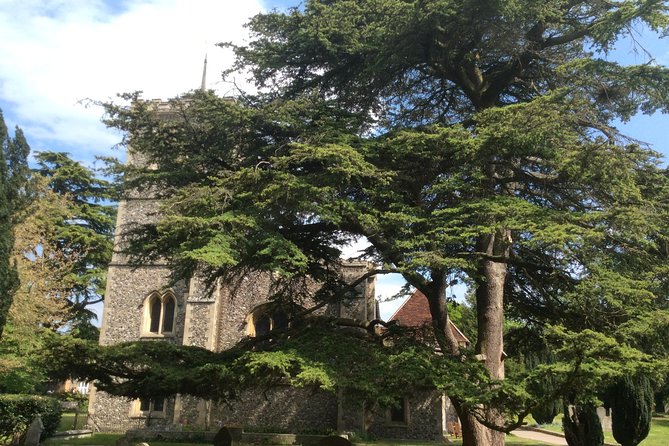
You begin at the Holy Well in St Albans, a spot that’s about more than water. The story ties the site to early Christian martyrdom—there’s a direct legend connection to the martyr himself—and then it gets even more fun if you’re an Arthur fan.
This is where local myth and medieval storytelling meet geography. The well’s waters are described as revitalising an elderly Uther Pendragon before a battle, and if Uther isn’t immediately familiar, you’ll recognize him as the father of the legendary King Arthur. Even if you don’t go deep into legend, your guide’s job is to help you connect the dots between the place you’re standing in and the stories people told around it.
The visit is short (around 10 minutes) and the ticketing is easy here—admission is free—so the Holy Well works as an excellent “wake-up stop.” It gives you a narrative anchor for everything that follows. In other words: you’ll understand the tone of St Albans before you start walking Roman remains and old church interiors.
Verulamium Park and Roman Walls: seeing the ancient city under the modern one
Next you head into Verulamium Park, which sits right on top of the Roman city. This is one of those places where the physical layout tells you a story. The “modern” town is up on the hill, and the Roman city was down below. That difference in elevation is more than trivia. It changes how you imagine daily life—routes, water, walls, and the practical geography of an old settlement.
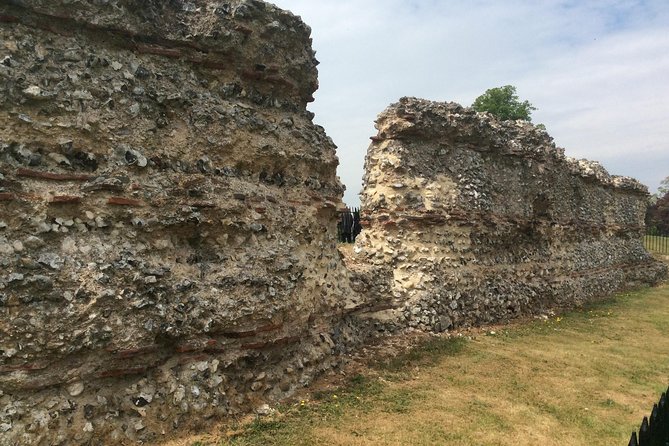
You’ll also spot impressive surviving sections of the Roman city walls. The park stop is brief (about 15 minutes), but it’s targeted. You’re not just looking at grass and stones—you’re learning what’s Roman, what’s later, and how the remains relate to the bigger picture of Verulamium as a real place.
Right after that, you get a quick look at additional surviving Roman walls of St Albans. This second stop is only about 10 minutes, but it’s valuable because it reinforces what you already saw. If you’re the type who likes patterns (and most people are), this sequence helps you “read” the site instead of treating each wall section as a random photo moment.
For me, the best value in these wall-focused stops is the time-to-understanding ratio. They’re short, free to enter, and your guide explains enough to make your photos feel meaningful later.
Hypocaust and the Roman mosaic: the highlight most people remember
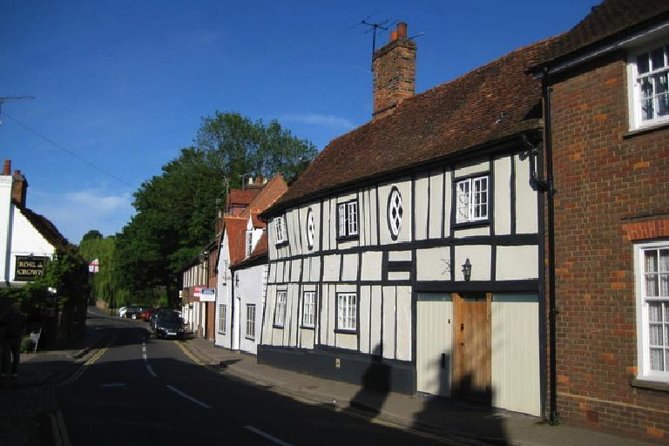
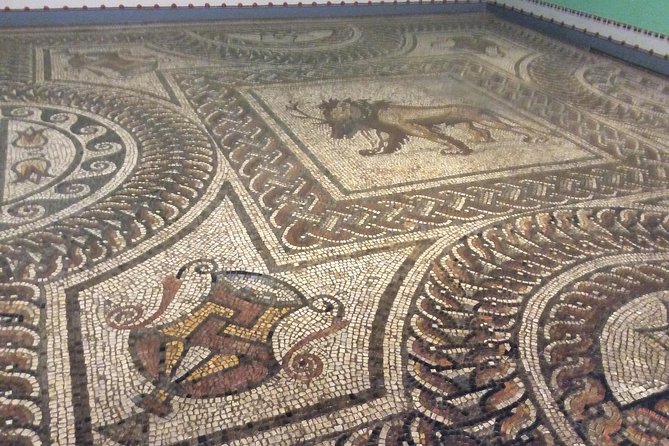
Then comes the stop that often steals the show: the Hypocaust and Roman Mosaic. This is one of the finest Roman mosaic floors in Britain, and described as one of the finest anywhere. Even if mosaics aren’t your hobby, this is the kind of site where you can’t help but slow down for a minute.
A hypocaust is tied to Roman heating systems—so you’re not only looking at decoration. You’re seeing evidence of how Romans made buildings comfortable. Pair that with the mosaic floor, and the message is clear: this wasn’t a “settlement of ruins.” It was an organized, built environment with serious design.
The visit is about 10 minutes, and admission is free, but don’t let the short time fool you. With a good guide, you’ll learn what you’re looking at and why this particular mosaic matters. The value isn’t just the artifact—it’s the way you’re taught to interpret it.
If you only had time for one “Roman interior” moment on the day, this is the one I’d prioritize. It’s the most concrete payoff for your Roman-time investment.
St Michael’s Church and the Roman Theatre: two eras, one walk
After the Roman stop, you shift into earlier Christian and post-Roman Britain at St Michael’s Church. This church is said to be around 1,000 years old, with an Anglo-Saxon origin, and it’s still used today. That matters. When a religious building is still actively part of local life, it tends to feel less like a costume museum and more like a continuing community space.
The stop runs about 15 minutes and entry is included. The smart play here is to pay attention to what your guide points out rather than trying to read every carved detail yourself. In a short slot, guidance helps you notice the features that actually anchor the story of the building.
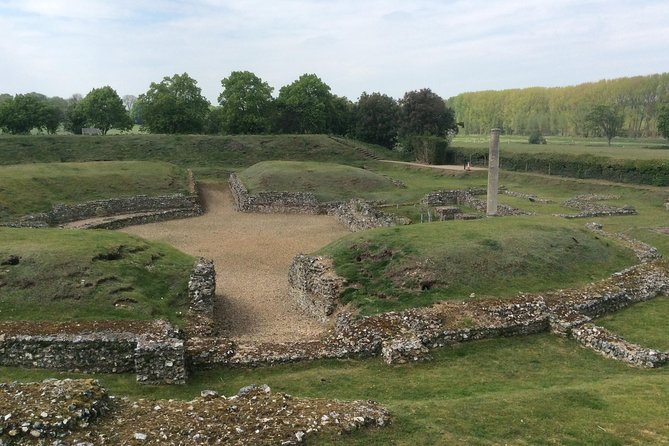
Next you visit the Roman Theatre of Verulamium and the related ruins and shops (about 25 minutes, with admission included). A theatre doesn’t just mean entertainment. It hints at public life, gatherings, and the kind of civic culture that existed when Verulamium was thriving.
This stop is longer than some of the others, which is good because theatres take a second to “click” in your mind. You’ll understand the layout faster with explanation than by eyeballing it alone.
You can also read our reviews of more private tours in London






Verulamium Museum: where the stones get names
If you like when a place stops being “just ruins,” the Verulamium Museum is your reward. You’ll spend about an hour here, with admission included.
The museum collection is built around Roman objects discovered in the park and city around the area. That’s a big difference from a museum that feels imported. Here, artifacts connect back to the exact spaces you’ve just walked through—Roman walls outside, objects inside.
This is also a practical reset. The day has multiple brief stops, so having a longer indoor segment lets you catch your breath. It’s a good moment for questions too, because you can ask about what something might have been used for, or how the city’s daily life might have worked.
If you’re worried you’ll be “Romaned out” after mosaics and walls, the museum helps because it organizes the chaos. You leave with a mental map of what the Roman city was like.
Ye Olde Fighting Cocks and the monastery gateway: old England in small doses
You’ll make a short (about 5 minutes) stop at Ye Olde Fighting Cocks, often described as one of the oldest pubs in Britain. Even if you don’t go inside, the point is that St Albans has lived with its legends for a long time. Pubs like this tend to be more than a place to drink—they’re living anchors of local memory.
Then you head to the Great Gateway of the Monastery, an imposing gatehouse and one of the more low-key highlights of the day. This stop is about 10 minutes and admission is free.
The benefit of these two quick stops is variety. After Roman and museum-heavy content, you get architecture and atmosphere—things you can feel with your eyes more than your imagination.
And yes, you’ll still have time to think about food later. Food and drinks aren’t included, but St Albans has old pubs and places to eat, so you’re not stuck hunting for a meal in the middle of nowhere.
St Albans Cathedral: the pilgrimage core of the day
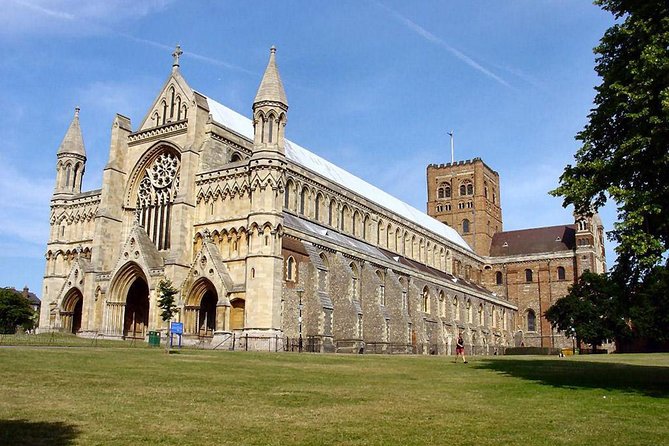
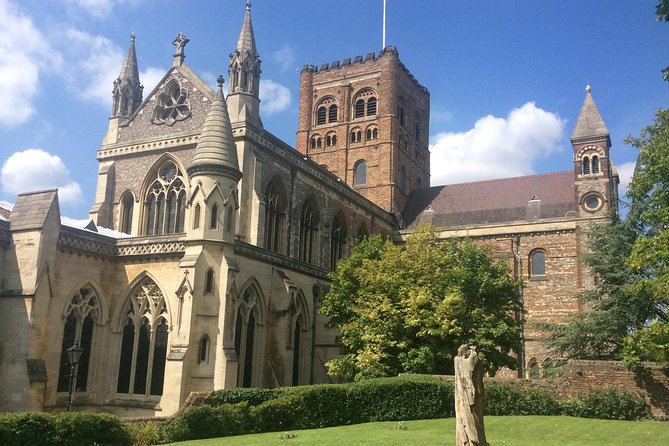
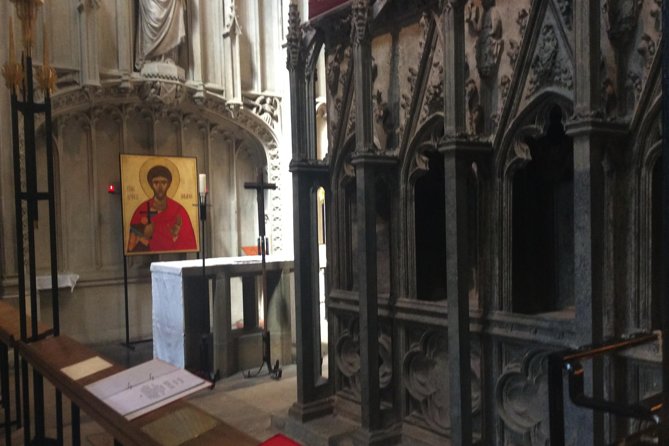
No matter what brought you to St Albans, you’ll want to give time and respect to St Albans Cathedral. This is the spiritual and historical center of the area’s long Christian story.
Your visit runs about 1 hour 20 minutes and entry is included. The guide connects it to the story of the area’s first Christian martyr from Roman times. You’ll also see why the cathedral became a key pilgrimage and important abbey—until King Henry VIII’s era changed the religious landscape.
This is also where your smart casual outfit matters. If you arrive underdressed, you might feel rushed. If you dress right, you can slow down and really look at the space.
For me, the Cathedral stop is the moment the day stops being a list of attractions and becomes a single narrative: Roman St Albans turning into a medieval Christian hub, with layers you can still feel in the building itself.
Verdun Tree, Clock Tower, and time in the market town
As the day continues, you get a blend of memory and everyday St Albans.
You’ll see the Verdun Tree, linked to World War I, in just about 5 minutes. It’s a small stop, but it’s a good reminder that towns keep collecting meaning long after the Romans are gone.
Then comes St Albans Market. The market doesn’t run every day, and when it’s not in full swing, there’s still plenty to see. Expect about 15 minutes. This is a flexible pocket of time where you can browse, people-watch, or just soak up the feel of the town.
At the edge of the market sits St Albans Clock Tower, built in 1403 and described as the only free-standing belfry in Britain. This stop is about 5 minutes, and admission isn’t included—though you likely won’t need tickets just to appreciate it from outside.
Finally, you get about 1 hour of free time to enjoy the city centre: old pubs, cafés/creperies, shopping, and an easy-going vibe. This is your chance to turn the day into your own pace. If you want a sit-down meal, this is the time.
Price and value for a private 6-hour day from London
At $377.07 per person, this tour isn’t cheap. The question is what you’re buying: not just access, but time, coordination, and guidance.
Here’s what’s doing the heavy lifting for value:
- Private format (only your group)
- Hotel pickup and drop-off
- A local guide (plus professional guidance during the day)
- Entry tickets included for multiple stops (mosaic/hypocaust, St Michael’s, Roman Theatre, Verulamium Museum, and the cathedral)
- Multiple Roman and medieval stops laid out so you don’t spend hours planning
Food and drinks aren’t included, and there’s a note about return train fare being about £15, plus the reality that your transport plan may use rail. So it’s wise to budget a bit extra for meals and any transit components that aren’t fully covered.
Still, for many people, the math works if you’re comparing against piecing together transport plus ticketed attractions plus the cost of a guide who can explain the layers in a few focused hours. If you want Roman St Albans without the learning curve and without the logistics headaches, the price can start to feel reasonable.
Who should book this St Albans Roman day—and who might not
This tour fits best if you:
- Want Roman remains plus cathedral time in one day
- Prefer guided interpretation over independent wandering
- Like history that connects myth, architecture, and everyday life
- Enjoy structured pacing but still want a bit of free time at the end
You might reconsider if you:
- Hate walking between frequent stops (even though each is short)
- Want a museum-only day with deep, slow reading
- Need food included in the price (you’ll handle that on your own)
Also, if you’re visiting in cold rain or hot sun, you should still be fine: the tour operates in all weather conditions. Just dress for the day, not for the forecast screenshot.
Should you book the Roman City of St Albans Private Tour?
I’d book this if you want a focused, story-driven tour of Roman St Albans that ends somewhere truly important—the cathedral—and you don’t want to juggle transit, tickets, and timing yourself.
Go for it especially if you like moments where the past is visible right in front of you: Roman walls you can walk near, a mosaic floor you can actually see, and a church that’s still used today. The guide (Kevin is a standout name from this experience) is clearly a key reason people leave feeling they got more than they could have gotten alone.
If you’re on a tight budget, you could DIY with transit and tickets. But if your time in the London area is limited—and you want it to feel well planned—this private format is the kind of upgrade that pays off.
FAQ
How long is the Roman City of St Albans private tour?
It runs for about 6 hours.
What time does the tour start?
The start time is 8:30am.
Is hotel pickup included?
Yes, hotel pickup and drop-off are included.
Is this a private tour?
Yes. Only your group participates.
What language is the tour offered in?
The tour is offered in English.
Are entry tickets included?
Yes. Entry tickets are included.
What’s not included in the tour price?
Food and drinks are not included. Return train fare is noted as about £15.
What should I wear for the cathedral?
Smart casual dress code is required for entrance into the Abbey Cathedral.
Does the tour run in bad weather?
Yes, it operates in all weather conditions. Dress appropriately.
Can I cancel for a full refund?
Yes. You can cancel up to 24 hours in advance for a full refund. If you cancel less than 24 hours before the experience starts, the amount paid won’t be refunded.