REVIEW · LONDON
Turmoil, Templars, Oliver Twist: London’s Squalor & Splendor
Book on GetYourGuide →Operated by Historic London Tours · Bookable on GetYourGuide
London’s squalor and splendor are side-by-side. This guided walk over Holborn stitches together Saxon turmoil with the theatrical grit of Oliver Twist, then swings to real-world power at the Temple and Freemasons. I love how the tour makes history feel concrete through specific stops, not just names on a page, and I also love the practical payoff at the end with London’s famed retail silver collection. One thing to consider: it moves on foot for about 2.5 miles in roughly two hours, so comfy shoes matter, and it is not aimed at kids under 13.
You start outside Covent Garden Station with an Historic London Tours sign, then work your way toward Blackfriars. With a cap of 15 attendees, you get time for questions without feeling like you’re being herded through major sights.
This is one of those London tours where the darkness has a street address and the glamour has paperwork behind it.
In This Review
- Key Things You Should Know Before You Go
- From Covent Garden to Blackfriars: Holborn’s Two-Millennia Story in One Walk
- Bow Street Police Museum: Where Crime Stories Meet Real Policing
- Freemasons’ Hall and Aldwych: Splendor With an Agenda
- Royal Courts of Justice: The Court System as a Landmark
- Temple Church and the Knights Templar Headquarters Area
- London Silver Vaults: The World’s Retail Silver Collection in Plain Sight
- Staple Inn and Hatton Garden: Old Buildings, Serious Business
- Holy Sepulchre Church and the Dickens Thread: Fagin’s London
- Old Bailey and Bridewell Centre: Two Notorious Prisons, One Clear Theme
- Price, Time, and Why This Walk Feels Worth It
- Who This Tour Is Best For (And Who Might Want Something Different)
- Should You Book This Tour?
- FAQ
- FAQ
- Where does the tour start?
- How long is the tour and how far do you walk?
- How much does it cost?
- What’s the meeting and ending location?
- What languages is the tour offered in?
- Is it suitable for children?
Key Things You Should Know Before You Go
- A small group for a tight route: limited to 15 people, with a total walk of about 2.5 miles in ~2 hours.
- Oliver Twist locations in the legal heart of London: Fagin’s den links and an execution spot get tied to the justice system’s real geography.
- Temple-area power you can see: you’ll spot the Knights Templar headquarters area via Temple Church and related legal landmarks.
- Freemasons’ Hall goes beyond myth: expect to see why fraternal organizations mattered in London’s public life.
- London Silver Vaults: you’ll learn why this is described as the world’s largest collection of retail silver.
From Covent Garden to Blackfriars: Holborn’s Two-Millennia Story in One Walk
This tour is built around one simple idea: Holborn is where London’s long arguments played out in public. In about two hours, you move across key legal, religious, and money-related landmarks, and you start seeing the city’s “highs and lows” as one continuous line.
You begin outside Covent Garden Station and you’ll end near Blackfriars, specifically around 36–37 New Bridge St (EC4V 6BJ). The total distance is roughly 2.5 miles, which is doable, but it’s also a steady pace on sidewalks and street crossings rather than a sit-down lecture.
The price is about $26 per person, which is surprisingly good value for a guided walking tour that covers a lot of heavy themes. You’re not just hearing stories; you’re also being pointed to the actual buildings where those stories and institutions connect.
If you like your history with atmosphere and straight context—rather than costumes and vague vibes—this tour fits. It also works well if you plan to do other central sightseeing the same day, since it finishes in an area with easy onward transit.
You can also read our reviews of more tours and experiences in London.



Bow Street Police Museum: Where Crime Stories Meet Real Policing
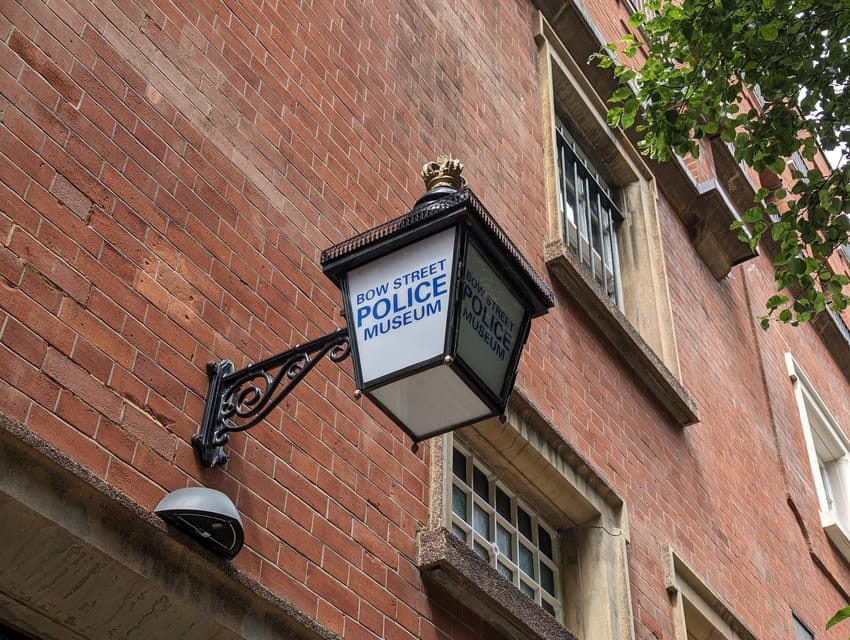
The walk kicks off at the Bow Street Police Museum area. Even if you’re not a “police history” person, Bow Street matters because it connects crime, courts, and the way London organized enforcement.
Here’s what I like about starting early: you get your bearings on how justice and crime were handled, then you carry that lens forward to the darker stops later. You’ll hear about London’s legal culture and the people who enforced order when the city was far messier than it looks today.
A short stop can still be meaningful on a tour like this, because the guide uses it to set themes. You’re not just ticking off a building; you’re building a mental map for why the later prisons feel so specific.
Freemasons’ Hall and Aldwych: Splendor With an Agenda
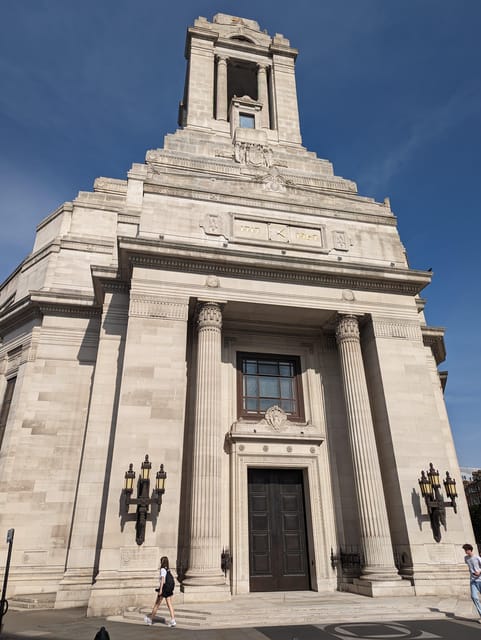
Next up is Freemasons’ Hall. The “splendor” part isn’t just about the exterior feeling impressive; it’s about the fact that organizations helped shape public life in London. If you’ve ever wondered why certain institutions appear so often around power, this is where you start connecting the dots.
Then you’ll pass through Aldwych, a street area known for layers—older London references mixed with more modern city use. It’s a good stretch for your brain to switch modes from dramatic storytelling to how London evolved block by block.
The tour’s pacing is smart here: you’re not stuck in one era. Saxon-era turmoil leads you forward to medieval and early modern influence, and the walk keeps reminding you that institutions outlast individuals.
Royal Courts of Justice: The Court System as a Landmark
You’ll stop at the Royal Courts of Justice area, and this is one of those places where London’s legal system becomes visible architecture. The point for you is not to memorize legal history—it’s to understand that courts weren’t tucked away. They were public-facing, and they helped define what London considered order.
For fiction lovers, this kind of setting is gold. When later you hear Dickens-linked material, you’ll feel how natural it is that stories of crime and punishment would attach to specific legal sites.
Even if you’re short on time in London, this single stop helps you recognize why people in the past talked about justice in almost the same breath as politics and status.
Temple Church and the Knights Templar Headquarters Area
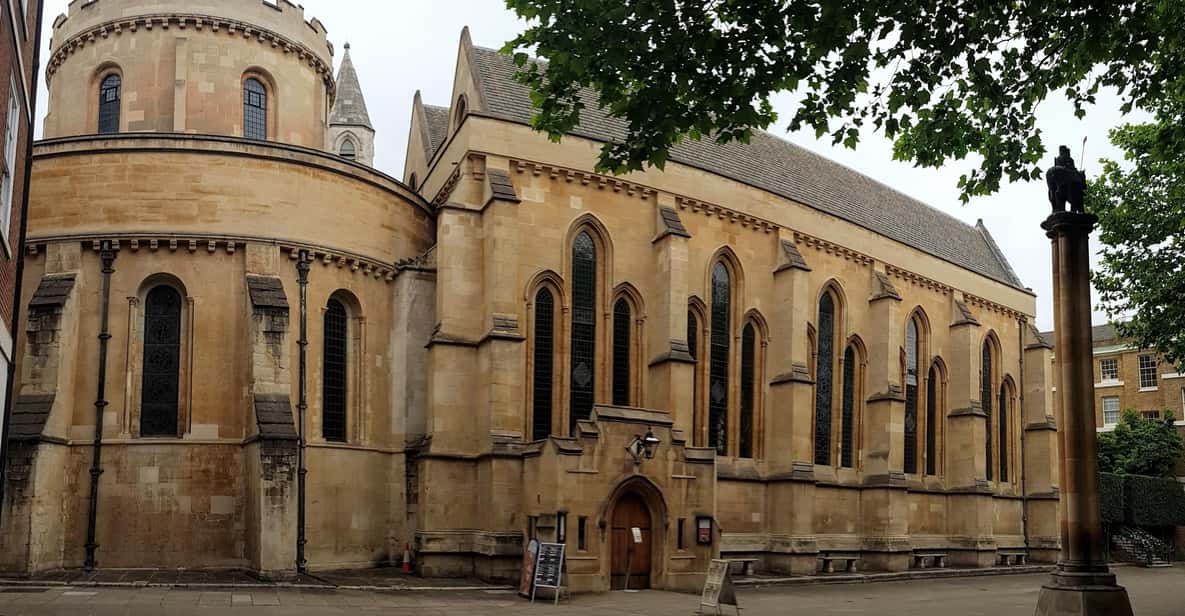
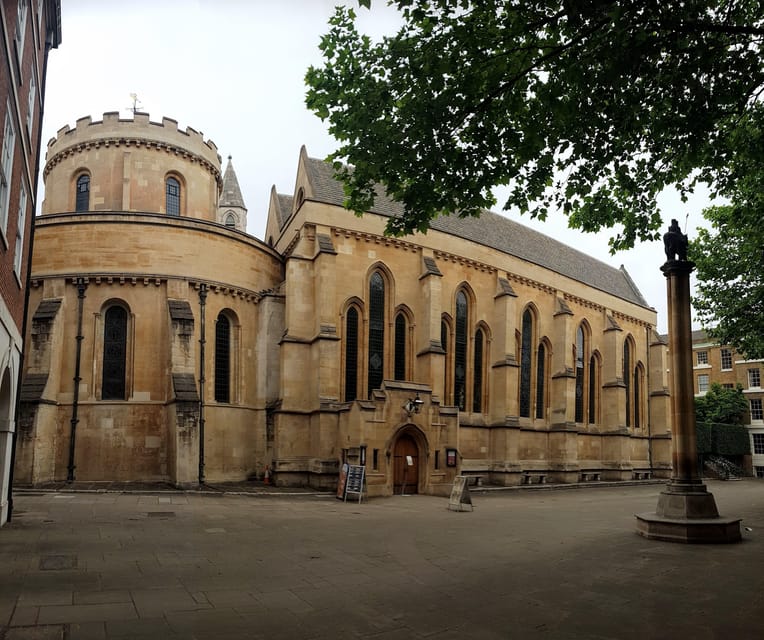
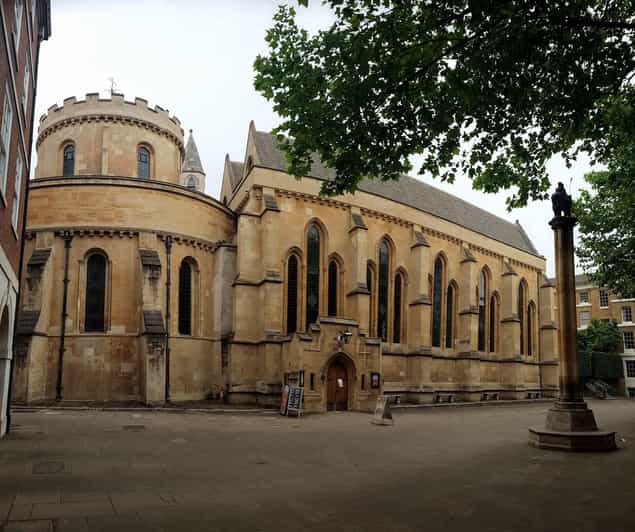
Temple Church is a highlight for the “how does power get preserved” question. You’ll hear about the Knights Templar headquarters context and see why this area is tied to more than one thread of medieval authority.
I like this stop because it turns a name—Templar—into something spatial. Instead of staying abstract, you’re looking at a place connected to the institutions and influence that could move through Europe and then land in London.
This is also where the tour really earns its title: squalor & splendor. You’re moving from the idea of disorder and unrest into the idea of organized strength—religious, legal, and political all at once.
If you’re the type who enjoys visual context, you’ll get a lot out of this part. The guide links it to what came before and what came next in the same walking rhythm.



London Silver Vaults: The World’s Retail Silver Collection in Plain Sight
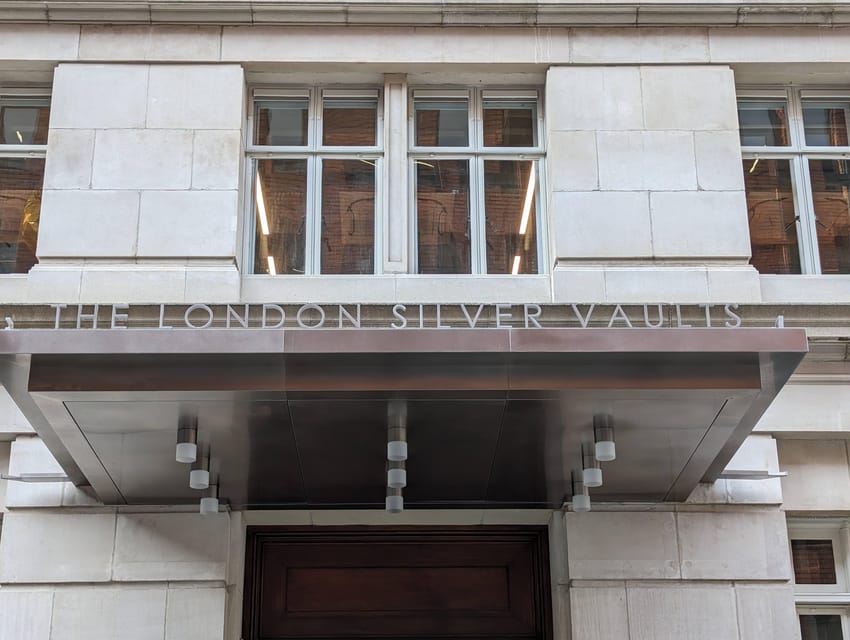
At London Silver Vaults, you’ll learn why it’s described as the world’s largest collection of retail silver. This is not a dusty museum stop. It’s a commercial space that still reflects how London’s wealth and trade worked in real life.
What I like here is the payoff for non-history folks. If you’ve ever worried that tours like this are all gloom and candles, the silver stop gives you something bright and concrete to hold onto—literally, if the shop has displays on offer when you’re there.
It also adds a money-trail layer. Earlier you’ve been thinking about justice and institutions; here you think about consumption and value, and how London created industries around wealth.
Even if you don’t plan to buy anything, you can still enjoy the story of why silver collection and retail became such a London-specific angle.
Staple Inn and Hatton Garden: Old Buildings, Serious Business
You’ll pass by Staple Inn next. This is one of those London stops that helps you see beyond the biggest landmarks. The structure and setting hint at older trade and the city’s long relationship with commerce and professional life.
Then the walk includes Hatton Garden, which is strongly associated with jewelry and precious goods. The connection to the silver stop is natural: London’s wealth doesn’t stay in one lane. It shows up in banking-adjacent areas, retail traditions, and the places where high-value goods were handled.
These stops also help the tour breathe. After prison and court themes, Staple Inn and Hatton Garden give you a “how money actually moved” feeling rather than only “how punishment worked.”
If you love walking tours that explain why neighborhoods have their reputations, this is the part that gives it a logical shape.
Holy Sepulchre Church and the Dickens Thread: Fagin’s London
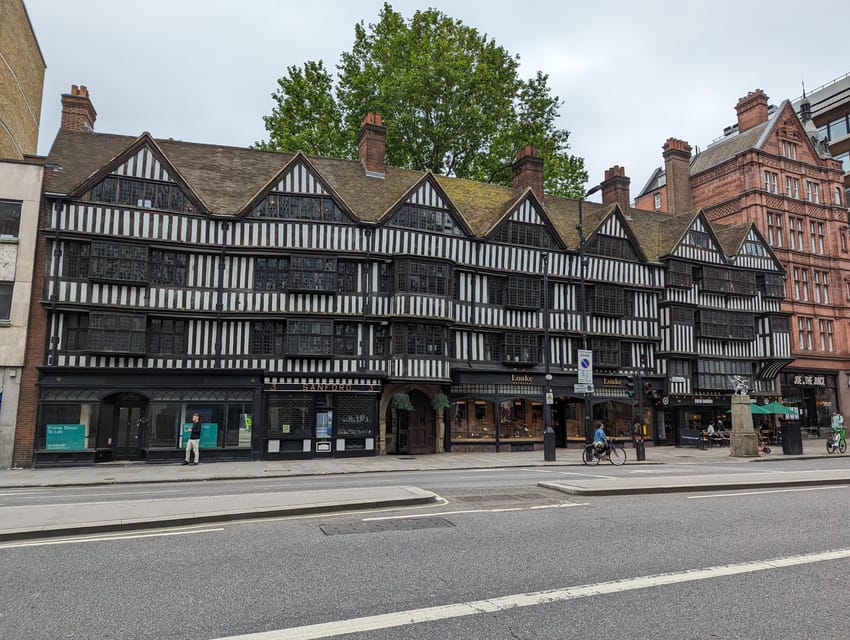
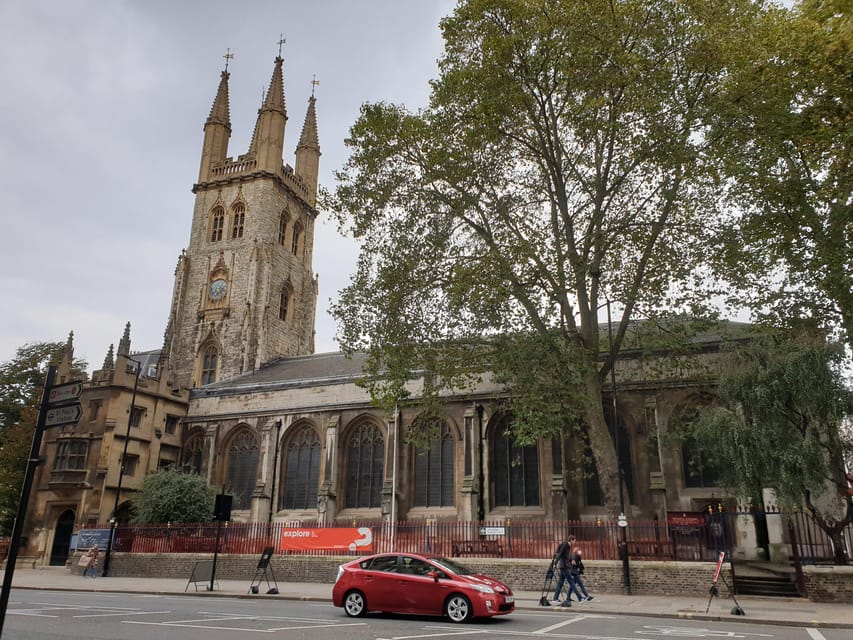
Holy Sepulchre Church comes later in the route, and it’s a good pivot point. Churches in central London aren’t just religious buildings; they’re often anchors in older city patterns, so you get one more chance to see how deep-time London overlaps with modern streets.
As the story tightens, the guide brings in Dickens and the Oliver Twist connections—specifically Fagin’s den links and an execution location tie-in. The value here is that you stop thinking of Oliver Twist as a vague literary London and start seeing how the city’s real justice sites would have provided the backdrop.
I love this approach because it makes fiction feel less like a separate world. It becomes a way of interpreting actual streets: who controlled law, where sentences happened, and how people with bad luck ended up moving through the same systems as everyone else.
Old Bailey and Bridewell Centre: Two Notorious Prisons, One Clear Theme
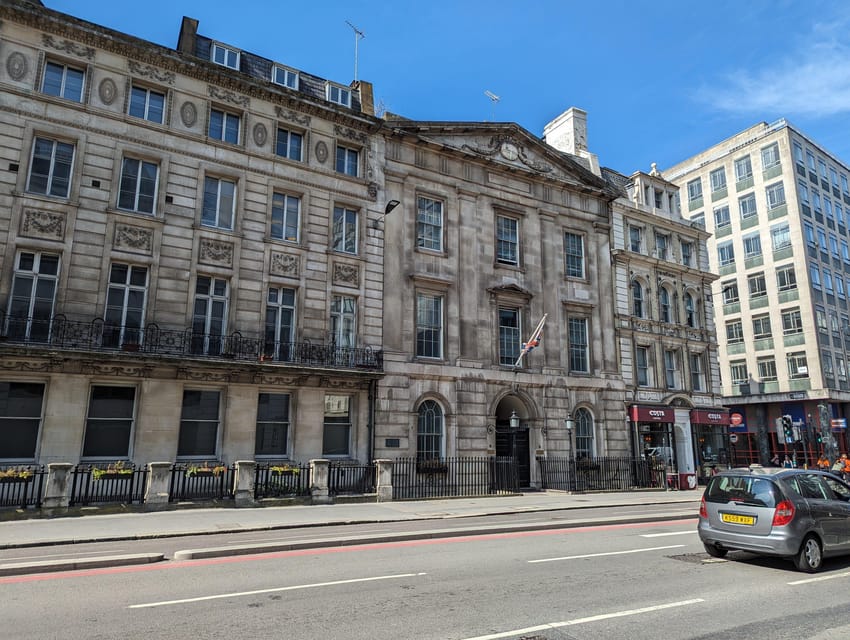
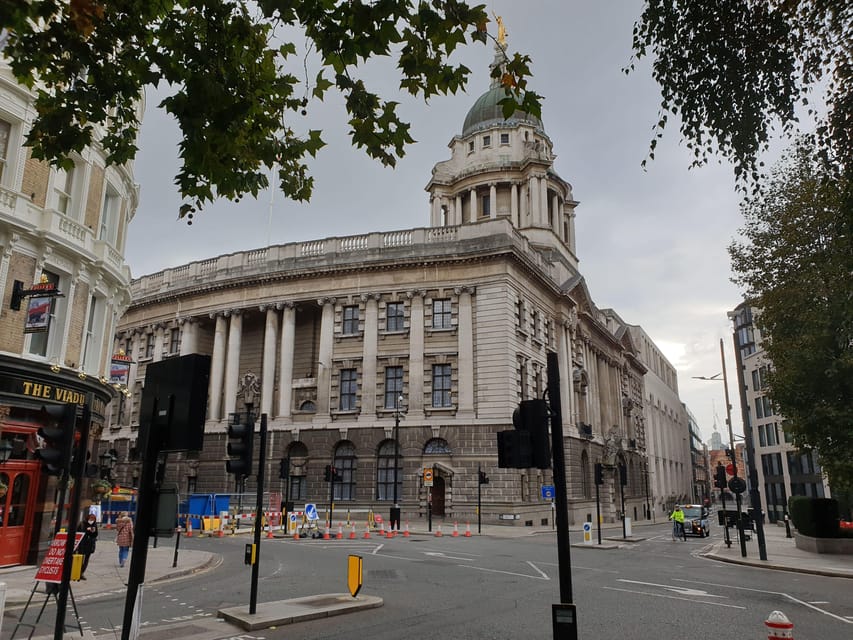
The Old Bailey area is where the justice thread snaps into focus. You’ll hear about one of London’s most notorious prisons and how it shaped public fear and public fascination with crime.
This is also where the execution story makes the most sense. Once you’re near the Old Bailey, the tour’s Dickens material stops feeling like a fun literary detour and starts feeling like a realistic social consequence tied to the legal geography of the time.
Then you’ll reach Bridewell Centre, another prison-related stop that helps broaden the picture beyond one single institution. The guide frames it as part of London’s darker network—how punishment, detention, and control operated as a system rather than as one dramatic moment.
What I like most about ending on these notes is the contrast. You’ve seen institutions that run the city’s shine—Templar power, Freemasons’ prominence, courts and commerce—and then you watch that contrast hit the brick reality of prisons.
It leaves you with a sharper understanding of London’s “squalor & splendor” title. It’s not just mood. It’s a map.
Price, Time, and Why This Walk Feels Worth It
At around $26 for a roughly two-hour guided walk, you’re paying for three things at once: expert storytelling, a curated route, and the benefit of a guide translating what you’d otherwise miss.
A big plus for value is the group size limit of 15 people. In a small group, you can ask questions and get straight answers without waiting in line for attention. That matters when the tour spans Saxons, Dickens, Freemasons, the Knights Templar, and London’s criminal justice.
The other practical value is the distance. About 2.5 miles in two hours is not leisurely, but it’s manageable for most adults who walk at an average city pace. You get a lot of locations without needing a whole day’s worth of transit and waiting.
The only real drawback is stamina. If you’re expecting a mostly indoor, stop-and-go kind of tour, this is more of a steady walking experience. Plan water, plan shoes, and plan for street noise and crossings.
Who This Tour Is Best For (And Who Might Want Something Different)
This is a strong match if you like London history tied to places, not just timelines. You’ll probably enjoy it most if you’re curious about Saxon turmoil, medieval power around the Temple, and how Dickens fits into real legal landmarks.
It’s also a good fit for people who like contrast. One minute you’re hearing about institutional influence, the next you’re standing near places associated with punishment and prisons.
It is not suitable for children under 13, which makes sense given the crime and prison themes. If you’re traveling with teens who can handle darker topics, the tour’s storytelling style should still work, but it’s explicitly not for younger kids.
Should You Book This Tour?
Yes, if you want a compact walk that connects literature, crime, and power to the actual streets of Holborn. The best part is how the guide keeps the route coherent: you’re not just receiving facts, you’re learning a way to read central London.
Book it if you want value for your time—two hours, about 2.5 miles, and a strong set of landmark stops from Freemasons’ Hall to the prison sites. Also book it if you’re the type who likes to ask questions; the small group helps.
Skip it only if you want a purely “pretty sights” itinerary. This is history with teeth, plus a silver-bright commercial finale.
FAQ
FAQ
Where does the tour start?
It starts outside Covent Garden Station, with the guide standing by an Historic London Tours sign.
How long is the tour and how far do you walk?
The tour lasts about 2 hours and covers about 2.5 miles on foot.
How much does it cost?
The price is $26 per person.
What’s the meeting and ending location?
You meet outside Covent Garden Station and the tour finishes near 36–37 New Bridge St, London EC4V 6BJ.
What languages is the tour offered in?
The guided tour is in English.
Is it suitable for children?
It is not suitable for children under 13.