REVIEW · LONDON
Ultimate Guided Tour of London
Book on Viator →Operated by See Your City · Bookable on Viator
London feels manageable on foot. This 2-hour guided walking tour strings together big-name neighborhoods with lots of short stops and time to take photos, plus an end-of-tour moment to ask your guide where to eat. I like that it’s small-group sized (up to 35) and that it includes a professional guide who helps you connect the dots as you move. You’ll also see how London changes block by block, from Mayfair polish to Soho energy.
One thing to keep in mind: it’s a fast walk with brief stops, so if you want long museum time or a deep dive into one neighborhood, you’ll need to pair this with your own plans. Also, show up early—arrive at least 15 minutes ahead—because the tour notes it will be hard to catch up if you’re late.
In This Review
- Key things to know before you go
- Entering London on a 2-hour walking route
- Starting point on South Molton Street, ending near Covent Garden
- Mayfair: Georgian elegance and luxury streets in 10 minutes
- Burlington Arcade’s covered passage: shopping as architecture
- Piccadilly Circus: neon chaos, photo stop included
- Chinatown’s red lantern streets: food culture in the middle of the city
- Soho: creative energy, theaters, and nighttime-style streets
- Trafalgar Square: public space with history and big-photo lions
- Covent Garden: markets, street performers, and a natural finish point
- The guide, the walking pace, and how to use the time well
- Accessibility and comfort: stroller and wheelchair friendly
- Price and value: $21.82 for guided orientation
- Who should book this London walking tour
- Should you book it or not?
- FAQ
- Where does the tour start?
- Where does the tour end?
- How long is the tour?
- What language is the tour in?
- Is the tour wheelchair and stroller accessible?
- Is a mobile ticket provided?
- How big is the group?
- Is free cancellation available?
- Is hotel pickup included?
Key things to know before you go
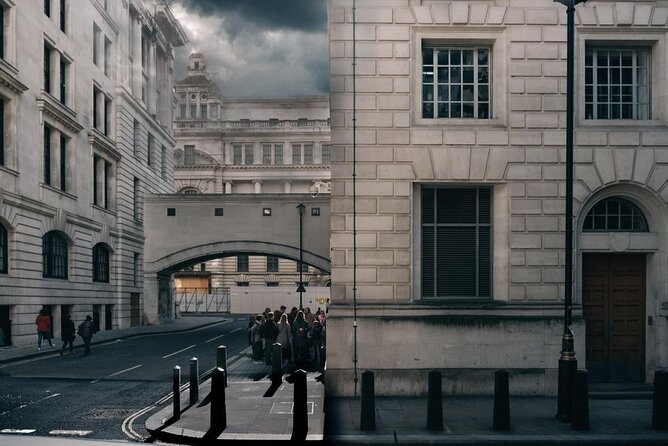
- Small group (up to 35): easier questions and a calmer walking pace.
- Photo-stop format: quick chances to capture each area without feeling rushed through everything.
- Ask-anything food advice: you get time to pick your guide’s brain on where to eat after the walk.
- Central “greatest hits” route: Mayfair, Burlington Arcade, Piccadilly Circus, Chinatown, Soho, Trafalgar Square, and Covent Garden.
- Mobile ticket: less fuss when it’s time to check in.
- Easy for strollers and wheelchairs: the tour is designed to be accessible.
Entering London on a 2-hour walking route
This is the kind of London tour I recommend when you want orientation fast, without waiting for a big bus or a full-day commitment. You’ll cover several of the city’s most recognizable areas in about 2 hours (approx.), mainly on foot, with short guided segments and built-in photo stops.
The value here is not just the locations—it’s the order and the pacing. You start in Mayfair, then glide toward Burlington Arcade, hit the flash-and-noise of Piccadilly Circus, and then slide into Chinatown and Soho before wrapping up at Covent Garden with Trafalgar Square along the way. It’s a smart sequence because it shows you the character shifts people talk about when they describe London.
And at just $21.82 per person, the math works if you’re doing this on a first or second day. You’re paying for a guide to help you make sense of what you see. If you would’ve wandered alone anyway, this helps you wander with a plan.
You can also read our reviews of more guided tours in London



Starting point on South Molton Street, ending near Covent Garden
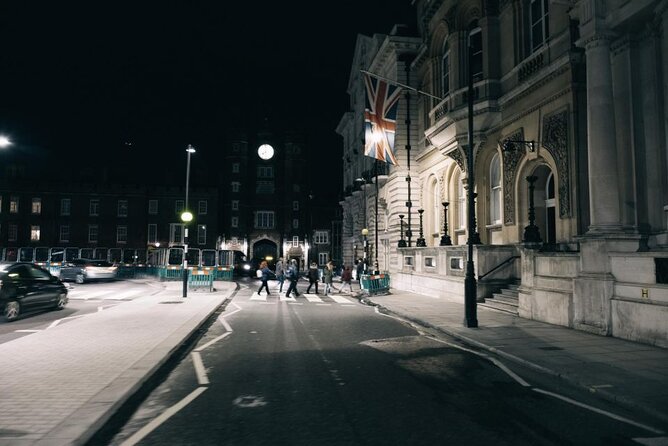
You’ll meet at South Molton Street (S Molton St, London, UK). The tour ends at the entrance to the covered market in the center of Covent Garden (13 King St, London WC2E 8HN). The endpoint is a short walk from Leicester Square, Soho, and Seven Dials, so it’s easy to keep exploring right after.
No hotel pickup or drop-off is included, so plan to get yourself to the meeting point on your own. That’s not a downside, but it does affect logistics. If you’re staying far out, you’ll want to factor in transit time and aim to arrive early.
Because this is a walking tour, I treat meeting time like a big deal. The tour asks you to arrive at least 15 minutes ahead since it will be hard to catch up if you’re late. For me, that’s a fair trade: start on time, keep moving, and you don’t waste the group’s energy circling for late arrivals.
Mayfair: Georgian elegance and luxury streets in 10 minutes
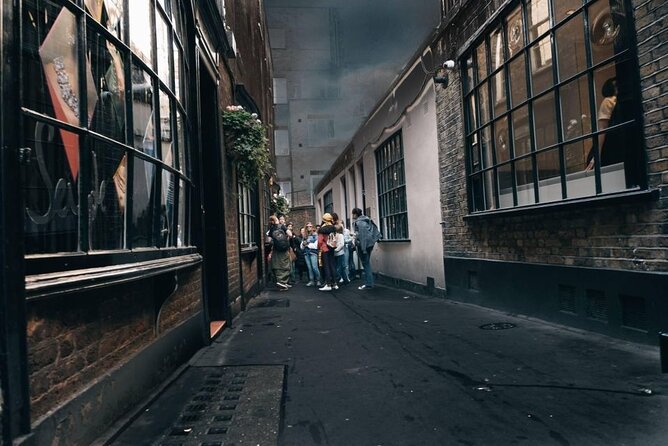
Your first stop is Mayfair, with a short photo stop and a guided walk (about 10 minutes). Mayfair is where London shows off its posh side: elegant streets, classic architectural lines, and a sense of old wealth. You’ll get enough time here to understand the vibe and spot what makes the area famous—without pretending you can fully “do Mayfair” in one short stop.
What I like about Mayfair as a starting point is that it gives you a contrast anchor. When you later see the louder energy around Piccadilly Circus or the food-and-nightlife intensity of Soho, you can literally feel the change in the streetscape.
Possible drawback: because the stop is brief, you won’t have long to linger outside of the planned photo points. If there’s a specific building or storefront you’re obsessed with, you’ll want to come back later.
Burlington Arcade’s covered passage: shopping as architecture
Next up is Burlington Arcade (again, about 10 minutes). This is a covered passage in Mayfair, known for an iconic glass roof and a refined shopping atmosphere. The guide points out what makes it distinct, and you’ll have a chance to see it as more than just a place to buy things.
Why this stop matters: it shows how London’s “small spaces” can feel special. A lot of visitors focus on big squares and landmarks. But passages like Burlington Arcade are part of what makes the city feel layered—public, yet slightly sheltered; quiet, yet still central.
Photo-wise, it’s a good one because you can frame the architecture and catch the light through the glass roof. Just know you’re moving on after that quick look, so don’t plan on extensive browsing during the tour time.
Piccadilly Circus: neon chaos, photo stop included
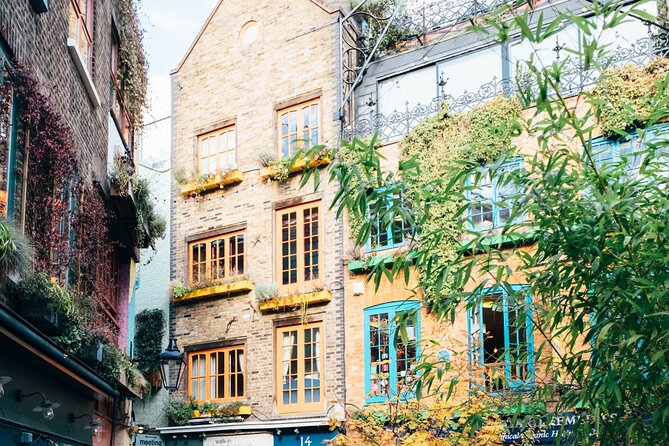
Then you’ll reach Piccadilly Circus (about 10 minutes). This is the iconic intersection with neon signage and the famous Shaftesbury Memorial Fountain. It’s one of those London scenes that feels instantly recognizable even when you’ve never been here before.
The guided portion helps you understand what you’re seeing in a practical way—where the energy comes from, and why it became a meeting point for entertainment and shopping. It’s also an easy spot to photograph because there are so many visual cues packed into a small area.
In real-life terms, this stop can be a little sensory overload if you’re already tired. But the tour’s format keeps it contained: you get your time, your photos, and then you move on before you melt into the crowd.





Chinatown’s red lantern streets: food culture in the middle of the city
After Piccadilly, the tour goes to Chinatown (about 10 minutes), with another photo stop and guided sightseeing walk. You’ll notice the red lantern look right away, and the area’s reputation for Chinese restaurants, bakeries, and shops.
What I appreciate here is that Chinatown isn’t treated like a side quest. It’s a full stop with guidance, so you come away understanding this part of London as a real neighborhood, not just a photo backdrop.
Also, this is a good moment to sharpen your “what should we eat later?” radar. Since the tour includes that brain-picking time for food after the walk, you can walk away with a short list of places to try near your route.
Soho: creative energy, theaters, and nighttime-style streets
Next is Soho (about 15 minutes), a longer stop than most on the route. The guide frames Soho as London’s artsy zone—known for diverse dining options, bars, and theaters. It’s the kind of place where you can’t help noticing the mix of people, lighting, and storefront energy.
Fifteen minutes is a decent window for Soho because the neighborhood rewards slower wandering. You’ll get time for photos and guided points of interest, and you’ll also have enough time to get the street rhythm without feeling stuck for ages.
A consideration: Soho is busy in general, and the tour timing is built for walking. If you want to sit down and read a menu or watch performances, you’ll need to schedule that on your own after the tour ends.
Trafalgar Square: public space with history and big-photo lions
Then comes Trafalgar Square (about 10 minutes). You’ll see the landmark Nelson’s Column and the lions that flank the square. It’s one of those places where the scale is obvious the second you arrive—wide space, major monument, and lots of people moving through.
The guide connects it to London’s role as a cultural and public gathering point. Even without going into museums, you’ll get the sense of why this square matters and how it fits into the city’s story.
Photo tip: this is a great stop to grab wide shots from a step back distance. The square is designed for big views, so take advantage of that before you move on.
Covent Garden: markets, street performers, and a natural finish point
Finally, you end at Covent Garden (about 10 minutes for the guided sightseeing/photo stop). The area is famous for its historic market hall feel, shopping and dining, and street performers. It’s a practical end point, too, because you finish near a cluster of busy attractions like Leicester Square and Seven Dials.
Why ending here works: you finish in a place where you can immediately turn the “tour mode” brain off and switch to “what do we do now?” mode. The covered market area gives you options whether you want snacks, browsing, or just people-watching with a goal.
If you want a smooth flow to your evening plans, this ending spot is strong. You’re not dropped in some far-off corner. You’re placed in the kind of central hub where it’s easy to keep walking, take the subway, or grab dinner.
The guide, the walking pace, and how to use the time well
This tour’s success depends on your guide, and it’s built around a guided format rather than a self-guided route. You get a professional guide, and the tour is explicitly offered in English. The group size cap of 35 travelers also matters; it keeps questions and regrouping manageable.
One detail from the experience you can actually use: the tour is set up so you can ask your guide where to eat after the walk. That’s not a throwaway line. If you go into the tour hungry (or just curious), use that moment at the end to ask for specific neighborhoods or nearby meal ideas rather than generic recommendations.
There’s also a strong hint that language options can vary by departure. A French-speaking guide named Anaïs received praise for leading people through historic and charming spots, and that feedback matters if you’re part of that audience. If you specifically want English only, you’re covered by the tour’s listed language offering.
Timing matters, too. With many stops around 10 minutes, you’ll want to treat this as an orientation sampler. I like it for first-time Londoners, but I also like it for repeat visitors who want a fresh path through familiar areas.
Accessibility and comfort: stroller and wheelchair friendly
This experience is listed as wheelchair and stroller accessible, and service animals are allowed. For many walking tours, that’s a big deal because not all routes are equally smooth.
Because the stops are close together and the segments are short, the structure supports people who need more predictable breaks. That said, it’s still a walking tour, so you should expect some walking time throughout the route.
If you have mobility needs, I’d plan your day so you’re not stacking another long activity right before the tour. The better you feel when you start, the more you’ll enjoy the quick stops.
Price and value: $21.82 for guided orientation
At $21.82 per person, this is priced like an “easy win” tour. You’re not paying for museum tickets or long rides. You’re paying for a guide to connect the sights, help with photo timing, and cover multiple central neighborhoods in a structured way.
For value, ask yourself one question: would you visit these areas on your own anyway? If yes, then a guide can be worth it just for saving you time and giving you a coherent route. If you already have a very specific plan (like “I only want Trafalgar Square and then a museum”), you might feel limited by the quick stop format.
The best deal is when your schedule is tight and you want a sense of how different districts feel. That’s exactly what this route does—from Mayfair’s polish to Soho’s nightlife-style streets to Covent Garden’s market buzz.
Who should book this London walking tour
I’d book this if:
- You want a quick overview of central London districts in about 2 hours
- You like photo stops and short guided context
- You want practical guidance on where to eat after the tour
- You prefer a smaller group experience (up to 35)
- You’re traveling with a stroller or need wheelchair-friendly accessibility
I might skip or pair it if:
- You want long stays in a single neighborhood (like spending hours in Covent Garden or sitting through a full show)
- You hate walking and prefer slower transport-based tours
- You need museum time built into the schedule
This also makes sense if you’re the type who likes to know what you’re looking at before you start wandering. The tour gives you that starter pack, then hands you the map for your own choices.
Should you book it or not?
Book it if you want a smart, efficient way to get your bearings in London. The route covers the kind of sights that show up on postcards, but the guided format helps you understand why each area feels the way it does. The guide’s food advice at the end is the kind of practical bonus that can improve the rest of your day.
Don’t book it if you’re looking for deep, slow travel. This is a walking sampler with short stops, not a long neighborhood study.
If your goal is to see a lot, take good photos, and leave with a clearer plan for dinner and the next few hours, this is a solid choice.
FAQ
Where does the tour start?
The tour starts on South Molton Street (S Molton St, London, UK).
Where does the tour end?
The tour ends at the entrance to the covered market in the center of Covent Garden (13 King St, London WC2E 8HN).
How long is the tour?
It lasts about 2 hours.
What language is the tour in?
The tour is offered in English.
Is the tour wheelchair and stroller accessible?
Yes, the experience is listed as wheelchair and stroller accessible.
Is a mobile ticket provided?
Yes, the tour uses a mobile ticket.
How big is the group?
The tour has a maximum of 35 travelers.
Is free cancellation available?
Yes. You can cancel for a full refund up to 24 hours before the experience starts.
Is hotel pickup included?
No. Hotel pickup and drop-off are not included.