REVIEW · LONDON
Winston Churchill’s London – A Very Small Group Walking Tour
Book on Viator →Operated by Richards Tours · Bookable on Viator
Churchill’s London feels personal at street level. This very small-group walking tour follows Winston Churchill through Mayfair, Savile Row, and Whitehall, using real storefronts and landmark spots so his life feels close-up, not textbook.
Two things I like a lot: the group stays capped at six, so Richard can adjust the flow and answer questions as you go. And you get more than “famous places”—you hit the practical stuff Churchill loved, from tailor stops to the cigar merchant, then you end at the WWII command center that once was top secret.
One drawback to plan for: you’ll finish outside the Churchill War Rooms, and entry to the War Rooms isn’t included—so if you want to go inside, you’ll need to book tickets ahead.
In This Review
- Key highlights worth your time
- Why this Churchill walk beats museum-only time
- Route snapshot: where you start, how long it takes
- Stop-by-stop: what you’ll see and why it matters
- Mayfair: Churchill’s early life and the exclusive London of his ambition
- Savile Row: Henry Poole and Co. and the suits that became symbols
- St. James’s: the shopping belt where taste reads like branding
- Spencer House: family roots and the Spencer-Churchill name
- Turnbull & Asser: practical comfort, even when London was under attack
- James J. Fox & Robert Lewis: cigar lore, chair time, and a sample
- Saint Margaret’s Church: the wedding next to Westminster Abbey
- Parliament Square: the statue and Churchill’s political choices
- Whitehall: the Red Lion pub and the tradition of Prime Ministers
- 10 Downing Street: the PM’s door and a preserved moment
- Churchill War Rooms: the WWII command center (book ahead)
- Is the $94.65 price a good value?
- Who should book this tour (and who might skip it)
- Small tips that make the whole day easier
- Should you book Winston Churchill’s London?
- FAQ
- How many people are on the tour?
- How long is the walking tour?
- Where does the tour start?
- Where does the tour end?
- Is entry to the Churchill War Rooms included?
- What language is the tour offered in?
- Do I get a mobile ticket?
- Is the tour only guided, or are other items included?
- Is there a cigar-related stop?
Key highlights worth your time
- Max 6 people keeps the walk conversational instead of lecture-style
- Savile Row tailoring links to Churchill’s suits, including Henry Poole and Co.
- Cigar stop with a sample option at the merchant where he bought his cigars
- Marriage and politics in one arc, from St. Margaret’s Church to Parliament Square
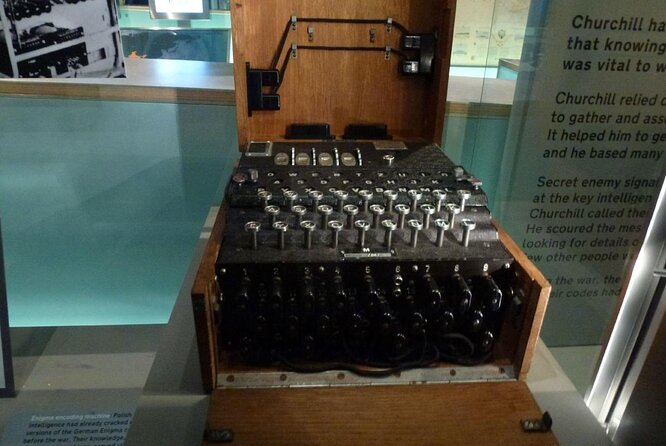
- WWII setting at the end with the Cabinet War Rooms and Churchill Museum (entry extra)
Why this Churchill walk beats museum-only time
I like tours that use the city as your timeline, and this one does exactly that. You’re not stuck inside a room trying to remember dates. Instead, you step from Mayfair’s early ambition into the tailoring world of Savile Row, then on toward Westminster-adjacent politics and WWII leadership.
The best part is how the guide connects dots you’d likely miss on your own. Richard is praised for making Churchill human—career, marriage, military life, and even the habits that shaped his public image. That kind of storytelling matters because Churchill isn’t only a statue. He was a dresser, a smoker, a husband, a political risk-taker, and a wartime decision maker. You see those sides as you walk.
You can also read our reviews of more walking tours in London



Route snapshot: where you start, how long it takes
This is a 2 to 3 hour walking tour with a mobile ticket. Most stops are designed as quick visits—think short, focused moments rather than long museum-style browsing. You also get time at the center-point sights, like the statue area near Parliament Square and the WWII site at the end.
You’ll start at 1–3 Arlington St, London SW1A 1RA, and the tour ends at Churchill War Rooms, King Charles St, London SW1A 2AQ. The handoff matters: you’ll be outside the War Rooms at the finish, so your plan for entry needs to be separate.
Here’s the practical rhythm I’d expect: quick landmark stops, then a few “special interest” moments (tailors, cigar merchant, church, pub) where you can slow down and actually understand what the place meant to Churchill.
Stop-by-stop: what you’ll see and why it matters
Mayfair: Churchill’s early life and the exclusive London of his ambition
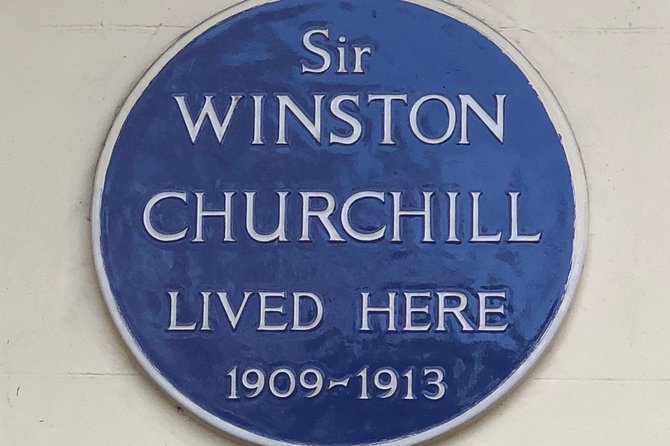
You begin in Mayfair, which is a good choice because it matches Churchill’s younger, rising years—bold, visible, and determined to make his mark. You’ll walk past the areas tied to his childhood home, his bachelor setup, and the home he made with Clementine. It’s not just “where famous people lived.” The point is to watch how a young Churchill positioned himself in London society.
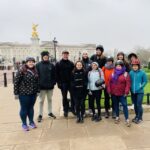
You’ll also get a chance to stop for a photo moment at the Allies Statue with Churchill and Roosevelt. That’s a simple break in the walk, and it also helps you visualize the international dimension of his career—this wasn’t only a British story.
Savile Row: Henry Poole and Co. and the suits that became symbols
Next is Savile Row, the street people associate with bespoke tailoring, and it’s where Churchill’s image becomes practical. You’ll stop at Henry Poole and Co., a historic tailor linked with Churchill’s family. The connection is specific: they made suits for Winston’s father Randolph and later made many of Winston’s suits. You’ll hear the kind of detail that makes you look at a black-and-white photo differently—like the pinstripe suit look tied to Churchill’s famous Tommy Gun-era image.
One funny, very human detail: the tailor was known to find cigar stubs in suit pockets when Churchill’s clothes came in for alterations. It’s the sort of story that turns “he smoked cigars” into something more like “he carried his habits everywhere.”
There’s also a film connection mentioned during the stop: Henry Poole and Co. made suits for Gary Oldman’s portrayal in The Darkest Hour. That’s a nice reminder that Churchill’s look is still studied, copied, and recreated.



St. James’s: the shopping belt where taste reads like branding
In St. James’s, the tour leans into Churchill’s personal preferences—simple tastes, but aiming for the best. You’ll hear about the kind of shops the area is known for, including places selling aftershaves and gentleman’s goods, plus even a favorite cheese merchant. The point isn’t shopping. It’s understanding how Churchill’s public persona was supported by the everyday choices of grooming and style.
If you like the “texture” of history—how people dressed, where they bought essentials, what they treated as status—this section will feel surprisingly alive.
Spencer House: family roots and the Spencer-Churchill name
Then you move to Spencer House, which anchors Churchill’s London childhood context. He was born at Blenheim Palace, but his early years were spent in London, and this area ties directly to the family line—Spencer-Churchill—through his father Randolph.
You’ll also hear about Churchill’s relationship to Diana Spencer (Princess Diana). That may feel like a modern twist, but it’s useful for connecting a long family thread through time—how names and status echo forward in Britain’s social landscape.
Turnbull & Asser: practical comfort, even when London was under attack
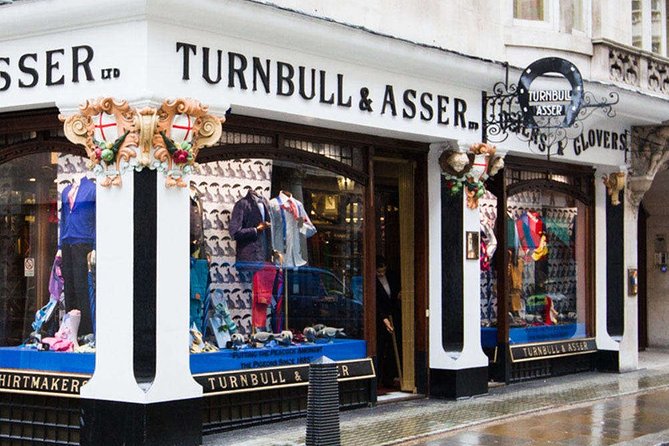
Next is Turnbull & Asser, where the story shifts from fine suits to what Churchill needed when life got harsh. You’ll hear about the “romper suit,” also known later as the siren suit, designed for practical comfort when he was out during the cold nights watching bombs fall over London at Chartwell-era times.
This stop is smart for two reasons. First, it shows Churchill wasn’t only polished for the public eye. Second, it makes clothing sound like equipment—gear for a specific kind of wartime routine. If you think history is only big speeches, this is a good corrective.
James J. Fox & Robert Lewis: cigar lore, chair time, and a sample
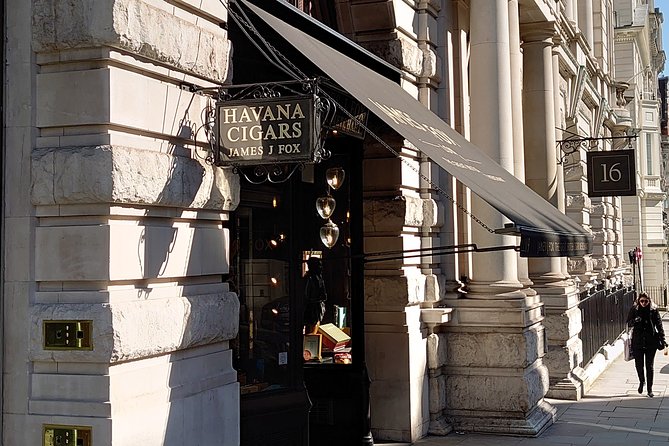
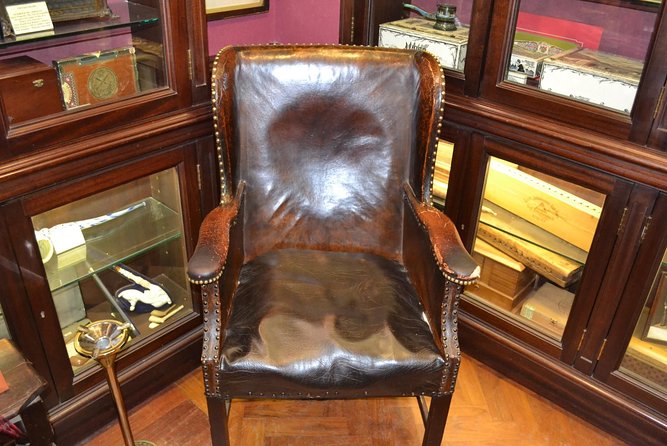
Few things define Churchill’s look like his cigar, and this stop leans into that. At the cigar merchant you’ll learn about his favorite brand—Romeo y Julieta—and you’ll even have a chance to sit in his chair. The best part, if you’re interested in the lived details of habits, is that you can sample a cigar in an upstairs lounge.
A practical note: if you’re not into cigar smoke, you can still enjoy the story and the atmosphere. But if you’re sensitive to smoke, keep that in mind before you commit to the sample moment.
Saint Margaret’s Church: the wedding next to Westminster Abbey
Then it’s off to St. Margaret’s Church on Parliament Square, which is one of the most meaningful stops for the timeline. Here, Winston Churchill married Clementine Hozier in September 1908. It’s right next to Westminster Abbey, and the tour frames it as a regular place for celebrations and milestones during Churchill’s life.
This is where the walk turns more personal. You’re not just tracing politics; you’re standing where two major public-to-private life events intersect.
Parliament Square: the statue and Churchill’s political choices
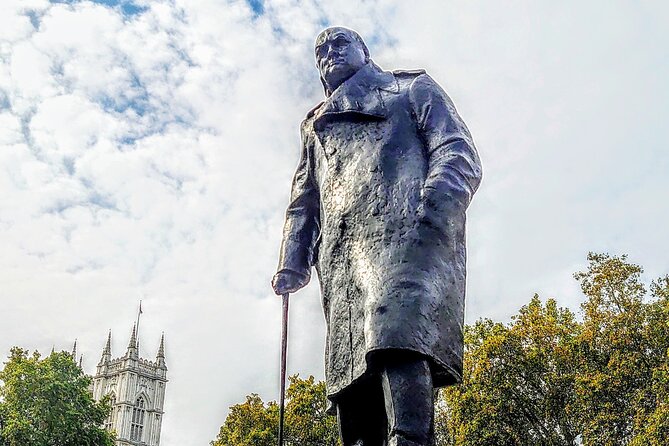
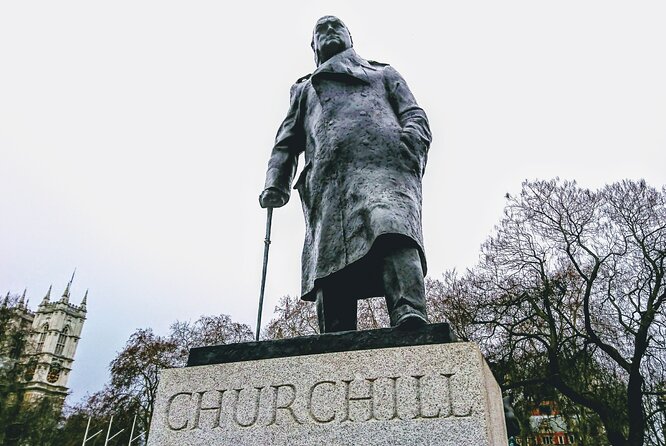
Across from the Houses of Parliament at Parliament Square, you’ll spend time with the Churchill statue. The tour uses that pause to talk about a key decision: Churchill was offered a peerage and also a dukedom, but turned both down because it would have ended the ability for him—or his male descendants—to serve in the House of Commons.
That’s a big idea delivered in a street-level way. Instead of reading about British honors systems, you hear why a single choice mattered. You also get guided anecdotes about his political life, which helps this stop feel like more than a photo spot.
Whitehall: the Red Lion pub and the tradition of Prime Ministers
Next is Whitehall, where you’ll stop at a pub connected with Prime Ministers: the Red Lion. The story given is simple and very “London”—the pub served every Prime Minister a drink, including Churchill, and Churchill didn’t want to break the tradition.
This is a good stop for those who like the lighter side of politics, because tradition is part of how power stays human. It also keeps the walk from becoming all solemn monuments.
10 Downing Street: the PM’s door and a preserved moment
At 10 Downing Street, you’ll learn why it’s so iconic and what’s preserved. The tour points to Winston Churchill’s time as Prime Minister in 1940 and notes that the door he walked through is preserved and displayed in the Churchill War Rooms.
You’re not likely to see much up close here compared with the War Rooms exhibit, but it’s valuable because it links two places that can otherwise feel separate. The guide connects them so you’re thinking one step ahead.
Churchill War Rooms: the WWII command center (book ahead)
Your walk finishes at the Cabinet War Rooms, Churchill Museum. This once top-secret bunker is where Churchill directed the British side of WWII, and the guide provides the key context that makes the site click even before you buy tickets.
Important practical point: entry to the War Rooms is not included in the tour. If you want to go inside, book ahead on the War Rooms website, because time slots can matter. The upside is that the guided walk sets you up to appreciate what you’re seeing instead of wandering blind.
Is the $94.65 price a good value?
At $94.65 per person, you’re paying for three things: a small-group guide, a curated route through multiple key London locations, and a focused storytelling approach that connects Churchill’s personal habits to national decisions.
Most stops are admission ticket free as you go, which helps the math. The only major exception is the Churchill War Rooms entry itself. So if you plan to visit the War Rooms inside, you should budget for that additional cost—but the tour still functions as a meaningful prequel that shapes how you read the museum.
When it’s a great value: if you’re a Churchill fan, or you like walking tours that blend biography with real-world details (tailoring, cigars, specific shops, and the marriage church).
When it’s not: if you only care about one or two famous monument stops and you don’t want to walk around the Westminster area with a small group for a couple hours, you might prefer a museum-focused day.
Who should book this tour (and who might skip it)
This works best for you if:
- You like guided storytelling and not just sightseeing.
- You’re the type who enjoys details like clothing makers, cigar brands, and the tiny habits that shape a public persona.
- You want a tighter, more personal format with a max of six people.
You might skip it if:
- Long-ish walks through central London feel like a hassle.
- You only want deep museum time and prefer to move at your own speed inside big-ticket sites.
Small tips that make the whole day easier
- Wear comfortable walking shoes. The tour is a sequence of short stops, which adds up.
- Bring your curiosity for the “non-obvious” stops: the tailors, the cigar merchant, and the pub. Those are the places where Churchill feels most real.
- If you plan to enter the War Rooms, reserve your tickets in advance so your day doesn’t get stuck outside.
Should you book Winston Churchill’s London?
Yes—if you want Churchill’s London as a living biography, not a list of monuments. The six-person size keeps the experience personal, and Richard’s storytelling gets praised for connecting Churchill’s life across childhood, marriage, wartime leadership, and even habits like cigars and style.
Book it especially if the Churchill War Rooms are on your list anyway. The walk tees you up with context, so the museum doesn’t feel like a random bunker tour. If you’re lukewarm on Churchill beyond the big headlines, you may enjoy it, but the best results come when you’re in the mood for the man behind the image.
FAQ
How many people are on the tour?
The group size is capped at a maximum of 6 travelers.
How long is the walking tour?
It runs about 2 to 3 hours.
Where does the tour start?
It starts at 1–3 Arlington St, London SW1A 1RA, UK.
Where does the tour end?
It ends outside the Churchill War Rooms at King Charles St, London SW1A 2AQ, UK.
Is entry to the Churchill War Rooms included?
No. The tour includes a finish at the Churchill War Rooms area, but entry is not included, and it’s advised to pre-book tickets.
What language is the tour offered in?
The tour is offered in English.
Do I get a mobile ticket?
Yes. A mobile ticket is included.
Is the tour only guided, or are other items included?
The tour includes a guided tour. Many listed stops are noted as admission ticket free, but War Rooms entry is not included.
Is there a cigar-related stop?
Yes. You visit James J. Fox & Robert Lewis and you can sit in Churchill’s chair and sample a cigar in the upstairs lounge.