REVIEW · LONDON
Witchcraft, Ancient Cults & MI15 Spy Secrets
Book on Viator →Operated by Pigeon Tours · Bookable on Viator
London hides cults under everyday streets. This 3-hour, time-traveling walk threads together London’s strange spiritual past with darker street-level stories, from underground Roman worship to sites linked with public punishment. I like how it mixes famous names (like major churches) with lesser-seen details that help you read the city at foot level. I also love the private-guide feel, meaning you’re not just herded along. One thing to consider: a few stops list admission as not included, so you may want to budget a little extra depending on what you choose to enter.
You’ll meet at Bleeding Heart Yard (EC1N) and finish near Monument Station. The route is designed for walking, with short stop times that keep the momentum high and give your guide room to point out small, meaningful clues. A good fit if you’ve already done the biggest hit attractions and want London’s leftovers: the odd carvings, the layered foundations, and the places where old power kept changing outfits.
This is run by Pigeon Tours, and the promise is a guided, focused experience for your group. Reviews also point to a guide who is friendly and well versed in the subject—one guide name you may see referenced is Elvira, who came across as especially sharp and nice.
In This Review
- Key Points You’ll Care About
- A Time-Travel Walk for When You’ve Done the Big Sights
- Getting Oriented: Start at Bleeding Heart Yard, End by Monument
- London Mithraeum at Bloomberg: Mithras, Darkness, and an Underground Temple
- St. Mary Woolnoth Church: Worship for 2,000 Years on the Same Site
- Cornhill House’s Devilish Terracotta: When Churches Started Petty Wars
- Church of St. Bartholomew the Great: A Medieval Church That Survived 1666
- Smithfield Market: Executions, Bloody Mary, and Public Space Power
- How the Private Guide Changes the Whole Experience
- Price and Value: Is $371.59 Worth 3 Hours?
- Should You Book Witchcraft, Ancient Cults & MI15 Spy Secrets?
- FAQ
- How long is the tour?
- What is the price per person?
- Where do I meet the guide and where does the tour end?
- What time does the tour start?
- Is this a private tour?
- Are tickets included for every stop?
- Do I need a printed ticket?
- Can I cancel for a full refund?
- Is there a minimum number of travelers?
- Is the tour suitable for people with service animals?
Key Points You’ll Care About
- A Roman Mithras temple tied to modern London: the London Mithraeum scene connects 1st-century origins to an underground, dark, windowless type of worship space.
- Church sites with Roman and pagan traces: St Mary Woolnoth’s location has been used for worship for at least 2,000 years, with earlier layers under the foundations.
- Cornhill’s devil terracotta figures: a rare, specific piece of long-running, religious-style satire linked to St Peter upon Cornhill.
- A Great Fire survivor: St. Bartholomew the Great survived 1666, so you see medieval survival in a city that often didn’t keep its old bones.
- Smithfield Market includes an execution story: you’ll get a Bloody Mary thread and the sense of what this public space meant.
- Private-group attention: you’ll get undivided time from your guide, useful when you want context instead of quick facts.
A Time-Travel Walk for When You’ve Done the Big Sights
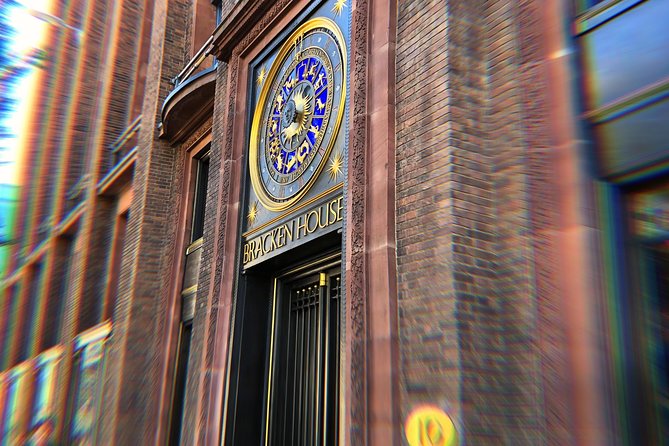
If your London list is mostly complete, this kind of tour is a smart next step. It shifts your attention from the grand landmarks to the smaller, story-rich locations that are easy to miss when you’re sprinting between museums. Instead of only asking what you’re looking at, you’ll also start asking why the city let certain things stay—and why other things were covered, rebuilt, or pushed underground.
The theme here is secrecy and belief systems that didn’t always sit comfortably with official power. You’ll go from Roman cult worship spaces to Christian worship sites layered on top of older ones, then to places that held public punishment. That mix is exactly why a walking format works: you can connect ideas through street geography, not just through dates.
You should also know what kind of pace to expect. The stop times are short (around 10 minutes each), so you’ll want to listen closely at each moment. If you’re the type who likes to linger for 30 minutes in one place, pair this with one or two longer breaks on your own after the tour.
You can also read our reviews of more tours and experiences in London.


Getting Oriented: Start at Bleeding Heart Yard, End by Monument
You’ll start in Bleeding Heart Yard (EC1N) and end next to Monument Station. That finish point is handy because it gives you quick onward options: you can hop on the Underground or simply continue walking around the City.
The route also helps you get your bearings fast. You’ll move through central London areas where layers of the past are literally built into the ground and the street level. It’s an approach that makes the rest of your trip easier, because you’ll start recognizing recurring patterns: older churches, reused sites, and the way new buildings don’t erase what was there before—they often hide it.
A small but useful practical note: the tour uses a mobile ticket, so you can keep things simple on your phone. Service animals are allowed, and it’s close to public transportation, which matters if you’re juggling a busy day.
London Mithraeum at Bloomberg: Mithras, Darkness, and an Underground Temple
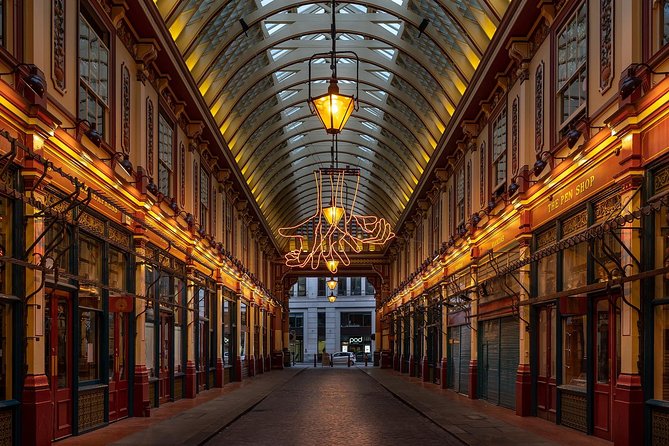
Stop one is the London Mithraeum at Bloomberg SPACE. This is one of those places where the past feels uncomfortably close to the present. The London Mithraeum is described as being at the center of London for a couple thousand years, and it’s tied to a Roman temple beneath/within a modern building environment.
Here’s the core story your guide will build: the cult of Mithras appears in Rome in the 1st century AD and spreads across the empire over roughly 300 years. You’ll learn that membership and appeal skewed toward groups like merchants, soldiers, and imperial administrators. That matters because it frames Mithraism as something that wasn’t just random local folklore—it was organized and political-adjacent, at least in how it traveled.
A key visual idea in Mithras worship is the mythological scene called tauroctony, where Mithras is shown killing a bull in a cave. Your guide may explain that the meaning is still debated, which is part of the fun. In other words, you’re not just collecting a neat fact—you’re seeing how some religions leave room for interpretation.
Practical consideration: the stop lists admission as not included, so you’ll want to plan your budget accordingly. Also, Roman underground cult spaces are often dark and windowless by design, so if you’re sensitive to low light, it helps to know ahead of time that this is not a bright, open-air photo-op.
St. Mary Woolnoth Church: Worship for 2,000 Years on the Same Site
Next you’ll visit St. Mary Woolnoth Church, where the site has been used for worship for at least 2,000 years. Even better, traces of Roman and pagan religious buildings have been discovered under the foundations of the current church. That’s the kind of fact that changes how you look at old places: it’s not only that a church is old—it’s that the ground underneath kept serving spiritual purposes, even as beliefs and institutions shifted.
The stop is 10 minutes and the admission is listed as free, which makes it a good one to include even if you’re trying to keep your costs controlled. You’ll likely spend most of your time listening rather than rushing. This is the kind of site where context matters more than photos.
The bigger takeaway for you: London doesn’t always replace the past. Often, it overlays it. Standing at places like this, you start to understand why later religions could take advantage of older sacred geography instead of starting from scratch.
Cornhill House’s Devilish Terracotta: When Churches Started Petty Wars
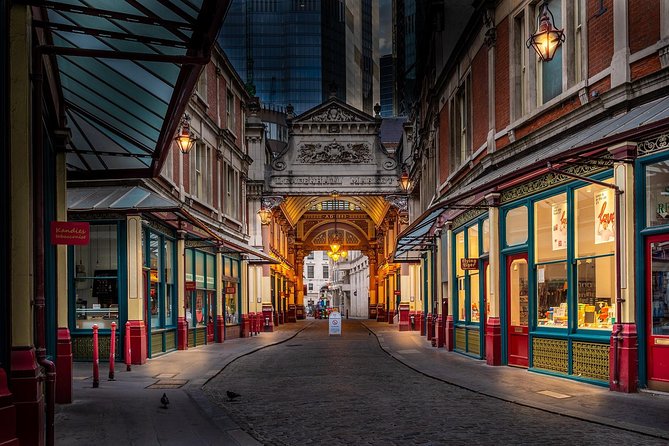
Then you’ll reach Cornhill House, known for its three devilish terracotta figures. The story tied to them is sharp and unusual: these figures are intended to mock worshippers next door at St Peter upon Cornhill, a city church that is now virtually submerged at street level due to office-block height changes.
This is one of my favorite types of London details because it feels human. Religious architecture can get very grand and solemn. Here, you get something that reads more like long-term visual sarcasm—an artwork designed to provoke and put rivals in their place.
Also, it helps you understand how the City of London has always been competitive, even when the competition looked like piety. When you see how one side tried to ridicule the other, you start noticing the same pattern in other parts of London: institutions trying to control attention, influence, and reputation.
Admission is listed as not included for this stop, so you may need to treat it as a look-and-learn moment rather than a full pay-to-enter visit. If you care a lot about seeing specific interiors, double-check what you’ll have time to do during the visit.



Church of St. Bartholomew the Great: A Medieval Church That Survived 1666
The tour continues to the Church of St. Bartholomew the Great, and it has an immediate claim to credibility: it’s one of the few medieval churches to survive the Great Fire of 1666.
That matters because 1666 is a huge line in London’s story. Fires reset neighborhoods, destroyed structures, and forced rebuilding. So when a medieval church survives that kind of catastrophe, you’re not just looking at old stone—you’re seeing a rare survival with the weight of history attached to it.
This stop is free and quick (about 10 minutes). That’s ideal if you’re trying to balance learning with keeping energy. You can get the point without turning it into a half-day detour.
If you like places where the timeline is visible—where you can almost trace layers without an exhibit—this is a highlight. It’s also a useful bridge between the Roman-era worship focus and the later public-life stories you’ll hear near Smithfield.
Smithfield Market: Executions, Bloody Mary, and Public Space Power
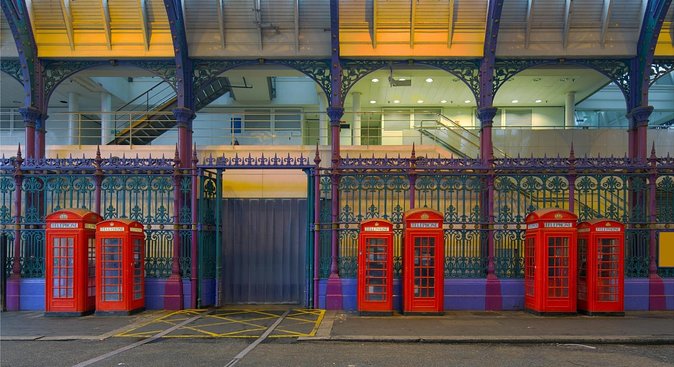
The final named stop is Smithfield Market, where the tour includes an execution-related story and a link to Bloody Mary. Smithfield is one of those London locations that makes you understand how space was used as a tool of rule. It wasn’t only a market—it was a stage.
Your guide will connect you to the idea that the city’s religious and political conflicts spilled into everyday public life. Even if you don’t love dark history, you’ll probably appreciate the clarity of the storytelling: why certain events happened in public, how they shaped reputations, and why later generations remembered (and mythologized) those moments.
This stop is listed as admission included, which is nice when you’re trying to predict costs. Still, it’s worth arriving in listening mode. The point isn’t just to see a place where something happened—it’s to understand how the place mattered when the event took center stage.
How the Private Guide Changes the Whole Experience
The tour emphasizes a private tour/activity, meaning it’s only your group with the guide. In practice, that matters because you’ll get more back-and-forth than you’d get on a large bus tour. It’s easier to ask why a detail matters, and it’s easier to slow down for a question if something catches your eye.
Reviews also underline the human side: one highlighted guide experience mentions Elvira as very nice and knowing a lot about the subject. That’s exactly what you want for a tour like this, where understanding relies on connections, not just dates.
A smart strategy for you during the walk: pick one theme you care about most—Roman cults, church-layering, religious rivalry, or public punishment—and listen with that theme in mind. Your guide will probably bring the different eras together, but you’ll get more value if you’re tracking a personal thread.
Price and Value: Is $371.59 Worth 3 Hours?
At $371.59 per person for about 3 hours, this isn’t a budget bargain. But value isn’t only price—it’s what you gain for that money.
Here’s why it can be worth it:
- You’re paying for a guide with focused attention, not a crowd experience.
- The stops are curated around meaning: Mithras worship in a specific Roman temple context, church sites with under-foundation traces, and London’s public history of punishment.
- Admission varies by stop: Smithfield is included, while others are listed as not included or free. That mix can lower your total out-of-pocket compared to a tour where everything is paid separately.
Here’s the one caution: because some admissions are not included, the final cost may creep up if you plan to go inside every stop that suggests paid entry. If you’re trying to hold the line on spending, decide in advance which places you want inside access for, and which you’re fine viewing from the outside.
Also, the tour is booked an average of 54 days in advance, which often signals demand. If you’re traveling in a busy season, it’s smart to lock in your date sooner rather than later.
Should You Book Witchcraft, Ancient Cults & MI15 Spy Secrets?
I’d book it if you want London to feel like a connected story, not a scrapbook of sights. You’ll especially enjoy this if you’ve already seen the top attractions and you’re ready for the city’s smaller, weirder signals: underground worship spaces, religious icon disputes, churches that outlast major disaster, and the way public spaces enforced power.
Skip it if you want long museum time or lots of interior touring at every stop. The visit rhythm is fast, and some stops flag admissions as not included, so this isn’t the best fit if you prefer slow, standalone exploration.
If you’re happy with a walking, guided, clue-focused style of sightseeing, this tour is a strong bet—one that helps you see London with sharper eyes long after you’ve finished the route.
FAQ
How long is the tour?
It runs for about 3 hours.
What is the price per person?
The price is $371.59 per person.
Where do I meet the guide and where does the tour end?
You start at Bleeding Heart Yard, London EC1N, and the tour ends next to Monument Station on King William Street, London EC4R 9AA.
What time does the tour start?
The start time listed is 12:00 pm.
Is this a private tour?
Yes. It’s described as a private tour/activity, and only your group will participate.
Are tickets included for every stop?
Not all admissions are included. Smithfield Market admission is included. London Mithraeum Bloomberg SPACE and Cornhill House list admission as not included. St. Mary Woolnoth Church and Church of St. Bartholomew the Great are listed as free.
Do I need a printed ticket?
No. The tour includes a mobile ticket.
Can I cancel for a full refund?
Yes, free cancellation is offered. You can cancel up to 24 hours in advance for a full refund.
Is there a minimum number of travelers?
Yes. If the minimum isn’t met, the experience may be canceled, and you’ll be offered a different date/experience or a full refund.
Is the tour suitable for people with service animals?
Service animals are allowed. The tour also notes that most travelers can participate.