REVIEW · LONDON
Women in art – National Gallery
Book on GetYourGuide →Operated by BestTours · Bookable on GetYourGuide
Women in art can sound like a theme list. Here it feels like a living conversation between paintings and power, with Katya guiding you through major works at the National Gallery. I like that the tour focuses on how women are shown, not just which famous names appear in captions. I also like the way the guide turns each stop into a clear story you can follow in real time. One possible drawback: with only 90 minutes, you’ll cover a handful of masterpieces, not the entire museum.
In This Review
- Key reasons to take this guided tour
- Women in Art: what you really notice with a guide
- Arriving in front of the National Gallery (and starting on time)
- The first stop: Leonardo da Vinci’s Madonna of the Rocks
- Michelangelo’s The Entombment: grief, witness, and presence
- Raphael’s St Catherine: why saints still feel human
- Rubens’ The Judgement of Paris: myth, choice, and power
- Van Gogh’s Sunflowers: symbolism beyond the obvious
- What makes Katya’s guiding style work
- Price and value: what $404.10 per group really means
- Who this tour suits best (and who should skip it)
- Should you book Women in Art at the National Gallery?
- FAQ
- Where does the Women in Art tour start?
- How long is the tour?
- Is this a private tour?
- What group size is it for?
- What languages are available?
- Is the tour wheelchair accessible?
- Is it suitable for children?
- What’s the cancellation policy?
- Do I need to provide a phone number?
Key reasons to take this guided tour
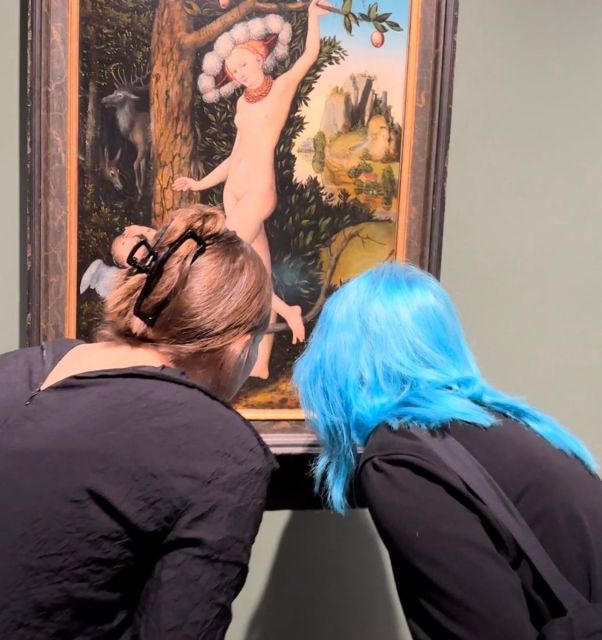
- A theme-led route that connects women’s roles to what’s happening in each painting
- Top-tier masterpieces in one focused visit, from Renaissance to Baroque to Impression-era art
- A guide who answers questions and ties old context to modern perspectives
- Private group format (up to 6) so you get more than a generic walkthrough
- Punctual, on-time pacing, with the itinerary adjusted to keep the tour ending when it should
Women in Art: what you really notice with a guide
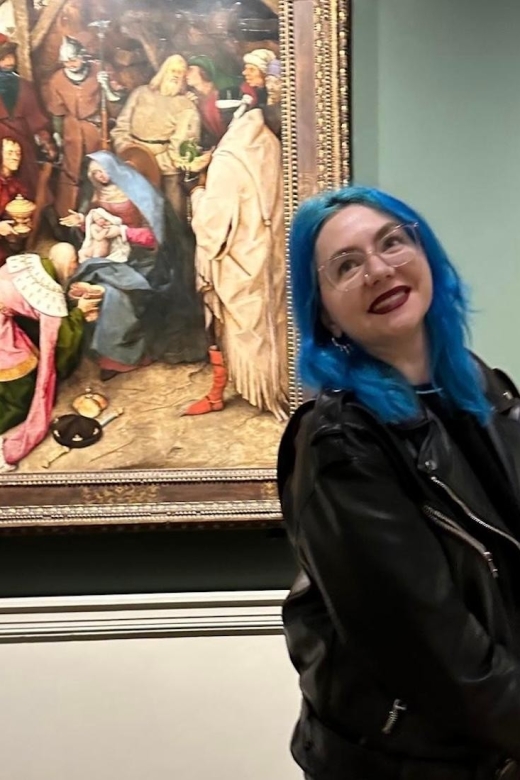
The National Gallery is big, and art can feel like it’s talking past you. This tour fixes that. You don’t just look at famous works and move on. You look with a purpose: how women are represented, imagined, protected, punished, idealized, or used as symbols.
That matters because museum labels don’t always explain the human choices behind the paint. A woman in an artwork can be a mother, a saint, a victim, a decision-maker, or a visual shorthand for ideas like virtue, grief, desire, or authority. With a guide, you start to spot those choices quickly. You’ll also notice how artists and patrons shaped the story, even when the scene looks purely religious or purely mythological.
I especially like the tone. The guide keeps explanations grounded. You get enough context to understand why an image is made the way it is, and then you’re encouraged to ask questions. If you’re the type who wants to know what you’re actually seeing (not just what you’re supposed to appreciate), this format fits.
You can also read our reviews of more museum experiences in London



Arriving in front of the National Gallery (and starting on time)
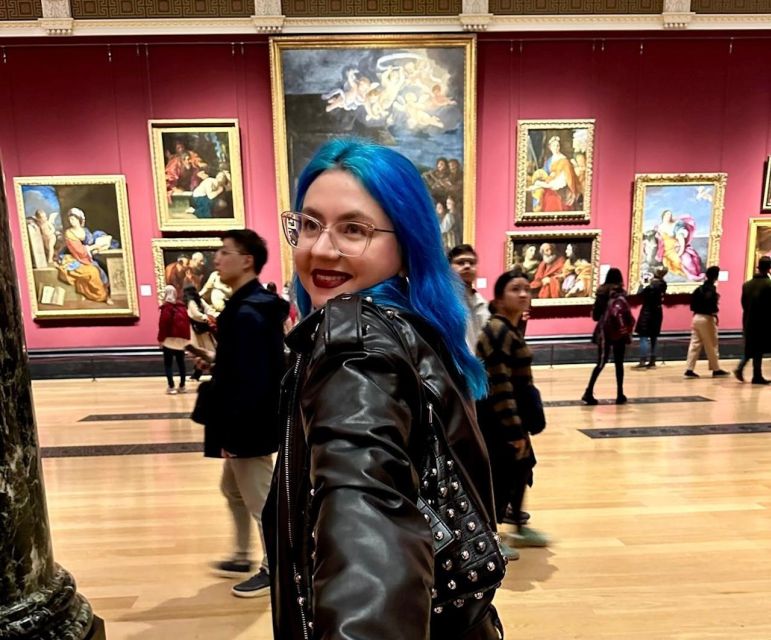
You meet in front of the National Gallery, and you end back at the same spot. The tour runs 1.5 hours, and the pace is designed to finish on time. That last part is more important than it sounds. In a museum, people can get slowed by crowds, lighting, or just the sheer urge to stare. The guide manages the flow so the tour doesn’t run long.
Here’s the practical takeaway for your day: plan to arrive a few minutes early, not just on the minute. If you’re late, you’ll miss context, and that’s the whole point of a theme-based tour. Also, the tour is private, so you’re not squeezed into a large group shuffle. For a private group, you’ll get a more direct, conversational pace.
You can book in English or Russian, and you’ll have a live guide with you the whole time. If you want to ask follow-up questions, this is the sweet spot: short enough to stay focused, long enough to have real back-and-forth.
The first stop: Leonardo da Vinci’s Madonna of the Rocks
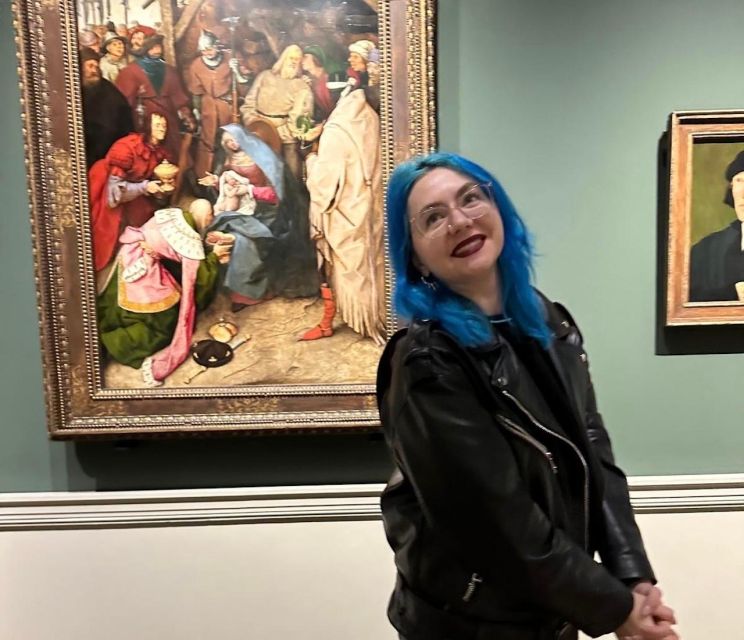
Leonardo’s Madonna of the Rocks is one of those paintings that rewards you for looking slowly, even if you’re only at it for a few minutes. In a Women in Art tour, it becomes more than a famous name on the wall. It’s about what the image gives women in the story: a sacred role with emotional weight.
What you should pay attention to:
- The relationship between the figures, and how their body language communicates authority and care
- The mood—softness, distance, protection—because mood is part of how power is shown
- The way divinity is visualized, since religious art often frames women as the bridge between heaven and the viewer
With the guide’s framing, you’re not only looking at composition. You’re also noticing how the painting positions the Madonna as more than decoration. She’s central to the emotional logic of the scene.
One useful benefit of having someone explain this: it helps you understand why viewers at the time would see the image as meaningful, not just beautiful. And if you like connecting the old world to today, this stop sets up that conversation early.
Michelangelo’s The Entombment: grief, witness, and presence
Michelangelo’s The Entombment brings a darker emotional register. Women in the scene are not simply present—they often function as the witnesses of grief, the human center of the drama, the ones whose reactions make the tragedy feel real.
This is where I like the tour approach. The guide doesn’t treat women as background. You’re prompted to look at how faces, gestures, and group placement guide your eye. In works like this, the painting can feel like it’s holding its breath. When you understand that structure, you feel less lost and more engaged.
At this stop, you’ll likely notice:
- How the arrangement makes certain figures feel more vulnerable
- The contrast between stillness and emotion
- The visual storytelling tools—hands, angles, and proximity—that create sympathy
Practical tip for your viewing: don’t rush to identify the main action. Let your eyes land on the expressions first. That’s often where the painting’s moral and emotional argument starts.
Raphael’s St Catherine: why saints still feel human
Raphael’s St Catherine shifts the topic from sacred mother imagery to saintly strength and public identity. Saints are fascinating in a Women in Art context because they sit at a crossroads: they are both individuals and symbols.
This stop is a good reminder that art doesn’t just represent women as ideals—it can also represent them as role models. When Catherine is shown, she isn’t only there to look impressive. She’s there to communicate a message about faith, endurance, and conviction.
What to look for with the guide:
- How the painting frames her posture and gaze
- The sense of dignity—how the artwork avoids making her purely passive
- The details that support her status as a figure of authority within a story
The guide’s strength here is connecting “what you see” to “why it matters.” Even if you’ve never studied iconography before, you can follow along because the explanation stays tied to visible choices: scale, placement, expression, and attire.






Rubens’ The Judgement of Paris: myth, choice, and power
Rubens’ The Judgement of Paris sounds like a myth lesson, but in this tour it becomes a story about women as decision pressure. Paris is the chooser, but the painting shows women in relation to desire, reputation, and leverage—how value gets negotiated through appearance and story.
This stop tends to change the tone. You move from religious narratives and saintly identity into a mythic setting that feels almost like social theater. The women in the scene aren’t just background figures. They’re the reason the judgment has weight.
When you’re looking at Rubens, I’d focus on:
- How the figures are positioned in relation to Paris and to each other
- The way attention is guided—who grabs your eye first and why
- What the scene implies about power: who controls narrative, who is offered as a prize, and who gets agency
This is also where a good guide really helps. Without a frame, myth paintings can blur into “pretty people doing dramatic things.” With context, you start to understand the gender politics hiding inside the drama.
Van Gogh’s Sunflowers: symbolism beyond the obvious
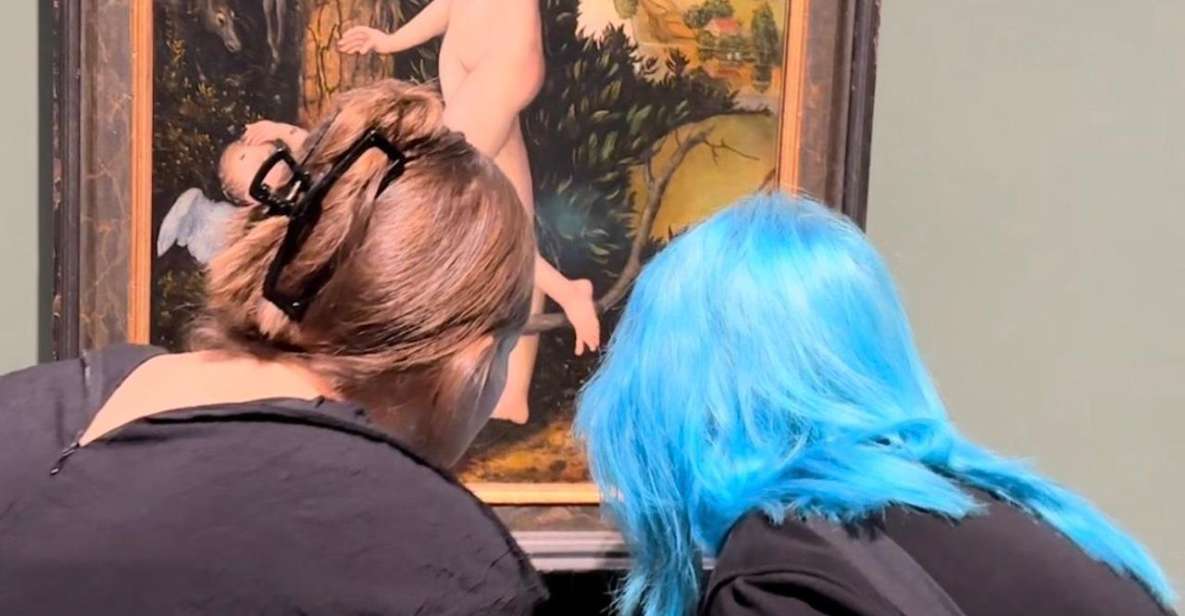
You end with Van Gogh’s Sunflowers, and that makes sense. It gives you a final contrast: not a myth scene, not a saint, but a subject that can carry big symbolic meaning. Flowers are often treated as decorative, but in art history they can also stand in for bigger ideas—care, attention, memory, and even gendered expectations.
In a Women in Art tour, this stop becomes a bridge. It can help you see how women are represented not only through people in portraits and saints, but also through objects and symbols linked to domestic spaces and social expectations.
What to pay attention to here:
- The color and brushwork, and how energy is created on the surface
- How the arrangement affects your emotional response
- The way the artwork turns something simple into something loaded
A practical angle: this final stop is where you can apply everything you just learned. Ask yourself how an artwork “assigns” meaning. Is the subject only decorative, or is it doing narrative work? The guide’s framing helps you answer that in a thoughtful way.
What makes Katya’s guiding style work
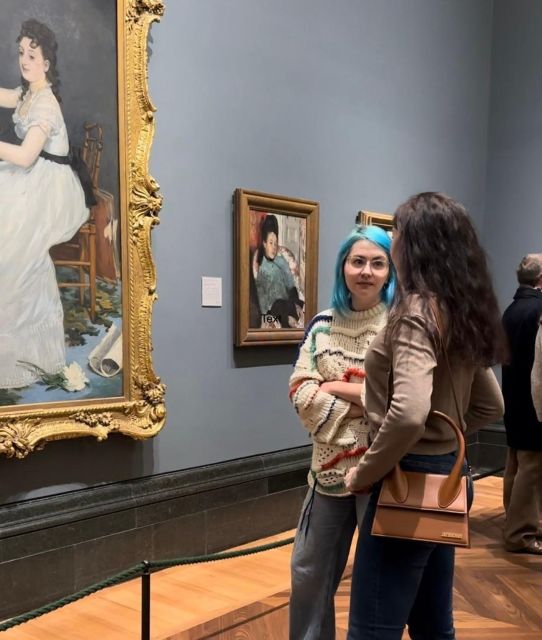
The strongest praise for this experience centers on the guide—specifically Katya—and it’s easy to see why. The tour isn’t just a list of facts. It’s a pattern of explanation, looking, and asking questions.
A few things that stand out from her approach:
- She keeps you engaged from the first minutes, with clear, captivating storytelling
- She gives in-depth explanations and sticks to what you can actually see
- She handles questions with thorough answers instead of brushing them off
- She connects historical context to modern reality, so the paintings don’t feel sealed off in the past
If you’ve ever taken a museum tour where you’re talked at for an hour, this is different. It’s interactive in a natural way. Even with a private group, you still want the guide to read the room. Katya’s style does that.
Price and value: what $404.10 per group really means
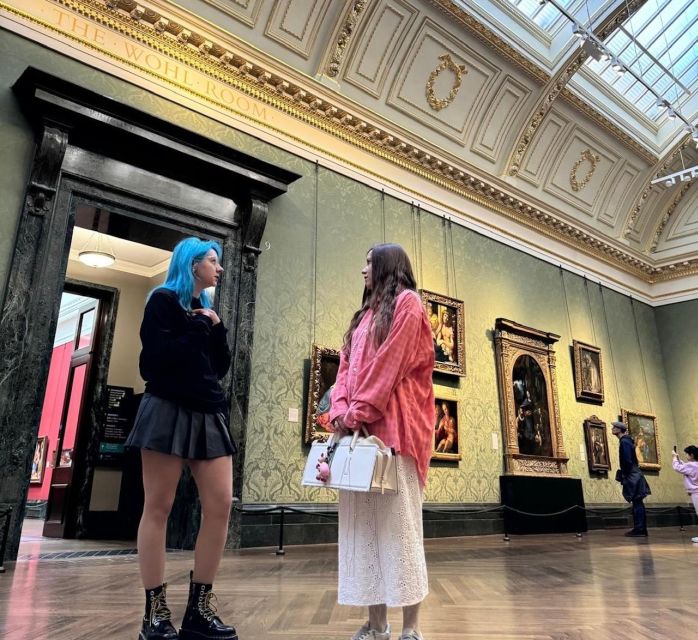
The price is $404.10 per group for up to 6 people, for a total duration of 1.5 hours. That can look steep if you’re thinking per person. But with a group size like this, it often lands in a reasonable range.
Here’s the simple math:
- If you fill all 6 spots, it’s roughly $67 per person
- If you come as 4, it’s about $101 per person
That makes a big difference when you compare it to a self-guided museum visit. A guided theme route saves you guesswork. You’re paying for direction, interpretation, and a way to understand why each masterpiece is chosen for this specific theme.
Also, because it’s a private group, the guide can tailor the pacing to your questions. In a museum, that kind of targeted attention is hard to get on your own without spending your time hunting for the right interpretation.
For planning peace of mind, the option to reserve now and pay later is a plus. And if plans shift, the tour offers free cancellation up to 24 hours in advance for a full refund.
One more practical note: the activity asks you to provide an active contact telephone number so the guide can reach you if needed. Have one ready when you book or when you get your confirmation.
Who this tour suits best (and who should skip it)
This is a great match if:
- You want a guided route through major works, without losing time figuring out what to focus on
- You care about how art represents women, including how symbolism and roles get constructed
- You like asking questions and getting answers tied to what’s on the wall
- You prefer a private group format over crowded group tours
It’s less ideal if:
- You’re traveling with children under 6, since it’s not suitable for that age group
- You want to roam the whole museum freely. This tour is focused. You’ll leave with a strong set of stories, but not with full museum coverage
Wheelchair access is listed as available, so if mobility is a concern, this is a format worth considering. Still, it’s smart to contact the provider in advance if you have specific needs, since museum layouts can vary by day and crowd level.
Should you book Women in Art at the National Gallery?
Book it if you want art viewing with direction and meaning. The best part isn’t the theme wording—it’s the way the guide helps you see decisions inside each painting: how figures are arranged, how emotion is guided, and how women’s roles are framed across different periods.
I’d especially recommend it if you’re a fan of clear explanations and you value a guide who keeps the experience lively. If your group can fill more of the 6-person capacity, the value improves a lot too.
Skip it if you’re hoping to cover the entire National Gallery in 90 minutes or you prefer silent, slow wandering. This is a focused story route, and the payoff comes from participating: looking closely, listening actively, and asking questions.
If that sounds like your kind of museum visit, this tour is a strong pick.
FAQ
Where does the Women in Art tour start?
It starts in front of the National Gallery, and it ends back at the meeting point.
How long is the tour?
The tour lasts about 1.5 hours. Starting times depend on availability.
Is this a private tour?
Yes, it’s a private group experience.
What group size is it for?
It’s priced per group for up to 6 people.
What languages are available?
The live tour guide is available in English and Russian.
Is the tour wheelchair accessible?
Yes, the activity is listed as wheelchair accessible.
Is it suitable for children?
It’s not suitable for children under 6 years.
What’s the cancellation policy?
You can cancel up to 24 hours in advance for a full refund.
Do I need to provide a phone number?
You should be ready to provide an active contact telephone number so the guide can reach you if necessary.