REVIEW · LONDON
London Crimes And Punishment Private Walking Tour
Book on Viator →Operated by Ye Olde England Tours · Bookable on Viator
London has plenty of pretty views. This tour picks the other angle. You’ll walk from Whitechapel to Borough High Street and hear how London handled crime, punishment, poverty, and public fear from medieval times to the modern city.
I like two things right away: it’s private for just your group, so you can ask questions and keep a comfortable pace; and the stops aren’t just famous names. You’ll spend real time at the places tied to gangland hits, courtrooms, executions, debt prisons, and the messy day-to-day life around them.
One thing to consider: the subject matter is dark. If gruesome stories make you squirm, bring a thick skin—or save this for a day when you want heavy history.
In This Review
- Key takeaways before you go
- A crime-focused walk that actually makes sense
- Price and logistics: what $247.73 per person really buys
- Meet Stephen Liddell–style storytelling (and how guides set the tone)
- From Whitechapel Bell Foundry to the Krays at The Blind Beggar
- Jack the Ripper’s London beyond the pubs: Brick Lane and Jamme Masjid
- Soup kitchens, Jewish charity, and the Old Spitalfields Market switch
- From William Wallace to the Peasants’ Revolt plaque
- St. Paul’s, the Viaduct Tavern cells, and the Old Bailey court
- Luftwaffe bombings, the Millennium Bridge story, and the Suicide angle
- Shakespeare’s Globe area: from plays to street misery
- Borough Market and Marshalsea: Dickens meets debtors’ prison
- Crossbones Cemetery: the last stop in the grim story
- Should you book this London Crimes And Punishment private walking tour?
- FAQ
- How long is the London Crimes And Punishment private walking tour?
- Where does the tour start and end?
- Is this a private tour or a group tour?
- What’s included in the price?
- Are tickets or admissions included for all stops?
- Does the tour run in bad weather?
- Can I cancel and get a full refund?
Key takeaways before you go
- Private pacing from Whitechapel to Borough High: many short stops, with room for questions.
- Stories that connect street life to punishment: not just dates, but why these places mattered.
- A guide spotlighted for detail: Stephen Liddell is specifically praised for careful, high-detail explanations.
- Some stops require separate admission: most are outside looks, but a couple entries are included.
- Good on a walking day: moderate fitness helps since you cover a lot of ground in 3 hours.
A crime-focused walk that actually makes sense
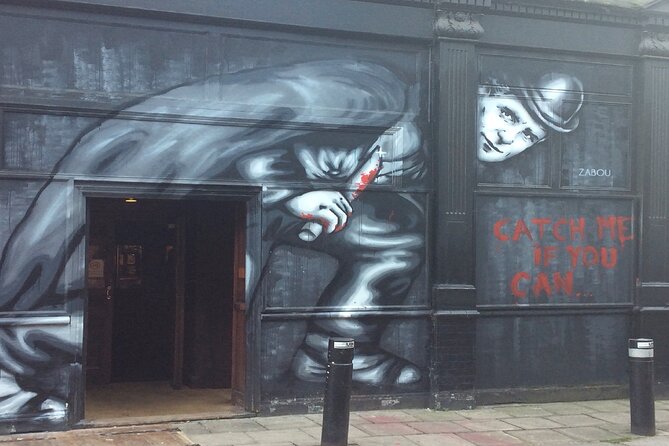
London’s “dark side” can get gimmicky on tours. This one avoids that by building a route that feels logical: poverty and pressure in the East End, the public spectacle of punishment, then the long shadow it casts on later London.
The big payoff is that you’re not just hearing about Jack the Ripper or famous gangsters in isolation. You see how the city’s systems—courts, prisons, markets, churches, even bridges—sat right in the same neighborhoods where daily survival played out. It’s less about gore for gore’s sake and more about how fear and law shaped ordinary streets.
The tour also leans hard into contrast. You’ll look at places now used for worship, business, and leisure, then hear what happened in those same locations when London was harsh, crowded, and unforgiving.
You can also read our reviews of more walking tours in London



Price and logistics: what $247.73 per person really buys
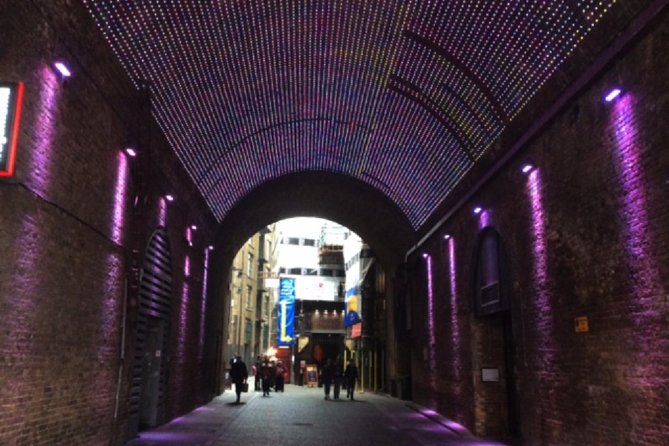
At $247.73 per person, this isn’t a budget walk. But you are paying for privacy, a dedicated guide, and a route packed with named sites.
What makes the price feel more reasonable is how the tour is structured:
- Private tour for just you and your party (no blending into a large group).
- Hotel pickup and drop-off are offered (on foot / London Underground).
- Most stops are quick, exterior-style site visits, so you keep moving without waiting around for everyone to enter somewhere.
- Admissions aren’t all on you: Old Spitalfields Market and the Marshalsea Prison South Wall stop list admission as included.
You should still plan for the fact that many stops list admission as not included. That usually means the guide keeps it to exterior viewing or optional add-ons you handle separately.
Logistically, it’s also set up for real life: you get a mobile ticket, it runs in all weather, and it’s near public transportation. Bring the right shoes because you’re walking.
Meet Stephen Liddell–style storytelling (and how guides set the tone)
The tour’s tone depends on the guide. In the material here, Stephen Liddell stands out for how he handles detail and pacing—people describe it as careful, attentive, and the kind of storytelling that makes the route feel unforgettable.
That matters because this is not the type of topic where “facts only” works well. A good guide has to keep you oriented: where you are, what time period connects to the next street, and why a pub or churchyard is part of the larger story of crime and punishment.
One more thing I’d watch for as you pick your day: because the stops include murders, executions, and grim prison history, the guide’s style is the difference between history class and a sad slog. From what’s described, Stephen is the kind of guide who turns all that into a clear, human narrative—without turning it into shock theater.
From Whitechapel Bell Foundry to the Krays at The Blind Beggar
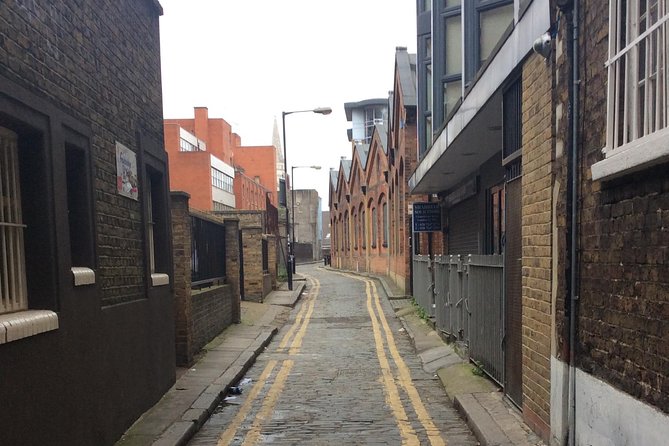
Stop 1: Whitechapel Bell Foundry (10 min, admission not included)
This is a strong opener because it ties crime-and-punishment London to something physical you can actually point at: the foundry made Big Ben and the Liberty Bell. You also learn how Big Ben got its name. Even if you don’t care about bells, this is a smart “gateway” stop because it grounds the walk in craft and industry before the violence kicks in.
Practical note: since admission isn’t included, expect either exterior focus or a moment that doesn’t require an entry ticket. If you’re the type who always wants inside access, you might want to budget extra.
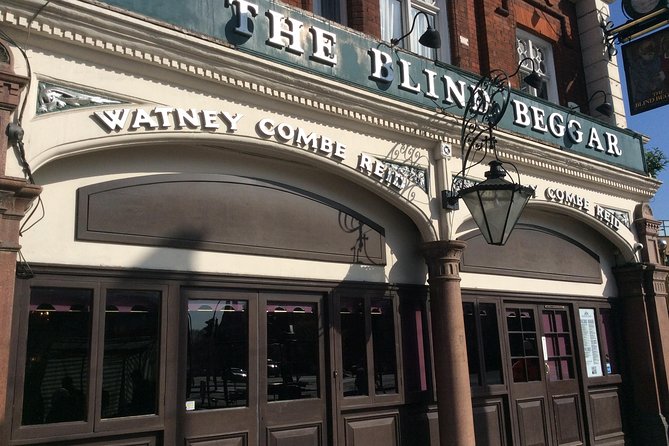
Stop 2: The Blind Beggar Public House, Whitechapel (10 min, admission not included)
Now you shift gears to gangland London in the 1960s. The Blind Beggar is linked with a notorious gangland shooting tied to the Kray story. The guide frames it as London’s answer to Al Capone—so you get a clearer sense of how London’s organized crime culture looked and how it spread fear.
Drawback? This is one of the heavier emotional stops early in the day, so if you’re sensitive, go in knowing it’s coming.
Stop 3: The Ten Bells (5 min, admission not included)
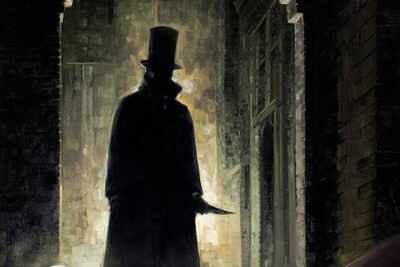
This pub connects tightly with Jack the Ripper. The itinerary even hints you may end up near the street where he lived. Those short 5 minutes are useful because the guide can compress context fast: the pub as an anchor for how people talked, gathered, and moved around fear.
Stop 4: The White Hart (10 min, admission not included)
Like Ten Bells, the White Hart is another pub linked with the Ripper. You’ll also visit the site of a potential Ripper killing. This is the kind of stop where “exactly what happened” depends on the story being told, so the value is in the guide’s ability to connect rumor, evidence, and street geography into one understandable picture.
Jack the Ripper’s London beyond the pubs: Brick Lane and Jamme Masjid
Stop 5: Brick Lane (15 min, admission free)
Brick Lane is now a trendy strip with a one-mile stretch of curry restaurants. But you’ll be guided toward the Victorian version of the street—the daily rhythms when Jack was active. This is one of those stops where you can see the layers: modern smells and signage above older poverty and overcrowding realities.
Stop 6: Brick Lane Jamme Masjid (5 min, admission not included)
This stop is pure cultural layering. Today it’s a mosque, but during Jack the Ripper time it was a synagogue. Even earlier, it served as a Protestant church for fleeing French refugees. The point isn’t religious tourism—it’s how neighborhoods change function while staying in the same geographic footprint.
If you like seeing how immigration waves and survival needs shape cities, this is a standout.
Stop 7: Golden Boy of Pye Corner (5 min, admission free)
Why a golden statue of a rather fat young boy? The answer is tied to the Great Fire of London. This is a quick stop, but it’s a good reminder that the city’s fear stories don’t always involve crime—sometimes it’s disaster, and the city remembers in statues and street markers.
Stop 8: Christ Church Spitalfields (10 min, admission not included)
This stone church becomes a “center of Victorian life” stop, with the guide pointing out it sat close to markets and a brewery, yet adjacent to what the itinerary calls perhaps the most dreadful street in London. That sharp juxtaposition helps you understand why crime and punishment were constant topics—people lived in close quarters.
You can also read our reviews of more private tours in London






Soup kitchens, Jewish charity, and the Old Spitalfields Market switch
Stop 9: Soup Kitchen for the Jewish Poor (5 min, admission not included)
You’ll see one of the first—and also one of the last—Jewish soup kitchens in the East End. This stop matters because it reframes the walk. Instead of only thinking “punishment,” you see how communities tried to prevent starvation and despair in the first place.
Stop 10: Old Spitalfields Market (5 min, admission included)
Now you switch to a place that’s fun to look at, under the old Victorian roof. It’s an industrial market turned modern, and the itinerary notes it’s always something to see here. The tradeoff: it’s short, so don’t expect a long wander. The value is the quick contrast—East End struggle, then the city’s ability to reuse and reinvent a space.
Stop 11: Smithfield Market (10 min, admission not included)
Smithfields has long been the center of the London meat trade. The guide notes that centuries ago, food production was less ethical and punishment wasn’t only for the criminals—it also touched people through systems that used and discarded bodies. The stop is worth it if you like hearing how “crime” can also mean economic cruelty.
If you’re vegetarian or strongly uncomfortable with animal-butcher history, this is the stop you’d want to skim or mentally brace for.
From William Wallace to the Peasants’ Revolt plaque
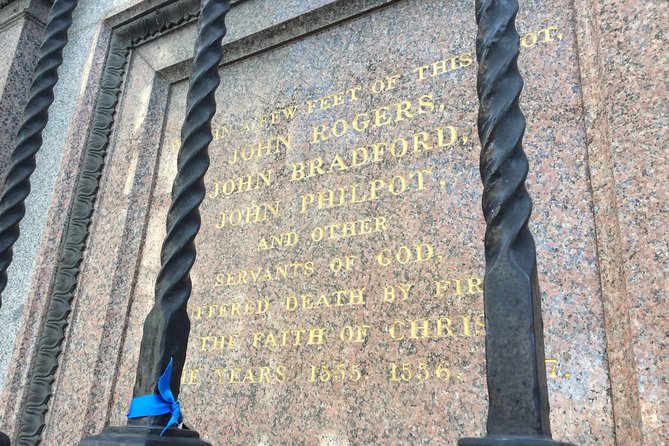
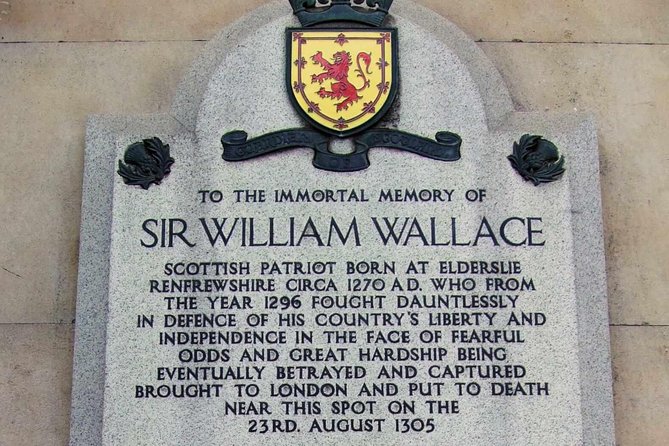
Stop 12: William Wallace Memorial (10 min, admission free)
This is the street version of a blockbuster. You’ll see the site where William Wallace was hung, drawn, and quartered, plus nearby other interesting histories. It’s quick but dramatic, and it shows how political crime and state punishment were once public events.
Stop 13: Peasants’ Revolt Plaque (5 min, admission free)
This one is brief but smart: you learn about the Peasants’ Revolt and how it helped shape life in modern Western countries. The practical value is that it breaks you out of the idea that “crime and punishment” only means criminals. Social unrest was treated like a threat too.
Stop 14: Church of St. Bartholomew the Great (5 min, admission not included)
A small churchyard and graveyard stop. The itinerary promises secrets within. The vibe here tends to be quieter and more reflective—less gunfire and more how people memorialize death when life was risky.
St. Paul’s, the Viaduct Tavern cells, and the Old Bailey court
Stop 15: St. Paul’s Cathedral (5 min, admission not included)
From the outside, you’ll learn how St. Paul’s avoided destruction in WWII. Even though the tour is framed around earlier punishments, this stop shows how London’s violence and survival didn’t end. If you want the “how the city endured” angle, St. Paul’s gives it to you fast.
Stop 16: The Viaduct Tavern (5 min, admission not included)
This pub is described as notorious because it sits next to centuries of executions. Plus, the cellars beneath the streets held condemned men spending their last night. This is one of the most emotionally intense stops on the list, because it makes punishment feel personal—sleeping close to your own execution isn’t a distant concept.
Stop 17: Holy Sepulchre London (5 min, admission not included)
Another old church with often gruesome history. The tour treats churches here as more than architecture—they’re records of what happened to people who didn’t make it.
Stop 18: Old Bailey (5 min, admission not included)
You’ll stand at Old Bailey, described as perhaps the oldest court in the Western world. It’s still used for trials and where the baddest of the bad are put on trial. This is a great “bridge stop” because it connects the story of punishment across centuries to today’s legal system.
Stop 19: Christchurch Greyfriars Church Garden (5 min, admission free)
A memorial garden to the Blitz in WWII. After the courtroom-and-execution intensity, a memorial space gives your brain somewhere to land.
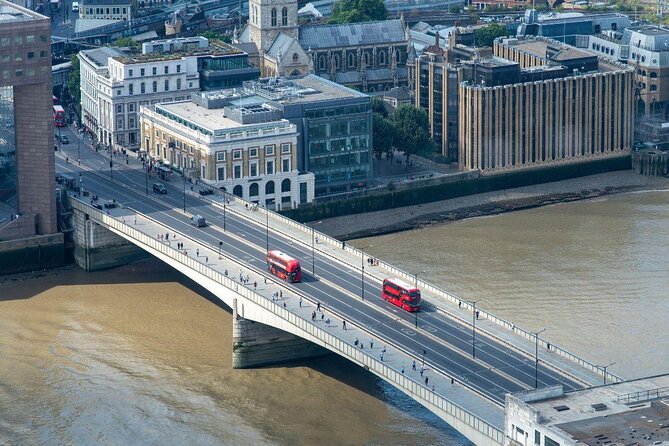
Stop 20: London Bridge (5 min, admission free)
You’ll learn about the ceremonial London Bridge with the large spike where heads of executed criminals were stuck as a warning. It’s the kind of detail that makes the city feel very real, very sharp. If you’re squeamish, this is the moment to brace.
Luftwaffe bombings, the Millennium Bridge story, and the Suicide angle
Stop 21: The National Firefighters Memorial (5 min, admission free)
This memorial honors those who gave their lives protecting London during the WWII Blitz bombings and fires by the Luftwaffe. It’s an important tonal shift: from punishing criminals to remembering people who responded to mass destruction.
Stop 22: Millennium Bridge (5 min, admission not included)
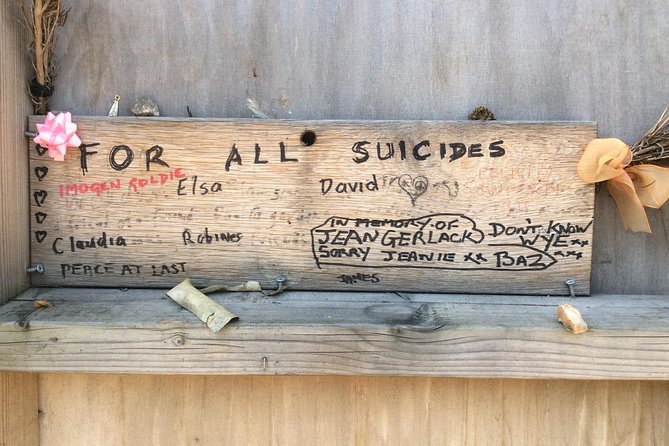
No gore here, but the itinerary says it’s a known suicide spot and notes it was described as decidedly sexist. This is the kind of stop where the guide’s wording matters—keep it as a story about public spaces and social attitudes, not a graphic discussion.
Shakespeare’s Globe area: from plays to street misery
Stop 23: Shakespeare’s Globe (10 min, admission not included)
Today, Shakespeare’s Globe is a top place to see a play. But back in Shakespeare’s time, the area was described as the absolute pits, compared to the Amsterdam of its day. This stop gives you a new way to see the “crime and punishment” theme: entertainment, poverty, and street life were often intertwined.
Stop 24: The Clink Prison Museum (10 min, admission not included)
You’re not going inside the museum. Instead, the guide points out the outside is authentic. That works well for this tour style—quick, location-based learning without turning the day into a line-waiting exercise.
Stop 25: Winchester Palace (5 min, admission not included)
Mostly destroyed in one of London’s huge fires, once home to the Bishop and his terrible ways, then the guide continues with more. This is a fast stop, but it helps broaden the story beyond “criminal justice” into church power and how institutions could be cruel.
Borough Market and Marshalsea: Dickens meets debtors’ prison
Stop 26: Borough Market (10 min, admission free)
Borough Market is framed as Dickensian London and tied to Oliver Twist. The market has been around since Roman times, which gives you a big-picture sense of continuity: even as punishment changed, London’s food and trade spaces kept pulling people in.
Stop 27: Marshalsea Prison South Wall (10 min, admission included)
The finish leans literary. Marshalsea was a debtors prison, and the itinerary notes it had a terrible impact on Charles Dickens. This stop is valuable because it broadens “crime” into unpaid debts and legal hardship—what could ruin a life wasn’t always a street brawl.
Crossbones Cemetery: the last stop in the grim story
Stop 28: Crossbones Graveyard & Garden of Remembrance (15 min, admission free)
This is one of the most unique stops on the route. It’s described as almost unknown even to Londoners. The graveyard holds criminals, prostitutes, plague victims, and suicides for centuries. That range matters: it shows how society labeled people it feared, punished, or simply couldn’t care for.
It also sounds like a place with enough beauty that you’ll likely remember it after the facts fade.
Stop 29: Red Cross Cottages & Garden (5 min, admission free)
You learn the story of one of the first attempts to improve welfare for poverty-stricken London. After two-plus hours of punishment and survival hardship, this is a “what people tried next” stop—small, but meaningful.
Stop 30: Ye Olde England Tours (end of tour)
The tour wraps at Ye Olde England Tours. At this point, you’ll have walked a route that moves from fear and punishment to charity and memory.
Should you book this London Crimes And Punishment private walking tour?
Book it if you want London that feels specific—street-by-street—and you like stories tied to real locations, not vague “in the area” history. The private format helps a lot. If you like asking follow-ups, this kind of tour fits your travel style better than a large-group bus tour.
I’d skip or think twice if you strongly dislike grim subject matter. The itinerary clearly includes executions, prisons, and murders, and it even calls out details like the London Bridge spike and condemned men spending their last night.
Finally, weigh the value. At $247.73 per person, it’s best when:
- you can commit to the full 3 hours,
- you want a guided narrative with a lot of stops,
- and you appreciate that some entries are included while many are exterior site visits.
FAQ
How long is the London Crimes And Punishment private walking tour?
It lasts about 3 hours.
Where does the tour start and end?
It starts at 277 Whitechapel Rd, London E1 1BY and ends at Borough High St, London SE1 1JX.
Is this a private tour or a group tour?
This is a private tour/activity. Only your group participates.
What’s included in the price?
Included are a local guide/professional guide, hotel pickup and drop-off (on foot / London Underground), and the private tour. Old Spitalfields Market and the Marshalsea Prison South Wall stop list admission as included.
Are tickets or admissions included for all stops?
No. Many stops list admission tickets as not included, while some stops are free and a couple have admission included.
Does the tour run in bad weather?
Yes. It operates in all weather conditions, so you’ll want to dress appropriately.
Can I cancel and get a full refund?
Yes. You can cancel up to 24 hours in advance of the experience for a full refund. Cancellation within 24 hours isn’t refundable.