REVIEW · LONDON
Women of Whitechapel 2 hour Walking Tour
Book on Viator →Operated by London Herstory Guided Walks · Bookable on Viator
Whitechapel tells stories you might miss. This Women of Whitechapel walk turns everyday streets into a map of female courage. You’ll hear about WWI-era resistance, late-1800s philanthropists, and even the anarchistic movement of the 1890s.
I love the way this tour stitches neighborhoods together instead of bouncing around London. The route flows from Whitechapel Road to Brick Lane, then on to Princelet Street, Spitalfields Market, and Stepney Green.
The only real heads-up: this is a good walking workout and it depends on weather. Bring comfortable walking shoes and dress for whatever East London is serving that day.
In This Review
- Key things you’ll like on this Women of Whitechapel tour
- Women’s stories across Whitechapel Road
- Brick Lane as a timeline of immigrants and quiet revolutionaries
- Princelet Street and solo women in the 1700s
- Spitalfields Market E1 and the women who pushed change
- Stepney Green: anarchism, East India connections, and a Call the Midwife link
- How the 2–3 hour timing actually feels on your feet
- What you pay ($27.53) and why it’s fair for this format
- Easy logistics: where you start and how the walk ends
- Coffee break option, but it’s on you
- Who should book Women of Whitechapel?
- Should you book this walk?
- FAQ
- How long is the Women of Whitechapel 2 hour walking tour?
- How much does the tour cost?
- Where do I meet the guide?
- Where does the tour end?
- Is the tour offered in English?
- What is included in the ticket?
- Is coffee or tea included?
- What should I wear?
- How big are the groups?
- What happens if the weather is bad or the tour is canceled?
- If I cancel, do I get a full refund?
Key things you’ll like on this Women of Whitechapel tour
- Mandy’s story-led guiding style that keeps the pace friendly and the facts clear
- A route built around major East London areas you’ll actually want to revisit after
- WWI resistance and other women’s “quiet power” woven into each stop
- Short, manageable stop times (some are 10–20 minutes) so you don’t feel dragged
- Spitalfields Market + film-feeling streets that make history feel concrete
- A small group size with a maximum of 30 travelers
Women’s stories across Whitechapel Road
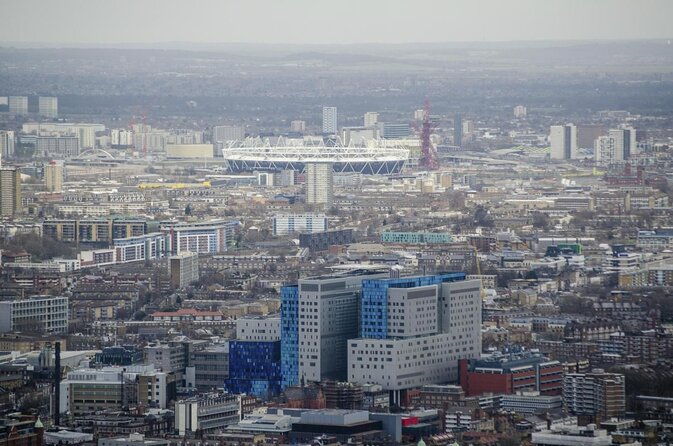
The walk kicks off on Whitechapel Road (277 Whitechapel Rd, London E1 1BY), and it’s a good way to get oriented fast. You’re right in the thick of daily life, with a high street feel, plus a mix of architecture you’ll start noticing once the guide points it out.
This first stretch is where the tone clicks. You’ll hear about brave women connected to WWI resistance, and about female philanthropists from the late 1800s. It also swings into the anarchistic movement of the 1890s, which you’d never guess exists in this kind of streetscape—unless someone gives you the angle.
Practical tip: because this is the longest stop (about 1 hour), wear shoes you can trust. If your feet are grumpy, the stories won’t land.
You can also read our reviews of more walking tours in London



Brick Lane as a timeline of immigrants and quiet revolutionaries
Next is Brick Lane, one of East London’s best-known names. The tour ties it to Monica Ali’s book and then moves through layers of who lived and worked here over time: Huguenot weavers, Jewish tailors, and later Bangladeshi restauranteurs.
What makes the stop feel different is the focus. Instead of treating Brick Lane as just a “culture hotspot,” this walk frames it as a place where women acted in the background—quiet revolutionaries, the kind who change a community through daily work, organizing, and survival.
This stop is short (around 20 minutes), which is smart. Brick Lane is full of distractions, so you get a focused hit of context without turning it into a long detour.
Princelet Street and solo women in the 1700s
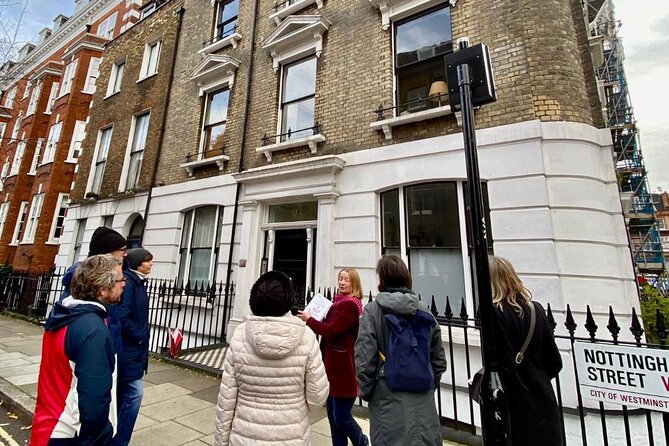
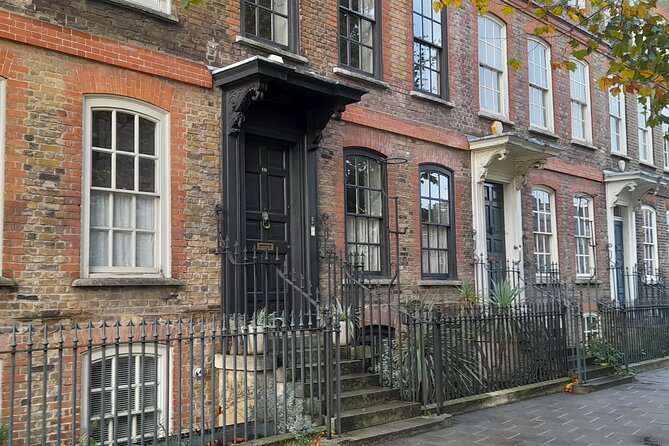
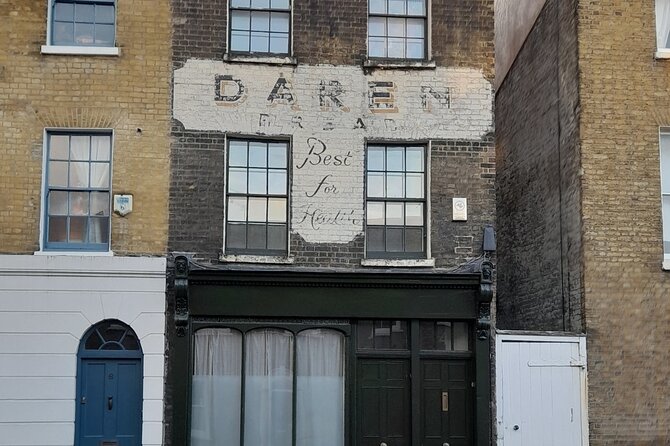
Princelet Street is next, and it’s the kind of street that instantly looks like it belongs in old film scenes. You’ll see pretty houses with wooden shutters, plus that tightly grouped, storybook feel you can’t fake.
Here the tour points to something specific and surprising: several women who lived alone in the 1700s. Even if you don’t normally think about domestic life as “history,” this moment shifts your perspective. You start scanning the streets as if you’re asking, Who lived here? What did they do? How did they handle independence in a world that expected women to be tucked away?
Expect about 10 minutes here. It’s perfect for a quick visual reset between bigger, more crowded areas.
Spitalfields Market E1 and the women who pushed change
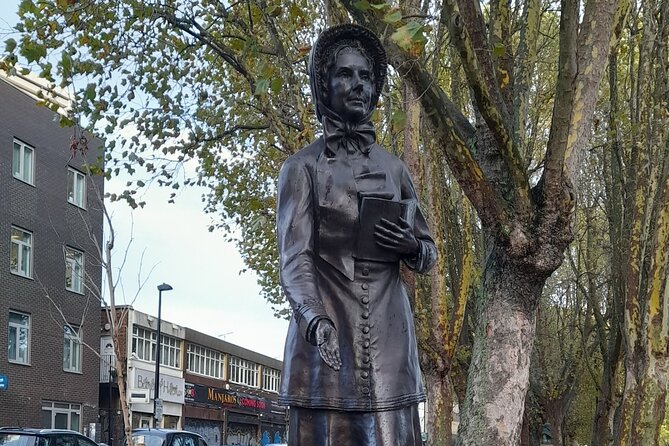
Then you move to Spitalfields Market (E1), where the guide brings in a real anchor point: it’s a market opened by Queen Victoria. That helps ground the walk. You’re not just hearing legends; you’re standing in a place with an official beginning.
From there, the tour keeps the spotlight on women tied to the revolution over the last few hundred years. Sylvia Pankhurst, Mary Wollstonecraft, and Sara Wesker all come up as part of the streets’ political and social energy.
Time-wise, you’ll have about 30 minutes around the market. That’s long enough to browse or just observe the flow of shoppers and vendors, but not so long that you lose the thread. If you like mixing “story mode” with “people watching,” this is a good payoff stop.
Bonus practical note: markets are busy. If you’re sensitive to crowds, keep an eye on the group so you don’t get separated while you look at stalls.
Stepney Green: anarchism, East India connections, and a Call the Midwife link
Stepney Green is the penultimate stop and it shifts the vibe again. The tour dips into an area rich with personal stories, not just famous names.
You’ll hear about a house lived in by the widow of an East India employee, and then about the story of a lowly prostitute who made a name for herself. That’s a big swing in subject matter, but it’s also the point of the tour: women’s lives took many forms, and not all of them were “respectable” in the way older histories prefer.
The guide also connects the area to anarchistic headquarters and even to Call the Midwife. That doesn’t mean you’re watching TV history—you’re using the show as a doorway to understand the real-world setting it drew from.
This stop is about 10 minutes. It’s short, but it lands because you’ve already spent the whole walk learning how to look at everyday buildings as evidence of real lives.
You can also read our reviews of more tours and experiences in London





How the 2–3 hour timing actually feels on your feet
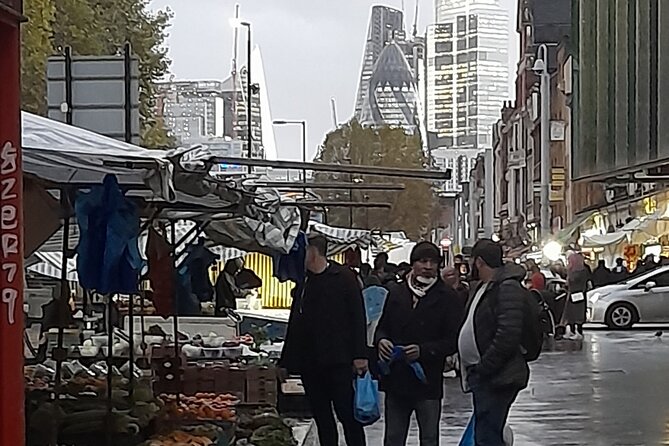
On paper, you’re looking at 2 to 3 hours. In practice, the stop lengths add up to a little over 2 hours (1 hour + 20 minutes + 10 minutes + 30 minutes + 10 minutes), and then you have walking time between locations.
That’s a good structure for most people. You get one longer segment early to set context, then several quicker stops that keep your attention fresh. You’re also moving through areas that are easy to navigate on foot once you’re with the group.
One more practical thing: the tour is rated for moderate physical fitness. That usually means steady walking, not long climbs—still, it’s not a “sit and stroll” kind of outing. If you’re dealing with knee or ankle issues, you’ll want to be honest with yourself about your comfort level.
What you pay ($27.53) and why it’s fair for this format
At $27.53 per person, this tour sits in the “value for your time” zone. You’re paying for guided storytelling that covers multiple neighborhoods and gives you a framework for understanding women’s roles across different eras.
Key reason it feels worth it: the tour is not just sightseeing. It’s a themed walk (women’s history) with specific anchors at meaningful places: Whitechapel Road, Brick Lane, Princelet Street, Spitalfields Market, and Stepney Green.
Also, it includes the guided experience itself (2–3 hours) and is offered in English with a mobile ticket. It’s small-group history, not a huge bus tour, so the guide can keep things human-sized.
If you’re hoping for museum-style “ticketed entry” attractions, this isn’t that kind of day. The stops are set up so you walk, look, and learn, with a free admission ticket noted for the stops in the itinerary.
Easy logistics: where you start and how the walk ends
The tour starts at 277 Whitechapel Rd, London E1 1BY, and ends near Liverpool Street Station (London EC2M 7QA). That end point is handy because you can keep moving right after the walk without needing extra planning.
It’s also described as near public transportation, which matters in London. You’ll be able to get there without a long trek across town, and you won’t be stuck far from transit at the finish.
The tour also runs on Mondays with the opening hours provided as 2:00 PM to 4:00 PM. If you’re choosing days for your itinerary, that’s a simple constraint to work with.
Coffee break option, but it’s on you
There’s mention of a stop at a Huguenot tea/coffee shop, but coffee or tea isn’t included. So if you want a mid-walk caffeine boost, budget for it.
I like that this keeps the tour flexible. Some people want a break, some don’t. You’re not forced into paying for a package deal.
Who should book Women of Whitechapel?
This is a strong fit if you want history that connects to real streets instead of only big museum halls. I think it’s especially good for you if you enjoy walking plus context—when you want to look at a street corner and understand what women did there, even when they weren’t centered in the usual story.
It’s also a good choice if you like meeting people. The highlights point out the chance to make a few new friends along the way, and the group size cap (30) helps make that more realistic.
If you dislike walking in crowds or you’re very sensitive to weather, you’ll need to think carefully. The experience notes that good weather matters.
Should you book this walk?
I’d book it if your idea of a great London day includes street-level storytelling and a women’s history lens. The route is practical, the stops are paced so you can handle them, and the guiding style is praised for being both kind and engaging.
Skip it only if you’re looking for indoor attractions or you want long, uninterrupted “sit and listen” lectures. This is an on-your-feet neighborhood walk, and it works best when you show up ready to look around.
If you’re doing East London anyway, this gives you a smarter way to see it.
FAQ
How long is the Women of Whitechapel 2 hour walking tour?
It’s listed as 2 to 3 hours approximately.
How much does the tour cost?
The price is $27.53 per person.
Where do I meet the guide?
The start meeting point is 277 Whitechapel Rd, London E1 1BY, UK.
Where does the tour end?
The tour ends at Liverpool Street Station, London EC2M 7QA, UK.
Is the tour offered in English?
Yes, it’s offered in English.
What is included in the ticket?
You get a 2 to 3 hour guided tour on the history of women in Whitechapel.
Is coffee or tea included?
No. Coffee and/or tea are not included, though there is a stop at a Huguenot tea/coffee shop at your cost.
What should I wear?
Wear good walking shoes and appropriate clothes for the weather.
How big are the groups?
The maximum group size is 30 travelers.
What happens if the weather is bad or the tour is canceled?
The experience requires good weather. If it’s canceled due to poor weather, you’ll be offered a different date or a full refund.
If I cancel, do I get a full refund?
You can cancel for a full refund if you cancel at least 24 hours in advance of the experience’s start time. If you cancel less than 24 hours before the start time, the amount paid is not refunded.