REVIEW · LONDON
Booze, Brothels & The Bard: A Walking Tour of London’s Bawdy Borough
Book on Viator →Operated by Historic London Tours · Bookable on Viator
A two-hour walk that tells dirty stories well. This is a focused stroll through Southwark where Shakespeare and Dickens-era London collide with beer trades, old prisons, and working-class life. I love how the route ties famous names to real, walkable places, and how the guide brings the characters to life with sharp, local context. The only drawback: the stops are brief, so you may want to plan extra time if you’re the type who likes to linger.
What I like most is the small group feel (up to 15), which keeps questions welcome, and the way you hit major anchors like Borough Market and Shakespeare’s Globe without turning it into a rushed museum day. The other consideration is that it’s more of a guided pass-by than a deep sit-down experience at each site. If you want long explanations inside buildings, bring that mindset before you go.
In This Review
- Key highlights at a glance
- Southwark in one afternoon: why this walk feels different
- Stop 1: St George the Martyr and the Marshalsea link
- Stop 2: Crossbones Graveyard and the Garden of Remembrance
- Stop 3: The Hop Exchange and London’s beer trade
- Stop 4: George (the last surviving galleried coaching inn)
- Stop 5: Old Operating Theatre Museum and Herb Garret
- Stop 6: London Bridge as a skyline anchor
- Stop 7: Southwark Cathedral and medieval survival
- Stop 8: Borough Market for real food-market London
- Stop 9: Winchester Palace remains and power in medieval form
- Stop 10: The Clink Prison Museum and the edge of notoriety
- Stop 11: Shakespeare’s Globe—reconstruction and why it matters
- How the pacing and group size affect your enjoyment
- Value check: is $27.78 worth it?
- Should you book Booze, Brothels & The Bard?
- FAQ
- How long is the walking tour?
- How much does the tour cost?
- Where does the tour start and end?
- What language is the tour offered in?
- Is this tour a small group?
- Do I need a paper ticket?
- Are the stops extra-cost admissions?
- Will I get confirmation after booking?
- Is free cancellation available?
Key highlights at a glance
- Bawdy borough theme, grounded in real locations from prisons to theatre
- Literary connections to Shakespeare and Dickens along the way
- Borough Market + Shakespeare’s Globe on the same walk route
- Beer-trade landmarks like the Hop Exchange
- Old Operating Theatre Museum with Europe’s oldest surviving operating theatre
- A compact 2-hour format with small-group attention
Southwark in one afternoon: why this walk feels different
Southwark is one of those London areas that rewards you for walking slowly. It’s close to the Thames, full of older street-level lanes, and historically it’s been a place for entertainment, trade, and trouble. This tour leans into that reality. The title might sound cheeky, but what you end up with is a smart tour about how ordinary life, crime, and performance all fed the same neighbourhood.
The format matters. You’re walking a tight route in about two hours, with quick stops that keep the story moving. And since the group size tops out at 15, it doesn’t feel like you’re packed in with a giant crowd. I also like that the tour is built around stops with admission-ticket free listings, so the day is mostly about people and place, not chasing entry fees.
If you care about the lived texture of London—streets, buildings, and how they connect—this is the kind of tour that helps you get your bearings fast. You leave with a map in your head, not just a list of famous sights.
You can also read our reviews of more walking tours in London



Stop 1: St George the Martyr and the Marshalsea link
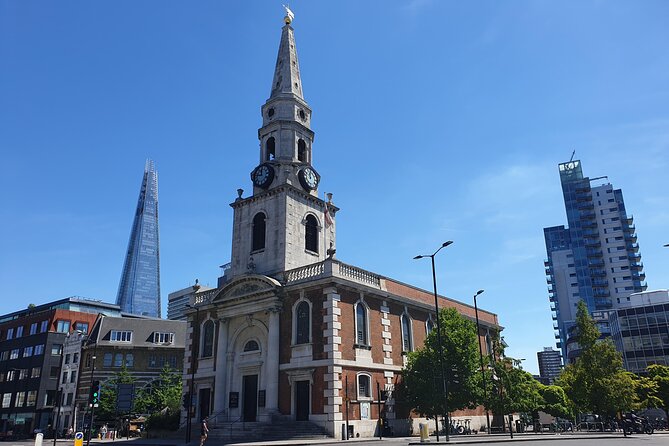
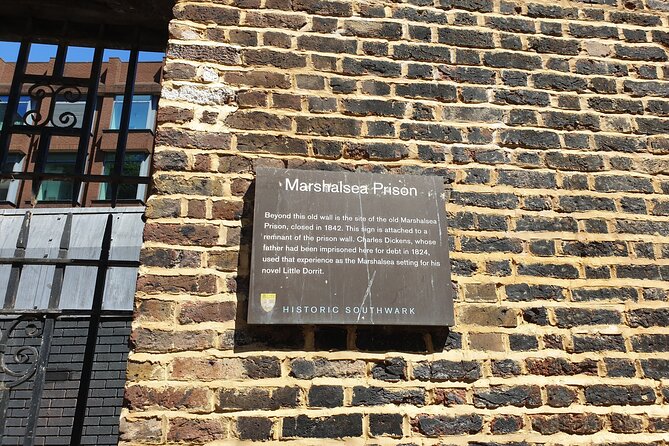
You start at St George the Martyr, a church with a major historical connection: it’s tied to the Marshalsea Prison. One small but meaningful detail is that it includes the only remaining part of the Marshalsea Prison. That matters, because prison history can otherwise feel abstract. Here, you’re looking at physical remnants tied to a specific place.
A quick stop can be good for sites like this. In a short time, you can still get the main idea: Southwark wasn’t just about entertainment. It was also about justice systems, confinement, and the everyday reality of poverty and debt.
Practical note: since you’re only there for around five minutes, don’t expect a long guide-led lecture. Use the stop to orient yourself, then if you’re curious, you can come back later and read more on your own.
Stop 2: Crossbones Graveyard and the Garden of Remembrance
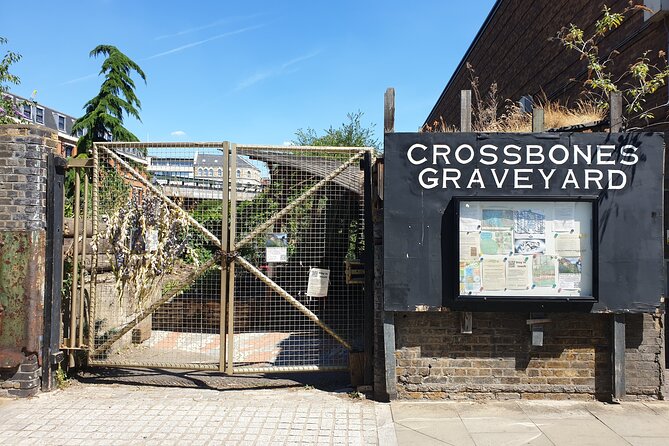
Next comes Crossbones Graveyard and the Garden of Remembrance. This is the darker emotional anchor of the walk. It’s described as the final resting place for thousands of Southwark’s outcast dead. That phrase can sound dramatic, but the point is straightforward: there’s a dedicated place here for people who were excluded even in death.
This stop works because it balances the day’s “bawdy borough” framing with something real and human. Instead of treating prisons and punishment like spectacle, the tour brings you to a memorial space where the story is about mortality and social status.
If you’re sensitive to grim subjects, take a breath here. It’s not long, but it carries weight.
Stop 3: The Hop Exchange and London’s beer trade
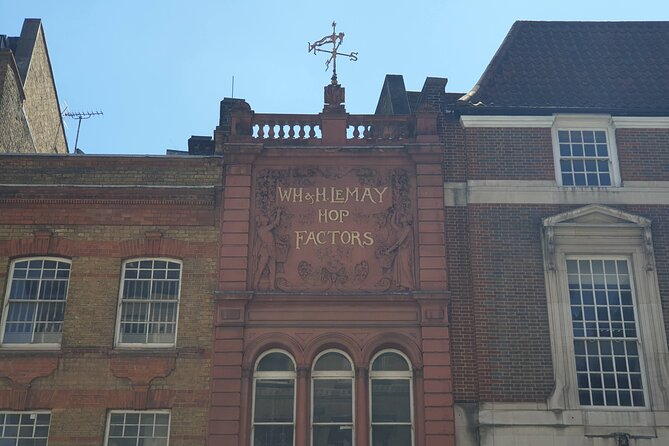
Then you shift from graveyard solemnity to beer history at the Hop Exchange. The Hop Exchange is described as the largest extant reminder of Southwark’s beer trade. That’s exactly the kind of landmark I like: it’s not just a name, it’s a surviving building tied to an industry.
Why it’s valuable: beer trade history explains a lot about how neighbourhoods functioned. Where there’s drinking and commerce, there’s also hiring, gossip, music, and, yes, petty crime. The tour’s theme makes more sense after you’ve seen how deeply rooted the area’s entertainment economy was.
Because the time is tight, you’ll likely do a quick exterior look and move on. Still, this is the stop where you start to see the pattern linking everyday trade to the bigger stories.
Stop 4: George (the last surviving galleried coaching inn)
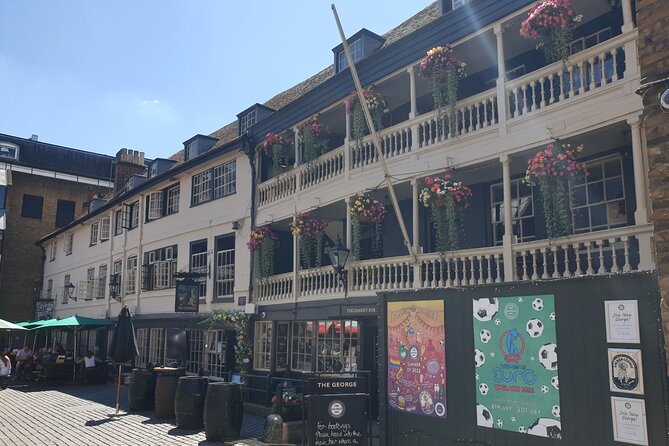
A few minutes later you’re at George, London’s last surviving galleried coaching inn. This is one of those places where the architecture is the story. A coaching inn isn’t a random old building—it’s the infrastructure of travel, lodging, and stop-and-go commerce.
The galleried design is a big clue. It suggests how people flowed through the inn and how travellers and workers shared the same space. You can almost imagine the noise: arrivals, departures, calls, and deals.
This is a good stop for photo-minded visitors too. Even on a short visit, you can spot enough to make it feel like more than a token stop.



Stop 5: Old Operating Theatre Museum and Herb Garret
Now the tour heads into a very specific kind of history at the Old Operating Theatre Museum and Herb Garret: Europe’s oldest surviving operating theatre. That’s not a small claim, and the stop signals that this walk isn’t only about legends and theatre.
What I find compelling here is the contrast. Southwark’s story includes entertainment and punishment, but it also includes medicine—often crude by today’s standards, but still part of the same world of survival. You’re seeing how people dealt with illness in the past, in a space that still exists.
In five minutes, you’ll get the outline, not a full museum experience. But for many people, that’s the right balance. It gives you a sense of place, then you can return later if you want to spend longer.
Stop 6: London Bridge as a skyline anchor
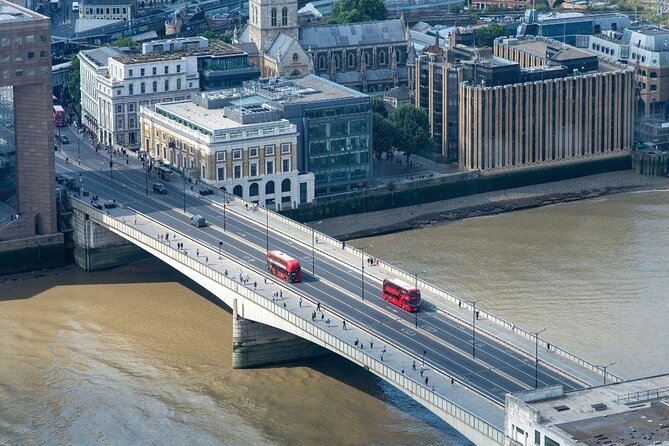
After the museum stop, the route reaches London Bridge. It’s one of those “you can’t miss it” landmarks, and including it on this walk is smart. It acts like a reset point: you look out, you reorient, and you remember you’re near the river.
The tour doesn’t treat London Bridge as just a postcard. It’s a practical landmark that helps you understand how Southwark connected to wider London. Even if your view isn’t perfect, the location puts the area in context quickly.
Again, this is brief, but for a two-hour route, that’s the goal: keep moving while staying grounded.
Stop 7: Southwark Cathedral and medieval survival
Then comes Southwark Cathedral, described as London’s oldest surviving gothic church. This is where the walk gains a kind of “time anchor.” When a building has survived since early gothic architecture days, it tells you the area had depth—people were building, rebuilding, worshipping, and surviving here for centuries.
I like how this stop counterbalances the darker prison sites. You’re still in the same neighbourhood, but the story expands. Religion, civic life, and community endurance show up as part of the same overall Southwark narrative.
If you’re into architecture, five minutes may feel short. But the stop gives you the “what to notice” basics—enough to make your next glance at the cathedral actually meaningful.
Stop 8: Borough Market for real food-market London
Next is Borough Market, described as a one thousand year old food market. This is one of the best stops in the entire walk because it turns history into something you can use right now.
Even with only a quick look, Borough Market signals continuity. Markets don’t last for a thousand years because they’re decorative. They last because people keep coming back to eat, trade, and do everyday business.
If you’re thinking ahead: plan for the possibility that you’ll want to grab a snack after the tour. The market can make the walk feel complete, like the stories moved from graveyards and prisons into normal human appetites.
The tour keeps it moving, though, so don’t expect a long guided taste experience. Treat it as a taste of the place—then go explore on your own.
Stop 9: Winchester Palace remains and power in medieval form
After Borough Market, you see Winchester Palace, described as the remains of one of the most prestigious homes in medieval England. Palace ruins are tricky: they can look like nothing until you understand what they used to represent.
That’s where a good guide helps. The tour frames Winchester Palace as the kind of wealth and influence that shaped the area. It’s a reminder that Southwark wasn’t only working-class life and entertainment. It also held spaces tied to status and authority.
Since your stop is short, your goal is to identify what’s left and understand what kind of power used to occupy that land. Even a quick stop can make later reading or visits feel much richer.
Stop 10: The Clink Prison Museum and the edge of notoriety
Then you move to the Clink Prison Museum, the site of the notorious Clink Prison. If Marshalsea was the start of the prison thread, the Clink is where the theme turns sharp and memorable.
“Notorious” is doing work here. Prison in London wasn’t just about locking people up. It was about reputation, punishment systems, and how society treated certain groups. With the museum setting and the prison focus, you get a clearer picture of why the area’s stories include fear as well as spectacle.
This is another stop where five minutes is enough to plant the idea. But if you like prison history, you’ll likely want to come back later and spend more time inside.
Stop 11: Shakespeare’s Globe—reconstruction and why it matters
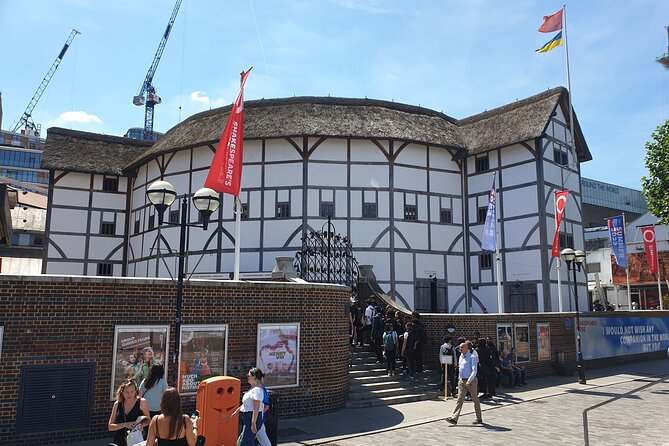
Finally, you end at Shakespeare’s Globe. The tour notes it as the reconstruction of Shakespeare’s Globe Theatre. Ending here ties the whole walk together. You start with real remnants and memorials, and you finish at a theatre meant to bring Shakespeare’s stage world back to life.
Even though it’s a reconstruction, the meaning isn’t fake. Theatre reconstructions help you understand what kind of space Shakespeare’s audience may have used. If you’ve ever watched a production and thought, I wish I could picture the original setting, this is the kind of stop that makes that mental image easier.
This is also where the tour title stops being just clever branding. Shakespeare isn’t floating in the air as a famous name. He’s connected to a specific London place you can actually stand next to.
How the pacing and group size affect your enjoyment
This is a 2-hour walk with about five minutes per stop. That pacing is a strength if you want a “great hits” tour of Southwark. It keeps energy up and prevents the day from dragging.
It’s also the main reason the tour won’t satisfy everyone. If you want to sit down, read every sign, and go slow inside each building, you’ll likely feel you sped by important parts. This is also why I recommend treating this as the first chapter, not the final one. Take the guidance to orient yourself, then choose one or two places to revisit afterward—especially Borough Market and Shakespeare’s Globe, since those lend themselves to independent time.
The max 15 group size is the other factor. Smaller groups mean you’re less likely to feel ignored. If you ask questions, you’re more likely to get answers rather than just hearing commentary at volume.
Value check: is $27.78 worth it?
At $27.78 per person, this tour is priced like a solid guided experience, not a premium ticketed attraction day. The value comes from three things:
- You get a walking tour guide rather than self-guided “wander and guess.”
- Many listed stops are admission-ticket free, so the day stays predictable.
- The route covers major Southwark anchors—prisons, a beer-trade reminder, a historic operating theatre, a cathedral, a medieval palace site, Borough Market, and Shakespeare’s Globe—without requiring separate ticket planning.
So the real question isn’t just the price. It’s what you want from your time in London. If you’re the type who enjoys connecting stories across different sites, this feels like a bargain. If you’re the type who wants long museum time, you may want to pair it with extra independent visits afterward.
Should you book Booze, Brothels & The Bard?
Book it if you want a guided walk that shows London’s “underworld” side through real, surviving places—and you like the idea of linking that to Shakespeare’s stage at the end. It’s also a great fit if you enjoy short stops with a guide who can keep the story moving. And if you’re travelling with someone who likes literature, this format gives you a way to see Shakespeare and Dickens connections without turning the day into pure theatre talk.
Skip it if your dream day is long sit-ins, deep reading in each building, and spending more time at fewer places. This one moves. But that can be a feature, not a bug, especially if you’re also planning to explore Borough Market and Shakespeare’s Globe on your own after the tour.
If you do book, keep your expectations tuned to the route: you’re getting an excellent overview that sets you up for smarter follow-up time.
FAQ
How long is the walking tour?
It’s listed as about 2 hours.
How much does the tour cost?
The price is $27.78 per person.
Where does the tour start and end?
It starts at Borough High St, London SE1 1JX, UK and ends at Shakespeare’s Globe, 21 New Globe Walk, London SE1 9DT, UK.
What language is the tour offered in?
It’s offered in English.
Is this tour a small group?
Yes. The maximum group size is 15 travelers.
Do I need a paper ticket?
No. It includes a mobile ticket.
Are the stops extra-cost admissions?
The stops shown are listed as admission-ticket free.
Will I get confirmation after booking?
Confirmation is received at the time of booking.
Is free cancellation available?
Yes. You can cancel up to 24 hours in advance for a full refund.