REVIEW · LONDON
Secrets of Underground Walking Tour with London Transport Museum
Book on Viator →Operated by Evan Evans Tours · Bookable on Viator
Tube trivia gets way better with a guide. This half-day walk uses real, working stations as clues, then layers in what happened underground over the years. You’ll move between major interchanges and lesser-known, now-closed spaces, all with live commentary and audio headsets so you don’t miss a word.
I especially like the value: for about $32, you’re not just doing a history walk, you’re also getting into the London Transport Museum. I also like the small-group feel (up to 25 people), which makes it easier to hear your guide and keep up with the story.
The main drawback to plan for is that the tour experience is about seeing and learning around disused sites from the public side. If you’re hoping for full access into truly closed “ghost” platforms, manage expectations and bring curiosity, not a ticket to restricted areas.
In This Review
- Quick take: what makes this tour work
- Price and value: $32 for a guide plus the London Transport Museum
- Meet at Baker Street, finish at Westminster, then go to Covent Garden
- How the walking tour stays audible: audio headsets and a small group
- Stop-by-stop: what you’ll learn at each Underground station
- Stop 1: Baker Street Station and the Metropolitan Railway origin
- Stop 2: Oxford Circus and the engineering behind line connections
- Stop 3: Green Park and Down Street Station, closed and remembered
- Stop 4: Piccadilly Circus Station and the overlap of two lines
- Stop 5: Embankment and the Thames-side reason for the route
- Stop 6: Westminster Station, starting as Westminster Bridge
- London Transport Museum after the tour: how to use your included time
- Who this tour suits best (and who should pick something else)
- My decision guide: should you book this Underground tour?
- FAQ
- How long is the Underground Walking Tour?
- Where do I meet the guide and where does the tour end?
- Is entry to the London Transport Museum included?
- Are audio headsets provided?
- Do I need an Oyster card or Travelcard?
- Is lunch included?
- Where is the London Transport Museum and how do I get there?
Quick take: what makes this tour work
- Headsets included, so station chatter and street noise stay in the background
- Baker Street start at 1:00 pm, with a clear landmark meeting point by the Sherlock Holmes statue
- A tight route from Baker Street to Westminster, then you head to the museum on your own
- Station engineering stories at Oxford Circus and beyond, not just names on a map
- Disused-station history (including Down Street) with realistic viewing expectations
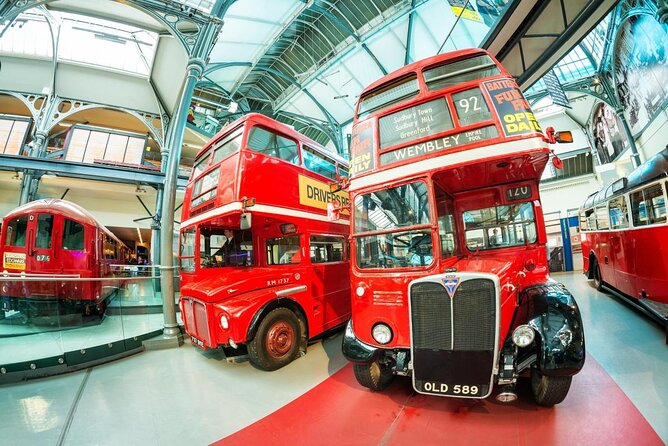
- London Transport Museum entry included for a hands-on add-on after the walk
Price and value: $32 for a guide plus the London Transport Museum
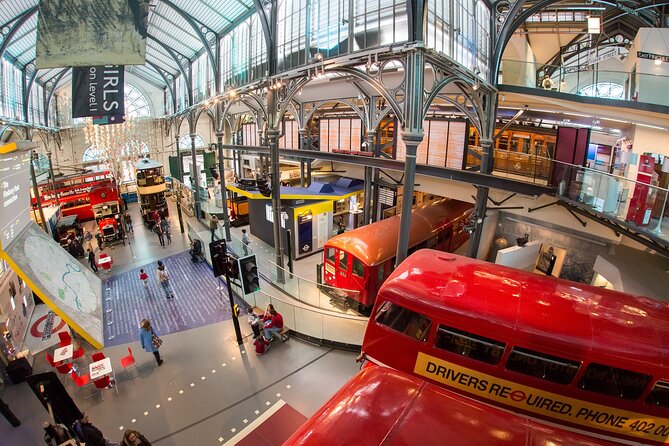
At around $32, this feels like a smart deal if you want both a guided street-level history lesson and a museum stop without paying twice. You’re paying for five-plus hours of expert commentary, plus entry to the London Transport Museum, which is where the experience becomes more than just photos.
The real value is how the two parts connect. The walk focuses on stations and lines you can point to instantly, while the museum gives you space to sit, read, and connect the dots. If you like learning by seeing things in the right order, this format is efficient.
One more practical point: lunch isn’t included. If you’re the type who gets hungry mid-walk, bring a snack or plan to eat soon after the tour ends.
You can also read our reviews of more walking tours in London



Meet at Baker Street, finish at Westminster, then go to Covent Garden
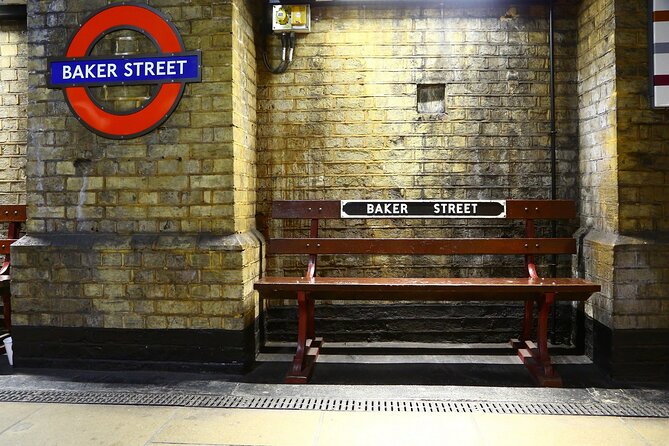
The tour runs about 5 hours 30 minutes, starting at 1:00 pm at Baker Street Underground Station. Your guide meets you outside Underground Ltd, and the specific start point is by the Sherlock Holmes statue outside the station.
You’ll finish around 3:30 pm at Westminster Station (Bridge St). From there, you’re on your own getting to the London Transport Museum at Covent Garden Piazza, London, WC2E 7BB. The museum is listed as near Covent Garden Underground, and also within walking distance of Leicester Square, Holborn, Charing Cross, and Embankment stations.
This matters because the best “tour day” timing depends on you. After the walk, you need to move to Covent Garden and still have time to enjoy the museum. I’d give yourself a little buffer instead of assuming you can sprint from Westminster to exhibits.
How the walking tour stays audible: audio headsets and a small group
You get personal audio headsets for the walking portion. That’s a big deal in London, where station entrances, traffic, and crowds can swallow a normal voice. With headsets, you can stay focused on the guide’s explanation rather than hunting for sound.
The group size caps at 25 travelers, which usually helps with pace and attention. It’s still a walk, so you’ll want shoes that handle pavement and stairs near underground entrances.
Also, this is designed for people with moderate physical fitness. The itinerary is broken into chunks, but you’ll still be on your feet between stations for hours.
Stop-by-stop: what you’ll learn at each Underground station
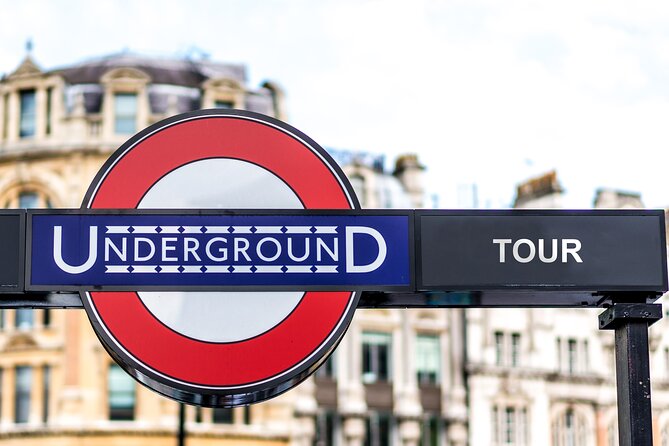
Stop 1: Baker Street Station and the Metropolitan Railway origin
Your first stop is Baker Street Station, tied to the Metropolitan Railway, described as the world’s first underground railway. This is the right opener because it frames everything that comes later: London didn’t start with a single line. It started with ideas, experiments, and a network that grew by problem-solving.
Baker Street is also a visual anchor. Even if you’ve used the Underground many times, this start helps you see it as history-in-motion instead of just a transport tool.
What to watch for: this is 30 minutes, so it’s not a museum-style slow start. You’ll get stories and context, then move on before the details become overwhelming.
You can also read our reviews of more museum experiences in London





Stop 2: Oxford Circus and the engineering behind line connections
Next up is Oxford Circus Station. The station story here is very specific: construction began in 1962 on the initial Walthamstow to Victoria section, with plans for cross-platform interchange at Oxford Circus. The Victoria line platforms opened on 7 March 1969, and the station became part of an extension from Warren Street to Victoria.
Why this stop matters: Oxford Circus is one of those stations people treat like a maze. Your guide’s job is to make sense of the layers—what was built when, and why the interchange design matters.
Small consideration: it’s a busy station area. Headsets help, but you’ll still be near crowds for part of the time.
Stop 3: Green Park and Down Street Station, closed and remembered
At Green Park, you’re connected to Down Street Station. The background is full of useful “why it closed” logic: opened in 1907 by the Great Northern, Piccadilly and Brompton Railway, later served by the Piccadilly line, and positioned between Dover Street (now named Green Park) and Hyde Park Corner. It closed in 1932, partly due to low patronage and because other stations were nearby.
This is where the tour earns its name Underground Walking Tour. You start hearing that the system wasn’t only expanding—it was also trimming routes that didn’t work.
What to expect: you’re learning about disused space, but you’re not automatically getting access to private areas. Based on other experiences with similar formats, plan on seeing and understanding from the public side rather than touring restricted “ghost” platforms.
Stop 4: Piccadilly Circus Station and the overlap of two lines
Then you’ll move to Piccadilly Circus Station. Here, the key dates are crisp. The station opened on 10 March 1906 by the Baker Street and Waterloo Railway (now the Bakerloo line). The platforms of the Great Northern, Piccadilly and Brompton Railway (now the Piccadilly line) opened on 15 December 1906.
This stop is great for anyone who likes to spot layers. Piccadilly Circus feels like a surface-level landmark, but Underground tells a different story: construction timelines, overlapping projects, and station growth in stages.
Practical note: it’s another 30-minute stop. If you’re the kind of person who likes long photo sessions, keep one short moment for pictures and then rejoin the group quickly so you don’t lose the thread.
Stop 5: Embankment and the Thames-side reason for the route
Next is Victoria Embankment, connected to Embankment Station. You’ll hear how Embankment runs along the north bank of the River Thames and was developed in the 19th century to reclaim marshy land along the river banks.
This is an excellent bridge between “transport” and “city-building.” The Underground isn’t only tracks and trains; it’s also what London decided to build on top of wet, changing terrain.
Potential drawback: you may find yourself switching between looking up at the street and absorbing Underground details. If you’re tired of standing, this is the point to do a quick stretch while still staying with the group.
Stop 6: Westminster Station, starting as Westminster Bridge
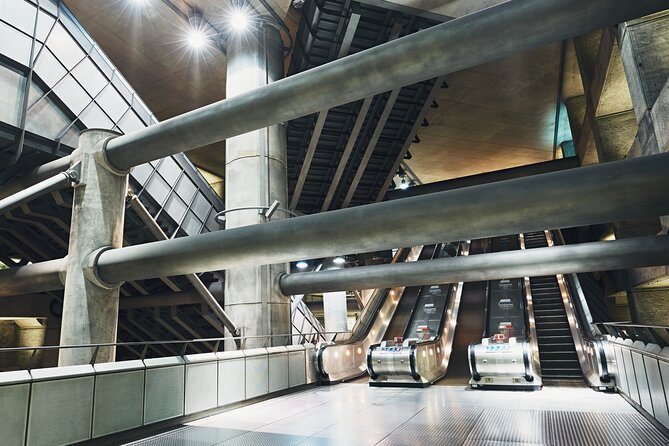
Finally, you reach Westminster Tube Station, which was originally opened as Westminster Bridge on 24 December 1868 by the steam-operated District Railway (now the District line). Your guide also covers access design: a passageway from Bridge Street and a pedestrian subway under the road.
This stop connects the Underground to the physical city around it. Westminster isn’t just a transfer station; it’s tied to 19th-century engineering decisions that shaped how people moved between bridges and rail.
Expect crowds and lots of movement here near the end of the tour. Keep your timing tight because the museum comes right after.
London Transport Museum after the tour: how to use your included time
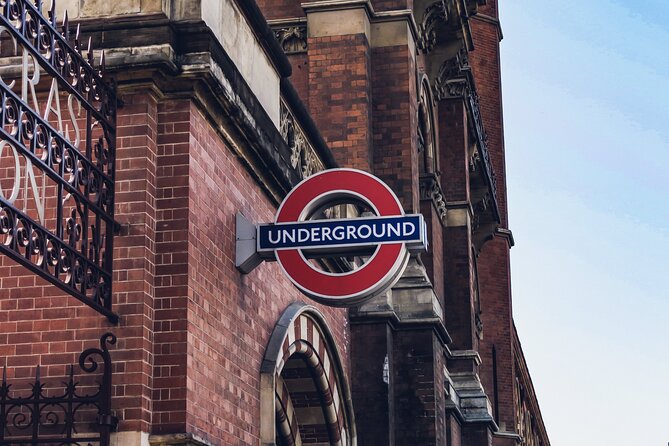
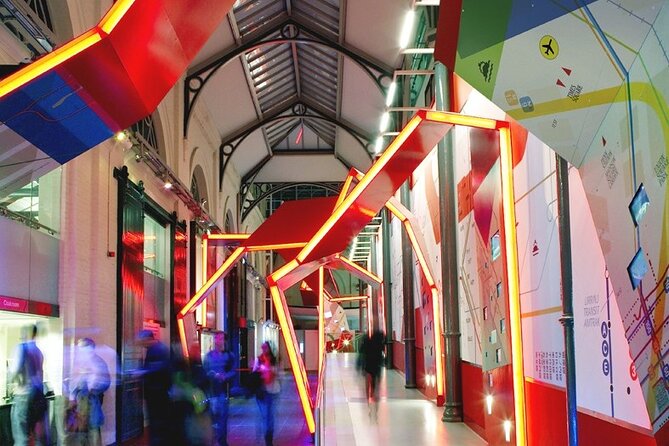
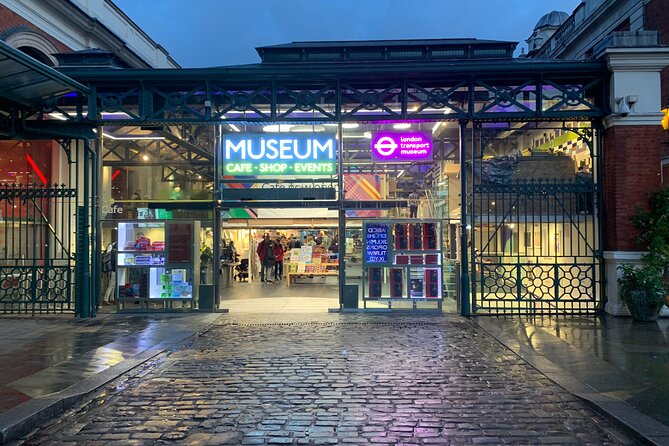
Your last scheduled chunk is 1 hour 30 minutes at the London Transport Museum, with admission included. The museum is independent at leisure, meaning the walking tour ends at Westminster and you then head to Covent Garden on your own.
This is a good time to shift from guided storytelling to self-paced exploring. You’ll likely enjoy it most if you go in with a few names and dates fresh in your head from the walk. That way, the exhibits feel like answers, not random artifacts.
One thing I recommend: be ready to show your museum entry details at the ticket desk. Even though the tour states museum admission is included, there have been real-world cases where the museum portion didn’t feel smooth for some people. Your best move is simple: double-check your confirmation and bring it with you, just in case the desk asks for specific voucher details.
Who this tour suits best (and who should pick something else)
I’d point you toward this tour if you:
- like learning transit history while standing in front of the places
- want a guided walk with audio headsets and small-group pacing
- enjoy museum time as a follow-up, not a replacement
You might want to consider a different style of tour if you:
- expect direct access into closed underground areas as part of the tour route
- hate public crowds around major interchanges
- need a fully planned meal break (lunch is not included)
My decision guide: should you book this Underground tour?
Book it if you want a cost-effective way to connect station landmarks to the Underground’s evolution, from early lines to closures and rebuilds. The combination of guided commentary, headsets, and included London Transport Museum entry is the core reason it’s worth your time.
Think twice if you’re chasing access to truly closed “ghost” platforms. Based on what the experience is set up to do, this is more about seeing history around the system and hearing how it worked, not about touring restricted spaces.
If you do book, plan two things carefully: bring what you need for Zone 1 payment (an Oyster/Travelcard/contactless is required), and give yourself extra minutes to get from Westminster to Covent Garden Piazza without stress.
FAQ
How long is the Underground Walking Tour?
The tour runs for about 5 hours 30 minutes (including the London Transport Museum visit time).
Where do I meet the guide and where does the tour end?
You meet at Baker Street Underground Station at 1:00 pm, by the Sherlock Holmes statue outside the station. The tour ends at Westminster Station at approximately 3:30 pm.
Is entry to the London Transport Museum included?
Yes. London Transport Museum entry is included as part of the tour, and you have about 1 hour 30 minutes there.
Are audio headsets provided?
Yes. Personal audio headsets are provided for the Underground walking tour so you can hear the guide clearly.
Do I need an Oyster card or Travelcard?
Yes. You’ll need an Oyster Card / Travelcard / contactless payment card for Zone 1 to participate (not included).
Is lunch included?
No. Lunch is not included, so plan to eat before or after the tour.
Where is the London Transport Museum and how do I get there?
The museum is at Covent Garden Piazza, London, WC2E 7BB. The tour ends at Westminster, and you need to make your way to the museum independently.