REVIEW · LONDON
British Museum Guided Tour
Book on GetYourGuide →Operated by The Great Weekender · Bookable on GetYourGuide
A guided route turns the museum into a story. I like how this guided route gets you to the right galleries quickly, and I like that the plan centers on iconic, high-impact objects like the Rosetta Stone. The main drawback is simple: at 2.5 hours, it’s a highlight tour, not a full museum marathon.
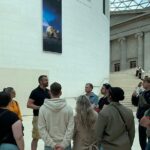
The British Museum is enormous, with around 8 million artefacts in total and about 80,000 on display. This tour helps you skim the right way. You’ll use timed entry and a separate entrance to skip the line, then follow an experienced local guide through a curated, walkable sweep (comfortable shoes still matter).
If you want, you can keep things flexible. The tour is described as bespoke, with a guide tailoring your route and pacing, and there’s also a private group option if you prefer quieter attention.
In This Review
- Key things that make this tour work
- The 2.5-hour plan: how to fit the British Museum into real life
- Meeting on Great Russell Street and using the skip-the-line entrance
- First minutes inside: getting a museum map you can actually use
- Egypt and the Assyrians: where the tour’s timeline starts clicking
- The Rosetta Stone: more than a famous name
- The Elgin Marbles: what you’ll notice when someone explains the why
- Sutton Hoo and Lewis Chessman: Britain’s ancient clues beyond the usual
- How the guide’s pacing improves your museum results
- What this tour is good value for at $93 per person
- Who should book this British Museum guided tour
- Should you book it?
- FAQ
- How long is the British Museum guided tour?
- Does this tour include timed entry or skip-the-line access?
- Where do I meet the guide?
- What are the main highlights you’ll see?
- What language is the guide?
- Is a private group available?
Key things that make this tour work
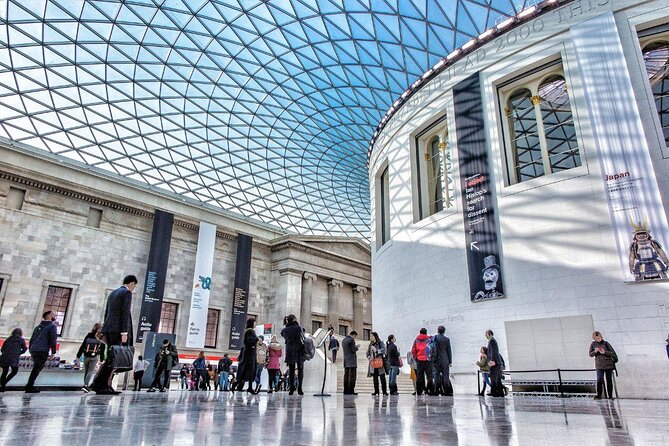
- Timed, skip-the-line entry so you spend more time inside the galleries
- A highlights-first path that helps you find the museum’s biggest payoff
- Big-name anchors like the Rosetta Stone, Elgin Marbles, and Sutton Hoo
- Story links across civilizations (Egypt, Assyrians, Ancient Greece show up often)
- English live guide who explains what you’re looking at, not just where it is
- Private-group availability if you want more personal pace and focus
The 2.5-hour plan: how to fit the British Museum into real life

The British Museum can swallow a whole day, and that’s exactly why a guided highlights route is useful. You get a structured visit that’s long enough to feel like you learned something, but short enough to still leave room for lunch, a walk through Bloomsbury, or a second museum stop later.
This one runs 2.5 hours, so your mindset should be: highlights with context. Think of it like a “greatest hits” album, but with the tracklist explained. You’ll spend your time where the museum’s story is easiest to grasp at a glance—objects that act like milestones, not random detours.
A small but important detail: the tour is a walking experience, but it isn’t described as a long-distance trek across London. Still, you’re inside a maze of galleries, and you’ll be on your feet. Comfortable shoes aren’t optional.
You can also read our reviews of more guided tours in London



Meeting on Great Russell Street and using the skip-the-line entrance
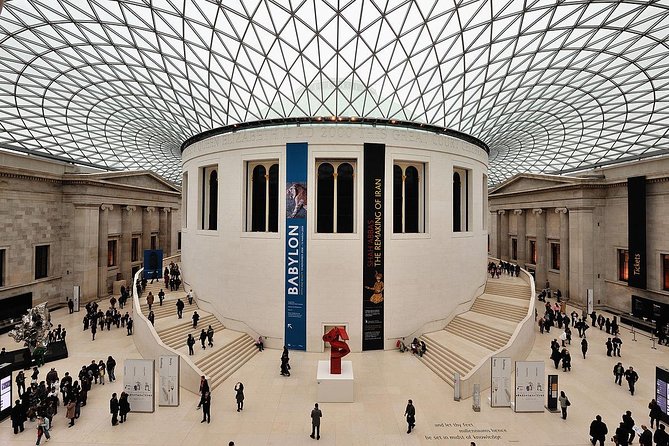
You’ll meet your guide next to the red telephone boxes on Great Russell Street, close to the museum entrance. One provided option also lists the meeting point as outside The Museum Tavern. The exact spot can vary by option booked, so it’s worth checking your confirmation closely.
Here’s why this matters for your day: the British Museum entrance area can get slow when multiple tour groups and general visitors pile up. This tour is designed with timed entry and a separate entrance for skip-the-line entry. That means you’re not burning time first thing while you’re still fresh and ready to look closely.
Once inside, the tour approach matters more than distance. Instead of wandering and hoping you land on the important rooms, your guide takes you through a route where you’ll see major anchor objects in context—so you don’t just recognize names, you understand why they’re there.
First minutes inside: getting a museum map you can actually use
The biggest problem with the British Museum on your own is not that it’s hard to find things—it’s that it’s easy to get lost in too many choices. In a 2.5-hour visit, you need to know what to prioritize before the crowd and the building both start to blur together.
A strong guide usually starts with orientation. This tour is set up to “journey through time,” heading straight toward the historic highlights. That phrasing is a clue to the method: you’ll be moving through eras with explanations tied to what you see right then.
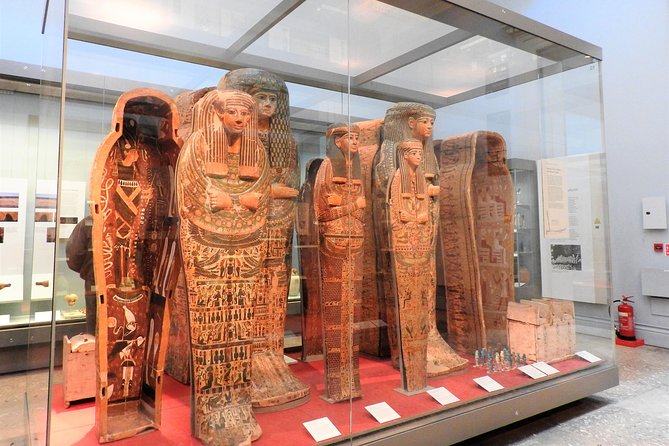
You’ll also get object-focused storytelling. Past experiences with this tour highlight that guides often choose a well-balanced selection of rooms, commonly featuring Egypt, the Assyrians, and Ancient Greece, plus other civilizations depending on the flow. That’s a smart way to structure the visit because these cultures show up together on your mental timeline instead of feeling like separate school reports.
Egypt and the Assyrians: where the tour’s timeline starts clicking
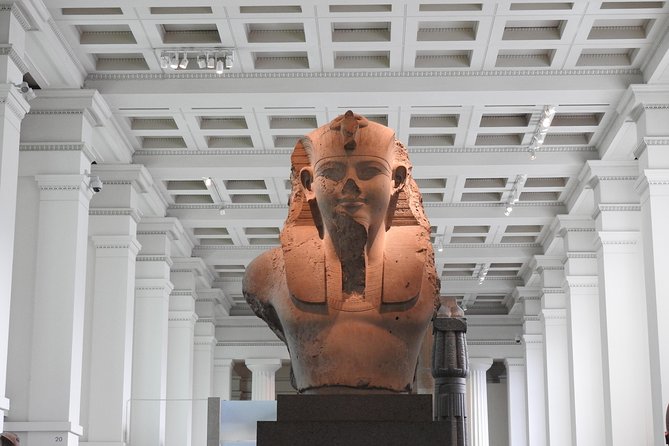
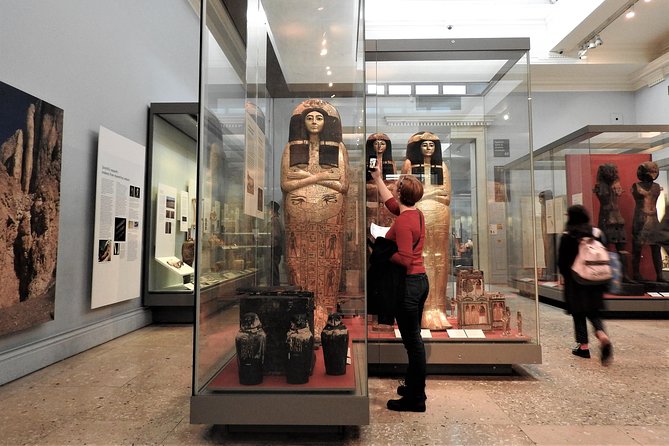
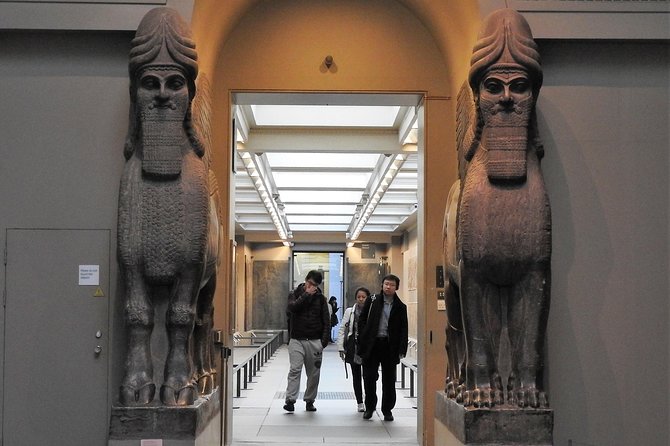
When a tour connects civilizations, you feel it in your head right away. Egypt tends to set a strong baseline: you can see how power, religion, and daily life show up in objects that have survived thousands of years. Then the Assyrian section helps you compare that foundation with a different style of rule and art, often with a more direct emphasis on royal imagery and storytelling in sculpture.
Even within the short duration, the best part is that the guide’s explanations give you “handles” to keep looking. Instead of just seeing carvings and figures, you’ll have a clearer sense of what you’re looking at—whether it’s political messaging, ritual meaning, or how a society recorded itself.
There’s also value in how this tour moves. You’re not being asked to master everything. You’re being guided toward the most readable moments in the galleries, the kinds of objects that make the next room easier to understand.
A practical tip: if you’re the type who likes to take photos, do it early, then listen. If you listen first, you’ll photograph with purpose instead of collecting a pile of vague images.
The Rosetta Stone: more than a famous name
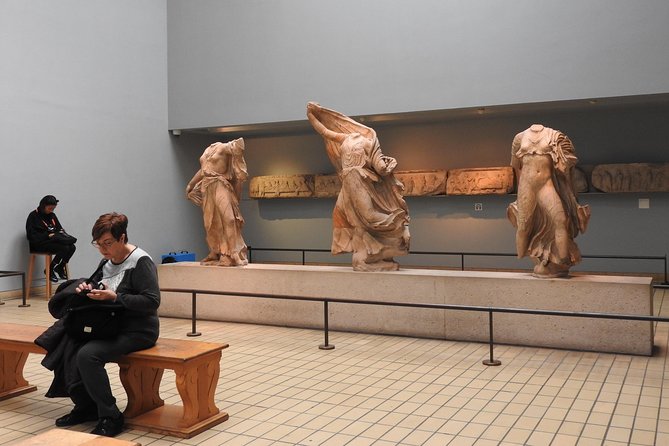
The Rosetta Stone is the kind of object that can feel like a celebrity when you finally see it. You’ve heard of it, maybe you’ve read about it, and you assume you’ll just recognize the importance at a glance.
But the tour’s value is how it translates the significance into something you can use. You’ll learn the broader story around the stone—how it connects languages and writing systems, and why it mattered for understanding ancient Egypt. Even if you already know the basics, you’ll likely leave with clearer context for why this one object became such a turning point.
This is one of the reasons people book a guided version in the first place: it’s hard to recreate that context quickly if you’re on your own. You might read a few placards, but the guide can connect the dots faster—especially when the route is built around the museum’s most important anchors.
You can also read our reviews of more museum experiences in London





The Elgin Marbles: what you’ll notice when someone explains the why
The Elgin Marbles are another “you can’t miss it” moment, and they’re also a place where a guide helps you slow down. Without explanation, you might look at stone fragments and think: beautiful, historic, done.
With a guide, you start noticing details like how the pieces relate to a larger whole and what kind of story-making they were meant to convey in the first place. The tour highlights them as a main stop, so you’re not just passing through. You get time to absorb why they are culturally important and why they sit where they do in the British Museum’s world.
This is also the kind of object where questions pop up naturally: why is it here, how is it displayed, and what should you be paying attention to? A guide’s job in a short tour is to give you the most useful answers fast, so you’re not left staring at a wall of marble with only the museum caption to guide you.
Sutton Hoo and Lewis Chessman: Britain’s ancient clues beyond the usual
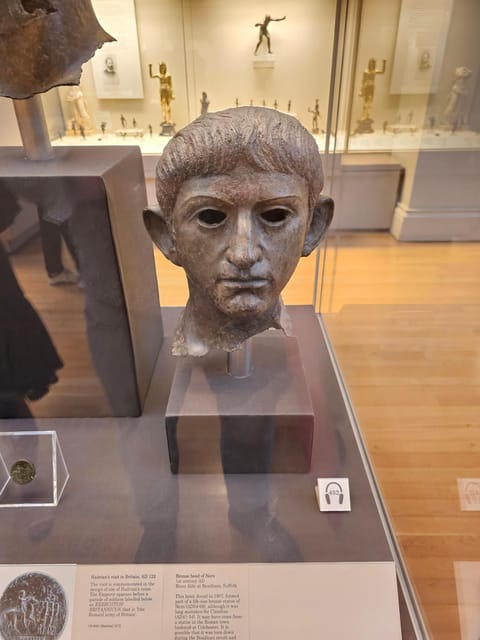
It’s easy to think the British Museum’s highlights are mostly about faraway empires. Then you hit Sutton Hoo and the feeling shifts. Sutton Hoo makes the story local—an early medieval window into England’s past, with objects that help you picture a society in a time before later written history fills the gaps.
Next, the Lewis Chessman offers a different kind of history: not just power or religion, but craftsmanship and culture in everyday—or at least familiar—forms. Chess is one of those universal activities that turns distance into something human. When you learn about the context around these pieces, you get a sharper sense of what “ancient” means on this island: not only kings and monuments, but also leisure, skill, and shared ideas.
Together, these stops widen your mental map. You’re not only collecting masterpieces. You’re building a timeline where Britain is not the afterthought.
How the guide’s pacing improves your museum results
The tour’s strongest promise is that your guide makes the experience efficient without turning it into a rush job. The plan calls for learning the background to important pieces, then moving “through time” with details curated for your visit.
From the guide feedback included in the tour info, guides like Matt and Wesley have been praised for being personable and for building an overview before getting into specifics. That combination is practical. First you get a scaffold—an outline of what the museum holds and why certain objects matter—then you can attach details to that structure.
You’ll also get tailored attention because the tour can be adjusted as a bespoke itinerary. That doesn’t mean you’ll reinvent the museum route on the fly. It means your guide can steer based on what you care about most, how your group is responding, and what you want more of during the limited time.
One consideration: if you’re the type who hates being walked along a set path, this may feel structured. The museum is huge, and a guided plan trades freedom for focus. In 2.5 hours, that trade is usually worth it.
What this tour is good value for at $93 per person
At $93 per person, this isn’t the cheapest way to see the British Museum. But the value isn’t just the guide. It’s the combination of three things you’re buying with that price:
1) Time savings with timed entry and skip-the-line entry
2) Focus on the museum’s highest-impact highlights, rather than random wandering
3) Meaning-making—learning background so objects click instead of blending together
The British Museum is free to enter (for general museum access), so it’s fair to ask why pay at all. You pay because the museum’s scale is the challenge. Without guidance, you can spend an hour trying to choose what to see and still leave with a sense of having seen a lot but understood little.
Is it worth it for every visitor? If you love slow browsing and you can happily read every placard for hours, you may prefer a self-guided approach. But if you want a fast, structured visit that helps you see the museum’s biggest stories and return home with real context, this price can feel reasonable.
Also, a 2.5-hour guided tour is a sweet spot. You get enough time to feel oriented and satisfied, without sinking a whole day.
Who should book this British Museum guided tour
I’d lean toward booking if any of these sound like you:
- You want the big highlights—Rosetta Stone, Elgin Marbles, Sutton Hoo, and Lewis Chessman—covered in a tight window
- You like explanations that connect objects to broader cultures like Egypt, Assyria, and Ancient Greece
- You want a guided plan that helps you get bearings fast inside a huge building
- You’re traveling with limited time and want maximum payoff per hour
- You prefer a group format with an English live guide, with a private group option if you need more room to breathe
It’s less ideal if your priority is unstructured wandering or if you’re planning to spend the entire afternoon in reading rooms and side galleries. This is a highlights route, not a full museum tour.
Should you book it?
If you have about half a day and you want the British Museum to feel understandable, I think this tour is a strong choice. The combination of timed entry, skip-the-line access, and a guide-led route focused on recognizable masterpieces makes it a practical way to see the museum’s best work without getting buried in options.
Book it especially if you’re visiting for the first time or if you know you’ll want context, not just photos. And if you care about multiple eras—Egypt to the wider ancient world, then back toward Britain’s own early stories—this structure is built for exactly that kind of curiosity.
FAQ
How long is the British Museum guided tour?
The tour duration is 2.5 hours.
Does this tour include timed entry or skip-the-line access?
Yes. It includes timed entry and uses a separate entrance to skip the line.
Where do I meet the guide?
Meet your guide next to the red telephone boxes on Great Russell Street next to the museum entrance. One option also lists meeting outside The Museum Tavern, and the meeting point may vary depending on the option booked.
What are the main highlights you’ll see?
The tour highlights include the Rosetta Stone, the Elgin Marbles, Sutton Hoo, and the Lewis Chessman, along with additional prehistoric tools and key collections across ancient civilizations.
What language is the guide?
The tour is led by a live guide in English.
Is a private group available?
Yes, private group availability is offered.