REVIEW · LONDON
Crime and Policing London Walking Tour
Book on Viator →Operated by Francis Mullan · Bookable on Viator
Police history in London feels real fast. This walking tour strings together the places behind the city’s policing story, with a former officer guiding the plot. You’ll hit major landmarks like Scotland Yard and Trafalgar Square, but through the lens of crime, cases, and how police work actually evolved.
I especially love the police-experienced storytelling. Francis shares both historical context and the kind of behind-the-scenes detail you don’t get from typical sightseeing. I also like that you get hands-on value: there’s a chance to examine historic police regalia as part of the tour.
One thing to consider: the tour leans into grim subject matter and it’s outdoors most of the way, so you’ll want comfortable shoes and a flexible mood if London weather turns.
In This Review
- Key things to know before you go
- Walking this route: where London’s policing story lives
- From Covent Garden to Bow Street: the start that matters
- Bow Street Runners: early policing, crime work, and why it changed
- Aldwych’s unsolved murder site and the espionage thread
- Charing Cross: the Blue Lamp and a view into busy police operations
- Sherlock Holmes Pub break and the crossing toward Scotland Yard
- Trafalgar Square watchful eyes: celebrations, riots, and order
- Whitehall and Downing Street: policing where government decisions land
- Great Scotland Yard and the first HQ: seeing the origin point
- Metropolitan Police and the revolving sign: the London icon you can spot
- The guide experience: why a former officer changes the whole tour
- Price and what you’re really getting for $48.61
- What this tour feels like in real life (and who it suits best)
- Practical tips for comfort and timing
- Should you book this crime and policing walking tour?
- FAQ
- How long is the Crime and Policing London Walking Tour?
- How much does it cost per person?
- Where do I meet the tour, and where does it end?
- What language is the tour offered in?
- How large is the group?
- Is it a walking tour, and is it manageable?
- What’s included in the tour besides the guide?
- Are service animals allowed?
- What happens if weather is poor?
Key things to know before you go
- A former police officer guides you through London’s policing roots, not just postcard facts.
- You’ll walk a compact central route, ending near New Scotland Yard close to major Tube and bus connections.
- Multiple stops are set up with short, easy viewing windows (about 10 minutes each) so you keep moving.
- Expect crime and policing stories ranging from murders to espionage and wartime changes.
- The tour includes a chance to examine real historic items of police regalia.
- Small group size: up to 20 people, which makes questions easier.
Walking this route: where London’s policing story lives
This tour is built like a “crime map” you can follow on foot. You start in the Covent Garden area and spend about 2 hours 15 minutes working your way through Westminster-adjacent streets, seeing how policing grew from local institutions into the famous Metropolitan Police presence you recognize today.
The pacing is gentle. It’s a walking tour, but the format is stop-and-story, not a long grind. Each location gets a focused slice of time, so you can actually absorb what you’re seeing instead of rushing past it.
Also, it’s practical for planning. The end point is at 35 Victoria Embankment, near Westminster Underground. After the tour, it’s easy to roll into more sightseeing nearby without needing a complicated transfer.
You can also read our reviews of more walking tours in London



From Covent Garden to Bow Street: the start that matters
Your morning (or afternoon) begins around Long Acre in the Covent Garden Underground area. That’s a smart starting choice because it puts you near multiple transport options and lets you get moving quickly through central streets.
The first stop is Bow Street, where you’ll see the police station and Magistrates Court. This matters because Bow Street is tied to early policing methods and the famous Bow Street Runners. The guide uses this point to show how policing took shape in London in a way that feels grounded in real institutions, not just legends.
What I like here is the shift from scenery to systems. You’re not only looking at a pretty building. You’re learning why that building mattered and what it did in the flow of justice.
Bow Street Runners: early policing, crime work, and why it changed
Bow Street is where the tour earns its name. You’ll hear about the Bow Street Runners and the idea that policing wasn’t always a single national machine. It started with localized approaches and people who knew the streets.
This is a good first stop because it sets expectations for the rest of the walk. You’ll start noticing patterns: how public safety, court systems, and public order all overlap. Even if you’re not a history person, the framing makes the story easy to follow.
A small consideration: this kind of tour can feel heavier if you’re expecting pure sightseeing. Bow Street sets a tone that continues through the route, including murder and mayhem stories later on.
Aldwych’s unsolved murder site and the espionage thread
Next up is the Aldwych area. Here, the tour points out the site connected to one of London’s saddest unsolved murders, then pulls you into the world of international espionage and murder.
What makes this stop worthwhile is how it broadens the definition of “crime” beyond street-level cases. The story connects policing to bigger forces—information, secrecy, and cross-border intrigue—topics that often get skipped on standard London history walks.
Also, the timing is short (about 10 minutes). That’s useful. You get the key story beats without the tour dragging or forcing a full museum-style explanation at street level.
Charing Cross: the Blue Lamp and a view into busy police operations
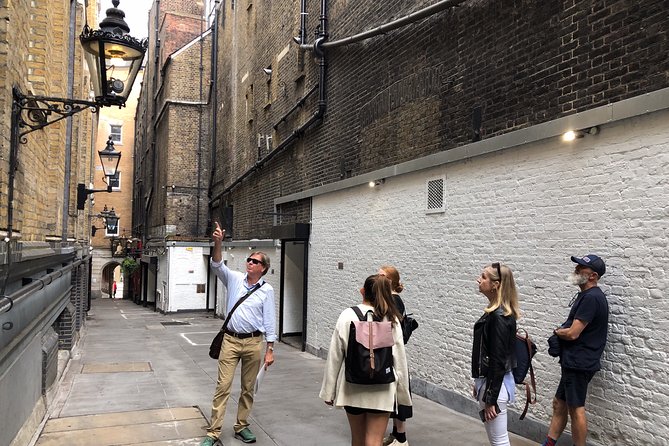
At Charing Cross, you’ll hear tales of grisly murder and mayhem. You’ll also see one of the busiest police stations in Europe and learn about the famous Blue Lamp of London.
This stop is where the tour feels very London. Even if you’ve heard the phrase Blue Lamp before, being in the place where it belongs helps it click. The guide also tends to connect the symbolism to how police work shows up in the city’s everyday rhythm—calls, shifts, and how visibility matters.
A practical note: Charing Cross is a heavy pedestrian zone. It’s worth wearing shoes that handle crowds and uneven pavement. If you’re traveling with mobility limits, you’ll still likely be fine because the pace is described as gentle, but central hubs can be mentally tiring.




Sherlock Holmes Pub break and the crossing toward Scotland Yard
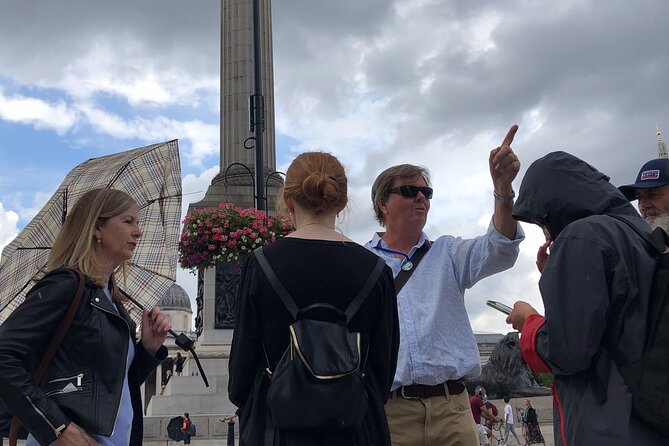
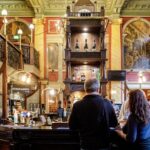
Northumberland Avenue includes a stop for a drink at the Sherlock Holmes Pub. Sherlock Holmes is, of course, fictional, but Arthur Conan Doyle’s creation is very real in terms of how London branded itself around crime stories.
This is a smart reset in the middle of a darker route. You get a chance to regroup, hydrate, and ask questions while the group is naturally closer together.
After the pub, you cross toward Great Scotland Yard to see where policing was invented. That line is dramatic, but the point is clear: you’re moving from early systems into a more formalized model. The guide uses the transition to explain how central police organization became a cornerstone of the city.
Trafalgar Square watchful eyes: celebrations, riots, and order
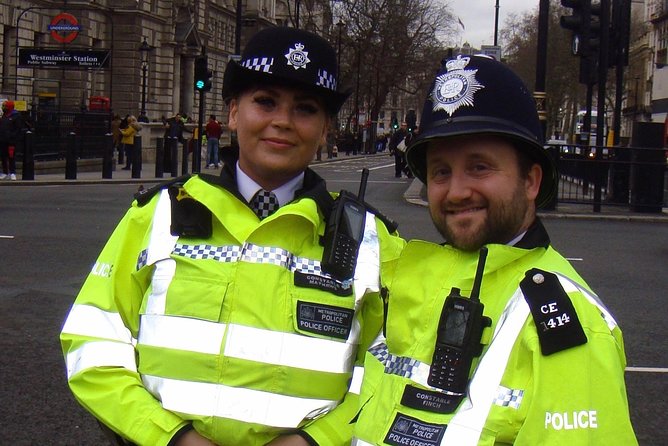
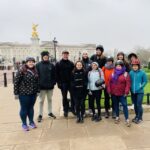
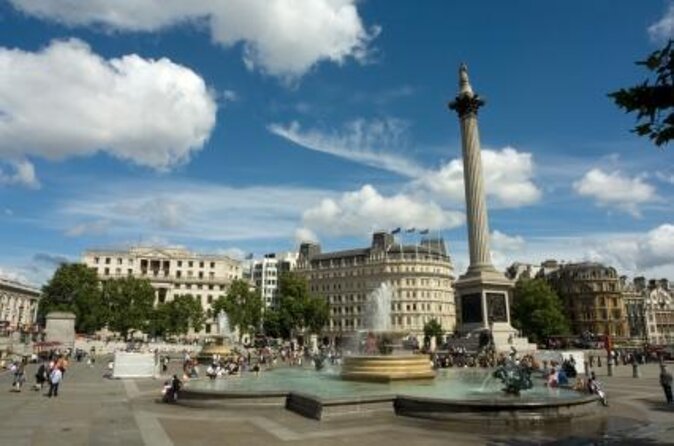
Trafalgar Square is the next stop. The tour frames it as a place where national celebrations, demonstrations, and riots have occurred—under the watchful eye of the world’s smallest police station.
That’s the kind of detail I love because it changes how you look at a familiar landmark. You’ve probably seen Trafalgar Square in bright daytime photos. Here, you’re meant to see it as a stage where public order had to be managed repeatedly.
The stop is about 10 minutes. That keeps it focused. You won’t lose the whole afternoon, and you move on while the story stays fresh.
Whitehall and Downing Street: policing where government decisions land
At Whitehall, you’ll see the heart of government at Downing Street. Then the tour shifts to the role of women in policing and what the police did in wartime London.
This part is valuable because it connects policing to power and policy. It’s easy to treat police as separate from government, but this walk reminds you that policing can change when the world changes—especially during war, when rules, staffing, and priorities all shift.
One more reason this stop works: it’s not only “crime happened here.” It’s “here’s how the system adapted.” That framing makes the tour feel more complete.
Great Scotland Yard and the first HQ: seeing the origin point
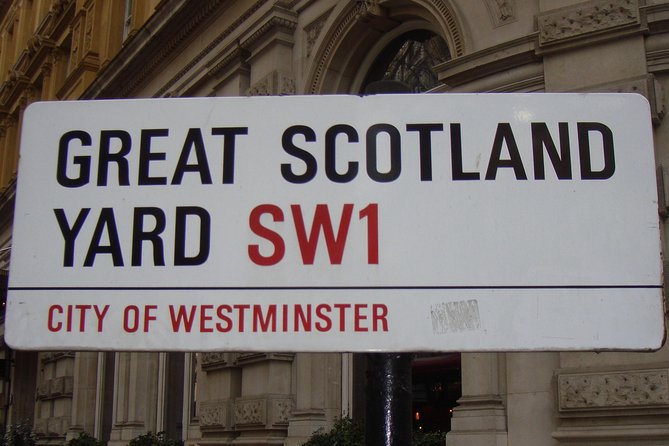
Next is Great Scotland Yard, where you’ll see where London police was created and the first police HQ. If you’ve ever wondered why Scotland Yard is so tied to London’s policing identity, this is the moment it becomes literal.
You’ll also notice how the guide keeps connecting physical locations to institutional evolution. A building is not just a building. It’s a clue to how authority organized itself, how information moved, and how policing became recognizable.
Metropolitan Police and the revolving sign: the London icon you can spot
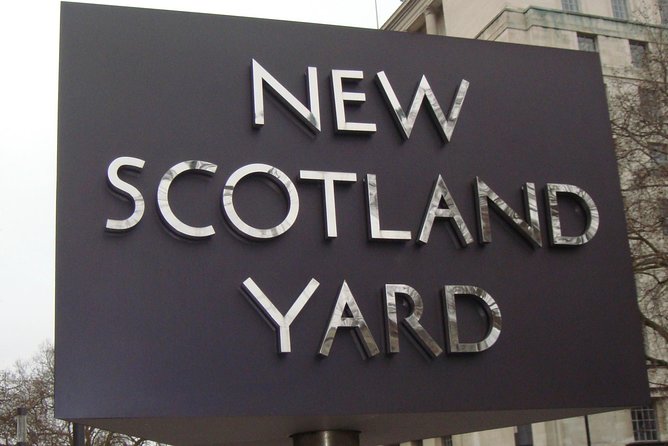
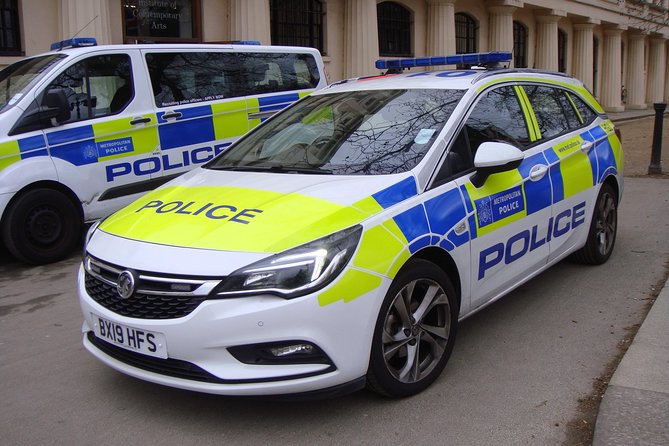
The tour’s final set of sights includes Metropolitan Police and the iconic revolving sign, famed worldwide.
Even if you don’t know the sign’s full story, you’ll likely recognize it. Seeing it in context helps you understand why police branding became part of London’s visual language. It’s a small detail that carries a lot of meaning.
This is also where you start thinking about the end of the walk. The tour finishes near New Scotland Yard at 35 Victoria Embankment, which is a short distance from Westminster Underground Station. That’s a convenient exit if you want to keep going on foot or hop on the Tube.
The guide experience: why a former officer changes the whole tour
A big theme across the guide feedback is the former police perspective. Francis is a former policeman, and you can feel the difference in the way the stories are told. Instead of only giving timelines, he’s explaining how situations are handled and why policing decisions took the shape they did.
This matters because crime history can go two ways. It can be sensational, or it can be practical. This tour aims for practical, with a side of the grisly.
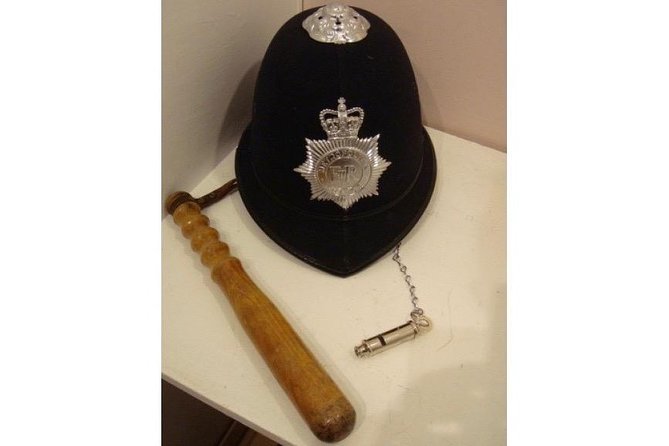
One added bonus: the tour includes kit and equipment, with the chance to examine real historic items of police regalia. That’s not “look, then move on.” It gives you a concrete sense of what officers wore and used in earlier eras, which makes the history feel less abstract.
If you like asking questions, this kind of guide shines. In the reviews, people repeatedly mention that the guide answers questions and adds personal context. That interactive element is part of the value, especially in a group limited to 20 people.
Price and what you’re really getting for $48.61
At $48.61 per person for about 2 hours 15 minutes, you’re paying for more than a walk and a route. You’re paying for a guided lens and access to specific policing sites plus a small-group format.
Here’s how I think about the value:
- Small group size (max 20) means more time for questions.
- Historic regalia items give you something tangible, not just verbal storytelling.
- Several stops are marked with admission ticket free, so you’re not layering extra entry fees on top of the tour price.
- The guide’s background as a former officer tends to add depth, especially when you’re curious how policing actually worked.
Could it be pricey compared to a free self-guided walk? Sure. But if you want the “why” behind London’s crime and policing story, this tour does that job in one sitting.
Also, it’s scheduled to be booked about 46 days in advance on average, which tells me it’s a popular slot if you’re traveling during busy periods.
What this tour feels like in real life (and who it suits best)
This is a crime and policing tour, so the mood is darker than a general walking history. You’ll hear about murders, espionage, and mayhem. The guide handles it as history and context, not shock for shock’s sake, but you should still know what you’re signing up for.
It suits you if you:
- like London history tied to real institutions
- want the story behind Scotland Yard and the Metropolitan Police
- enjoy walking and short stop-and-learn segments
- want a guide with practical insight, not just a lecture tone
You might skip it if you want a purely scenic loop with minimal dark content. Also, because it’s outdoors and weather-dependent, you’ll want to bring the right layer and flexible plans.
Practical tips for comfort and timing
A few small things will make your day smoother:
- Wear comfortable footwear. Central London pavements and crowds can be rough.
- Bring a water bottle or plan a refreshment stop. There is a drink stop at the Sherlock Holmes Pub along the way.
- Use the London rhythm: restrooms and refreshments are available if required, but it’s better to plan for a steady pace.
- If you’re sensitive to crowds, expect higher foot traffic near Charing Cross and Trafalgar Square.
The tour is in English, and service animals are allowed. Mobile ticketing is used, so you can keep everything on your phone.
Should you book this crime and policing walking tour?
If you’re the kind of traveler who likes London beyond the standard highlights, I think this is a strong booking. The combination of a former police officer guide, a route that hits real policing landmarks, and the chance to examine historic police regalia makes it feel worth the time and money.
Book it especially if you want a guided story that connects buildings to how policing evolved. Skip it if you want only light entertainment or you dislike crime-focused topics.
If you do book, plan to finish near Westminster and use the end point as a launchpad for the rest of your day.
FAQ
How long is the Crime and Policing London Walking Tour?
The tour runs for about 2 hours 15 minutes.
How much does it cost per person?
The price is $48.61 per person.
Where do I meet the tour, and where does it end?
It starts at Covent Garden Underground Ltd, Long Acre, London WC2E 9JT, UK, and ends at 35 Victoria Embankment, London SW1A 2JH, UK near Westminster Underground Station.
What language is the tour offered in?
The tour is offered in English.
How large is the group?
The tour has a maximum of 20 travelers.
Is it a walking tour, and is it manageable?
Yes, it’s a walking tour at a gentle pace. Most travelers can participate, and comfortable footwear is recommended. Refreshment and toilet stops are available if required.
What’s included in the tour besides the guide?
The tour includes kit and equipment, including the opportunity to examine real historic items of police regalia.
Are service animals allowed?
Yes, service animals are allowed.
What happens if weather is poor?
The tour requires good weather. If it’s canceled due to poor weather, you’ll be offered a different date or a full refund.