REVIEW · LONDON
London: British Museum Guided Tour Private Group
Book on GetYourGuide →Operated by My tour London · Bookable on GetYourGuide
Two hours can still change how you see history. This private British Museum guided tour is built for focus, with a licensed guide steering you through big turning points in human culture.
I especially like two parts of this experience: the way the Rosetta Stone helps you grasp Egyptian hieroglyphs without getting lost in academic jargon, and the chance to see the Elgin Marbles with context, not just a quick photo stop. That pairing makes the museum feel less like rooms of stuff and more like one connected story.
One thing to consider: at 2 hours, the pace can feel quick. If you prefer long, meandering time in one gallery, you may wish you had booked a longer visit.
In This Review
- Key things to know before you go
- A private British Museum tour in 2 hours: what you’re really buying
- Where to meet your guide: portals, stairs, and getting in smoothly
- Ancient Egypt and the Rosetta Stone: learning the rhythm behind hieroglyphs
- Greece and the Parthenon effect: philosophy you can point to
- Elgin Marbles: seeing greatness and grappling with the controversy
- Ancient Rome: emperors, mosaics, and gods in everyday form
- Sutton Hoo: Anglo-Saxon treasure and the thrill of the unknown
- Easter Island and the Hoa Hakananai’a moai: a world-size perspective
- Ending with global artifacts: what you should walk away with
- Price and value: when $331 per group makes sense
- Best fit: who this tour is for (and who might want more time)
- Should you book this British Museum Guided Tour Private Group?
- FAQ
- How long is the British Museum guided tour private group?
- What is the price for the tour?
- Where do I meet the guide?
- How do I receive the tickets?
- Is the tour offered in multiple languages?
- Is this a private group?
- Is the tour wheelchair accessible?
- What should I bring?
- Is there free cancellation?
Key things to know before you go
- Licensed guide time, not museum wandering: you get a person in front of you explaining what matters.
- Rosetta Stone framing: hieroglyphs get decoded in a practical way you can actually follow.
- Elgin Marbles with context: famous sculptures plus the controversy around them.
- A tight route through major civilizations: Egypt, Greece, Rome, Sutton Hoo, and more.
- Small private group (up to 5): easier questions, less waiting around.
A private British Museum tour in 2 hours: what you’re really buying
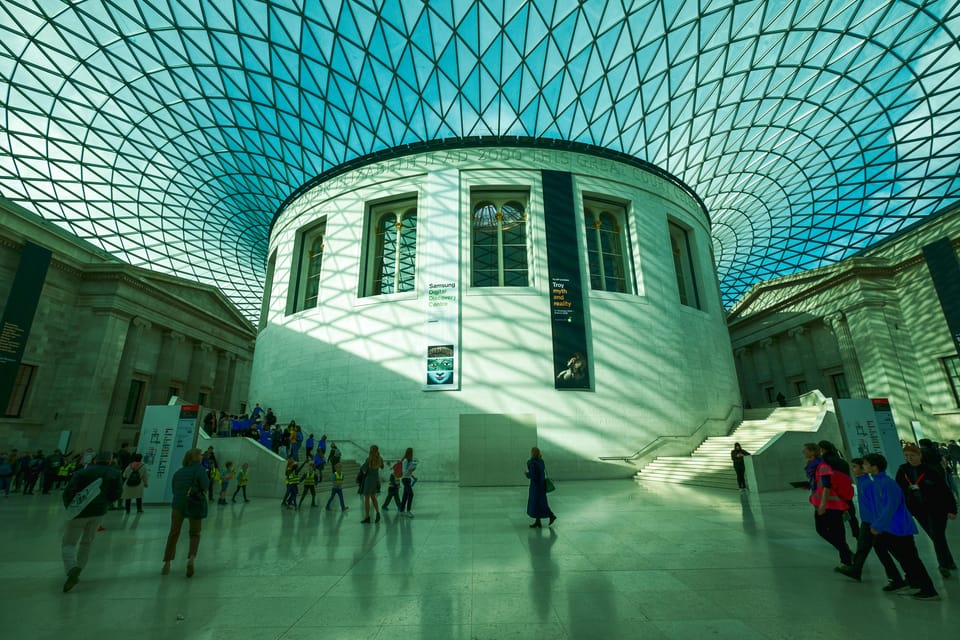
The British Museum is huge. On your own, it’s easy to pick the wrong galleries first and run out of time before you see the headline items. This tour solves that problem by doing two things well: it takes the pressure off decision-making, and it uses a guide to connect the dots across time.
I like the private group setup because it changes the tone. You’re not just listening to a lecture while shuffling forward; you can ask follow-ups and get answers that match your curiosity. Feedback also highlights that guides can bring real energy to the room. One name that pops up is Filomena, noted for enthusiasm that kept the experience moving.
What you’re paying for is not just access to objects. It’s a guided way of understanding why these objects matter, plus a route that aims at the most remarkable parts of the public museum without leaving you to sprint.
You can also read our reviews of more guided tours in London



Where to meet your guide: portals, stairs, and getting in smoothly
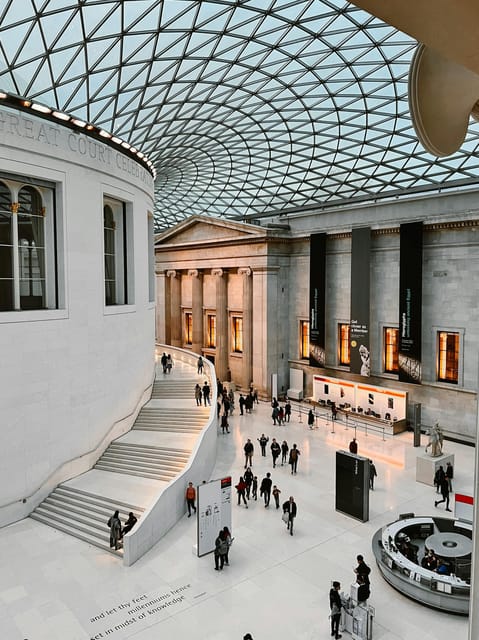
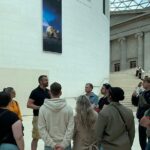
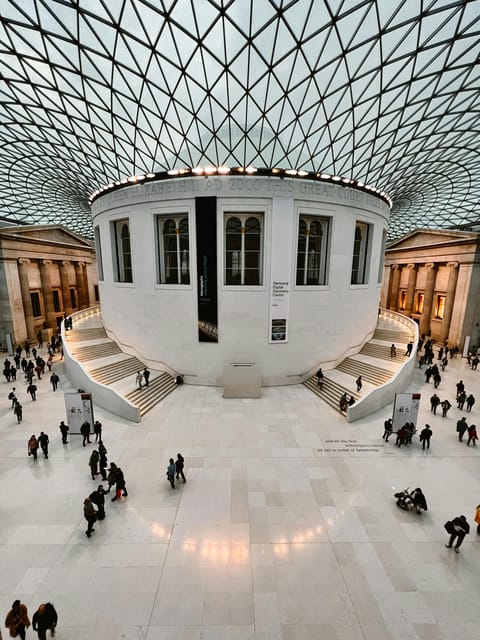
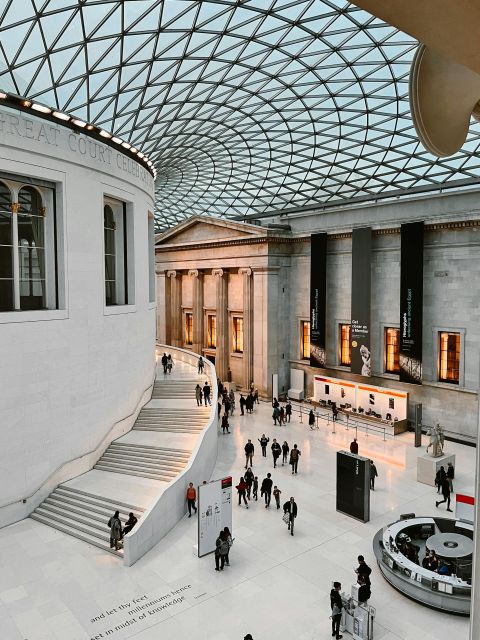
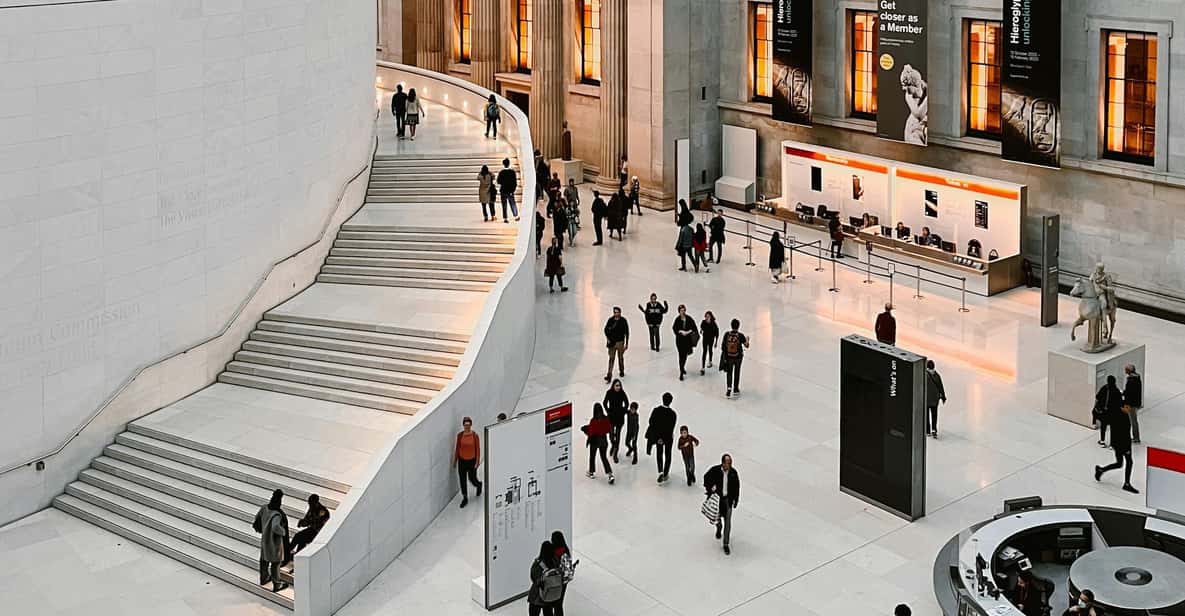
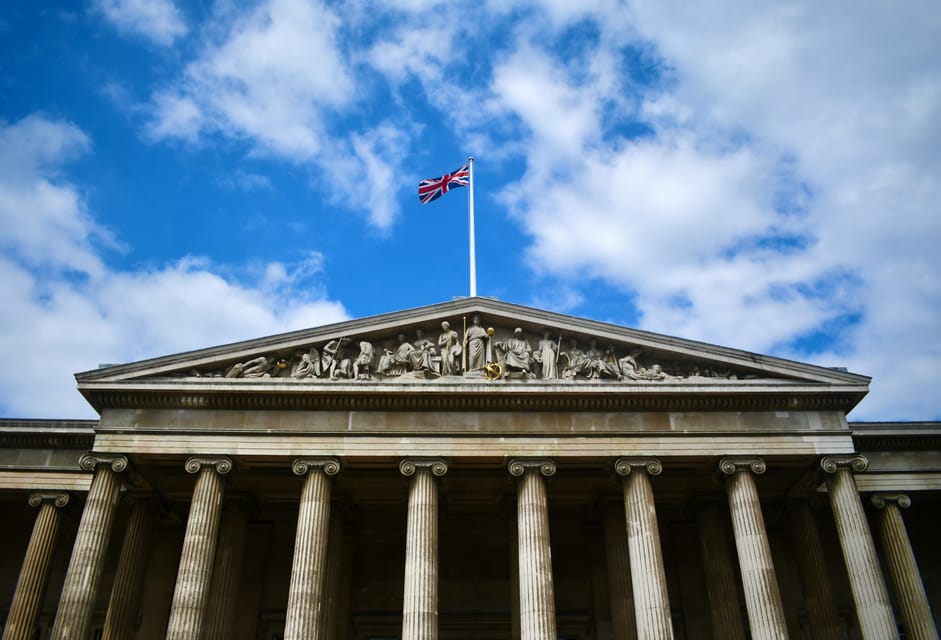
Meeting point details matter here, because you’re inside a busy building with security. You’ll meet your guide in front of the British Museum portals on the stairs near the pillars after you pass security. The key is this: it’s not outside of the gates.
Tickets are handled shortly before the tour. You’ll receive them 1 hour before via WhatsApp. If you don’t use WhatsApp, the provider asks you to email instead so they can send entry tickets another way.
Practical tip: arrive with time to spare after security. Wear comfortable shoes. You’ll be moving through galleries, and even with a guide, this is not a sit-and-watch kind of tour.
Ancient Egypt and the Rosetta Stone: learning the rhythm behind hieroglyphs
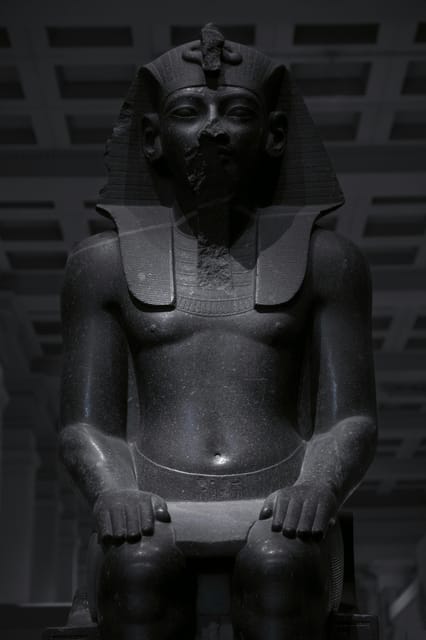
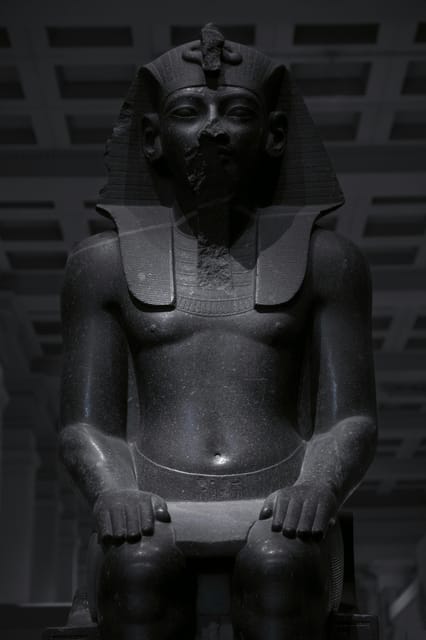
The tour starts in the Egyptian galleries, and that’s smart. Egypt is where you can feel the museum’s scale right away—statues, rulers, religious art, and the long timeline of writing and symbolism.
The Rosetta Stone is the headline moment, and the value here is how it’s explained. The focus isn’t just that the stone is famous. It’s that it becomes a teaching tool for understanding how Egyptian hieroglyphs can be approached and deciphered. If you’ve ever looked at hieroglyphs and thought they were totally out of reach, this portion is designed to make them feel less mysterious and more systematic.
You’ll also get time around relics tied to ancient Egypt and pharaohs—enough to set the scene before the tour shifts to other civilizations. One downside of any short museum tour is that you can’t stop at every detail. Still, starting with a guided entry point helps you notice more during the time you do have.
Greece and the Parthenon effect: philosophy you can point to
Next comes ancient Greece, where art and ideas rise together. This is where the tour leans into major cultural symbols you’ve probably heard about, but maybe never really studied.
The Parthenon is a central stop, including its iconic sculptures. What makes this segment worthwhile is that it’s not only visual. You’ll also hear about the marble inscriptions and how they shaped Western thought—turning the museum’s objects into anchors for big concepts like civic life, ethics, and storytelling.
Greece can be intimidating because the museum has multiple layers: art history, political history, and mythology all overlapping. A guide’s job here is to keep you from treating the Parthenon pieces like isolated masterpieces. You get the sense of how Greek culture turned ideas into physical form.
Elgin Marbles: seeing greatness and grappling with the controversy
The tour includes the Elgin Marbles, and that’s a meaningful choice. These sculptures are famous for both artistic reasons and for the controversy around how they ended up in the British Museum.
In a good guided tour, controversy doesn’t get swept aside, and it doesn’t get turned into a rant either. The helpful part is getting a grounded explanation of what you’re looking at and why people argue about it. Even if you already know the headlines, you’ll likely leave with a clearer picture of what the debate is about, and how museums present history to the public.
This segment is especially good if you like art with context. You’re not just admiring craftsmanship; you’re learning how ownership, interpretation, and storytelling all shape what you think you’re seeing.
You can also read our reviews of more private tours in London





Ancient Rome: emperors, mosaics, and gods in everyday form
Then the tour moves into ancient Rome, which tends to feel different from Greece and Egypt. Where Greece can feel philosophical and Egypt symbolic, Rome often feels practical—power, engineering, public life, and the way images communicate authority.
You’ll see relics tied to emperors and major artistic works, including statues depicting gods and heroes. The guide also points out Roman engineering feats and the kind of engineering mindset that produced lasting, system-like structures across the empire.
A highlight here is the presence of intricate mosaics. Mosaics are one of those art forms that reward close looking. In a short tour, you won’t get endless minutes, but you will get enough guided attention that you can still appreciate pattern, scale, and the narrative quality of what’s pictured.
If you’re the kind of person who likes to connect art to power, this Rome portion delivers.
Sutton Hoo: Anglo-Saxon treasure and the thrill of the unknown
After the classical world, the tour jumps forward to Sutton Hoo, an early England window that can feel like a plot twist—in a good way. The Sutton Hoo artifacts are known for their Anglo-Saxon connections, and they help you see that England’s story didn’t start with modern history. It started long before.
What I find valuable in including Sutton Hoo on this kind of highlight tour is the shift in tone. You go from big Mediterranean civilizations into a different cultural geography, with objects that carry mystery and craftsmanship in equal measure.
The tour frames Sutton Hoo treasures as glimpses into early English life. That matters because it keeps you from viewing the items as just archaeological trophies. You’re invited to imagine real people, real status, and real beliefs reflected through objects.
Easter Island and the Hoa Hakananai’a moai: a world-size perspective
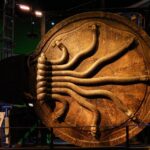
Next comes a fascinating leap: a moai from Easter Island called Hoa Hakananai’a. This isn’t just an extra stop for variety. It’s a reminder that human culture doesn’t progress in a straight line through the same set of places.
Moai sculptures are distinctive, and seeing one in London forces you to think about distance, meaning, and how spiritual or symbolic art travels. The tour describes Hoa Hakananai’a as embodying the spiritual essence of a distant civilization, which gives you a lens for looking beyond aesthetics.
This part of the experience works well if you like the museum as a global conversation. You see that the British Museum isn’t only about Europe or only about the ancient world. It’s trying to show how different societies expressed identity, belief, and power—using totally different visual languages.
Ending with global artifacts: what you should walk away with
The final stretch of the tour focuses on artifacts from around the world. This helps you avoid a common museum trap: leaving with only one theme. Instead, you get a broader impression of human culture as a long-running, varied story—written in stone, metalwork, sculpture, writing systems, and art.
Because the tour is private and timed, you’ll likely get a selection of objects rather than a full sweep. That said, the value is how the guide ties themes together. You start seeing repeated human concerns—memory, leadership, belief, and storytelling—show up across unrelated societies.
If you like taking mental notes, this is where you’ll benefit from asking questions. The guide can point out what to notice if you return later on your own. Even with only 2 hours, a guide-led wrap-up can help you plan your next visit without feeling overwhelmed.
Price and value: when $331 per group makes sense
The price is $331 per group up to 5, with a total duration of 2 hours. That pricing can feel high if you treat it like an individual ticket. But for a private museum experience, it’s easier to evaluate per person.
If you’re 2 people, it’s like splitting the cost of a guide into a premium format. If you’re 4 or 5, the value improves fast because you’re paying for a private explanation that’s shared.
The real question is whether you’d otherwise spend that time doing your own self-guided routing. If you’d waste time figuring out which galleries to hit, the guided format becomes a practical deal. You’re buying saved time, better context, and a tighter experience than most people can manage alone on a short museum visit.
Best fit: who this tour is for (and who might want more time)
This tour fits best if you:
- Want big-name highlights without turning it into a rushed checklist
- Like explanations that connect objects to ideas (hieroglyphs, inscriptions, power, belief)
- Prefer a private group where you can ask questions
- Want a 2-hour plan that works even if you’ve never visited the British Museum before
You might want a longer or different plan if you:
- Want to linger for long stretches in one gallery
- Are the type who needs deep reading time at every display
- Expect a museum visit to feel slow and quiet rather than guided and efficient
Should you book this British Museum Guided Tour Private Group?
If you’re doing London sightseeing and want one cultural anchor that covers many of the museum’s heavy hitters, this is a solid pick. The strongest reason to book is that the tour doesn’t just point at famous objects. It frames Rosetta Stone decoding, the Parthenon sculptures and inscriptions, Roman art, Sutton Hoo, and the Hoa Hakananai’a moai as parts of one wider human story.
I’d book it if you like structure, context, and a guide who keeps things moving. Just go in knowing 2 hours is a fast, highlight-focused format. Bring comfy shoes, arrive on time after security, and treat it like the starting point for seeing more later at your own pace.
FAQ
How long is the British Museum guided tour private group?
The tour lasts 2 hours.
What is the price for the tour?
It costs $331 per group (up to 5 people).
Where do I meet the guide?
Meet your guide in front of the British Museum portals on the stairs near the pillars after passing the security check (not outside of the gates).
How do I receive the tickets?
Tickets are provided 1 hour before the tour via WhatsApp. If you do not have WhatsApp, contact the provider by email so they can send the entry tickets another way.
Is the tour offered in multiple languages?
Yes. The live tour guide is available in English, French, and Italian.
Is this a private group?
Yes. It is a private group with up to 5 people.
Is the tour wheelchair accessible?
Yes, the tour is wheelchair accessible.
What should I bring?
Wear comfortable shoes.
Is there free cancellation?
Yes, you can cancel up to 24 hours in advance for a full refund.