REVIEW · LONDON
London Sightseeing Walking Tour with 30+ sights
Book on Viator →Operated by See The Sights Tours · Bookable on Viator
London has a way of feeling huge until someone gives you the map in words. This 30+ stop walking tour strings together the City of London and Westminster so you can see the landmarks you came for and learn how they connect. I especially like the constant photo opportunities and the way the guide keeps the day moving without making it feel rushed. You’ll still be looking from the street at most stops, so plan to return later if you want inside views.
It’s also priced like a value play: about $26.35 for a guided day covering major sights across two neighborhoods, with a Tube journey included. The main drawback is simple: it’s a long walk. You’re covering roughly 5 miles, and it isn’t suitable for guests with mobility difficulties or for prams/strollers.
In This Review
- Key highlights worth your attention
- The sweet spot: why this tour is built for seeing London fast
- Where you start and why it matters: St. Paul’s Station to begin your day
- The City of London stretch: St. Paul’s, the Monument, and finance landmarks
- Buckingham Palace, The Mall, and royal streets at street level
- Westminster Abbey and Parliament: the government core in one guided sweep
- Tower of London, bridges, and the Thames: photo time with context
- A route that blends old roads with modern London: Shard, Sky Garden, and more
- Lunch near Tower Hill and the one Tube journey that keeps you sane
- How much walking are you really signing up for?
- What you get after: turning this into better next steps in London
- Should you book this tour?
Key highlights worth your attention
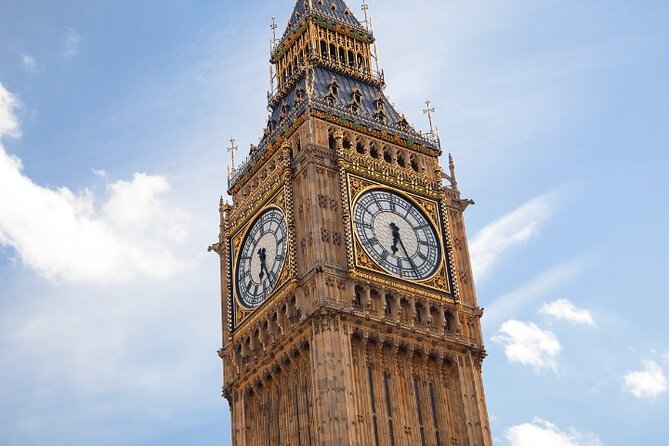
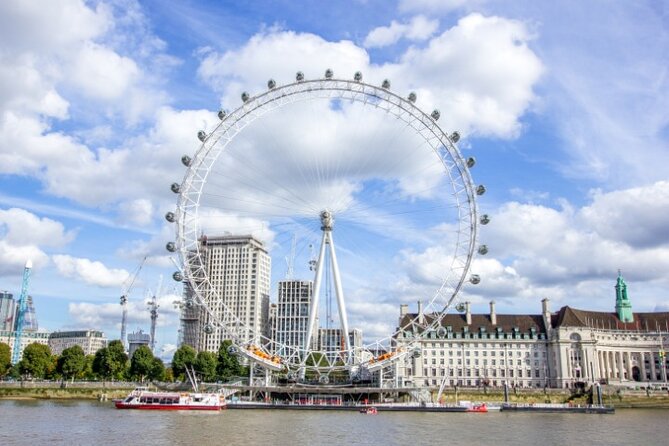
- Photo stops at the right landmarks: Big Ben, Buckingham Palace, London Eye, Tower Bridge, and more—built into the route.
- Two districts in one day: City of London energy, then Westminster’s government core, without the guesswork.
- Small-group feel (max 25): Easier questions, and more chances to get a group photo without chaos.
- Guides who handle photos and names well: Guides like Mike, Adam, Carolina, Eric, Matt, and Andrew are repeatedly praised for making the group comfortable.
- A practical lunchtime pause near Tower Hill: A real reset before Westminster takes over the agenda.
- Street-level context you can use later: You’ll understand what each building signals—church, throne, parliament, finance, or war memory—so repeats feel smarter.
The sweet spot: why this tour is built for seeing London fast
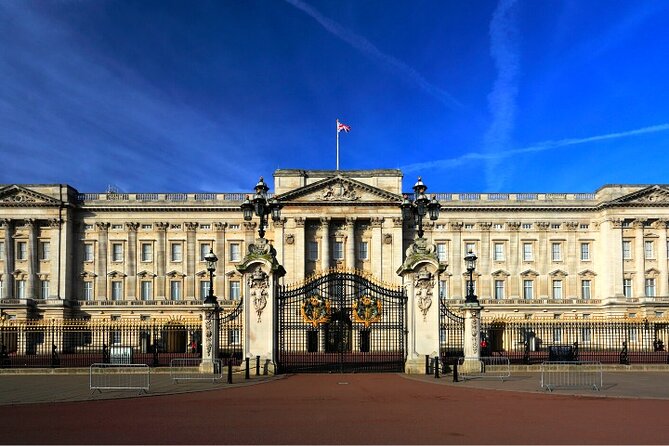
This tour works because it does what most people want on day one: it connects the dots. You start in the City side near St. Paul’s, then move through the Westminster cluster where the politics and royal pages get printed in stone. Along the way, you get a guided story for the big names—plus a few stops that many visitors walk past without noticing.
The guide format matters here. Over multiple runs, the tour has been led by people like Mike, Adam, Carolina, Eric, Matt, and Andrew. The common theme from their approach is that you’re not stuck guessing what to look at or when. Several guests specifically called out that the guide offered to take photos for the group and remembered first names—small detail, big morale boost when you’re trying to get clean shots in crowds.
At about $26.35 per person, the value comes from the day structure more than from entrances. There are no admission tickets included, and the tour doesn’t enter sights. So don’t treat this like a ticketed skip-the-line program. Treat it like a guided orientation that helps you decide what deserves your money (and time) later.
You can also read our reviews of more walking tours in London



Where you start and why it matters: St. Paul’s Station to begin your day
Meeting at St. Paul’s Station (Exit 2) is a smart choice if you want to avoid transit headaches. The tour starts at the top of the steps at Exit 2 next to Caffe Nero, and the guide is holding a yellow umbrella. Start time is 10:00 am, and once you’re assembled, the day becomes a steady walk through famous streets.
You should also know how the tour handles movement. It includes one journey on the London Underground, and you’ll need a valid payment method for it: an Oyster Card, contactless credit/debit, or Apple/Google Pay for each guest. That matters because it keeps one part of the day efficient after lunch—especially if you’re trying to hold energy levels for Westminster.
Finally, the tour uses a mobile ticket, and confirmation is received at booking. You’ll want your phone charged, because in London, that’s the ticket to not standing around with a confused face.
The City of London stretch: St. Paul’s, the Monument, and finance landmarks
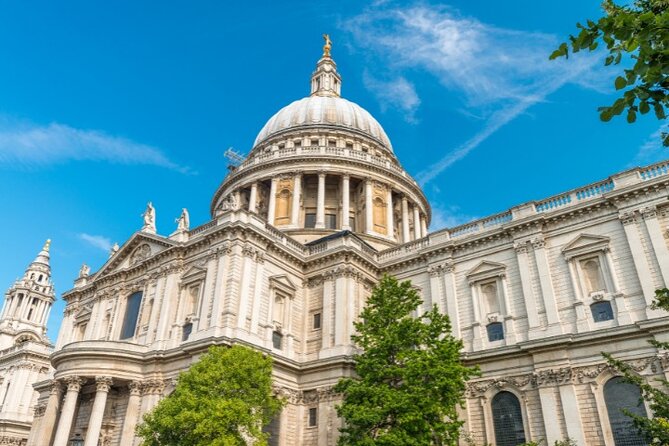
Your first major stop is St. Paul’s Cathedral. Even without going inside, the guided framing helps you notice details you’d miss at speed: the scale of Sir Christopher Wren’s design and why this cathedral anchors so many public moments. It’s one of those buildings that’s visible from lots of angles, but it’s best understood when someone points out what to look for first.
Next comes the big photographic pivot: Big Ben (Elizabeth Tower) next to the Houses of Parliament area. Even if you only have a few minutes, this is still the moment most people came for—the clock face, the street sightlines, and the way it visually ties Westminster’s themes of tradition and authority together.
Then the route pushes deeper into the City side. You’ll hit Bank of England, a quick stop that’s surprisingly useful. It helps you connect London’s financial power to the streets you’re standing on—so later, when you see more banking buildings, it feels less random. There’s also time for The Royal Exchange, which blends old trade purpose with modern commerce. Again, you’re outside, but the guide’s explanation turns it from background architecture into a timeline you can place.
A favorite stop for many people is The Monument to the Great Fire of London. It rises like a needle in the skyline (from street level it’s a proper landmark), and it’s not just a memorial. It helps you understand why London’s urban shape changed and why rebuilding became a repeating theme.
Buckingham Palace, The Mall, and royal streets at street level
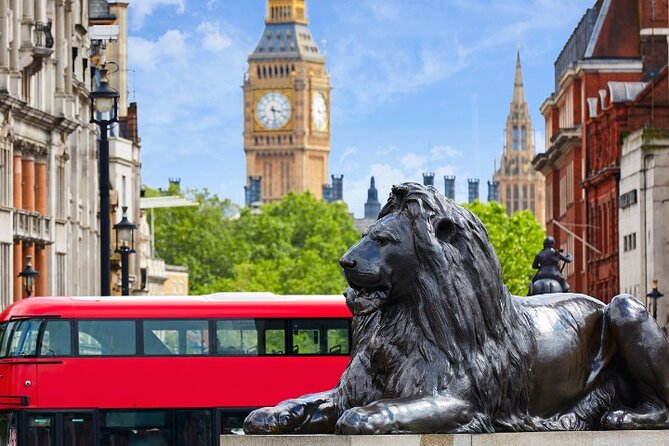
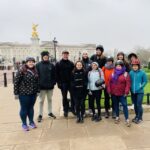
From the City momentum, the tour shifts toward royal visuals. Buckingham Palace is next, with just enough time to photograph it and understand what it signals: official residence, ceremony backdrop, and a working institution rather than a dead museum.
You also get The Mall, the grand ceremonial avenue connecting Buckingham Palace toward Admiralty Arch. It’s a “walk it once” kind of space. Even if you’ve seen it in photos, standing there helps you grasp why it’s used for major state moments. The surface is bright, the alignment is dramatic, and the whole street feels designed for processions.
There are more royal stops in the orbit: St. James’s Palace and Clarence House. These aren’t the places most visitors prioritize, so this is where the guide can add extra value by explaining why multiple royal sites exist around the same center of gravity. It also keeps the day from becoming pure photo-chasing.
In the middle of this royal stretch, you’ll also pass St James’s Park, where you get a chance to look at the gardens and—yes—see the famous park wildlife. One guest called out the pelicans, which makes sense because this park is the practical place on the route to appreciate something more than stone and flags.
Westminster Abbey and Parliament: the government core in one guided sweep
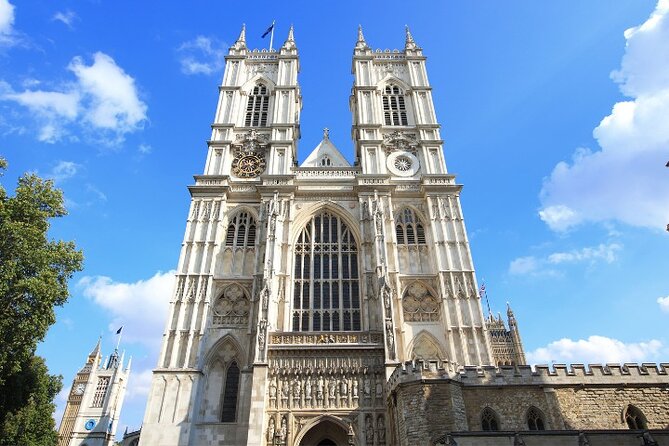
The tour’s Westminster segment is built around the idea that you can’t really understand the area without seeing how the landmarks cluster. Westminster Abbey is the first big anchor. The guide helps you understand the centuries of coronation tradition and why this Gothic space matters far beyond architecture. Even if you’re not stepping inside, you’ll know what you’re looking at when you recognize the significance of the church and the national ceremonies attached to it.
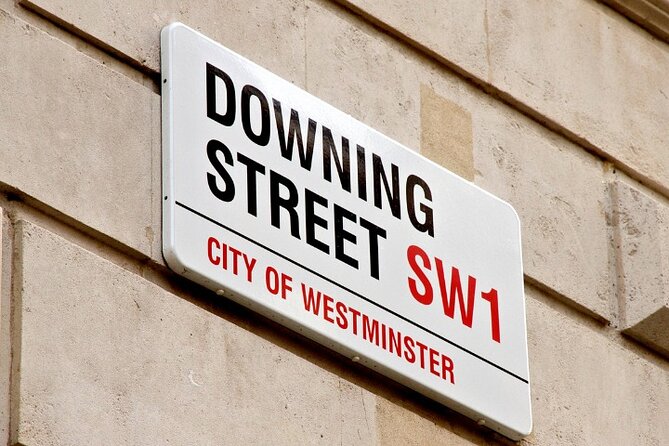
Then the day turns into the political heart. You’ll see Houses of Parliament, 10 Downing Street, and the Cabinet Office. For many visitors, Downing Street is a quick photo stop; for you, it becomes more useful if you understand it as a symbol of how government concentrates in a few tightly packed streets.
You’ll also be near Parliament Square, where St Margaret’s Church—often called the Politician’s Church—fits into the mix. It’s a smaller stop by time, but the guide’s context makes it meaningful because it ties the religious and civic sides of British public life together.
Later, you’ll also pass more of the legal and defense framework: The UK Supreme Court and the Ministry of Defence. These stops tend to be brief, but they add variety. Instead of only royals and parliament, you see how the UK organizes justice and national defense in prominent, recognizable buildings.
If you want one reason this tour feels efficient, it’s this: it gives you a guided mental model for Westminster. When you later return for a longer visit to one of the big sites, you’ll know exactly what neighborhood logic you’re working with.





Tower of London, bridges, and the Thames: photo time with context
After Westminster, the tour still makes sure the “London by water” feeling isn’t missing. In the City/Thames half, you’ll visit Tower of London. It’s a stop with serious weight, and even in a short window you can understand why it became a royal palace, prison, treasury, and symbol of power. You’ll also get a sense of why the Crown Jewels and the Yeoman Warders matter to the place’s identity.
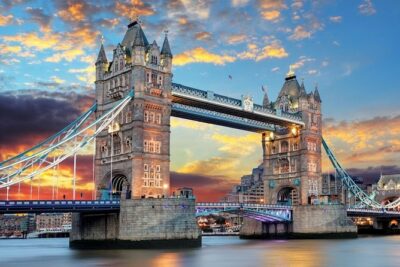
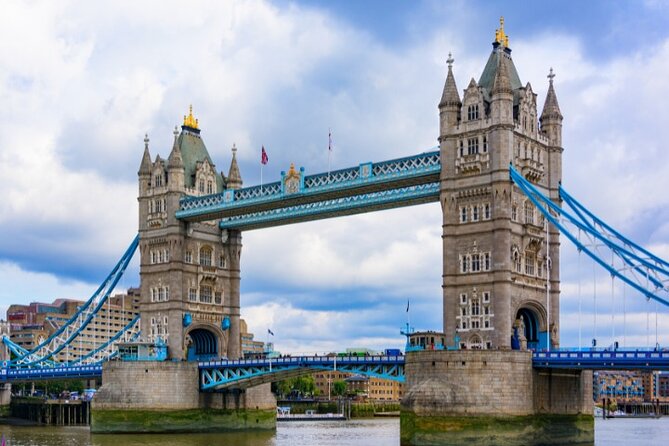
Then comes Tower Bridge, followed by London Bridge. Tower Bridge is the classic London silhouette; London Bridge is the practical connector between the City and Southwark. One extra detail that sticks: Tower Bridge might not get you a full walk across on every schedule, and you may only view from nearby angles depending on timing and crowds. Either way, you’ll come away with stronger photo instincts than you’d have on your own.
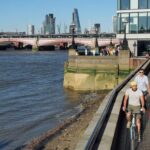
The Thames stops are quick but useful. The tour includes a stop at the Thames River and also includes HMS Belfast, a permanently moored World War II-era ship turned museum. Since you’re not going inside, the biggest value here is understanding what you’re looking at: war memory anchored to a specific vessel, not an abstract lesson.
You’ll also see Cenotaph, the war memorial where Remembrance Day ceremonies happen. This is one of those brief stops that still lands emotionally, because it shifts the day from landmarks to remembrance—especially if you’ve been only thinking about royal and political spectacle.
A route that blends old roads with modern London: Shard, Sky Garden, and more
A nice surprise in this day plan is that it doesn’t stay in the past. You’ll pass through modern symbols too. The Shard is the big one. It’s London’s tallest skyscraper and acts like a visual marker for “now” in the middle of all the older architectural cues. Even if you don’t go up to a viewing area during this tour, seeing it in context helps you understand the city’s skyline logic.
Other modern stops include Bloomberg, with its recognizable contemporary shape, and Bracken House, which is tied to the Financial Times. You’ll also pass Sky Garden at the Walkie Talkie building. The time at each is short, so you won’t get a long look. But as orientation points, they work well—especially if you want your next step to be either a return visit or a separate ticketed experience.
And for an extra layer, you’ll stop near Watling Street, an ancient Roman road route running into London. This is the “Roman London” connection that helps the history line feel continuous instead of chopped into separate time periods.
Lunch near Tower Hill and the one Tube journey that keeps you sane
About halfway through the day, you get a break. There’s a short lunch break near Tower Hill, and lunch is at your own expense. The upside is that you’re not forced to cram food between photos. You get a real pause so your feet can stop acting like they’re auditioning for a role in a horror movie.
One practical bonus: guides like Carolina have been noted for organizing a smoother lunch reset with a place that offers views and a good variety of options nearby. Even if your day plan differs slightly, the goal is the same—refuel and regroup.
After lunch, the tour uses the Tube once to transition toward Westminster efficiently. Based on how the tour has been run, the guide keeps the group together and makes the transit part feel manageable. You’ll still need that Oyster/contactless/mobile payment set-up, though.
Also, keep this in mind: the tour ends at a different location than it starts. It finishes at Buckingham Palace (SW1A 1AA). That’s normal for a points-to-point highlights walk, but it affects where you’ll want to plan dinner or your next booking.
How much walking are you really signing up for?
This is where you should be honest with yourself. The tour covers about 5 miles and runs for around 5 hours. Most of the stops are timed in short bursts—some are 5 minutes, while the biggest anchors like St. Paul’s, Tower of London, and Westminster Abbey get longer. The result is a fast-moving, stop-and-stare style day.
A few guests have said the pace felt great overall, while one mentioned it could be a touch fast for some participants. My practical advice: wear comfortable shoes and don’t plan on doing anything athletic later in the day. You’ll think you’re fine until you’re staring at your step count.
The tour also isn’t suitable for:
- walking or mobility difficulties
- prams/buggies/strollers
On the positive side, service animals are allowed, and most travelers can participate if their walking is up to the task.
What you get after: turning this into better next steps in London
This tour is strongest when you use it as a launchpad. Since it doesn’t include entry tickets and it doesn’t take you inside the major sights, your “payoff” is understanding where everything is and what you want to return to.
Do this within your first day or first two days in London. Guides have been praised for offering tips about where to eat and how to access key attractions. I’d take those as a starting point and then choose 1–2 sites to return for deeper time based on your personal interest—cathedral architecture, royal residence experience, a museum afternoon, or a longer Thames plan.
Because you end at Buckingham Palace, you can also build the rest of your day around that geography. It’s a handy way to keep your itinerary from crisscrossing the city after a long walk.
Should you book this tour?
Book it if you want a guided highlights route that covers the City + Westminster in one day, gives you photo-friendly stops, and helps you plan your follow-up visits without committing to a pile of tickets up front.
Skip it if you:
- need lots of inside access during the same day (this tour stays outside)
- can’t handle around 5 miles of walking
- rely on prams/strollers or have mobility limits
For the price, you’re paying for direction, pacing, and storytelling more than admissions. If that matches your travel style, this one is a smart use of a single day in London.