REVIEW · LONDON
London’s Ghosts & Gruesome Past Nighttime Walking Tour
Book on GetYourGuide →Operated by Tours by Foot · Bookable on GetYourGuide
Night in London has a darker side. This 2-hour London ghosts walking tour threads through Victorian sites and courtroom landmarks, with guide Matt telling the gruesome backstories in a way that actually makes sense. I love the stop at Smithfield Market where public executions once happened, and the moment you hear the Mind the gap setup as you learn about a ghost said to haunt a tube station. One drawback: the tone is firmly gruesome history, so if you want mostly light spooky vibes, you may feel it goes too far.
This is the kind of night walk where you keep your eyes up and your brain switched on. You get a professional, certified guide plus an escort through the darker streets, and the pace is built around stops at old churches, historic jails, and places connected to grave-robbing and bodies-in-motion stories. It’s also wheelchair accessible, which makes it easier to plan if mobility is a factor.
I also appreciate that the tour doesn’t treat London like a theme park. Instead, it links rumors, medicine, crime, and the Underground into one connected story about how fear spread across the city. By the time you reach the finish near St. Paul’s Cathedral, you’ll feel like you understand why people once feared the same streets we stroll today.
In This Review
- Key things you should know before you go
- Entering Farringdon: the Underground ghost and the pace at night
- Smithfield Market: where public punishment happened for centuries
- Charterhouse Square and plague history: medicine, failure, and survival
- St Bartholomew the Great: 900 years of the living and the dead
- St Bartholomew’s Hospital: when treatments got dramatic
- Holy Sepulchre Church: empty pits and the grave-robbing angle
- Sir William Wallace Memorial: Scotland, war, and memory in stone
- The Old Bailey finale: England’s most prolific serial killer
- How the tour ends near St Paul’s, and what that means for your night
- Price and value: what $49 buys in 2 hours
- Who should book this London ghosts walking tour
- Final verdict: should you book?
- FAQ
- How long is the London’s Ghosts & Gruesome Past Nighttime Walking Tour?
- Where do I meet the guide?
- Where does the tour end?
- Is the tour guided by a live person?
- What’s included in the ticket price?
- Is this tour wheelchair accessible?
- Is it a night walking tour through dark streets?
- Can I cancel and get a full refund?
Key things you should know before you go
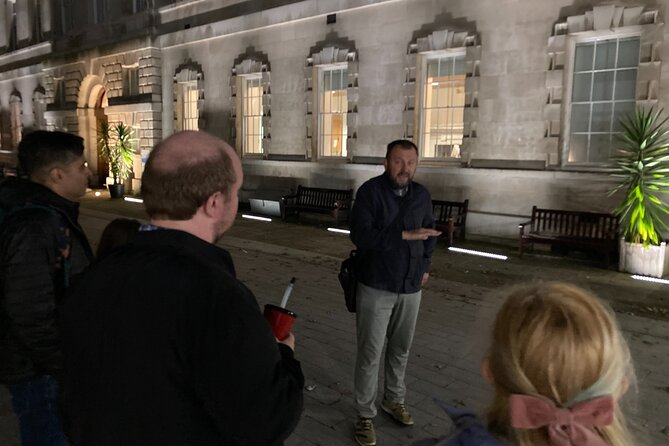
- Farringdon start, including the Underground ghost moment: you meet outside Farringdon Underground Station and learn the Mind the gap connection to a ghost story.
- Smithfield Market is the executions stop: this area is framed as a place where public punishment happened for centuries.
- Charterhouse Square turns plague history into a walkable story: you’ll see how plague shaped daily life and medical thinking.
- 900-year-old St Bartholomew the Great anchors the religious and burial angle: expect tombstones, a hospital legacy, and founder-related stories.
- Holy Sepulchre Church connects grave-robbing to real economics: you’ll look at empty pits tied to the trade in dead bodies.
- Old Bailey closes with England’s most prolific serial killer: and yes, the story is positioned as not Jack the Ripper.
Entering Farringdon: the Underground ghost and the pace at night
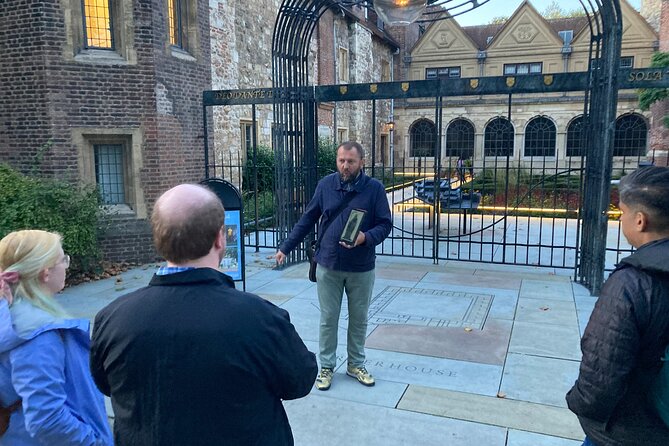
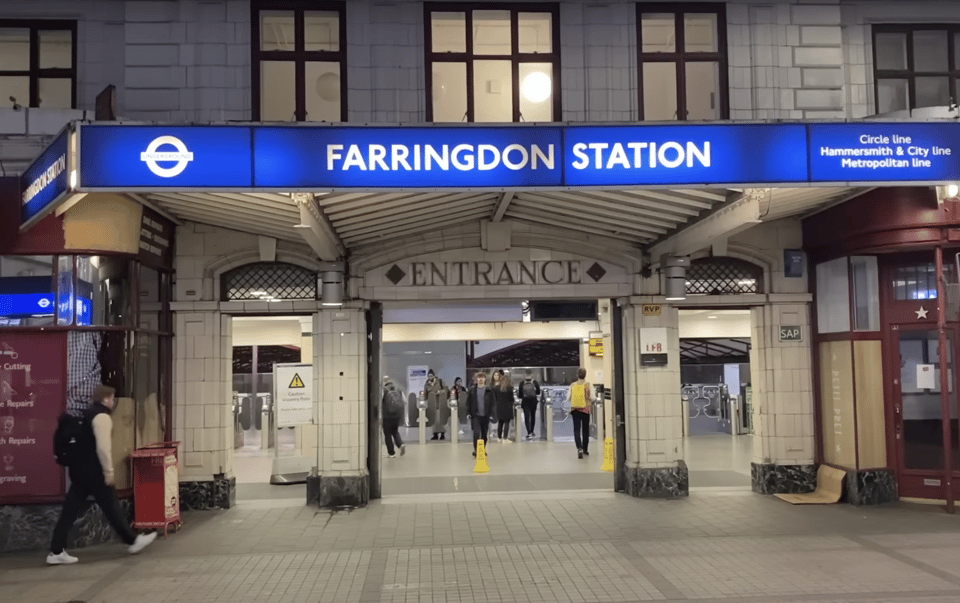
The tour kicks off near Farringdon Underground Station, right outside the main entrance/exit area between the new and old station parts. That meeting point matters because it drops you into London’s layers immediately: modern transport on top, older grit underneath. The guide also makes sure you’re paying attention to the platform line with the Mind the gap story, which sets the tone for the night ahead.
Expect a smooth walking rhythm rather than a sprint from one photo stop to the next. The route is designed so each stop feels like a new chapter: executions, plague, hospitals, graveyards, then the courthouse finale. Since it’s an evening walk through darker streets, you’ll want comfortable shoes and a jacket you don’t mind wearing for a bit in the cold.
Also, keep in mind the tour materials list the start area two ways: meeting outside Farringdon Station, and the route listing references 42 Cowcross St as the starting point. In practice, you should rely on the guide’s directions at the station meeting point.
You can also read our reviews of more walking tours in London



Smithfield Market: where public punishment happened for centuries
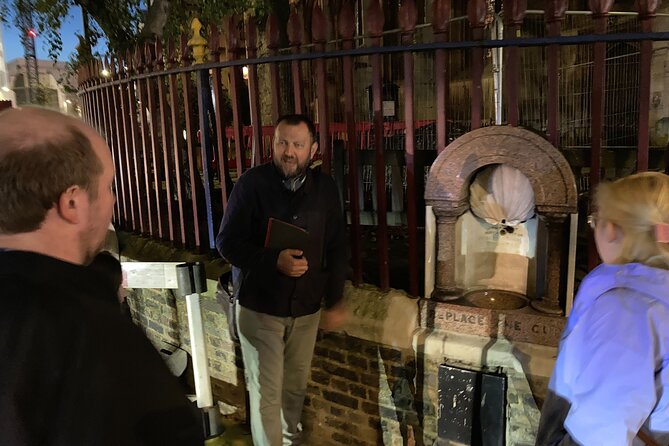
Smithfield Market is the first heavy-hit history stop. It’s introduced as a place where public executions took place for centuries, and the tour frames it as London’s old stage for punishment. That context changes how you see the area: it stops being just a market district and becomes a place where fear had a schedule.
What I like about this stop is how it connects big ideas. You’re not only told that executions happened; you’re guided through why the spectacle mattered. This helps you understand why later stories about crime and bodies feel so baked into London’s identity.
There’s also a built-in emotional switch here. Earlier stops set up medical and burial themes; Smithfield Market turns the volume up and reminds you that death was once a civic event. If you’re sensitive to grim subject matter, this is likely to be the moment where you decide how much you want to lean in.
Charterhouse Square and plague history: medicine, failure, and survival
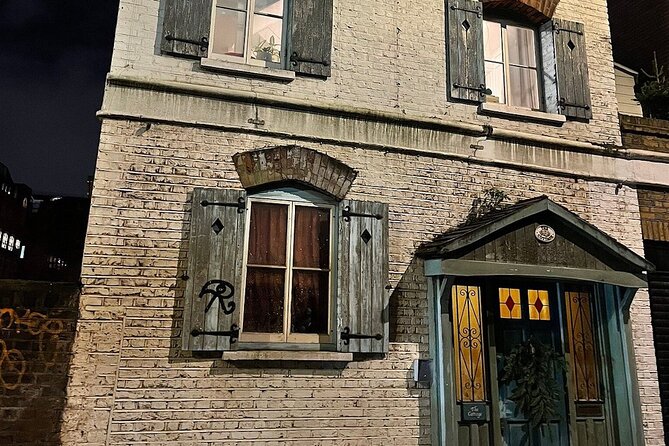
Next comes Charterhouse Square, a surprisingly calm patch of green in a busy part of London. The quiet is part of the effect: you stand where people can rest, and the guide then unspools how plague changed London, how deadly it could be, and how doctors tried to respond.
This stop works because it grounds the macabre in daily reality. Plague isn’t just a spooky rumor; it’s explained as an event that reshaped routines, medical practice, and survival odds. Even when the tour turns dark, the material lands with logic.
I also like the way the guide likely handles the human side. Instead of focusing only on the worst outcomes, the story emphasizes what happened to those who survived. That balance matters on a tour like this, because it keeps the night from becoming one long horror montage.
St Bartholomew the Great: 900 years of the living and the dead
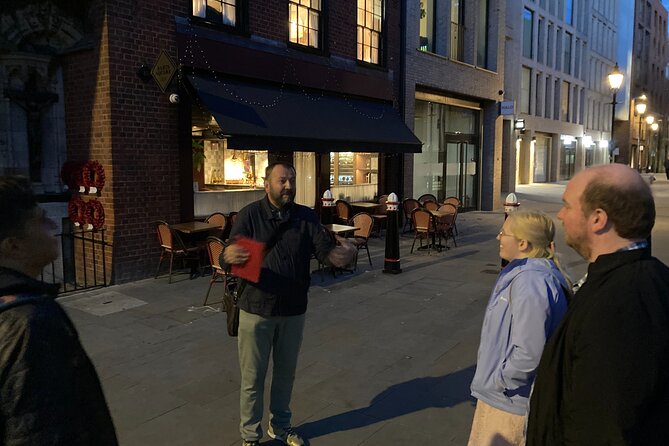
At St Bartholomew the Great, you’re surrounded by a church and burial setting that’s been serving people for centuries. The tour describes it as a hospital for the living and the dead, and the stop leans into the idea that care and burial were intertwined. With centuries-old tombstones around you, it becomes easier to understand why graveyards in London weren’t just backdrops.
This is also a strong stop for anyone who likes the mechanics of history. The guide’s job is to make the timelines feel connected, and this kind of 900-year site helps you do that in your head. You’re standing in place where layers of belief, medicine, and burial practices have overlapped.
One practical note: churches and graveyards usually have uneven ground. Even though the tour is wheelchair accessible overall, you should still be ready for potentially tricky walking surfaces in old areas.
St Bartholomew’s Hospital: when treatments got dramatic
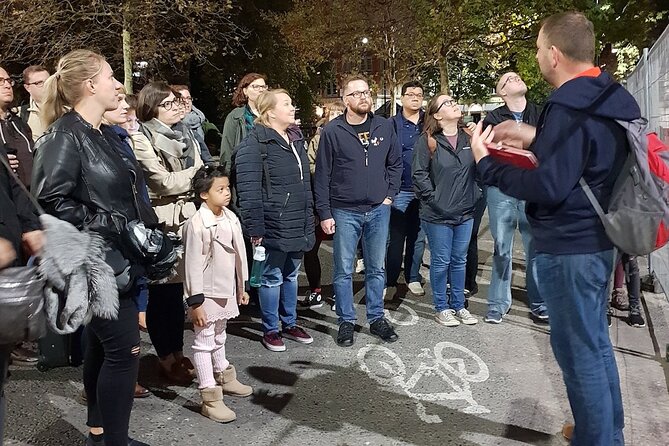
Then you hit St Bartholomew’s Hospital, and the tour brings the medical theme fully into the past. This is where you learn about the methods, tools, and means doctors used back then, and the tour doesn’t pull punches about what people were sometimes made to drink, eat, or smear on themselves in the hope of recovery.
I like this stop because it makes you think like a skeptic. The guide’s framing pushes you to ask what people feared, what they believed would help, and why those choices made sense at the time. In other words, it’s not just gross-out details. It’s about the desperation behind the medicine.
If you’re easily turned off by descriptions of bodily treatment, this may feel intense. But if you like history with cause-and-effect, it’s one of the most educational parts of the night.



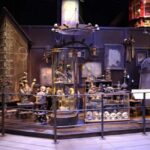
Holy Sepulchre Church: empty pits and the grave-robbing angle
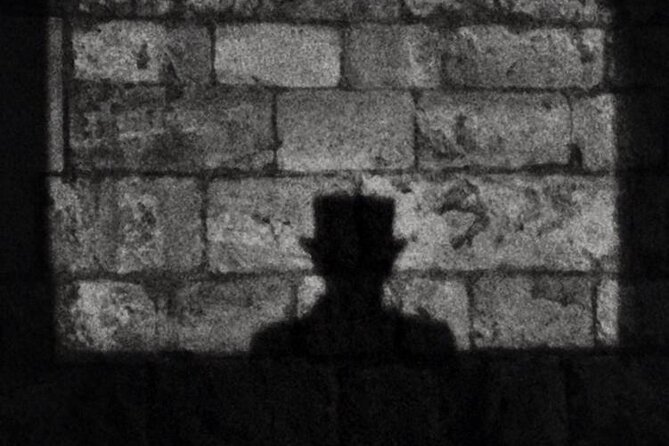
Holy Sepulchre Church brings the tour’s grave-robbing theme into sharp focus. The empty pits in the churchyard are explained as a reminder of a time when people made a living by taking dead bodies out of graves and selling them. The guide then connects the dots between who would want those bodies and how the hospital theme from earlier steps fits in.
This stop is smart storytelling. It turns a single spooky detail into a broader system: supply, demand, and why legal and ethical boundaries were tested. The tour also reinforces the Barber Surgeons thread, linking the story to the broader practice of bodies being used for medical purposes.
This is also where the tour earns points for coherence. Earlier, you’re learning about hospitals and medical practice; here, you’re shown why bodies were suddenly valuable in a different way. It makes the city’s “underbelly” feel less random and more structured.
Sir William Wallace Memorial: Scotland, war, and memory in stone
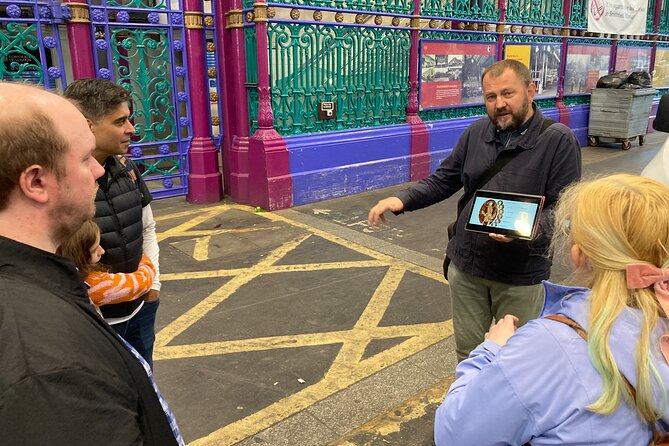
You then pause at the Sir William Wallace Memorial. This stop shifts the tone a bit away from plague and bodies and into wartime memory. The guide sets the scene back when England and Scotland were at war and explains how one Scottish freedom fighter is remembered at that spot.
Even though it’s not the most gruesome chapter, it adds depth. It reminds you that London’s past isn’t only about its own local horrors. It’s also about the political reach of the British Isles, and how names and stories can travel and get anchored in physical landmarks.
If you like tours that mix crime, medicine, and politics without feeling random, this is one of the better transitions.
The Old Bailey finale: England’s most prolific serial killer
The finale lands at the Old Bailey, one of London’s most legendary courthouse sites. Here, the guide saves the darkest story for last: England’s most prolific serial killer. And you’re specifically guided to set aside the name Jack the Ripper, because the tour frames this as a different case entirely.
I like the structure of ending here. Courthouses are naturally narrative-friendly places: people came here for judgment, and you can almost feel the weight of public truth. The guide’s scholar-storyteller role matters most in a stop like this, because the goal isn’t shock for shock’s sake. It’s explanation, character, and the way the legal system turned terror into record.
This is the part of the tour where you may want to mentally prepare for heavier subject matter. If your goal is a night of spooky atmosphere with light stories, you may find the ending more intense than you expected. If your goal is dark London history that still teaches you something, it’s a strong closer.
How the tour ends near St Paul’s, and what that means for your night
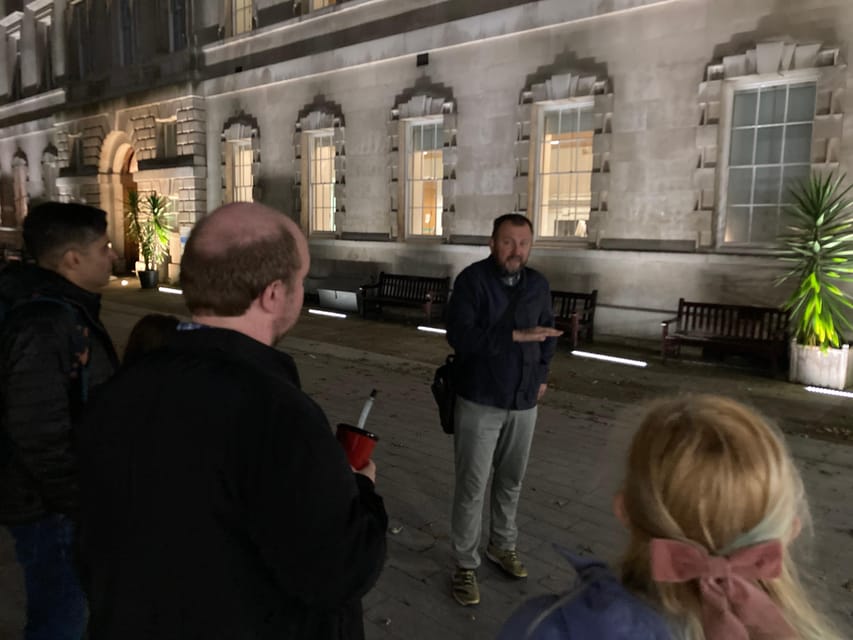
The route is listed as ending at St. Paul’s Cathedral. In the activity description, there’s also a note that it ends back at the meeting point, so there may be some variation by departure or operator setup. Either way, you’ll finish in a central area where it’s easy to continue your evening with dinner or a final walk.
I like tours that land near a major landmark at the end. It gives you a clean sense of orientation when you’re done, especially at night. You’ll also have a good mental map of the city’s darker corners, from hospitals and burial sites to the courthouse where punishment was formalized.
Price and value: what $49 buys in 2 hours
At $49 per person for about 2 hours, this tour is priced for value if you enjoy story-led walking experiences. You’re paying for more than a route on a map. You’re paying for a professional, certified guide, plus an escort through darker streets, and a packed lineup of stops connected by one theme: crime, medicine, burial practices, and the fear that threaded through London.
The value piece here is density. In a short time, you hit major “story nodes” across several centuries—900-year church territory, plague-era medicine, grave-robbing economics, and courthouse crime history. If you’re visiting for a few days and want one night activity that’s not just sightseeing, this is the kind of single-ticket experience that gives you a lot to carry home.
You should only hesitate on price if you’re looking for mostly mild ghost stories. The tour is clearly built around gruesome past as a feature, not a side note.
Who should book this London ghosts walking tour
This tour fits best if you want London history with teeth. You’ll get more enjoyment if you like:
- Storytelling that links places to systems, like medicine and body trade, not just spooky sightings
- Dark historical themes, including executions and crime cases
- A guide-led pace that turns landmarks into a narrative chain
It may be less ideal if you prefer lightly spooky walking tours or if you get squeamish about body-related history. The good news is that you can always steer your own comfort level in real time—pay attention to how the guide approaches the details and decide what you want to hear.
Because it’s wheelchair accessible, it also makes sense for groups where not everyone wants to handle steep stairs or long detours.
Final verdict: should you book?
I think you should book this if you want a guided night walk that explains why London’s darker stories became part of the city’s identity. The strengths are the places you visit and the way they’re connected, plus the energy behind the storytelling. If guide Matt’s kind of delivery matters to you, the ratings back up that the tour works when the guide is in full narrative mode.
I’d hold off if you’re hoping for a mostly “ghosts only” style tour. The historical gruesome side is part of the design, from grave-robbing themes to the courthouse serial killer finale.
If you’re open to learning history through unsettling details, this is a memorable way to see London after dark.
FAQ
How long is the London’s Ghosts & Gruesome Past Nighttime Walking Tour?
The tour runs for about 2 hours.
Where do I meet the guide?
You meet your guide outside Farringdon Underground Station, in front of the main station entrance/exit between the new and old stations. One route listing also references 42 Cowcross St as a starting point, so follow the guide instructions at Farringdon.
Where does the tour end?
The itinerary lists the finish at St. Paul’s Cathedral. The meeting point details also say the activity ends back at the meeting point, so confirm the exact end point with your booking confirmation.
Is the tour guided by a live person?
Yes. It includes a professional, certified guide and is conducted in English.
What’s included in the ticket price?
You get the professional, certified guide plus an escort through the dark and spooky streets of London.
Is this tour wheelchair accessible?
Yes, the activity is listed as wheelchair accessible.
Is it a night walking tour through dark streets?
Yes. The description specifically frames it as an escort through dark and spooky streets.
Can I cancel and get a full refund?
The tour lists free cancellation up to 24 hours in advance for a full refund.