REVIEW · LONDON
London:Winston Churchill Walking Tour with WII War Rooms Entrance
Book on Viator →Operated by Walks - UK · Bookable on Viator
Churchill’s London feels different at street level. This small-group walking tour strings together key Westminster landmarks tied to Winston Churchill, then sends you underground to see how WWII decisions were made in the Churchill War Rooms. You’ll cover the speeches, the monuments, and the political sights—then step into the space where staff worked day after day, 1940–45.
I like that you get small-group attention (max 15), which makes it easier to ask questions while you’re walking. And I especially like that Churchill War Rooms entry is pre-reserved and included, so you’re not hunting for tickets or waiting in the wrong line.
One thing to consider: the walk is only part guided, and the War Rooms section is audio-guided, so if you need constant live narration the whole time, this may feel a little less hands-on than you expect—especially if crowds are heavy at the weekend or during school holidays.
In This Review
- Key things to know before you go
- A small-group Churchill walk that ends underground
- Royal Air Force Memorial start and the Battle of Britain kick-off
- Embankment, statues, and Big Ben: seeing London as wartime messaging
- Parliament Square and Westminster Abbey exteriors: Churchill’s political stage
- 10 Downing Street and Whitehall memorials: the walk gets solemn
- Horse Guards Parade area: troops, timing, and a fun contrast
- Churchill War Rooms: what the audio-guided 1940–45 experience feels like
- Guides make or break it: the storytelling factor
- Price and timing: is $108.53 worth it?
- Best fit: who should book this tour
- Should you book this Churchill War Rooms walking tour?
- FAQ
- How long is the London Churchill Walking Tour, including the War Rooms?
- Is Churchill War Rooms entry included in the price?
- What sights do we see on the walking part?
- Is the War Rooms guided by a person the whole time?
- What’s the group size?
- Where do we start and where does the tour end?
- Is this tour okay if I can walk at a moderate pace?
- What if I need to cancel?
Key things to know before you go
- Max 15 people means more space to hear your guide and ask questions as you move between sights
- Pre-reserved Churchill War Rooms entry saves time when the museum is busy
- Audio-guided underground visit lets you set your own pace once you’re inside
- Mostly exteriors for Big Ben, Parliament, Westminster Abbey, and 10 Downing Street keeps the schedule moving
- Security checks + crowds can affect timing, particularly on weekends and school breaks
- Limited toilets until you reach the War Rooms is worth planning around
A small-group Churchill walk that ends underground
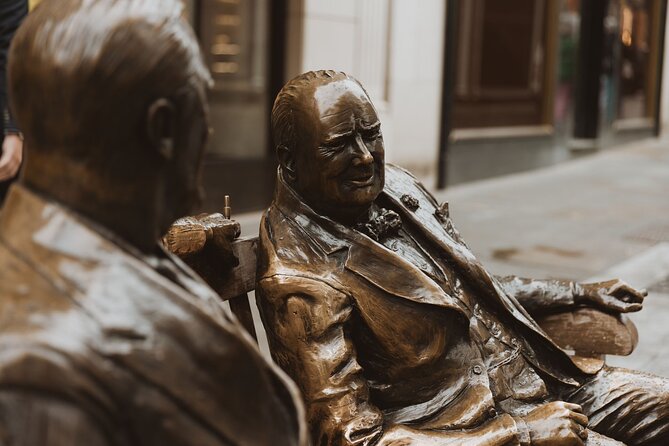
This is the kind of London tour that helps history make sense in real space. You start above ground, linking Churchill’s message to the city around him—then you finish underground where the work got done under pressure. It’s built for people who like the story side of WWII, but also want tangible context: monuments outside, then artifacts and period rooms below.
The small group size matters here. With a group of 15, your guide can keep people together at tight corners and busy pedestrian areas, and you’re more likely to actually hear the explanations over traffic and footfall. Several guides have led this tour, and the common thread in the reviews is that they bring Churchill to life as a person—not just a statue.
You’re also getting a built-in “high point” at the end: Churchill War Rooms. That part is where most first-timers end up saying, I’m glad I didn’t just read about this.
You can also read our reviews of more walking tours in London



Royal Air Force Memorial start and the Battle of Britain kick-off
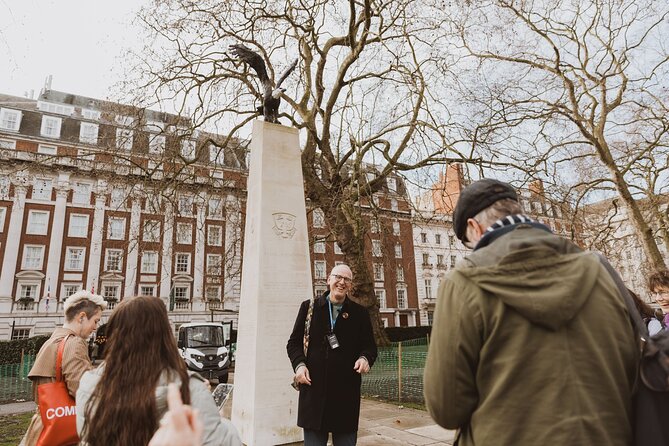
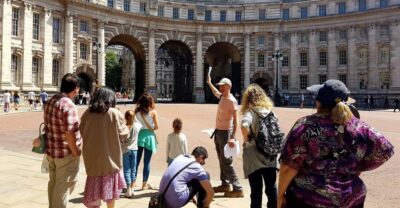
You meet at the Royal Air Force Memorial area on Whitehall (SW1A 2NS). The tour is designed to get your bearings fast, and your first stop sets the tone: the Battle of Britain Monument.
This opening is short, about 10 minutes, but it’s a useful warm-up. The idea is to connect Churchill’s wartime rhetoric—especially speeches that helped morale—with what people remember about the Battle of Britain itself. It’s not a deep museum start. It’s a street-level frame.
Practical note: this part is close to major transit, but it still has the feel of a “workday” location. If you arrive early, take a moment to look at the memorial setting before the group forms. It makes the next steps click.
Embankment, statues, and Big Ben: seeing London as wartime messaging
After the memorial, you walk down toward the Embankment and make a quick stop by a statue tied to the Boudiccan Rebellion. This is where your guide draws a line between past resistance and WWII resilience. It’s a clever move for a walking tour: you’re not only seeing WWII references, you’re watching how Churchill-era leadership would have leaned on older British narratives to steady people.
Then you hit the big photo stop: Big Ben. You’ll see it from the outside only. That’s a plus if you want a smooth schedule, and a minus if you hoped for inside access (the tour doesn’t include it). The best part here is the way Big Ben is framed as a beacon of hope despite Blitz damage. Even if you’ve seen it before, the storytelling changes how you look at it.
What I’d do: bring an eye for detail. Big Ben’s area is busy and full of camera angles. If you only look at the clock, you’ll miss why guides mention certain bits of wartime context. Spend 60 seconds longer than your usual “quick photo.” It pays off.
Parliament Square and Westminster Abbey exteriors: Churchill’s political stage
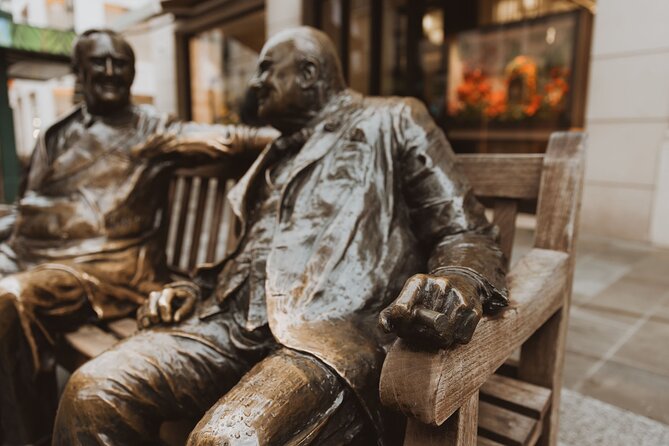
Next up is Parliament Square and the area around the Houses of Parliament (exterior only). This is one of the stops where the tour can feel especially meaningful, because Churchill’s public role is tied directly to the idea of parliamentary government and national decision-making. You’ll also see Churchill’s statue in the square, which makes the topic less abstract.
From there, you move toward Westminster Abbey for another exterior-only view. Your guide explains Churchill’s connection to the site. Even if you’re not stepping inside the abbey, it works as a kind of “location anchor” for his life story and legacy.
A quick reality check: these exterior stops are timed, and there isn’t much room for long questions while people are moving. If you’re the type who likes to ask follow-ups, ask early. If you wait until you’re right at the curb, you may lose your chance.
10 Downing Street and Whitehall memorials: the walk gets solemn
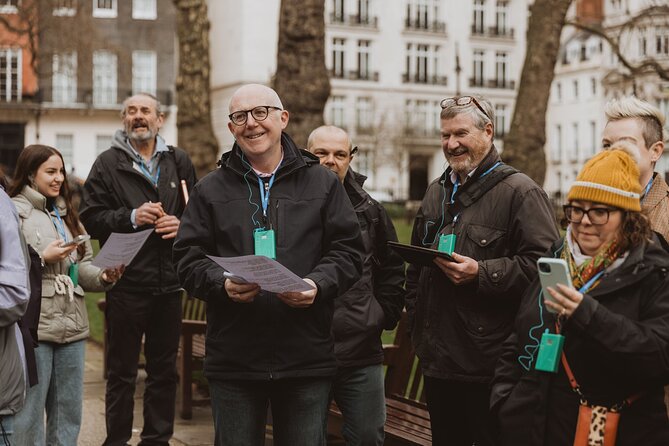
The tour continues along Whitehall. You’ll view 10 Downing Street from outside—again, no interior access—and your guide ties that wartime residence to Churchill’s leadership role.
Then it becomes more reflective. You’ll pay homage at WWII and other conflict memorials around Whitehall, plus you pause at a tribute to those who served. This is a different tone from the early “inspiring speeches” focus, and it’s important. WWII wasn’t only strategy and slogans; it was people paying the ultimate price.
One of the best values of this tour is that it doesn’t treat the War Rooms as a separate attraction. It prepares you for it by shifting the mood from public life to human cost.
If you’re sensitive to atmosphere changes, expect a quieter feel here. The area is still busy, but the points your guide makes tend to slow the group down for a minute.



Horse Guards Parade area: troops, timing, and a fun contrast
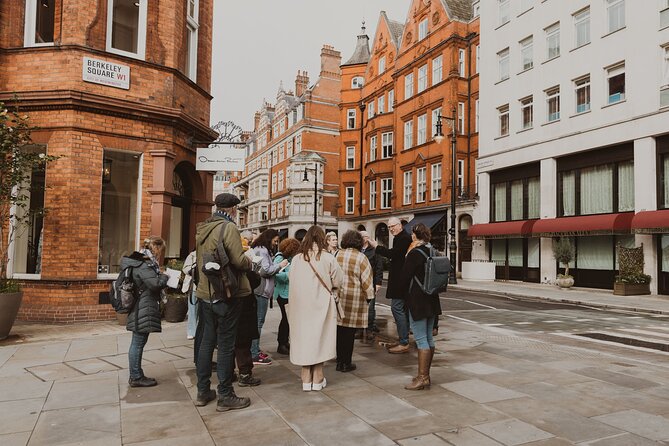
You’ll also spend time at the Horse Guards Parade area near Whitehall. The stop is short and focused: Churchill-era inspections of troops, plus the sight of mounted cavalry troops on well-bred horses.
This part is a nice contrast if you’ve been mentally in WWII mode for an hour already. It helps you remember that London wasn’t only bombs and briefing rooms. It was also uniforms, ceremonies, and public-facing discipline—even during wartime.
If you’re a detail person, look around at the parade-ground geometry and how it channels foot traffic. Guides can point out how the area works, which makes it easier to “see” what inspections would have looked like in motion.
Churchill War Rooms: what the audio-guided 1940–45 experience feels like
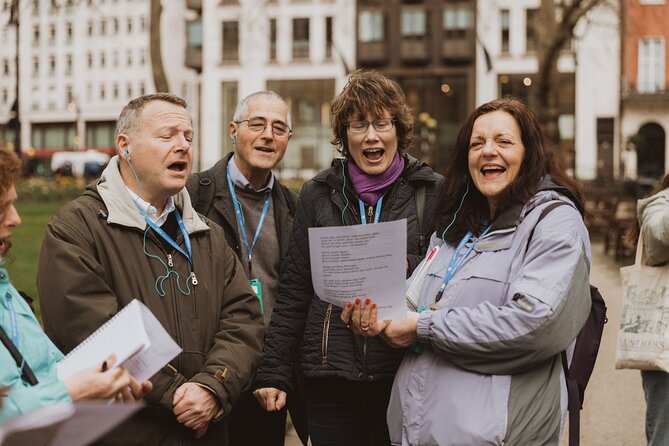
The final and biggest section is Churchill War Rooms, located in the Westminster district. The time here is about 1 hour 30 minutes, and entry is included with a pre-reserved ticket plus an audio guide.
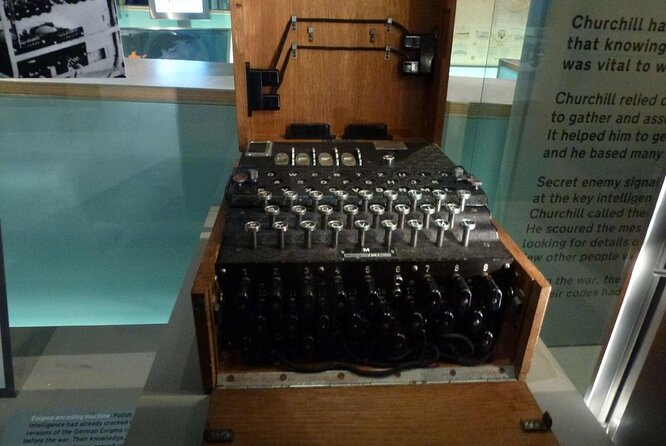
This is the heart of the tour. Underground spaces change everything: sound travels differently, and the “scale” feels more intense than photos. The rooms recreate the working environment where Churchill and his staff directed military operations from 1940–45, and you’ll see original artifacts, historic photographs, and interactive displays.
Because this portion is audio-guided, your experience will depend on pace. If you want to skim and keep moving, you can. If you want to linger by a display, you can do that too. One review even noted they liked that the tour didn’t force a strict script inside, so they could spend as much or as little time in each section as they wanted.
Two practical points that matter:
- Security is required before you enter. Build a little buffer time if you’re visiting on a packed day.
- Crowds can be intense on weekends and during school holidays, and the tour notes that the War Rooms can be busy. If you hate crowded museum corridors, pick a weekday morning when possible.
Also, one real-world comfort detail: limited bathrooms are available until you reach the War Rooms. If nature calls before the end, you may be stuck waiting until later.
Guides make or break it: the storytelling factor
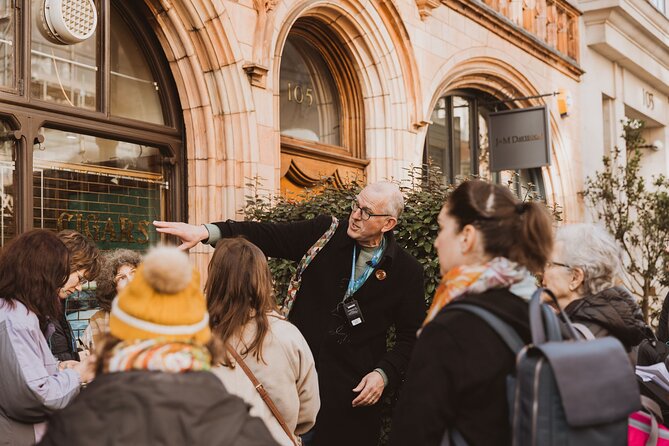
Most of what earns this tour its strong rating is the guide experience. The most praised names in the reviews include Danny, Savanah, Peter, Kate, Alex, Judd, and David, with multiple people calling out the way they told Churchill’s story like it mattered.
You’ll notice patterns in what people appreciated:
- Danny was praised for being especially good at turning history into a clear narrative.
- Savanah received high marks for being both skilled at explaining and sensitive to mobility needs.
- Peter came across as friendly and accommodating, with answers for questions.
- Judd was singled out for storytelling that captured Churchill’s quirks, successes, and failures.
- David was called out as enthusiastic and engaging, and the tour gave them more than they expected beyond the War Rooms entry.
- Kate was described as interesting and informative, with one complaint that the guided portion ran longer than the description set expectations for.
My advice: when you arrive, watch your guide for the first few minutes. If the way they talk clicks with you—storytelling pace, clarity, how they handle questions—you’ll feel the value instantly. If not, at least the War Rooms itself tends to carry the day.
Price and timing: is $108.53 worth it?
At $108.53 per person (about a 3-hour experience), you’re paying for three things: a guided walk, a pre-reserved ticket timed to your group, and the audio-guided museum component.
If you were buying Churchill War Rooms entry on your own during a busy period, you’d likely appreciate the pre-reservation. That’s the value anchor here. The walking portion also has benefits: you get context at monuments that are otherwise just photo stops.
That said, the walking segment is only as strong as the storytelling at each stop. Some people noted that certain exterior locations got less explanation than they expected for the time spent walking. And the strict “3 hours with a guide” expectation isn’t always how the day feels because the underground portion is audio-led.
So here’s how I’d judge value for you:
- If you want guided context across multiple Westminster locations and then a museum at the end, the price can feel fair.
- If you only care about being inside Churchill War Rooms, consider whether you’d rather go straight there with less walking.
The good news is that most reviews heavily favor the War Rooms experience, so even if the walking pace isn’t perfect for your taste, the ending is still the main event.
Best fit: who should book this tour
This tour is a great match if you:
- Love WWII stories and want Churchill’s life tied to real London places
- Like small groups and don’t want to get lost in a crowd
- Want guided context outside and freedom inside (audio guide) at the War Rooms
It may not be the best match if you:
- Need constant live commentary at every stop (the War Rooms part is audio-guided)
- Strongly dislike crowds, since the War Rooms can be busy on weekends and school holidays
- Have strict time expectations about how long you’ll be with the guide, since the day includes timed exterior stops and then an audio-guided museum block
Should you book this Churchill War Rooms walking tour?
I’d book it if you want one ticket that strings together key Churchill-linked sights around Westminster and ends with access to Churchill War Rooms included. The pre-reserved entry and the underground exhibit quality are the main reasons. For many people, it becomes the highlight of their London WWII focus.
I’d skip or rethink if your priority is only museum time and you hate walking between exterior landmarks, or if you’re the type who needs the schedule to match your expectations down to the minute. Also, arrive with the mindset that some stops are exteriors only, so you’re there for the explanations and perspective, not interior access.
If you do book: wear comfortable shoes, plan for limited toilets until you reach the War Rooms, and show up a bit early so you’re not stressed about meeting up before you start moving through security and crowds.
FAQ
How long is the London Churchill Walking Tour, including the War Rooms?
It runs about 3 hours total, with the War Rooms portion taking about 1 hour 30 minutes of that time.
Is Churchill War Rooms entry included in the price?
Yes. Pre-reserved tickets to Churchill War Rooms with an audio guide are included in the tour price.
What sights do we see on the walking part?
You’ll stop at places including the Battle of Britain Monument, Big Ben (exterior only), Parliament Square and the Houses of Parliament (exterior only), Westminster Abbey (exterior only), 10 Downing Street (exterior only), and Whitehall areas with memorials and the Horse Guards Parade area.
Is the War Rooms guided by a person the whole time?
No. The Churchill War Rooms portion is audio-guided.
What’s the group size?
The tour is a small group with a maximum of 15 guests.
Where do we start and where does the tour end?
You start at the Royal Air Force Memorial area at Whitehall (SW1A 2NS) and finish at Clive Steps near King Charles Street (SW1A 2AH).
Is this tour okay if I can walk at a moderate pace?
Most travelers can participate. It’s a walking tour where guests should be able to walk at a moderate pace without difficulty, and you must pass through security.
What if I need to cancel?
You can cancel for a full refund if you do it at least 24 hours before the experience starts. If you cancel less than 24 hours before, the amount paid is not refunded.