REVIEW · LONDON
The Great Rock and Roll Walking Tour of London
Book on Viator →Operated by London Walks&All · Bookable on Viator
Rock history on foot, with Abbey Road photos. In about two hours, you’ll hit street corners tied to the Beatles and other icons, then finish near Denmark Street. The small-group size (up to 15 people) keeps the stories personal and the pace workable.
I love the built-in photo payoff at the Abbey Road zebra crossing, where the Beatles vibe is the whole point. I also like the personal guide attention on a max-15 walk, with guides such as Grant (and others like Glen in some groups) tailoring the chatter to what you actually like in rock.
One thing to plan for: this is a walking tour first, and two stops are marked as admission ticket not included—so you may mostly be looking from outside unless you choose extra entry.
In This Review
- Key highlights you’ll feel on this walk
- Why the Abbey Road photo stop still works
- Soho-to-Denmark Street: the walking route that keeps momentum
- Stop 1: Soho Square and Trident Studios (Trident Studios, MPL)
- Stop 2: Savile Row and the Beatles last concert building
- Stop 3: Denmark Street, Tin Pan Alley, and guitar-shop energy
- Stop 4: Wardour Street and the former Marquee Club
- Stop 5: Heddon Street and the Ziggy Stardust plaque
- Stop 6: Regent Sounds and the shoestring-recording story
- Stop 7: Regent Street and Pink Floyd as architect students
- Stop 8: The Marquis, London’s Rock and Roll Watering Hole
- Small-group size: why it feels better than a big bus
- Price and value: what $27.46 buys in two hours
- Timing, walking, and where to meet without stress
- Who should book (and who might skip)
- The guides: stories shaped to the group
- Should you book the Great Rock and Roll Walking Tour of London?
- FAQ
- How long is The Great Rock and Roll Walking Tour of London?
- What does the tour cost per person?
- Where do I meet, and what’s the nearest Underground station?
- Where does the tour end?
- Is a mobile ticket provided?
- Are admission tickets included for every stop?
- How big is the group?
- Can I bring a service animal?
- Is free cancellation available?
Key highlights you’ll feel on this walk
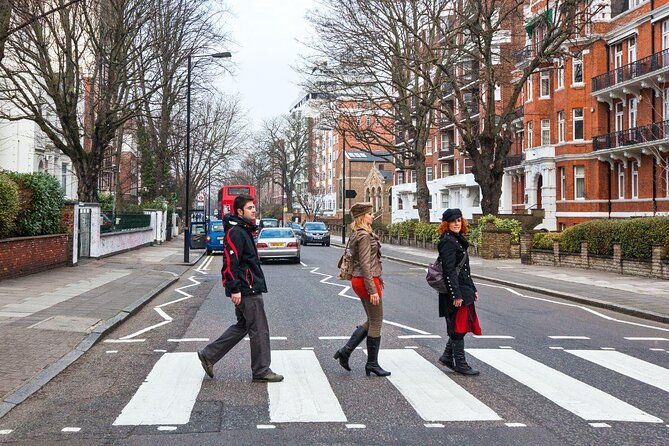
- Abbey Road photo stop: pause for Beatles-style pictures at the zebra crossing
- Small-group attention (max 15): easier questions, more back-and-forth, better pace
- Denmark Street gear street: Tin Pan Alley energy and a nod to buying a Gibson Les Paul
- Marquee Club legacy at Wardour Street: Jimi Hendrix, David Bowie, and The Who all in the mix
- Quick stops with big names: Ziggy Stardust plaque, Regent Sounds, Pink Floyd student roots
- Finish with a drink vibe at The Marquis: London’s Rock and Roll Watering Hole as the emotional landing
Why the Abbey Road photo stop still works
The Abbey Road zebra crossing moment is not just a gimmick. It’s a way to turn a famous image into a physical memory you can carry, then snap it right where the association lives—on the street.
What I like is that it’s integrated into the tour flow, not tossed in as a distant “you’ll see it someday” bonus. After you’ve spent an hour hearing why various Soho and Central London streets mattered to artists and scenes, the Abbey Road stop feels earned.
You’ll also want to budget a minute or two for positioning and photos, because you’re doing this in a very public place. Wear shoes you can stand in for a short stretch, and bring your camera settings confidence—you’ll be moving fast from stop to stop.
You can also read our reviews of more walking tours in London



Soho-to-Denmark Street: the walking route that keeps momentum
This tour is built like a string of music-lore checkpoints. Each stop is short—often around 5 to 10 minutes—so you stay in motion and your brain stays switched on. If you love rock trivia, you’ll have a good time. If you prefer long pauses, you might feel rushed.
Here’s what the route is doing, stop by stop, and why it matters:
Stop 1: Soho Square and Trident Studios (Trident Studios, MPL)
You start around Soho Square, with a look at Trident Studios. The stop is timed for about 10 minutes, and admission isn’t included, so think of this as a “place matters” stop—spot the setting, get the story context, and keep walking.
Why it’s worth your time: Soho’s central position made it a magnet for musicians, producers, and music-business people who needed studios that were practical to get to. Trident’s name carries weight because it represents the studio-side craft of getting great rock tracks recorded, not only the performance-side glamour.
Stop 2: Savile Row and the Beatles last concert building
Next comes Savile Row, where you’ll spend about 10 minutes at a building tied to the Beatles’ last concert. Admission isn’t included here either, so the experience is about the street-side connection and the guide’s explanation.
This stop is powerful because it anchors a major band in a real-world location, not in a vague “they played somewhere” memory. If you like to connect dates and places—who played, where, and why—Savile Row gives you that sense of real-time geography.
Stop 3: Denmark Street, Tin Pan Alley, and guitar-shop energy
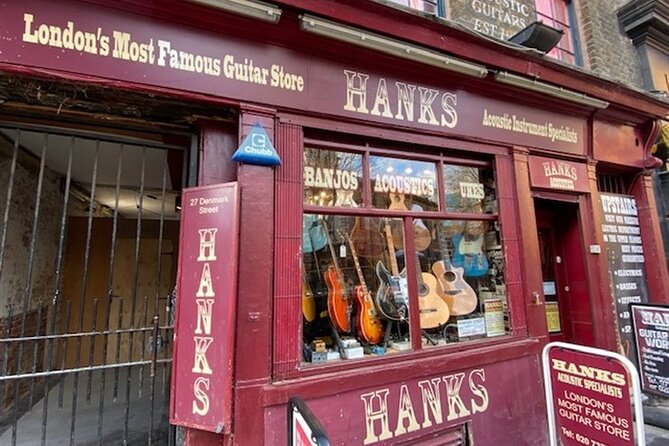
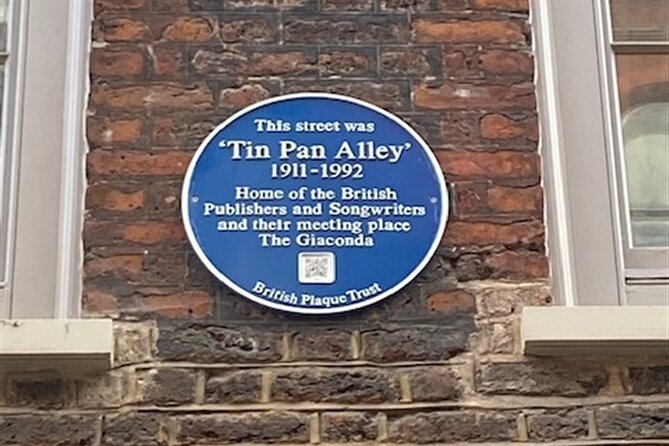
Then you hit Denmark Street, often called London’s Tin Pan Alley—the street-level reason so many songs and sessions happened. This stop is marked free and timed around 10 minutes, with a specific nod to classic guitar culture, including a mention of buying a Gibson Les Paul.
This is where the tour starts feeling like a walk through everyday London, not a museum route. You’re in a shopping-and-street-scene area, so even if you don’t buy anything, you’ll get the mood of “music as commerce and craft.”





Stop 4: Wardour Street and the former Marquee Club
At Wardour Street, you’ll spend about 10 minutes at the former Marquee Club—a place tied to Jimi Hendrix, David Bowie, and The Who. Admission isn’t included, so again, it’s about the location plus the stories you’ll get in the air around it.
This stop is a reminder that rock scenes didn’t just appear fully formed. They grew around venues where people could actually see shows, hear new sounds, and trade ideas night after night. The Marquee Club is one of those names that sounds legendary because it helped create the conditions for legends.
Stop 5: Heddon Street and the Ziggy Stardust plaque
At Heddon Street, the tour pauses around 10 minutes at a Ziggy Stardust plaque area. This is marked free.
Short stops are where plaques and small street signals shine. They’re small objects in big cities, and the guide’s job is to point them out and explain what you’re looking at. It’s also an efficient way to bring pop-culture into a physical setting without needing extra paid entry.
Stop 6: Regent Sounds and the shoestring-recording story
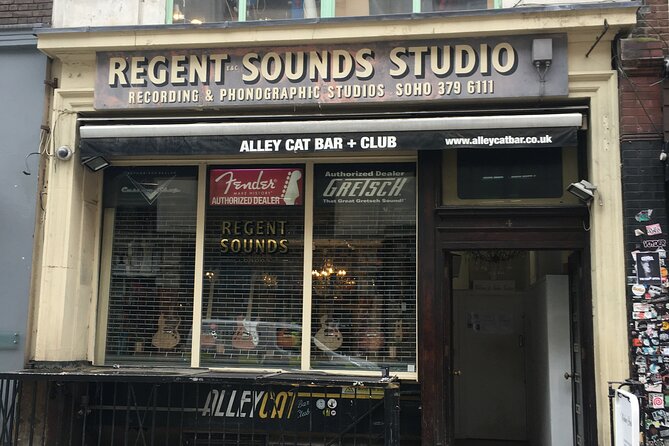
Next: Regent Sounds, timed at about 5 minutes and marked free. This is one of those quick-hit stops that can still land hard because it includes a story about the Rolling Stones and Black Sabbath recording their first album on a shoestring budget, plus the tale of Jimi Hendrix being asked to turn the music down.
Even in a short slot, this kind of anecdote does real work. It explains how chaotic recording life could be—and how big outcomes can grow from small, practical constraints. You’re not just learning names; you’re learning working conditions.
Stop 7: Regent Street and Pink Floyd as architect students
At Regent Street (about 5 minutes, free), the tour points to the area now part of Westminster University, where Pink Floyd met as architect students.
This stop is a clever reminder that rock bands often start as normal people with normal plans—until music becomes the loudest plan in the room. If you like origin stories where nobody is magically born ready, this one will click.
Stop 8: The Marquis, London’s Rock and Roll Watering Hole
Finally, there’s The Marquis, marked free and timed around 5 minutes. This is presented as London’s Rock and Roll Watering Hole, and it’s a satisfying emotional landing after the street-side legend tour.
The Marquis stop makes sense because after lots of names and places, you may crave a simple “okay, I get it” moment. Even if you don’t drink, the stop gives you closure and a natural place to regroup before heading off near Denmark Street, where the tour ends.
Small-group size: why it feels better than a big bus
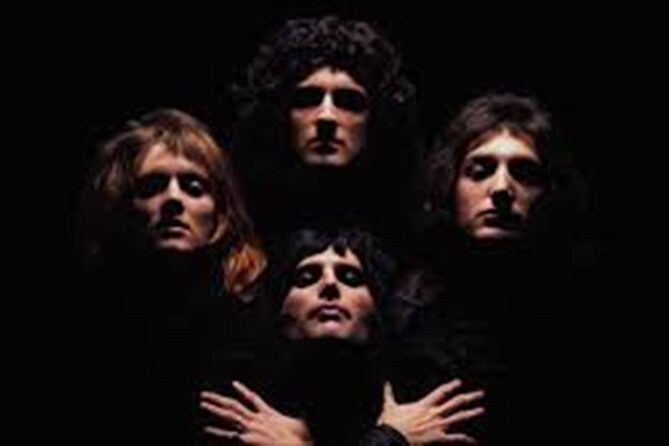
A max of 15 people changes the tour experience in real ways. In a group that size, a guide can actually notice who’s lagging, who wants more detail, and who is asking questions you can’t ignore.
The reviews and guide notes around the experience also point to personal attention. I like that some guides (such as Grant) are described as shaping the walk around the group’s musical tastes. That matters because rock isn’t one subject—it’s a whole stack of genres, decades, and personalities.
If you’re the type who asks, Wait, where exactly was that?, this format is friendlier. You get more conversation, not just a lecture voice.
Price and value: what $27.46 buys in two hours
At $27.46 per person for about two hours, you’re paying for three things:
- A guided route through central streets (with time-coded stops)
- Story context connecting bands to addresses you’d otherwise miss
- A photo opportunity at Abbey Road that’s part of the experience, not a random wander
When a tour only costs a little more than a dinner out, I usually look for whether it changes what I can do in a day. This one does. It compresses a lot of “place meaning” into a short window, and it stays in a tight area around Soho/Central London.
Is it perfect value for everyone? Not necessarily. If you want lots of indoor time, or you expect a heavy audio-video show component, a walking route may feel like it’s more movement than spectacle. This tour is designed to be walked, not sat through.
Still, for music fans who enjoy street-level context, the price-to-time ratio is solid.
Timing, walking, and where to meet without stress
The scheduled start time shown is 11:00 am, and the tour runs about 2 hours. The start point is 3 Villiers St, London WC2N 6NN, and the nearest Underground station is Tottenham Court Road. The route ends around Denmark Street (Denmark St, London WC2H).
That end point is handy. Denmark Street is a logical place to continue your day—grab a snack, browse music shops, or just keep exploring nearby streets.
Two practical notes:
- This is mostly street time: comfortable shoes are non-negotiable.
- Some stops list admission tickets not included. So if you’re hoping to walk straight into specific interiors every time, you’ll want to adjust expectations and treat those parts as exterior/area moments unless you buy separate entry.
Who should book (and who might skip)
This tour is a great fit if:
- You love rock music and want location-based stories tied to iconic names
- You like walking tours but still want a manageable time window
- You want the Abbey Road photo moment but also want context before and after it
- You prefer small-group interaction, not a crowd with no breathing room
I’d think twice if:
- You dislike walking long blocks or hate standing for photos
- You expect mostly indoor access and ticketed venues
- You’re looking for a show format rather than a route-based guide experience
Also, it’s worth noting this one is booked ahead often—on average about 34 days in advance—so grabbing a date that works with your schedule is smart.
The guides: stories shaped to the group
The vibe here is strongly story-driven, not just geography. The guide is central to making the stop-and-walk format feel lively, and you can see that in how different guide names show up in the feedback (like Grant and Glen).
One of the biggest perks I’d look for: the guide taking cues from your music interests. If your “rock” is more classic Beatles and Bowie, you’ll want those threads emphasized. If you’re heavier on Stones, Sabbath, or Pink Floyd, you’ll want the guide to connect those dots quickly. The tour structure makes that possible because the stops are designed as quick drops of context that a good guide can tailor.
My suggestion: at your first stop, ask one simple question like, What should I pay extra attention to today? It’s the fastest way to get your tour to match your taste instead of running on a generic script.
Should you book the Great Rock and Roll Walking Tour of London?
If you want a short, focused London experience that mixes real street locations with rock legends—plus the Abbey Road zebra crossing photo—you should book this. It’s priced for a value-minded day, it runs about two hours, and it stays small enough to keep the guide exchange feeling human.
Book it especially if you’re building a Central London itinerary and you want something that’s more than “walk around and hope you notice the famous stuff.” This tour points things out on purpose, fast.
Skip it if you want mostly indoor entrances, or if walking is your weak spot. You’ll still see a lot, but you’ll be moving for most of the time.
FAQ
How long is The Great Rock and Roll Walking Tour of London?
The tour runs for about 2 hours.
What does the tour cost per person?
The price is $27.46 per person.
Where do I meet, and what’s the nearest Underground station?
You meet at 3 Villiers St, London WC2N 6NN. The nearest underground station is Tottenham Court Road.
Where does the tour end?
The tour ends near Denmark Street (Denmark St, London WC2H).
Is a mobile ticket provided?
Yes, this experience includes a mobile ticket.
Are admission tickets included for every stop?
No. Some stops are marked Admission Ticket Not Included, while others are marked Admission Ticket Free. You’ll want to plan for a mix of exterior viewing and free pauses.
How big is the group?
The tour has a maximum size of 15 people.
Can I bring a service animal?
Yes, service animals are allowed.
Is free cancellation available?
Yes, you can cancel up to 24 hours in advance for a full refund.