REVIEW · LONDON
Palaces, Parliament & Power: A Walking Tour of London’s Royal City
Book on Viator →Operated by Historic London Tours · Bookable on Viator
Power corridors beat random wandering. This 2-hour, small-group walk threads together Westminster Abbey, Buckingham Palace, Downing Street, and Parliament with stories that explain how the city’s rules, royals, and wartime decisions all connect. Two things I like a lot: the personalized group size (up to 15) and the fact the guide uses engaging anecdotes that go past the usual facts. One drawback to plan for: most stops are short and entrance fees aren’t included, so you’ll mainly see key places from the outside.
I also appreciate the practical value of the $19 price: you’re not paying to enter attractions here, you’re paying for a focused route, a mobile ticket, and a clear sense of what to do next in London. The tour ends near Green Park Station, which makes it easy to keep moving without hauling your feet across town again. If you’re hoping for long, inside visits at every stop, adjust your expectations and use this as your fast orientation to London’s political and royal core.
You’ll start at 9152 Golden Jubilee Bridges (near the River Thames) and finish at St James’s Palace, outside near Green Park. The pace is geared to seeing a lot in a short time, with each main stop clocking in around ten minutes, so come ready to walk, look, and ask questions.
In This Review
- Key things to know before you go
- Why this Royal City route works when you have only a day
- Meeting at Golden Jubilee Bridges and getting oriented fast
- Victoria Embankment: River Thames views before the power shows up
- Banqueting House and Whitehall: the Palace of Whitehall’s surviving piece
- Downing Street: Prime Minister and Chancellor on the same street
- Cenotaph and Parliament: war memory and democracy in walking distance
- Jewel Tower and Westminster Abbey: medieval survival and royal rites
- Churchill War Rooms and St James’s Park: wartime decisions and royal green space
- Buckingham Palace and St James’s Palace: official residences and senior status
- Is the $19 price a good deal?
- Who this tour is best for
- Tips to make the most of the two-hour walk
- Should you book Palaces, Parliament & Power?
- FAQ
- How long is the tour?
- How much does it cost?
- Is the ticket mobile?
- Do I need to pay entrance fees for stops?
- Where does the tour start and end?
- What time does it start?
- What is the cancellation policy?
Key things to know before you go
- Up to 15 people keeps the walk from turning into a slow-moving sidewalk crowd
- Mobile ticket makes check-in simpler
- Most entrances aren’t included, so you’ll enjoy exteriors and brief stops more than long museum time
- 11 big-name stops in about 2 hours means strong first-time orientation
- You finish at St James’s Palace, convenient for continuing through central London
Why this Royal City route works when you have only a day
London can feel like a million postcards at once. This tour gives you a focused path through the city’s most power-heavy mile: monarchy, Parliament, and wartime leadership in the same walking circuit. Instead of choosing between Westminster Abbey, Downing Street, and the palaces, you get them in one route—so your brain starts connecting themes rather than collecting isolated sights.
Another reason I like the approach is that it’s built for independence. You’re not just “seeing stops”; you’re also getting suggestions for how to use the rest of your time in London. That matters because a short trip usually turns into guesswork unless someone helps you prioritize.
And yes, it’s brisk. You’ll move from garden views to government buildings to royal residences quickly, with commentary along the way. It’s a great fit if you want the highlights now and decide later what deserves a ticket and extra hours.
You can also read our reviews of more walking tours in London



Meeting at Golden Jubilee Bridges and getting oriented fast
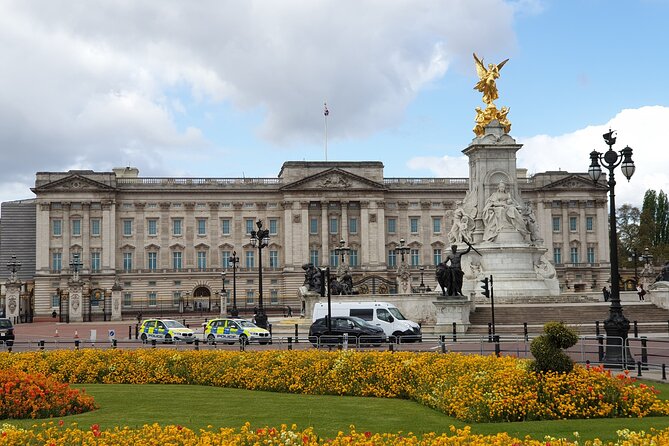
You begin at 9152 Golden Jubilee Bridges, London WC2N 6NS, and the route starts with the Victoria Embankment area. That opening choice is smart: you’re near the River Thames and you get your bearings before the royal-and-political section of central London starts closing in.
The walking pace matters here. With about ten minutes per main stop, the guide has to keep the route flowing and the stories moving. If you like to linger for photos, you’ll have to be selective—but the upside is that you won’t waste time trying to figure out where everything is.
Because this is a small group (max 15), you’ll generally get more of the guide’s attention than you would on a huge coach-style tour. It’s also useful for asking quick questions when something catches your eye—especially when you’re looking at places tied to government and ceremony.
Victoria Embankment: River Thames views before the power shows up
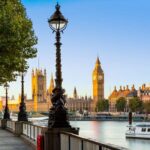
Stop 1 is Victoria Embankment, with the gardens looking over the River Thames. Admission here is free, so it’s a low-stress way to start. It also sets the tone: London’s political center isn’t only stone and rules; it sits right beside the river that helped the city grow.
What I’d watch for at the start is the contrast. You begin in a calmer public space with river views, then the tour quickly shifts to Whitehall and Westminster’s political corridor. That back-and-forth helps you remember the route, because each area feels distinct even when you’re walking through the same general neighborhood.
It’s a good warm-up stop if you’re coming in from elsewhere that morning. You can take a breath, orient yourself, and then go straight into the louder symbolism of royal power and Parliament.
Banqueting House and Whitehall: the Palace of Whitehall’s surviving piece
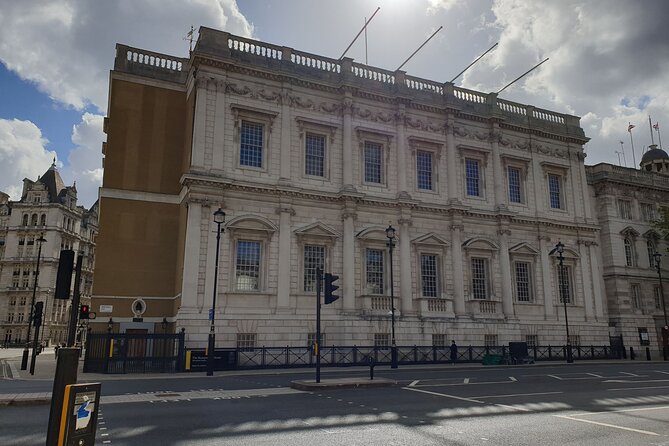
Next up is Banqueting House. The tour points out something specific that makes this stop worth your attention: it’s described as the only major surviving part of the Palace of Whitehall. That’s the kind of detail that turns a random building into a meaningful “why this still matters” moment.
Admission isn’t included for this stop, so you’ll likely spend your time outside with the guide’s commentary. The value is in understanding why the building remains when other parts of the older palace complex didn’t. For history-minded visitors, that single surviving structure becomes a physical shortcut back into the earlier era of Whitehall.
A practical tip: if you’re a person who wants to read plaques and absorb details slowly, you may feel a little rushed here. But the upside of the tour format is that you get a focused explanation quickly, then you can decide whether Banqueting House deserves a return visit with an admission ticket.
Downing Street: Prime Minister and Chancellor on the same street
Stop 3 is 10 Downing Street, described as the street home to the Prime Minister and Chancellor. You don’t need a background lecture to understand why this is a high-interest stop—this is one of the most recognizable power addresses in the UK.
Because entry isn’t included, you’ll experience it the way most people do: from the street, with the guide helping you connect what you’re seeing to how power works. That’s a key benefit of this tour: it helps you interpret what otherwise looks like a plain stretch of government frontage.
If you want a good photo, aim to be quick and respectful. In this area, the story is the location, not a long lingering session. The tour keeps moving, but you can still capture the moment without turning it into a traffic jam for the group.
You can also read our reviews of more city tours in London




Cenotaph and Parliament: war memory and democracy in walking distance
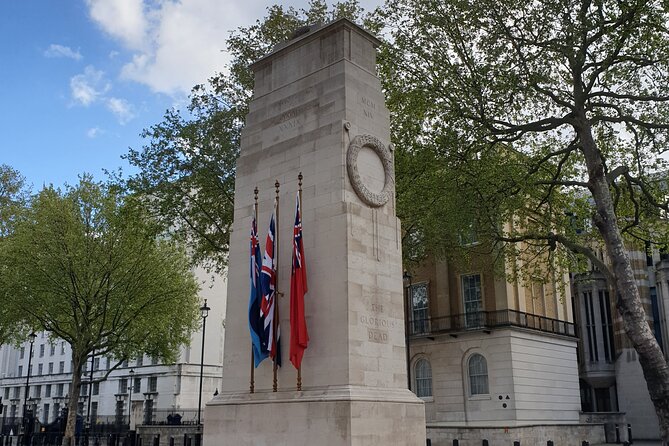
Then comes the Cenotaph, the UK’s official war memorial. Admission is free here, and the stop is short by design. Even so, it’s an important reset: before you go into the symbols of governance, you pause at a place that represents collective loss and public remembrance.
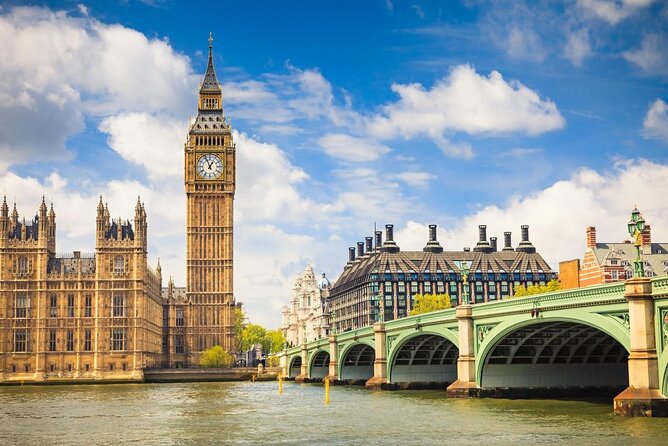
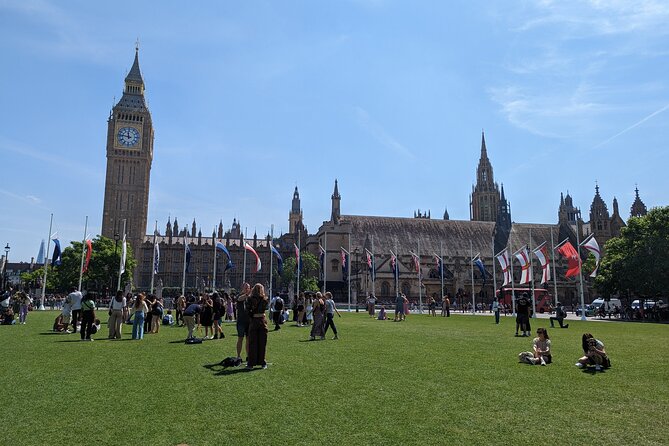
Right after that, you reach Houses of Parliament, described as the centre of British democracy and the Mother of all Parliaments. This is one of the stops where commentary really changes your experience. A building like this can feel obvious on a first visit, but a good explanation helps you see how it functions as a public symbol—not just a landmark.
A realistic expectation: you’re not getting an all-day official tour of Parliament. You’re getting a short, guided orientation to why the place matters and how it fits into the broader storyline of London’s royal and political power.
Jewel Tower and Westminster Abbey: medieval survival and royal rites
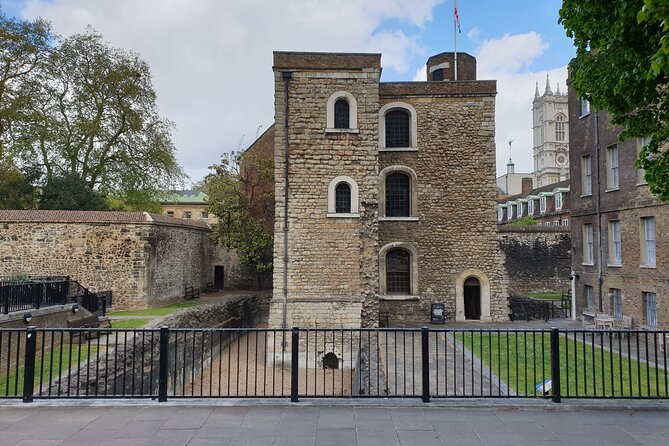
Stop 6 is the Jewel Tower, described as one of the only surviving pieces of the medieval Palace of Westminster. That phrase—only surviving pieces—is the point. It’s a reminder that the area has been rebuilt and reshaped many times, but some older fragments remain.
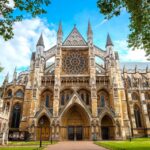
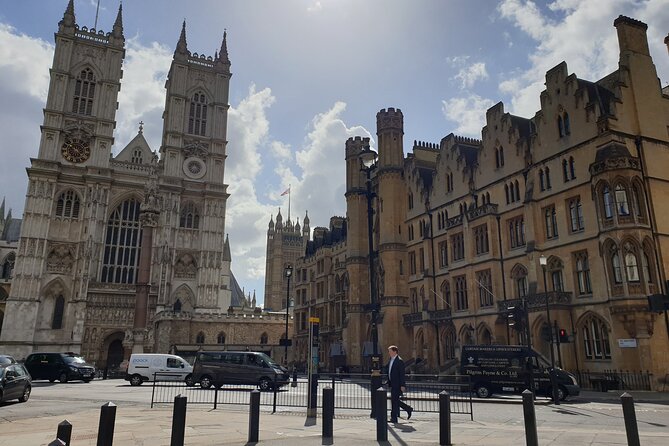
Then you move to Westminster Abbey, the site of royal burials and weddings. This is one of those places where the tour’s storyline shines. You’re not just seeing a famous church; you’re seeing a focal point for royal life-cycle rituals—birth-to-reign-to-memory—compressed into one location.
Admission isn’t included for Westminster Abbey in this tour, so again you’ll likely focus on what you can see and understand quickly from outside. If you have a spare half-day later, you might want to come back for a dedicated visit. But as an opener to London’s royal narrative, this stop does a lot.
One thing I’d do: when the guide talks about royal burials and weddings, take a second to connect it to what you just saw at Parliament and the Cenotaph. The tour’s power theme isn’t only about policy; it’s also about how the country remembers, celebrates, and mourns through formal spaces.
Churchill War Rooms and St James’s Park: wartime decisions and royal green space
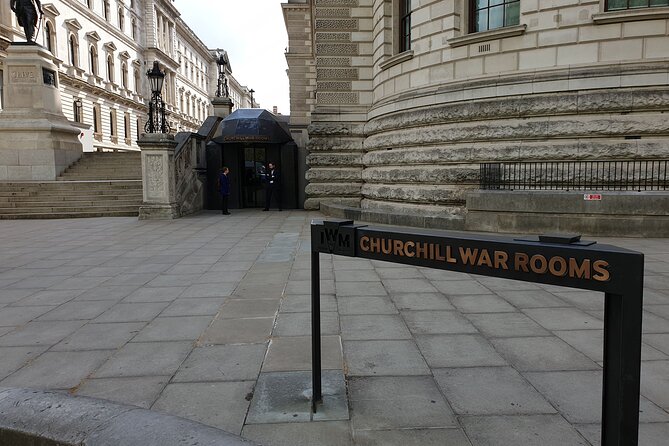
Stop 8 is the Churchill War Rooms, with the focus on the rooms from which Winston Churchill directed the Second World War. This is a strong pivot. After royal settings and parliamentary symbolism, the tour shifts to decision-making in a crisis—tied to rooms where leadership mattered day by day.
Admission isn’t included, so you’re likely getting a guided orientation rather than a full interior experience. Even so, this stop works because it reframes the whole tour. Power isn’t only ceremonial. It’s also operational, tense, and urgent.
Then you get a breather at St James’s Park, described as the most beautiful Royal Park in London. Admission is free here, and the timing helps: it breaks up the concentration of government buildings before the palaces.
If you’re walking with kids, this kind of pause is a small gift. It’s also a good moment to refocus your senses—look at the park layout, take a few minutes to sit if you can, then head into the final royal residences with fresh energy.
Buckingham Palace and St James’s Palace: official residences and senior status
Stop 10 is Buckingham Palace, described as the official London residence of the monarch. This is a must-see for many visitors, but the tour helps you see it as part of the same system you’ve been walking through: monarchy as a public institution, displayed through a recognizable address and surrounding ceremonial spaces.
Then you finish at St James’s Palace, described as the most senior royal palace in the UK. The end point matters here. The tour doesn’t end “somewhere nearby”—it ends at St James’s Palace, and you’re let out outside not far from Green Park Station.
Ending here is practical. It reduces the “now what?” gap. You can head into the next part of your day with less transit friction and more confidence about where you are.
Is the $19 price a good deal?
At $19 for about 2 hours, you’re paying for a structured route, guided commentary, and the convenience of a mobile ticket. Entrance fees are not included, which is the trade-off. But that also means the price stays accessible.
For value, the big win is that the tour strings together high-demand sights that often require separate planning. Instead of spending your limited time jumping between distant attractions or guessing at how the areas relate, you get a single storyline in a compact walking format.
If you’re the kind of visitor who likes to choose what to pay for later—maybe returning for an interior visit at Westminster Abbey or the Churchill War Rooms—this tour helps you decide with more confidence. You’ll know what you care about most after you’ve seen how the route connects the themes.
If, however, you were hoping to pay one price and go inside every stop, you’ll want to rethink. Because most stops list admission as not included, the tour experience is primarily exterior viewing plus explanation.
Who this tour is best for
This is ideal for first-time visitors who want a fast, meaningful orientation to London’s royal and political center. It’s also a good fit if you travel with teenagers or adults who like context and stories more than a pile of random facts. The tour’s format is designed to keep attention across multiple major sites in a short window.
It’s also a solid choice if you want a walking day without committing to a full-day ticketed schedule. You can treat this as your backbone morning, then build the rest of your trip around the places that stayed with you.
Tips to make the most of the two-hour walk
- Wear comfortable shoes. You’re covering a lot of ground for about two hours, with many short stops.
- Keep photo expectations realistic. Some stops are quick by design, so choose one or two “must-capture” moments.
- Use the guide’s context. When the stop is tied to something specific—like Churchill directing the Second World War from the War Rooms—you’ll get more out of it if you listen for the connection.
- If you’re interested in entrances, plan ahead. This tour signals that entrance fees aren’t included, so you’ll want a separate plan for any interior visits.
- Bring a light layer. Central London weather can change quickly, and parks plus street walking means you’ll feel it.
Should you book Palaces, Parliament & Power?
Yes—if you want a high-impact introduction to London’s monarchy and government in a budget-friendly, guided format. This tour is built to make sense of the city’s power story quickly, and the small group size helps the guide keep it personal. You’ll leave with a clearer mental map of Westminster-area landmarks and a better idea of what deserves more of your time.
Skip it or rethink if your priority is long interior time at multiple sites. This isn’t a ticket-happy itinerary; it’s a “see the key places and understand why” walking tour.
If you’re deciding last minute, the route ending near Green Park Station is also a practical plus. It makes it easier to keep your day flexible right after the tour.
FAQ
How long is the tour?
The tour is approximately 2 hours.
How much does it cost?
The price is $19.
Is the ticket mobile?
Yes, it includes a mobile ticket.
Do I need to pay entrance fees for stops?
Entrance fees are not included. Some stops are free, including Victoria Embankment and the Cenotaph, while other major stops list admission as not included.
Where does the tour start and end?
It starts at 9152 Golden Jubilee Bridges, London WC2N 6NS, UK, and ends outside St James’s Palace near Green Park Station.
What time does it start?
The start time is 11:00 am.
What is the cancellation policy?
Free cancellation is available up to 24 hours in advance for a full refund. If you cancel less than 24 hours before the experience starts, the amount paid won’t be refunded.