REVIEW · LONDON
Private Jack the Ripper Walking Tour of Whitechapel and Brick Lane
Book on Viator →Operated by Jack the Ripper Walks · Bookable on Viator
Jack the Ripper is alive after dark. This private tour in Whitechapel and Brick Lane makes the case feel close to the ground, with period-dressed storytelling and a 14-inch backlit tablet showing vintage photos right where the action happened. I like the way the guide balances myths with the strongest explanations, and I like the relaxed, question-friendly pace. One downside: you’ll be on your feet for about 2.5 hours, and no bottled water or food is provided.
Expect an evening walk through the East End, starting at Aldgate High Street and finishing near Bell Lane, with the last stretch ending about a 5-minute walk from Liverpool Street. This is offered in English, and the schedule shown runs Monday through Thursday in the afternoon-to-evening window. If you want the story told by someone who has been doing it for years, this private format is a big advantage.
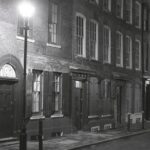
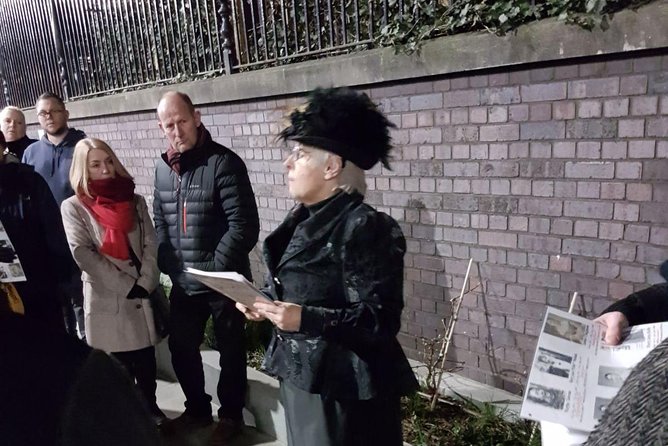
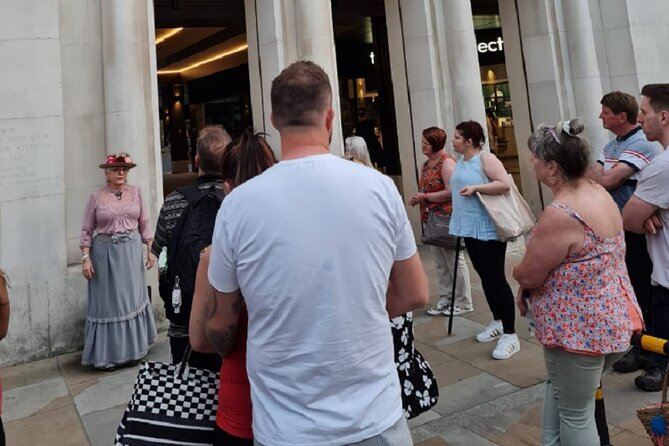
The vibe is dark, the history is messy, and the streets are real. The guide, often seen in Victorian dress, uses the tablet to connect faces, documents, and locations without sending you off to guess what you’re looking at.
In This Review
- Key things that make this tour worth your time
- Why this private Jack the Ripper walk can be good value
- Meet at Aldgate High Street: how the timing and route work
- Stop-by-stop: Aldgate to the City’s September 1888 double murder
- Petticoat Lane, the boundary line, and the Goulston Street doorway clue
- Martha Tabram to Mary Anne Nichols: the streets before Brick Lane
- Hanbury Street to Puma Court: when letters become part of the map
- Ten Bells and Christchurch graveyard: where Mary Kelly’s story lands
- From Hell and Millers Court: letters, suspected men, and the clean finish
- The tablet and the guide’s style: what you’re actually getting
- What to bring for a comfortable night on these streets
- Who this tour suits best (and who might prefer something else)
- Should you book this Jack the Ripper private tour?
Key things that make this tour worth your time
- Private group attention instead of shoulder-to-shoulder walking, for a slower pace and more answers as you go
- In-period, in-character guidance that brings the 1888 setting to life in a practical way
- A 14-inch backlit tablet to view photos of key people and places at street stops
- A tight East London route that links the Aldgate area to Whitechapel courts and then into Brick Lane
- Clues tied to letters and specific addresses, placed where the story points
- A finish near Liverpool Street, so you’re not stuck for transport after the walk
Why this private Jack the Ripper walk can be good value
The price is set per group, not per person. The tour is listed at $205.76 per group (up to 5) for about 2 hours 30 minutes, which can make it a smart choice if you’re coming with friends or family rather than buying multiple seats on a big-group tour. The provider’s details also mention £150 for up to 5 people with £25 per extra person, so when you book, double-check your total in your checkout currency.
What you’re really paying for is attention. Private tours aren’t just a crowd-avoidance trick; they let your guide slow down at the spots that matter most—like why certain streets connect to the double murder night in September 1888, or how letter evidence gets discussed alongside the locations connected to it.
This tour also tends to get booked ahead (the average booking window shown is 51 days), so if you’re traveling at a popular time, don’t wait for the last minute.
You can also read our reviews of more walking tours in London



Meet at Aldgate High Street: how the timing and route work
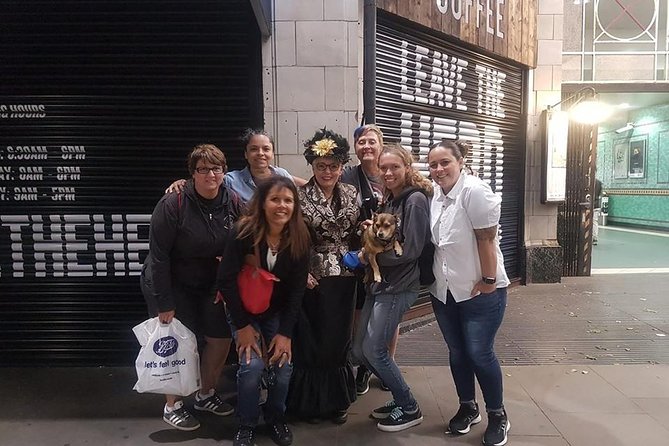
You’ll meet at Aldgate High Street (EC3N 1AH). The tour runs Monday to Thursday, with the hours shown as 3:00 PM to 9:00 PM for the period listed in the booking info. That matters because East London’s streets can feel very different depending on daylight, fog, and how busy they are.
The walk itself is built around short stops—mostly 2 to 20 minutes each—so you’re not stuck at one place long enough to lose the thread. The guide keeps moving, but not so fast that you can’t ask follow-ups. There’s also a clear end point: the tour finishes near Bell Lane (E1), and the schedule notes that the last stop leaves you about a 5-minute walk from Liverpool Street Station.
Fitness-wise, plan on a moderate walking pace. The info suggests moderate physical fitness, which usually means steady walking on city sidewalks and some time standing still at corners and doorways.
Stop-by-stop: Aldgate to the City’s September 1888 double murder
The early part of the walk is about setting context before the story gets graphic. You start at St Botolph’s Aldgate, where the guide puts the area into place for 1888. It’s a quick orientation stop, but it helps you stop thinking of Whitechapel as a single “Ripper zone” and start seeing it as a working part of London.
Next is Aldgate Square, focused on poverty and daily survival: workhouses and common lodging houses that Whitechapel residents endured. This is where the tour does something useful—linking crime stories to the social reality around them, so the murders don’t feel like random horror movie scenes.
Then you reach the City of London side with Mitre Square, tied to the 30 September 1888 double event—the murders of Elizabeth Stride and Catherine Eddowes. The key benefit here is specificity: you’re not just told names. You’re brought to the spot that the story associates with that night, so the case feels anchored to geography.
Petticoat Lane, the boundary line, and the Goulston Street doorway clue
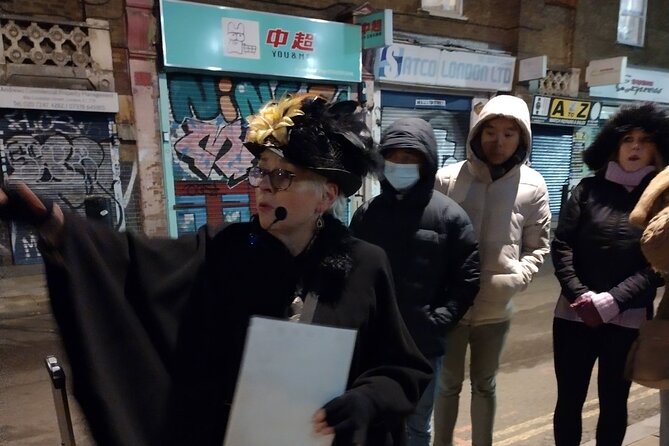
After the City-side stop, the tour shifts toward the boundary between administrative worlds. At Petticoat Lane Market (also referenced as the Middlesex St boundary), the guide points out that this is where the City of London meets the Metropolitan area. That might sound like a boring detail until you remember how different jurisdictions and policing can shape how an investigation unfolds.
From there, you get a very specific, visual moment: the tour stops at the doorway at 118–119 Goulston Street, where a piece of apron belonging to Catherine Eddowes was found, along with graffiti on the doorpost. The practical point for you is that your guide uses the tablet to show relevant images so you’re not relying only on your memory of what someone says happened.
One small consideration here: the story is very location-driven. If you’re prone to tuning out when you’re just standing and listening, this portion may feel longer than the clock says. If you like facts tied to exact corners and addresses, it’s one of the tour’s strongest stretches.
Martha Tabram to Mary Anne Nichols: the streets before Brick Lane
At Wentworth Street, the tour focuses on the murder of Martha Tabram, now believed to be the first victim in the Jack the Ripper narrative. Right after that, the route moves to Gunthorpe Street, where you view the street tied to the murder at George Yard Buildings.
This is a smart sequencing choice. The guide builds momentum from earlier cases that are often treated as footnotes in more general tours. By the time you reach Brick Lane, you’ve already got a clearer sense of how the legend forms and which incidents are grouped into the broader story.
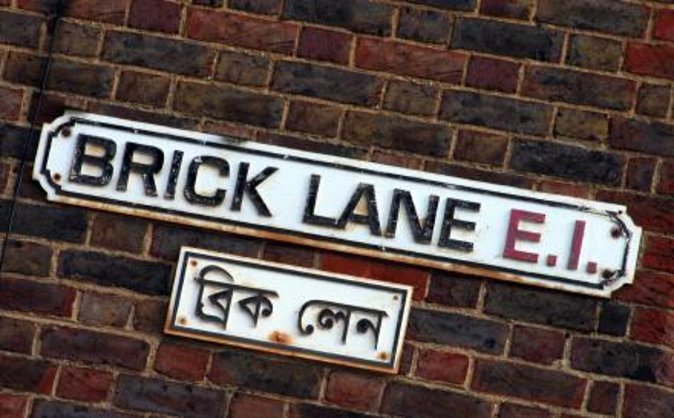
Then comes Brick Lane, with a stop opposite the Frying Pan Pub, connected to Mary Anne Nichols (Polly) and her last drink. Even if you’re only casually familiar with the names, seeing a real pub frontage (and hearing what the guide associates with it) makes the story feel less like a list and more like a lived night in 1888.
You can also read our reviews of more private tours in London






Hanbury Street to Puma Court: when letters become part of the map
On Hanbury Street, you stand at the site tied to Annie Chapman, described as the murder in the backyard of 29 Hanbury Street. The stop is brief, but it’s one of the tour moments that shows why courts and backyards matter in this part of London.
Then you move to Puma Court, an old courtway where the guide examines the Dear Boss letter sent to the Central News Office. Letters can feel abstract until they’re paired with the physical setting. With the tablet images available, you can connect names and text to the narrow streets where communication and anonymity could overlap.
This section is also where the tone tends to shift. The evidence here is partly narrative—letters, offices, and what they triggered. Your guide’s balance of myths and theories helps keep the conversation anchored, instead of turning into only sensational claims.
Ten Bells and Christchurch graveyard: where Mary Kelly’s story lands

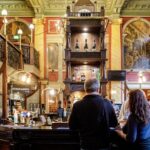
At The Ten Bells, the tour stops opposite Mary Kelly’s favourite pub and the Christchurch graveyard. The guide links the graveyard area to where homeless prostitutes would gather during the day. That detail matters because it moves the story away from the single instant of a murder and toward the routines and precarious lives that existed before it.
This is also one of the emotionally heavy stops. If you’re uncomfortable with human suffering stories, plan your expectations. The value of this stop is that the tour doesn’t just chant facts; it treats the neighborhood as a community under pressure.
The good news: the stop lengths stay manageable, and the private format gives you a chance to ask, slow down, or request clarification without feeling like you’re holding up a big group.
From Hell and Millers Court: letters, suspected men, and the clean finish
Next is the London Fruit & Wool Exchange, where the guide examines the From Hell letter, tied to George Lusk of the Whitechapel Vigilance Society. You’ll spend time both in a passage leading to the central courtyard and then in the courtyard area itself.
The second exchange stop focuses on the courtyard where Millers Court, Dorset Street once stood, connected to the murder of Mary Kelly, described as the last victim in the Jack the Ripper narrative. The tour also notes that the guide looks at some men suspected over the years, which is useful if you like understanding how theories evolve over time rather than treating any single suspect as the final answer.
The tour ends a short walk from Liverpool Street Station. That helps a lot practically: after a late-evening walk, you want an easy rail option without backtracking across the city.
The tablet and the guide’s style: what you’re actually getting
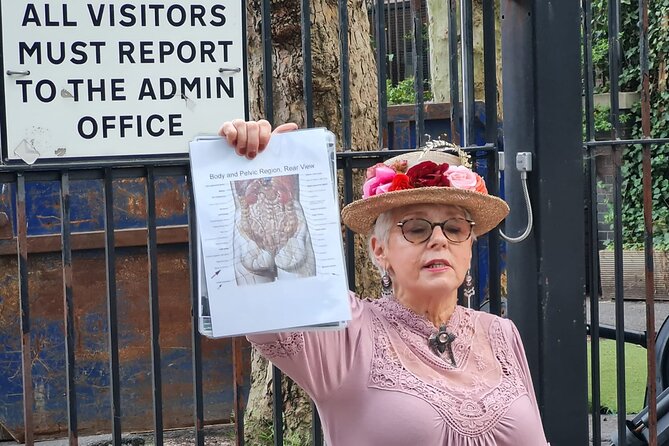
The tour includes all the photo references you need, presented on a 14-inch backlit tablet for clear viewing. You’ll use it at multiple points to look at images of murder victims and key locations, not just vague reenactment imagery.
In the stories you’ll hear, the guide’s style is a major reason this tour earns perfect scores. People have described an enthusiastic, in-character host who dresses for the period, and who has clearly spent years building the material. The practical payoff for you is that you’re not just watching a person recite a script. You’re getting a guide who answers questions and keeps a calm pace so you don’t feel rushed.
Another pattern worth noticing: the guide often ties the myth and the possible truth together. For a case like this—where misinformation can spread as fast as rumors—the ability to separate what’s known from what’s assumed makes the experience more satisfying.
What to bring for a comfortable night on these streets
This is not a coffee-and-cake walk. No food or bottled water is provided, so I’d plan for that even if you’re only out for about 2.5 hours. If it’s cool, bring a layer you can move in, because you’ll be standing at street corners during the story.
Wear shoes that handle uneven sidewalks and narrow lanes. Courtways and short alley-like passages can feel tighter than the wider main streets, and you’ll want stable footing when the guide stops to point out doorways, courtyards, and street-level details.
Also, bring your phone for navigation support. You’re given a mobile ticket, and the meeting point is precise. Even if you arrive early, you’ll avoid stress if you’re ready to double-check where you’re standing before the tour starts.
Who this tour suits best (and who might prefer something else)
This private Jack the Ripper walk is ideal if you want a close-up tour of East London tied to real locations, not just general commentary. It fits best for adults and older teens who like true-crime history, street-level exploration, and discussion. The booking info suggests a minimum age of 12+, which usually works if the content doesn’t upset the kids and they can handle a focused, evening-length walk.
If you hate being outside after dark, or you’re not comfortable with crime-themed stories, you might prefer a lighter historical walk instead. And if you’re the type who hates standing still for explanations, you may find the stop-and-listen segments more noticeable.
Should you book this Jack the Ripper private tour?
I’d book it if you want three things: private attention, exact locations, and a guide who brings the case together through documents, photos, and street corners. The tablet support makes a big difference here, because it keeps the experience visual even when you’re standing in real places that don’t look like they did in 1888.
If you go, go prepared. Bring water for yourself if you need it, wear good shoes, and treat it as a serious evening story walk, not a casual stroll.
If those points fit your style, this tour is an easy yes—especially for small groups who’d rather have their own guide than share the route with strangers.