REVIEW · LONDON
Private Spy Walking Tour of London
Book on Viator →Operated by Tours Of The UK · Bookable on Viator
London at street level turns spooky fast. This private spy walking tour gives you real intelligence history and James Bond-style connections without museum brain overload. It moves at a human pace, and the mix of Cold War cases and older wartime intrigue makes it fun whether you’re a die-hard spy fan or just enjoy Bond now and then.
I especially like how the route uses specific landmarks as evidence boards, from Waterloo Bridge to Whitehall. You’ll also get a guide who can connect the dots clearly, with names like Eian and Michael showing up in guide profiles for this experience. One consideration: you’ll do a solid amount of walking over ~3 hours, so plan for moderate stamina and bring comfy shoes.
In This Review
- Key highlights worth planning for
- Why this spy tour works: history you can see, not just hear
- Getting started at WatchHouse, Somerset House (and why timing matters)
- Waterloo Bridge: the Georgi Markov ricin story in plain sight
- The Savoy: wartime London intrigue and Bond-adjacent details
- Edith Cavell Memorial: the ethics twist most spy tours skip
- High Commission of Canada: a warning about war as early as 1919
- Old Admiralty Building: naval intelligence, a dead-body deception, and WWI impact
- Whitehall: where spying gets tied to oversight and authority
- Parliament Square: Churchill’s role and how a spy story gets checked
- Riverside Walk Gardens and Mi6: Bond angles plus MI5 and GCHQ context
- Price and value: $245.48 per group that can actually make sense
- Who this tour fits best (and what to bring)
- Should you book? My practical recommendation
- FAQ
- How long is the Private Spy Walking Tour of London?
- Where does the tour start and where does it finish?
- Is this a private tour?
- What language is the tour offered in?
- Are service animals and strollers allowed?
- Is public transportation included?
Key highlights worth planning for
- Waterloo Bridge and the Georgi Markov ricin assassination story
- The Savoy and surprising ties to James Bond creator intel work
- Whitehall’s counterspy framework, from the Secret Service era onward
- Mi6 at Riverside Walk Gardens, plus how MI5 and GCHQ fit together
- Bond film and TV angles, with photography built into the stop
Why this spy tour works: history you can see, not just hear
This tour is built on a simple idea: if you want spy history to feel real, you have to stand where the story happened. You’ll bounce between landmark sites tied to assassinations, wartime espionage, and the institutions that shaped modern UK intelligence.
I like that the tone stays friendly and readable. You’re not forced into jargon, yet the details are concrete enough that it feels like you’re following a case file. Expect street corners, government buildings, and riverside views—plus a guide who can explain why each place matters.
And yes, James Bond fans will enjoy the pop-culture links. But the tour isn’t only about movie scenery. It uses those references to point back to the real people, agencies, and techniques behind the myth.
You can also read our reviews of more walking tours in London


Getting started at WatchHouse, Somerset House (and why timing matters)
The tour begins at WatchHouse Somerset House East Wing (Somerset House East Wing, London WC2R 1LA). This is a practical start point: you can get there using public transit, and you’re close to the Thames corridor where a lot of London spy legend concentrates.
You’ll get a mobile ticket, and the tour runs in English. It’s also set up as a private experience, meaning only your group participates—handy if you want more back-and-forth questions or if you’re traveling with kids or friends who like to linger at the photo spots.
A good tip: treat the first 20 minutes like orientation. Spy stories move fast if you’re bouncing between eras. If your guide asks you to look at something specific—like a facade, a river view, or a street angle—do it right away. It will make the later stops easier to follow.
Waterloo Bridge: the Georgi Markov ricin story in plain sight
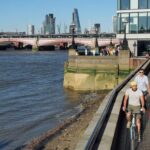
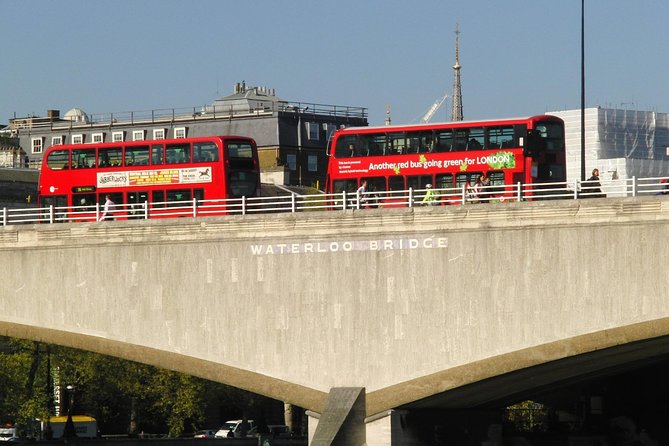
Your first major stop is Waterloo Bridge, famous for one of the most talked-about Cold War assassinations: Georgi Markov. The story centers on a poisoned pellet, ricin, allegedly delivered via a needle-tipped umbrella. It’s the kind of detail that sounds like thriller fiction—until you realize how much it affected how people talked about covert action.
This stop works because it ties three things together:
- a very specific method (poison delivery),
- the geopolitical context (Cold War tension),
- and the idea that intelligence work can target individuals, not just governments.
If you like your spy history with real-world grit, this is the anchor. Even if you don’t know Markov’s full biography, your guide can set the scene quickly enough that you’ll still feel the stakes.
Logistics note: this is a short stop (about 10 minutes), so be ready to absorb first, then ask questions. If you want a photo, angle yourself early—busy bridge traffic can be distracting.
The Savoy: wartime London intrigue and Bond-adjacent details
Next up is The Savoy, one of those grand London hotels where the walls feel like they’ve heard secrets. Here, the tour connects spy history to the creator of James Bond, including real-life intelligence work that you might not know before.
There’s also a detail that surprised me as a concept: the tour links intelligence history to a tradition involving the Christmas Tree in Trafalgar Square. It’s the sort of sideways connection that makes London feel like one long conversation between eras.
You’ll also hear how, during World War II, the Savoy was a favorite residence for a spy whose identity was so secret even Winston Churchill was reportedly unaware of it. That’s the kind of contrast that makes the whole spy world feel more plausible: power is real, but knowledge can be tightly controlled.
This is another short stop (about 10 minutes). If you’re someone who likes to read plaques and soak in architecture, don’t worry—you can still do that after. What the guide gives you is the context that makes the building feel like more than a pretty hotel.
Edith Cavell Memorial: the ethics twist most spy tours skip
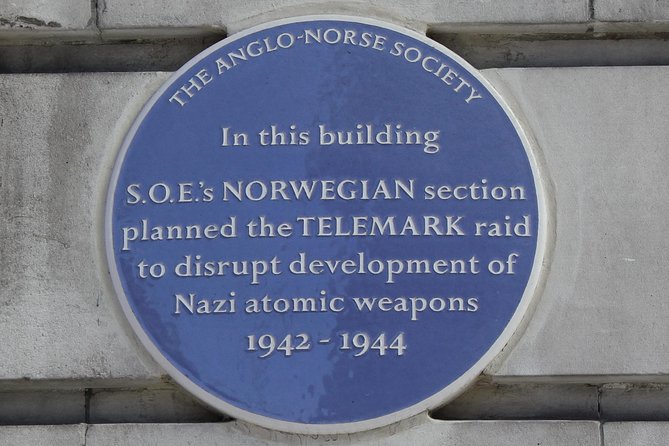
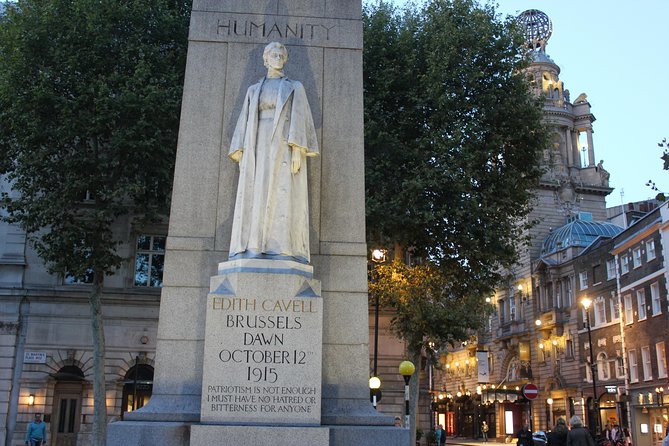
At the Edith Cavell Memorial, the tour shifts from spy methods to spy accusations and the moral fog of wartime. Edith Cavell was a nurse in occupied Belgium during World War I and was executed by the Germans on charges related to spying. The British government denied those charges at the time, and she became a martyr in the public story.
Then comes a twist that matters: newly declassified documents suggest a different version of events. That turns the stop into more than a tragedy lesson. It becomes a lesson in how intelligence cases can be shaped by politics, propaganda, and what information becomes available later.
This is one of the most thoughtful stops on the route because it teaches you to hold two ideas at once: symbols matter, but documents can change what you think happened. It’s a reminder that spy history isn’t only about intrigue—it’s also about evidence and interpretation.
You’ll get about 10 minutes here, so don’t expect a full history lecture. Do expect a strong framework so you can understand why the story remains disputed.
You can also read our reviews of more private tours in London


High Commission of Canada: a warning about war as early as 1919
The stop at the High Commission of Canada in the United Kingdom brings a different angle: international intelligence and early warnings. You’ll hear about a Canadian MI6 spy who warned the British government about the possibility of another war with Germany as early as 1919.
That timing is important. It suggests how intelligence doesn’t just react to events—it tries to forecast them. You’re also reminded that intelligence work is rarely a single-country story. Allies share information, and the warning networks often run through surprising channels.
This is a short stop (about 5 minutes). Use it like a quick briefing: listen closely to the timeline your guide gives you, then look around. Even if you can’t picture the past, you’ll at least feel how power and diplomacy sit in real buildings.
Old Admiralty Building: naval intelligence, a dead-body deception, and WWI impact
Next is the Old Admiralty Building, where the tour focuses on the Directorate of Naval Intelligence during both World Wars. This stop is packed with ideas, but the goal is to show how intelligence agencies evolve, not just who did what.
You’ll hear how intelligence deciphered here helped bring the United States into World War I. That’s a big claim, and the tour presents it as part of a larger story: information gained, signals understood, decisions made.
Then comes one of the most movie-friendly parts—without turning it into pure fiction. The guide describes a plan created in this building, involving a dead body, intended to fool the Germans. The story goes further: that deception plan also helped inspire the best-reviewed British musical of all time.
That’s a clever way to teach cause and effect. The building isn’t only a wartime artifact; it’s a link between intelligence operations and how those ideas echo into culture afterward.
Expect about 10 minutes at this stop. If you’re the type who likes to remember details, take one thing as your mental hook—naval intelligence here, decoding there, deception as a tool everywhere.
Whitehall: where spying gets tied to oversight and authority
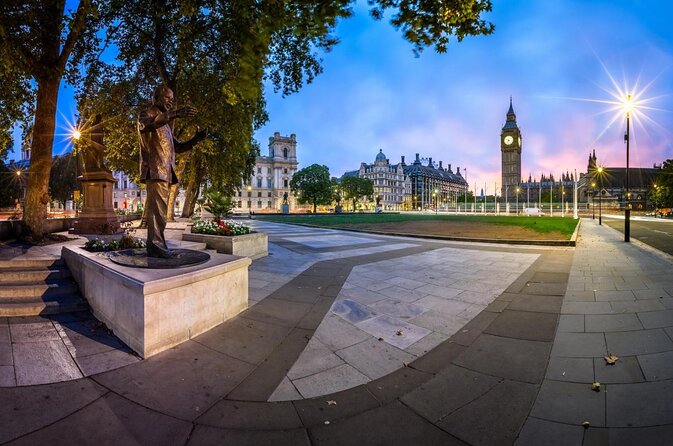
You’ll spend about 30 minutes at Whitehall, and it’s one of the best sections for understanding how spy institutions fit into government. Whitehall is linked to spying and spies since the early 20th century, and it’s closely tied to Downing Street and the Admiralty.
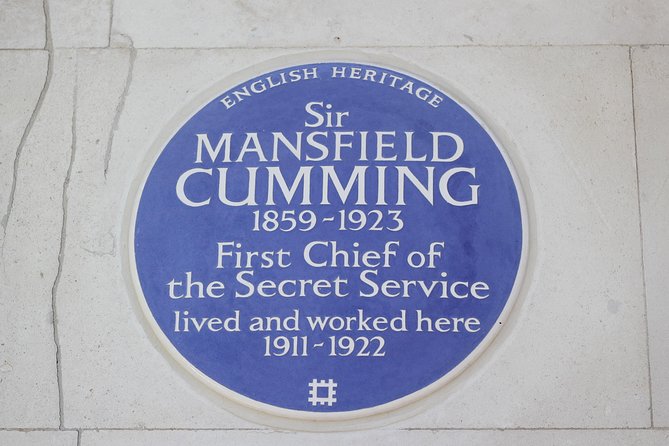
This is where you learn that intelligence work isn’t just secret agents in the shadows. It also includes structure, enforcement, and legal or political boundaries. The tour connects Whitehall to the first head of the Secret Service and to a police force charged with stopping foreign spies during both world wars.
In other words: the story isn’t only about infiltration. It’s also about defenses and rules. That angle makes the spy world feel less like fantasy and more like a system with inputs, outputs, and consequences.
Practical tip: Whitehall can feel like a wide, busy zone. If your guide offers a specific viewpoint or suggests where to stand for the best context, follow it. It will help you connect the buildings to the story beats.
Parliament Square: Churchill’s role and how a spy story gets checked
From Whitehall you head toward Parliament Square. This stop is about how the UK’s biggest decisions shaped espionage in the Second World War. The tour highlights how Winston Churchill changed the direction of things through decisive leadership.
You’ll also talk about oversight. The guide explains how parliamentary oversight works around spy organizations, and how the UK works with international allies. That matters because it gives you the modern governance angle behind the secrecy.
There’s another detail that makes the stop memorable: the tour discusses how a spy ended up buried in Westminster Abbey. That’s one of those London facts that feels almost too perfect—until you realize prominent figures have always mixed into national myth.
This section also includes transit onward. From Parliament Square, you’ll board a famous London double-decker bus and head toward Mi6. That bus ride is useful. It breaks the walking rhythm before the last big intelligence location.
Riverside Walk Gardens and Mi6: Bond angles plus MI5 and GCHQ context
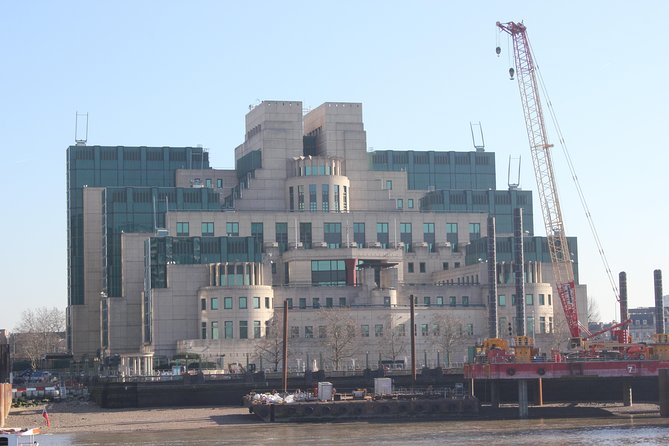
The tour’s later highlight lands at Riverside Walk Gardens, where you hear about the Security Intelligence Service (Mi6) and how it works alongside Mi5 and GCHQ. This is one of the few parts where the tour tries to sort out the agencies so you don’t leave with a pile of names but no map.
It also ties the spy story to pop culture. You’ll learn about how Mi6 and its headquarters show up in James Bond films and TV series like Sherlock. The point isn’t fan service only. It helps you understand why certain buildings and settings became shorthand for British intelligence on screen.
Photo tip: treat Riverside Walk Gardens like your gallery stop. You’ll have time to frame the river views and related landmark angles. Even if you’re not chasing Bond shots, the setting helps the stories feel grounded.
After Mi6, you’ll cross Vauxhall Bridge and take a short train hop toward Waterloo, then walk the short distance to the final location near Vauxhall Bridge. The route is built to end in a scenic, transit-friendly zone.
Price and value: $245.48 per group that can actually make sense
The price is $245.48 per group with a limit of up to 15 people, and the tour lasts about 3 hours. Because it’s private, you’re not paying per person like you would on many group walking tours. That makes it more realistic for families, friend groups, and small parties where splitting the cost lowers the bite.
Here’s what you’re paying for, beyond the headline spy theme:
- A guide to connect the places into a coherent story
- A tight route that hits multiple spy-related landmarks in one outing
- Mobile ticket convenience
- Stops that don’t require paid admission based on the tour details
One more value note: many London sightseeing tours charge for museums or paid entries. This one keeps the emphasis outside, with admission ticket free stops at each location described.
If you’re solo, this price may still feel steep compared with a standard group tour. But if you can bring even a few people, it becomes the kind of deal where you’re paying for attention from your guide, not just walking along.
Who this tour fits best (and what to bring)
This is a smart match if you:
- love spy stories and want them tied to real London sites
- know James Bond as a starting point but want deeper context
- want a private format rather than a crowded group experience
It’s also stroller-friendly, and service animals are welcome, which is great for families who still want real history without an accessibility headache. The tour calls for moderate physical fitness, so plan for a steady walking pace and occasional stop-and-go crowds around major streets.
What to bring:
- Comfortable shoes for 3 hours of walking
- A charged phone for the mobile ticket
- Weather gear, because riverside London can change fast
- A plan for transit: travel on the TFL network is not included
Should you book? My practical recommendation
Book this tour if you want a spy-themed walk that stays grounded in London landmarks and agency history, with clear storytelling and time to take photos. The combination of Cold War intrigue, wartime intelligence, and modern institutional context makes it more than a theme walk.
You might skip it if you hate walking for any reason, or if you want lots of indoor time and long museum-style explanations. The tour is place-based, outdoors, and it moves with purpose.
If you’re on the fence, think about group size. With the per-group pricing up to 15, it can be a strong value when you spread the cost. For solo travelers, it’s a splurge—but it’s the kind of splurge that buys you a focused, private briefing instead of just scenery.
FAQ
How long is the Private Spy Walking Tour of London?
It runs for about 3 hours.
Where does the tour start and where does it finish?
It starts at WatchHouse Somerset House, Somerset House East Wing, London WC2R 1LA. It finishes at Vauxhall Bridge.
Is this a private tour?
Yes. It’s a private tour/activity, and only your group will participate.
What language is the tour offered in?
The tour is offered in English.
Are service animals and strollers allowed?
Service animals are allowed, and the experience is stroller-friendly.
Is public transportation included?
No. Travel on the TFL network is not included. You’ll use your own method such as Apple/Android pay, an oyster card, or a contactless card.