REVIEW · LONDON
Roman London Private Walking Tour
Book on Viator →Operated by Ye Olde England Tours · Bookable on Viator
London’s Roman layers are still under your feet. This private walk is built for unrushed, personalized pacing, plus those clever sights you only notice when someone points them out. I love that you get below-street discoveries as well as big landmarks, from hidden wall sections to the London Mithraeum under the modern city. The main catch is simple: it’s a long, steady walk, so you’ll want solid shoes and a moderate fitness baseline.
What makes this tour work so well is the flow: you’re not bouncing between scattered stops on your own. Your guide meets you at the start (and pickup is available from central hotels), then keeps things moving with stories tied to what you’re actually seeing. Also, because it’s private, you can ask questions as you go—especially useful when Roman London can feel like a puzzle of fragments.
One more consideration: some key entrances involve timed admission. Access to the underground temple at London Mithraeum Bloomberg SPACE requires advanced booking for peak times, so plan ahead if your date is busy. With that, you’re set for a morning that feels like a guided walk through Londinium’s street plan.
In This Review
- Key Things I’d Prioritize Before You Go
- How a Private Roman London Route Feels Different
- Starting Near St. Paul’s: Diana’s Roman Footprint in Plain Sight
- The Roman Wall Trail: Luftwaffe-Era Clues and Surviving Gates
- Guildhall, the Amphitheatre, and the Feeling of a Roman City
- Bank Area “Roman London Heartbeat”: Royal Exchange and Leadenhall
- Memory Lines: Aldgate Square, Vine Street, and London Stone
- Tower of London Edge: Trajan, All Hallows, St Dunstan, and the Roman City Boundary
- Billingsgate Roman Baths, London Bridge Remains, and the Great Fire Monument
- Underground Finale: London Mithraeum Bloomberg SPACE and the Temple of Mithras
- Price and Value: What $254.93 Buys You in Real Terms
- Smart Timing, Weather, and How to Prep Your Day
- Should You Book This Roman London Private Walking Tour?
- FAQ
- How long is the Roman London private walking tour?
- Where does the tour start and end?
- Do you offer hotel pickup?
- Are admission tickets included?
- Is access to the underground Mithras temple guaranteed?
- What should I wear and how fit do I need to be?
- Can I cancel for a full refund?
Key Things I’d Prioritize Before You Go
- Private format: only your group, so you control questions and pacing.
- Above-and-below moments: amphitheatre levels and the Temple of Mithras underground.
- Roman Wall tracing: you follow the line of Londinium’s defenses through modern streets.
- Strong guide energy: guides like Kevin and Stephen are praised for storytelling and answering questions.
- Value comes from admissions choices: lots of stops are free, while major paid sites are included on the route.
How a Private Roman London Route Feels Different
Roman London can be hard to “do right” without a plan. The best parts aren’t just famous monuments—they’re the fragments: a gate buried under landscaping, a wall section in a place you’d never think to look, or a Roman structure tucked behind a church interior.
That’s why the private format matters. You get a single route that stitches together the Roman story into something you can follow. Instead of guessing where things were, your guide points out the evidence—so your brain starts building the city back in order.
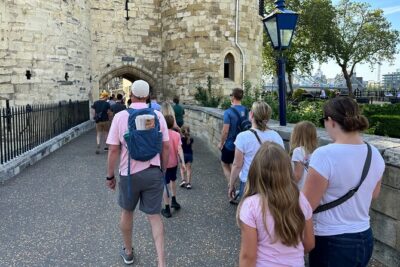
You also get practical benefits. This runs about 3 to 4 hours, starts at 9:30am, and ends near Bank Underground at London Mithraeum. The route is designed so you won’t waste time searching the side streets on your phone. Your guide collects you by public transport if you use the pickup option, so you’re not left navigating the city’s logistics before the first ruins.
Finally, you’ll be walking in smart London style: smart casual is suggested, and the tour operates in all weather. If London is doing its normal thing—rain, drizzle, wind—you’ll still be out there. Dress for it, not for the forecast fantasy.
You can also read our reviews of more walking tours in London



Starting Near St. Paul’s: Diana’s Roman Footprint in Plain Sight
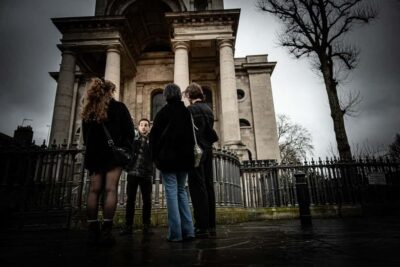
The tour begins at Pan(y)er Alley, London EC2V 6AA, with the first stop set in the shadow of St. Paul’s Cathedral. Even though St. Paul’s is an icon of later London, the real hook here is what came before it: there was a Roman temple connection tied to the Roman goddess Diana. You’re starting with a “layers of London” idea—great for getting your mindset straight early.
From there you move a few steps to the Church of St Vedast alias Foster. This is where Roman remains get tucked away from the street, and the feeling is very London: history built in, then surrounded by newer streets. One extra plus here is that you’ll also notice something older than the Roman layer, which helps you understand why Romans didn’t appear from nowhere—they arrived on a landscape already shaped by earlier eras. That stop is free.
If you want a first lesson before you go too far: think of the city like a palimpsest. Roman Londinium didn’t vanish; it got repackaged into later neighborhoods. A good guide helps you “read” the repackaging.
The Roman Wall Trail: Luftwaffe-Era Clues and Surviving Gates
A huge chunk of the tour is about the Roman Wall and its gates—because if you can visualize the boundary, everything else clicks. You’ll get repeated chances to see the wall in different forms, including sections that pop up where you’d never expect them.
One early example is Noble Street, where a Roman wall stretch was discovered thanks to Luftwaffe damage during WWII. It’s a sobering reminder that modern events sometimes expose older ones. This stop is short, but it’s memorable because the discovery story is as much a part of the Roman narrative as the stone itself.
Then you hit Cripplegate Street, which includes an old Roman gate and preserved sections of Roman city wall nearby. Gates matter. They weren’t decorative; they regulated movement into Londinium. Being able to see gate-adjacent wall pieces gives you a better sense of how the city managed entry and exits.
After that, you’ll spend time at London Wall in multiple places—some of them described as places you’d never predict Roman ruins would show up. This repeated approach is smart for two reasons:
- You can compare different wall sections.
- You stop “wandering in history” and start following a line.
And it doesn’t stop there. The tour later returns to Roman Wall again, including a section where admission is included, so you get both street-level context and a more formal viewing setup.
Guildhall, the Amphitheatre, and the Feeling of a Roman City
Next you move toward the center of old civic London with Guildhall. This stop is a quick one, but it’s tied to the ancient City of London Corporation—useful because it shows how authority locations evolve over centuries. Roman connections are part of what you’re guided to notice, and admission here is not included, so treat it like a guided look at connections rather than a “museum-style” stop.
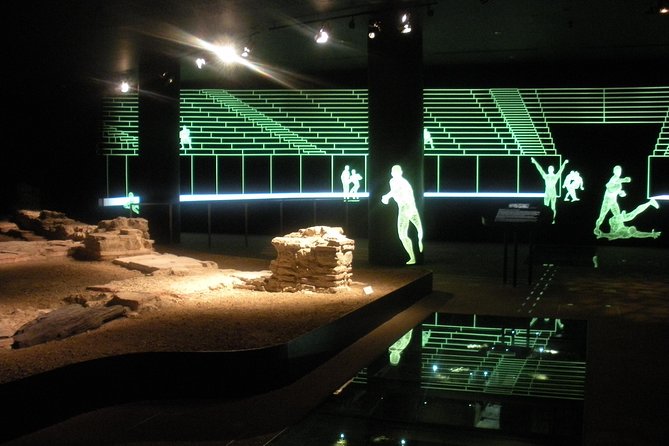
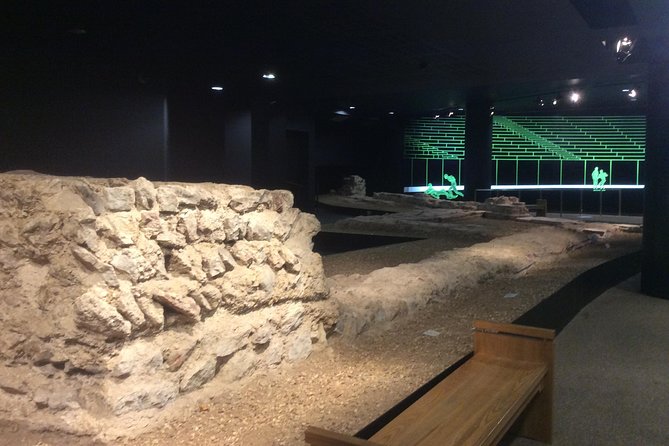
Then comes a highlight: London’s Roman Amphitheatre. This is under the original streets of London, and it was discovered only in more recent decades. That below-street element is the core theme of the tour: Roman London lives beneath your shoes. This stop runs about 25 minutes, and the admission ticket is included, so you’re not juggling extra entry fees for this key site.
Just after that, there’s a pause at the old official residence of the Lord Mayor of London. It sounds administrative, but it’s actually a helpful bridge. Roman civic life, later medieval civic power, and modern governance all share the same “where decision-making happened” logic. You’ll get context that helps the amphitheatre stop feel less random.
Bank Area “Roman London Heartbeat”: Royal Exchange and Leadenhall
At the Bank of England, you’re in the modern center of London, but the story points you back to the Roman heart of the city. The buildings here are massive, and that scale helps you understand how a capital keeps building on itself—sometimes literally on older foundations. Admission isn’t included, so you’ll be using this stop for viewpoint-level context and guided interpretation.
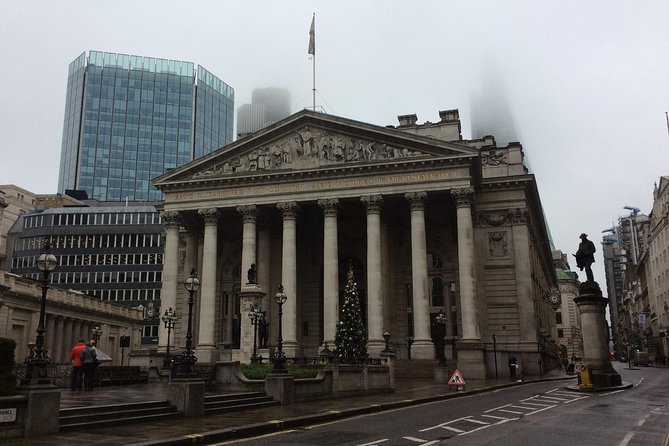
Then you’ll stop at the Royal Exchange Building, where the mood is described as almost like being in ancient Rome. With admission included (about 10 minutes), this is one of the places where the Roman-to-modern link feels most direct. It’s a good “breather” stop because the architecture does some of the work for you—your guide adds the Roman layer.
From there, the route heads to Leadenhall Market. This is a favorite type of stop for me because it’s a functional place with history baked into it. The market is built on top of a Roman predecessor, and your guide will point out evidence that you might miss if you’re just scanning for food stalls and pretty ironwork. Admission is included, and you’ll spend around 15 minutes.
Under the shadow of the Gherkin (30 St Mary Axe), there’s an unexpected Roman memorial. It’s quick—about 2 minutes—but those short, surprising stops are where the tour stays fun and keeps you alert.
Then you get a human-scale memorial: the Tomb of the Unknown Roman Girl. Another quick stop at 2 minutes, and it’s a reminder that Londinium wasn’t only about walls and emperors. It was people, families, and individuals with lives that never make it into big monuments.
You can also read our reviews of more private tours in London






Memory Lines: Aldgate Square, Vine Street, and London Stone
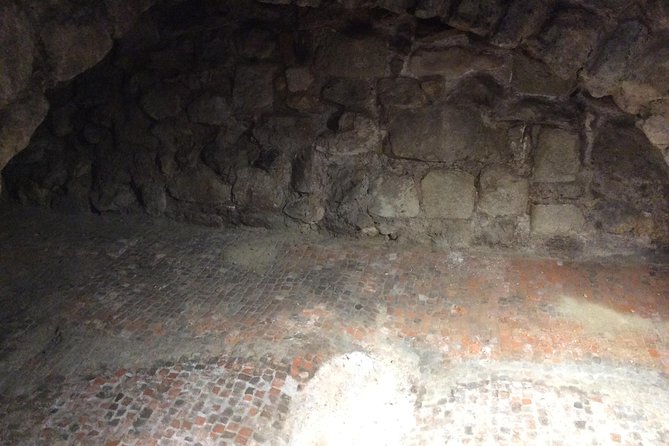
You continue with Aldgate Square, where the Roman gate remains are buried beneath newly landscaped park areas. You’ll still be able to see the route of the wall and related features, but the point is that Roman London can be present without being dramatically exposed. You’re learning to “read” subtlety.
Next is Vine Street, described as London’s newest museum stop in this sequence, with Roman wall and artefacts. Admission is listed as free, and this is a practical moment if you want to switch from outdoor scanning to an object-based understanding. Artifacts make the Roman story feel less abstract.
Then there’s London Stone, a brief but iconic pause. It’s presented as legendary and described as being as old as London itself. Even if you treat the “legend” angle carefully, it’s still useful because it shows how cities mythologize their own origins.
Tower of London Edge: Trajan, All Hallows, St Dunstan, and the Roman City Boundary
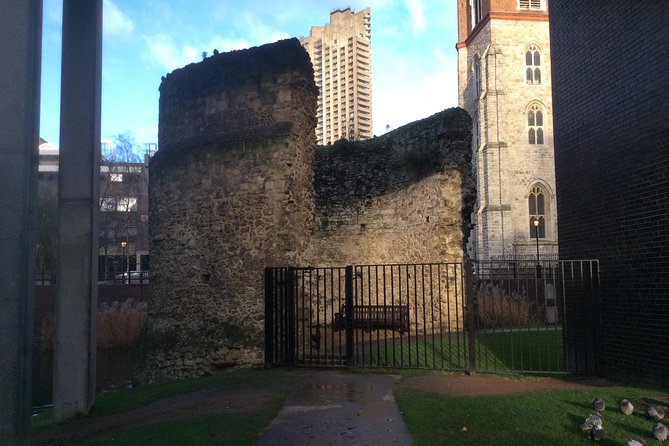
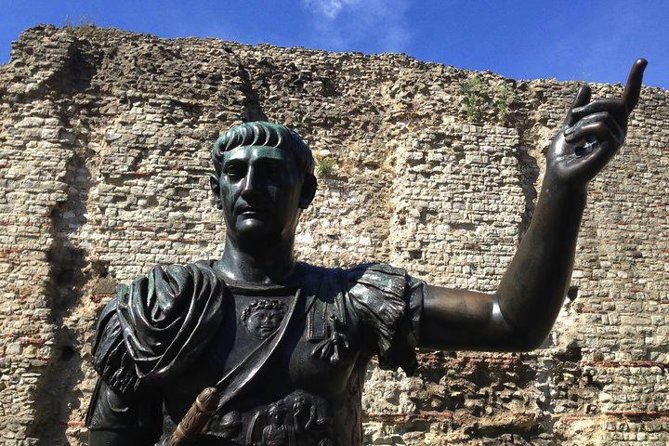
The tour stays in the Tower-area orbit with Emperor Trajan outside the Tower of London. It’s a straightforward stop at about 5 minutes, and it works well as a Roman “named face” in a route full of walls and foundations. It also sets up later stops about what Romans built and what later London kept.
Then you’ll step into All Hallows By The Tower, a church where you’ll see the oldest archway in London plus remains of an old Roman house. Admission is included, and it runs about 15 minutes. This is one of those stops where you see how Roman domestic life can survive inside later buildings. It’s not just stone outside; it’s stone used again.
A change of tempo follows at St. Dunstan In The East. While it’s not strictly Roman related, it’s highlighted as among the most beautiful and peaceful ruins in London. Admission is included, and you’ll spend about 10 minutes here. I like this kind of break mid-tour because it resets your senses. After walls, gates, and underground sites, the calm helps the next stops feel clearer.
Billingsgate Roman Baths, London Bridge Remains, and the Great Fire Monument
You then head to the Billingsgate Roman Bath House locations. This stop is short (about 5 minutes), and admission is not included, so it’s mostly about where the bath complex sat—plus how Roman bathing culture fits into daily life.
After that comes St. Magnus The Martyr, where you’ll find possibly the only remaining part of the original Roman London Bridge. This is about 5 minutes and admission is included. Bridge remnants are a big deal because crossings shape trade, movement, and how cities expand.
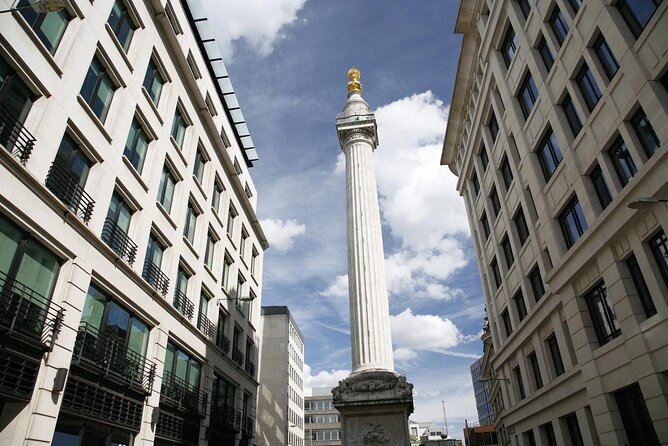
Next is the Monument to the Great Fire of London. You’ll stand on the spot where it started, and nearby there are visuals connected to Roman Londinium about 2,000 years ago. Admission isn’t included. This is one of the clever stops for people who like “then-and-now” city storytelling: you see the later catastrophe and you’re reminded the Roman story didn’t disappear; it became the layer below the next big chapter.
Underground Finale: London Mithraeum Bloomberg SPACE and the Temple of Mithras
The tour ends at London Mithraeum | Bloomberg SPACE at 12 Walbrook, right by Bank Underground. This is the payoff for the whole “beneath the city streets” theme.
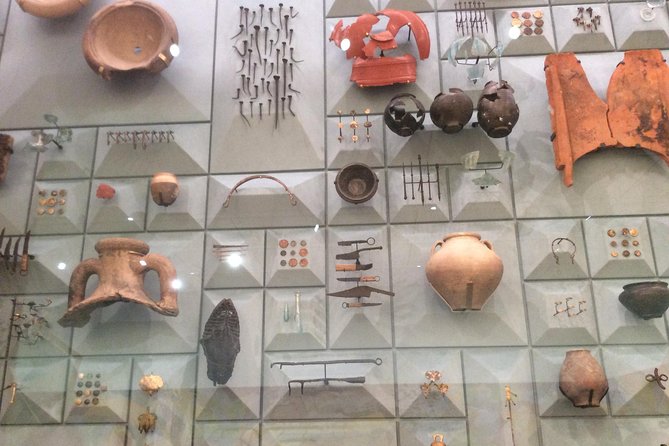
You’ll first see hundreds of Roman artefacts, then you go underground to visit the old Temple of Mithras. The stop runs about 20 minutes, and admission is included. If you like the Roman world as more than names on plaques, this is where the experience turns physical—objects in your face, then an underground sacred space.
One practical note: guaranteed access to the temple requires advanced booking for peak times. If you’re traveling in a busy season or on a popular day, you should plan early so you don’t get stuck with an incomplete underground visit.
Price and Value: What $254.93 Buys You in Real Terms
At $254.93 per person, this isn’t a “cheap stroll.” It’s priced like a guided, high-effort private route through a tight area of London where access and setup matter.
Here’s why it can still feel like good value:
- Many stops in the sequence are free (so you’re not paying entry fees every few minutes).
- The major paid experiences are built into the route, with admission included at key sites like the Roman Amphitheatre, Royal Exchange Building, Leadenhall Market, a London Wall included stop, All Hallows By The Tower, St Dunstan in the East, St Magnus, and the big finish at London Mithraeum.
- You’re paying for planning and interpretation—someone with the route logic and the connections who can point out what your eye would miss.
The tradeoff is that you’re also paying for time on your feet. This tour is designed for a moderate fitness level, and you should expect a continuous walking rhythm for the core hours. Reviews describe it as a three-hours-without-a real long break kind of day, so treat it as an active morning.
Smart Timing, Weather, and How to Prep Your Day
This tour starts at 9:30am and runs roughly 3 to 4 hours. It’s offered in English, with a mobile ticket, and it operates in all weather conditions. That means your best prep is boring but effective: wear shoes you trust, bring water, and keep layers handy for changing London weather.
Dress code is smart casual, which for London usually means “no gym shorts” but also “you’re not dressing for a formal dinner.” If you want comfort, lean practical while still matching the dress vibe.
Also pay attention to where you start and finish. You meet at Pan(y)er Alley near EC2V 6AA, and you end near Bank Underground. That makes it easier to build the rest of your day. You won’t be dragging yourself back across town afterward—especially useful if your schedule is packed.
Should You Book This Roman London Private Walking Tour?
If you care about Roman London beyond the postcard basics, this is a strong choice. You’ll follow the Roman Wall, see Roman remains tucked into churches and modern streets, and end with the underground Temple of Mithras experience at London Mithraeum Bloomberg SPACE.
Book it if:
- you want a private, question-friendly guide-led route
- you like “small evidence” moments (memorials, buried gates, hidden wall lines)
- you want multiple included admissions tied to major Roman sites
Skip it if:
- you don’t handle long walking well
- you’re unwilling to plan ahead for timed temple access on busy dates
- you prefer self-paced sightseeing over a structured route
Overall, I’d call it a worthwhile “Roman Londinium” morning for anyone who likes seeing how the city keeps stacking its past under the present.
FAQ
How long is the Roman London private walking tour?
It runs about 3 to 4 hours.
Where does the tour start and end?
You start at Panyer Alley, London EC2V 6AA and end at London Mithraeum | Bloomberg SPACE, 12 Walbrook, London EC4N 8AA, right by Bank Underground Station.
Do you offer hotel pickup?
Yes. Pickup is available from central London hotels. The guide then uses public transport to reach the tour starting point.
Are admission tickets included?
Some admissions are included and some aren’t. Examples include London’s Roman Amphitheatre and London Mithraeum Bloomberg SPACE (included), while stops like St. Paul’s Cathedral and Bank of England are listed as not included. Several other stops are free.
Is access to the underground Mithras temple guaranteed?
Access to the temple requires advanced booking for peak times, so it’s best to plan early if you’re visiting during busy periods.
What should I wear and how fit do I need to be?
Smart casual is recommended. The tour notes a moderate physical fitness level, and it operates in all weather, so plan for continued walking.
Can I cancel for a full refund?
You can cancel up to 24 hours in advance for a full refund. If you cancel less than 24 hours before the start time, the amount paid is not refunded.