REVIEW · LONDON
Soho London Private Music Self-Guided Tour
Book on Viator →Operated by Pandemic Tours · Bookable on Viator
Soho plays music on every corner. I love the Evren audio guide with real narration (no computer-generated voice), and I love that you get three weeks of unlimited access to replay it. The only drawback is you’re on your own for navigation and pace, so this won’t feel the same as a live Q and A.
You start at the Dominion Theatre area on Tottenham Court Road and end at Trident Audio Post, with in-app maps and GPS route guidance to keep you moving through Soho’s twisty streets. You can also choose the time that fits your day, rather than waiting for a scheduled departure, which is a big deal when London plans shift.
This runs about 2 hours, but you control how long you linger at each stop. At $12.47 per person, you’re paying mostly for the audio, maps, and stop information, since the tour’s key listed stops show as free—so the value depends on whether you like walking and reading signage as you go.
In This Review
- Key highlights I’d plan around
- Soho London music on your schedule, not a timetable
- Meeting point and ending at Trident Audio Post
- The West End start: Dominion Theatre and the Astoria Theatre legacy
- Denmark Street: from Tin Pan Alley to the punk and publishing addresses
- Music meets counterculture: Forbidden Planet, Phoenix Theatre, and Phoenix Garden
- Covent Garden theatre roots and Soho’s retail music institutions
- When nightlife changes: Borderline Nightclub closure and Soho Square’s star sightings
- Mozart’s blue plaque and Ronnie Scott’s jazz legacy
- From 2i’s Coffee Bar to the Marquee Club: British rock’s early engines
- Reckless Records and Trident Studios: vinyl browsing to studio craft
- Value check: $12.47 for a two-hour self-guided Soho music walk
- Who should book this Soho music self-guided tour
- Should you book? My practical take
- FAQ
- How long is the Soho music self-guided tour?
- Where does the tour start and end?
- Can I choose my own start time?
- Is there an in-person guide during the tour?
- What language is the tour offered in?
- Do I get unlimited access?
- Are the tour stops free to visit?
- What do I get access to besides the audio?
- Do I need to bring a specific code to start?
- Is the tour refundable or changeable?
Key highlights I’d plan around
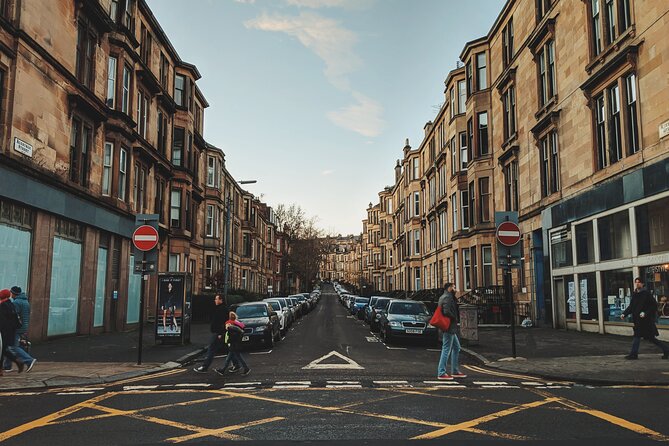
- Evren’s audio guide (not robotic voice work) keeps the tour feeling human while you walk.
- Three weeks unlimited access means you can revisit after you’ve seen more of London.
- GPS route + in-app directions help you avoid overthinking Soho street turns.
- Soho music is told in layers, from venues to studios to music publishing.
- Artist callouts at specific addresses, including Bowie, the Sex Pistols, and Prince.
- A smart mix of music and culture stops, like Forbidden Planet, Foyles, and Phoenix Garden.
Soho London music on your schedule, not a timetable
This tour is built for people who like to move at walking speed, stop when something catches your eye, and not feel rushed. You’re not waiting on a group, and you’re not stuck listening to a script at one volume level for the whole walk. Instead, you follow the route in the app, then use the audio and visuals to connect what you see outside with what happened there inside London’s music scene.
I also like the “second chance” feature. Three weeks of unlimited access is great if you do your first walk quickly to get the lay of the land, then return later when you’re in the mood to read more carefully. Soho rewards repeats, and this tour lets you do that without paying again.
One more practical plus: you can start at the most convenient time for your day. That matters when West End ticket plans, dinner reservations, or museum timing shift on you.
You can also read our reviews of more guided tours in London



Meeting point and ending at Trident Audio Post
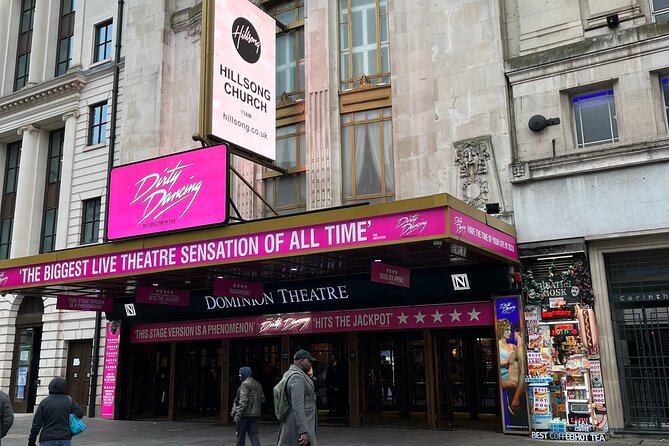
You begin at Dominion Theatre, 268–269 Tottenham Ct Rd, London W1T 7AQ. The walk ends at Trident Audio Post, 33 Great Pulteney St, London W1F 9NP. After you finish, you’re free to wander around Soho at your own leisure.
The tour is designed around app use, including maps, directions, and GPS route help. That means you’ll want your phone charged. You don’t need a computer on-site, and the audio is included in the experience.
Duration is listed as about 2 hours. In practice, that’s usually enough time to take the route without sprinting. A few stops have set time estimates in the tour flow—like Denmark Street (20 minutes) and Reckless Records (10 minutes)—so those are natural anchors for pacing.
The West End start: Dominion Theatre and the Astoria Theatre legacy
Your opening move is to connect Soho music to the big stage first. Dominion Theatre on Tottenham Court Road is a grand West End venue, and the tour highlights its role in musicals and concerts over the years, including a landmark performance by David Bowie. Even if you don’t plan to see a show that day, this is a strong way to frame the neighborhood: Soho wasn’t only clubs and studios; it also fed the mainstream stage.
Next up is the Astoria Theatre. This stop is focused on history rather than an active music calendar, since the Astoria Theatre is now closed. The value here is the sense of continuity: the audio helps you picture the kinds of noteworthy bands and artists who shaped Soho’s live scene when the venue was operating.
If you like your music history tied to real addresses, both of these stops do that job well. They set the tone for what’s coming: a walk that repeatedly turns the spotlight back to specific places where songs, careers, and industry decisions happened.
Denmark Street: from Tin Pan Alley to the punk and publishing addresses
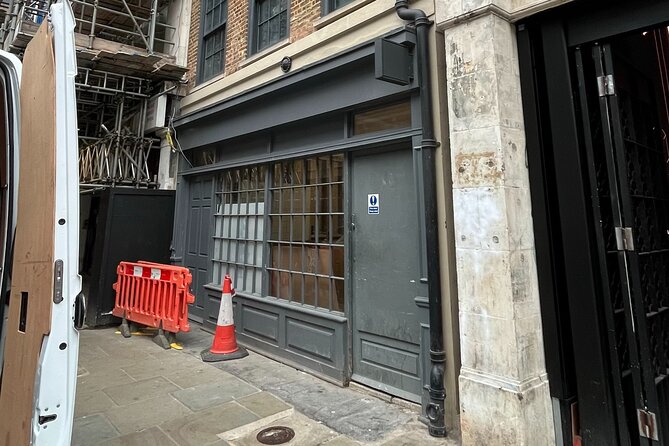
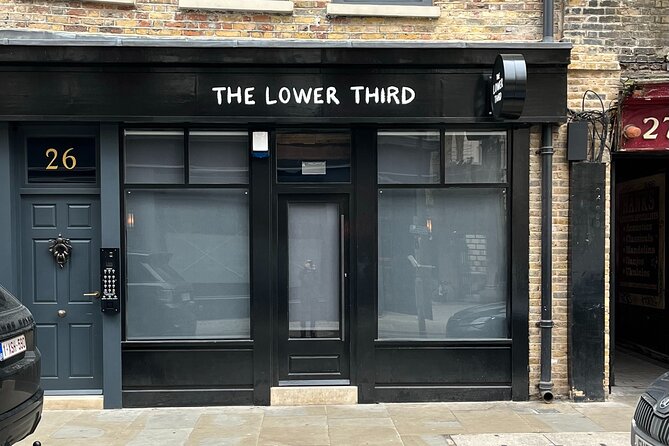
Denmark Street is the centerpiece segment, with an allotted stop time of about 20 minutes. The tour frames it as the British Tin Pan Alley: a place where songs were written, recorded, and traded through a dense cluster of studios, shops, and venues. You’ll also get artist connections like Elton John and the Rolling Stones starting out in recording studios in the area.
This is also where you move from “famous names” into “how the machinery worked.” The stops around Denmark Street aren’t only about concerts. They point to writing, publishing, instruments, and the day-to-day industry ecosystem that helps music get made.
A few standout stops within this stretch:
- 12 Bar Club: a key grassroots venue known for early performances by artists like Adele and The Libertines. The tone is intimate, and the tour’s focus helps you understand why small rooms mattered.
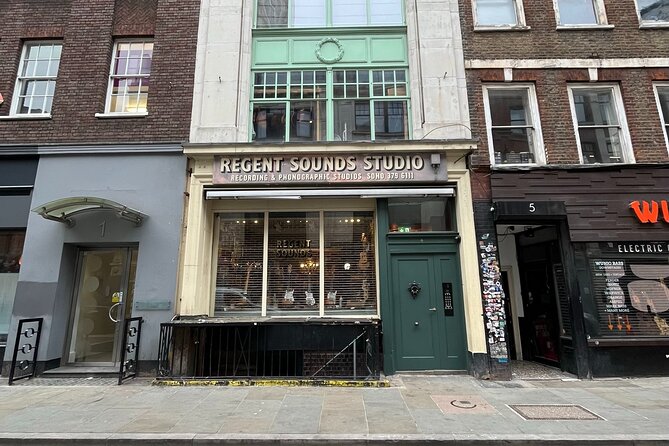
- Regent Sounds Studio: historically tied to iconic records, including the Rolling Stones’ first album and sessions by The Beatles. It’s now a guitar shop, which adds a nice practical layer—your music history walk ends up feeding a “keep browsing” habit.
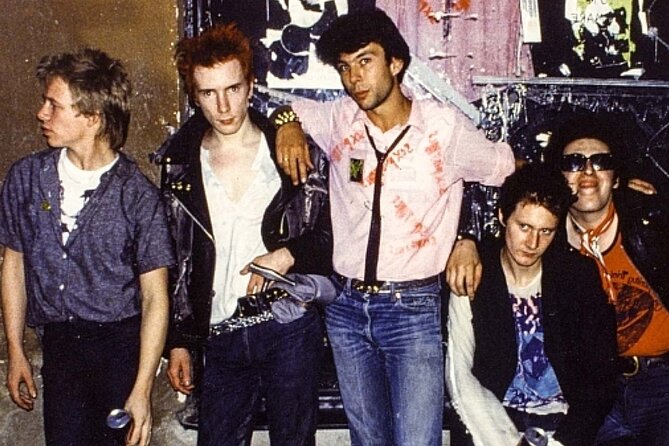
- No. 6 Denmark Street: associated with the Sex Pistols, who lived and recorded music there in the 1970s. This is the kind of stop that makes the street feel personal, not just historical.
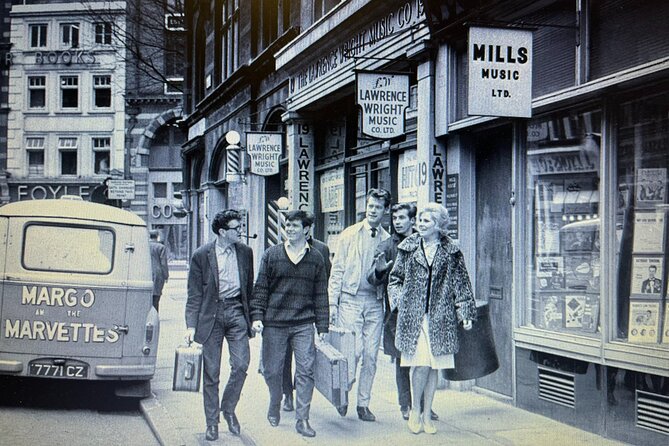
- Mills Music: a music publishing company with a legacy dating back to the early 20th century. The tour mentions links to Jimmy Page and David Bowie, which helps connect the dots between songwriting, contracts, and long-term success.
- La Giaconda: a legendary café and musician hangout in the 1960s, with names like David Bowie, Jimi Hendrix, and Elton John. Even if you don’t stop for a drink, it’s a strong reminder that creativity often ran on coffee breaks as much as stage lights.
- KPM Music House: this stop widens the lens beyond performers. KPM’s catalogue and work in film and TV scores represents the behind-the-scenes side of the industry.
One planning tip: this is the area where it’s easiest to slow down. If you’re the type who likes to stand in front of a building and read plaques or shop windows, Denmark Street is where you’ll naturally want extra time.
Music meets counterculture: Forbidden Planet, Phoenix Theatre, and Phoenix Garden
After Denmark Street, the tour keeps the pace moving but changes the flavor. Forbidden Planet is a short stop (about 5 minutes) and not directly tied to music history, but it’s described as an iconic Soho landmark and a major retailer for comics and science fiction, fantasy, and cult entertainment. This is the kind of stop that makes sense in Soho: music doesn’t live alone here. The creative worlds overlap.
Then you head to the Phoenix Theatre, another West End stop, with a highlight that David Cassidy performed in the musical Blood Brothers there. This adds another layer to the “stage to street” story. It’s also a quick reminder that Soho’s music footprint reaches into mainstream theatre production, not only bands and nightclubs.
The tour then includes Phoenix Garden (about 5 minutes). It’s a community garden loved by locals, and the point isn’t music facts—it’s a pause. When you’ve been walking and reading addresses tied to loud decades, a little green space gives your brain somewhere to rest before the next chunk of history.
You can also read our reviews of more private tours in London





Covent Garden theatre roots and Soho’s retail music institutions
The next shift is to ODEON Covent Garden, which the tour connects to the former Saville Theatre. The tour notes Saville Theatre hosted iconic musical performances in the 60s, including those by The Beatles and Jimi Hendrix, with Brian Epstein also mentioned as having managed the venue. This stop is useful because it links Soho’s music ecosystem to the business and promotion side of pop culture.
Then you hit Macaris Guitar Shop, noted as now operating as an Apple Store. That transition matters. The tour uses the location to show how Soho’s music retail identity can change over time while still leaving traces. If you’re the type who likes to see what survived and what didn’t, this contrast is part of the payoff.
A short walk later is Foyles Book Shop. It’s not presented as a music venue, but the tour highlights its extensive music section, with scores, biographies, and history books. This stop works well if you want to keep the momentum after the walk. You can go from listening to music stories to buying paper to keep the research going.
When nightlife changes: Borderline Nightclub closure and Soho Square’s star sightings
The tour includes Borderline Nightclub, and it’s currently closed. The stop is still listed, with emphasis on the club’s past as a cornerstone of live music in Soho and an eclectic mix of artists, from indie bands to folk musicians. Since the tour can’t change reality, the best use of this stop is mental: listen to the audio, then look around and imagine the room with the doors open.
Then comes Soho Square (about 5 minutes). The tour points to its age and mentions a building owned by Paul McCartney overlooking the square, plus a story of secret performances that included two by Prince in one night. Even if you don’t think you’ll remember a detail, these kinds of specific names are what turn a square from a landmark into a moment.
From there, you’ll also pass The Dog and Duck pub. The tour notes it’s a historical pub and that its ties to music are more subtle, but it’s a very practical stop for the vibe of Soho: a traditional pub setting where people can share stories after walking all day.
Mozart’s blue plaque and Ronnie Scott’s jazz legacy
Next you get Mozart Blue Plaque, tied to a residence where Wolfgang Amadeus Mozart, aged eight, composed his first symphony in 1764. This is a useful reminder that London music history didn’t start in the rock era. Soho has carried classical genius too, and the tour makes that connection without making it feel forced.
After that, you land at Ronnie Scott’s Jazz Club. This is one of the biggest “don’t miss” stops because the tour describes it as a beacon of jazz since 1959 and mentions legendary names linked to the club’s stage, including Miles Davis, Ella Fitzgerald, and Nina Simone. Even though this walk is self-guided, the audio here is clearly meant to recreate the weight of the room, where jazz wasn’t background noise.
If you’re choosing between stops, Ronnie Scott’s is the one I’d prioritize for a live-music mood, even if you only take a photo from outside.
From 2i’s Coffee Bar to the Marquee Club: British rock’s early engines
The tour then heads into the British rock and early talent pipeline. It includes 2i’s Coffee Bar, described as the birthplace of British rock ‘n’ roll and a hub for emerging talent in the 1950s and 60s. Artists like Cliff Richard and Tommy Steele are named as having been discovered there. The tour also notes it’s no longer standing, which makes the audio feel like a time machine rather than a storefront visit.
You’ll also see The Marquee Club, a venue on Wardour Street in Soho that hosted debut performances by iconic bands like The Rolling Stones and The Who. It’s closed now, but the tour emphasizes its role in the 60s cultural revolution. Like Borderline, this stop is about absorbing what used to be there and how that energy shaped later scenes.
This section is ideal if you like music history that explains development, not just famous outcomes. You’re seeing where careers started and where new styles got tested.
Reckless Records and Trident Studios: vinyl browsing to studio craft
The tour finishes strong with music retail and studio lore. Reckless Records is listed as a must-visit independent record shop, with a stop estimate of about 10 minutes. The tour highlights the range of second-hand vinyl, CDs, and DVDs, and the practical point is simple: you’ll have time to browse and spot what you might want to play next back home.
Then you end with Trident Studios, described as a major recording studio with countless iconic albums recorded there. The tour specifically mentions David Bowie’s Hunky Dory and sessions by The Beatles. This stop is the perfect closer because it brings you from places where music was performed and hyped into where records were actually made.
Your official endpoint is Trident Audio Post at 33 Great Pulteney St. After reaching that finish, you’re free to wander Soho more, which is smart. By the end, you’ll likely spot other plaques, shops, or venue facades worth lingering on without needing the app to tell you what to do.
Value check: $12.47 for a two-hour self-guided Soho music walk
At $12.47 per person, I think the value depends on how you like to travel. If you enjoy self-directed walks, reading signs, and letting audio set the context, this feels like a low-cost way to turn Soho into a music timeline.
The big reason it’s good value is the package: 3 weeks unlimited access, app maps and GPS routing, plus multimedia support (audio, videos, pictures, and recommendations). You’re also not paying for much in-person entry on the tour stops shown as free, which keeps costs predictable.
The tour’s rating is 5 out of 5 based on 3 ratings, with strong praise centered on how informative it feels and how it changes the way you see rock and roll history in the streets. If you want that effect, this is the format that can deliver it without waiting around.
Who should book this Soho music self-guided tour
Book it if you want:
- A self-paced Soho London walking tour focused on music venues, studios, and industry sites.
- An audio guide by Evren plus in-app GPS routing.
- The chance to replay for three weeks and keep learning at your own pace.
I’d think twice if you need:
- A live guide to answer questions on the spot.
- A tour that automatically builds in long stops for museums or guided internal access (this experience is designed around exterior/history points and walking).
Should you book? My practical take
If you’re excited by the idea of walking Soho and learning why certain streets became launchpads, I’d book this. The route covers more than “concert history” and actually touches publishing, studios, and the quiet work behind famous sounds. The three-week access also gives you room to do a second pass when you’re ready to notice more.
If you want a social group experience with a person at the front leading every step, you might prefer a guided tour instead. This one is for people who like direction from an app and time for their own pace.
FAQ
How long is the Soho music self-guided tour?
It’s listed as approximately 2 hours.
Where does the tour start and end?
It starts at Dominion Theatre, 268–269 Tottenham Ct Rd, London W1T 7AQ, UK and ends at Trident Audio Post, 33 Great Pulteney St, London W1F 9NP, UK.
Can I choose my own start time?
Yes. The tour is designed so you can start at the time that’s most convenient for your schedule.
Is there an in-person guide during the tour?
No. This is a self-guided experience with an audio guide in the app.
What language is the tour offered in?
The tour is offered in English.
Do I get unlimited access?
Yes. You get three weeks of unlimited access to the self-guided tour on the app.
Are the tour stops free to visit?
The listed stops show admission ticket free for the places included in the itinerary.
What do I get access to besides the audio?
You’ll have maps, directions, GPS route support, and the audio guide plus videos, pictures, and recommendations inside the app.
Do I need to bring a specific code to start?
The instructions are sent by email, and booking reference is not the code.
Is the tour refundable or changeable?
This experience is non-refundable and cannot be changed for any reason.