REVIEW · LONDON
St James’ & Mayfair – Private Tour of London’s Royal & Aristocratic Villages
Book on Viator →Operated by Hobnob Tours · Bookable on Viator
Royal London, minus the crowd crush. This private Mayfair and St James walk strings together royal palaces, calm gardens, and famous shops, with stories timed so you can actually look. I love the small, specific details the guide brings out, like Fortnum & Mason’s market-stall origins and the roof features you’ll be able to spot. I also love the royal-park explanations, especially the long-running pelican story at St James’s Park. One consideration: it’s about 5.5–6 hours and roughly 3 miles of walking, so comfortable shoes matter.
Your guide is Sandy (Hobnob Tours), and the group stays small, up to five people, so questions don’t disappear into street noise. You’ll receive a mobile ticket, and the listed stops have free admission on this tour, so you’re paying for guidance and time, not extra entry fees. It runs rain or shine, so plan for weather and bring waterproofs if needed.
In This Review
- Key things to know before you go
- What you’re paying for: $279 for a private day with a guide
- The walk plan: Mayfair north-to-south, then royal St James’s
- Fortnum & Mason: how a market stall became a department-store legend
- Royal Academy of Arts and Burlington Arcade: architecture, art, and a 200-year corridor of shops
- Berkeley Square: the square with nightingale lore and a river you can’t see
- Mount Street Gardens: the calm break—and the darker secret underneath
- Shepherd Market to Green Park: Mayfair’s older entertainments, then the royal shift
- St. James’s Palace and Buckingham Palace: origins, pageantry, and that famous balcony
- St. James’s Park and Horse Guards Parade: pelicans, ceremonies, and Whitehall’s big moments
- St. James’ Square and Jermyn Street: finishing in the sweet spot of old London addresses
- The guide factor: why this tour feels personal
- Who should book this tour (and who should skip it)
- Should you book St James’ & Mayfair?
- FAQ
- How long is the St James’ & Mayfair private tour?
- What’s the group size for this private tour?
- Where do we meet, and what time does it start?
- Is there food included?
- Do we pay admission fees at the stops?
- Does the tour run in bad weather?
- What language is the tour in?
Key things to know before you go
- Small group of up to five: more conversation, fewer hearing-the-guide-through-the-crowd moments
- Two neighborhoods in one loop: Mayfair’s aristocratic streets to St James’s royal core
- Royal parks with real stories: St James’s pelicans and Green Park naming legends
- Shopping stops with context: Fortnum & Mason, Burlington Arcade, and Jermyn Street explained fast
- Free admission at each stop: your tour price covers the guide, not ticket line items
- A pace built for walking: expect short stops (about 10 minutes each) plus a couple longer royal-palace moments
What you’re paying for: $279 for a private day with a guide
This tour is $279 per group, for up to five people, for a 5–6 hour walk. That pricing makes sense if you’re traveling with friends or family, because you’re essentially buying a private guide for your group size. If you’re solo, it’s still a good deal only if you really want the one-on-one feel and the guided pacing—this is built around listening, not just taking photos.
The itinerary is also designed to reduce friction. Most stops are brief—think 10 minutes to get oriented and hear the key story—so you see a lot without getting dragged through one huge museum day. Plus, the tour’s listed stops have free admission, which helps keep the day from turning into a line-item budget surprise.
You can also read our reviews of more private tours in London


The walk plan: Mayfair north-to-south, then royal St James’s
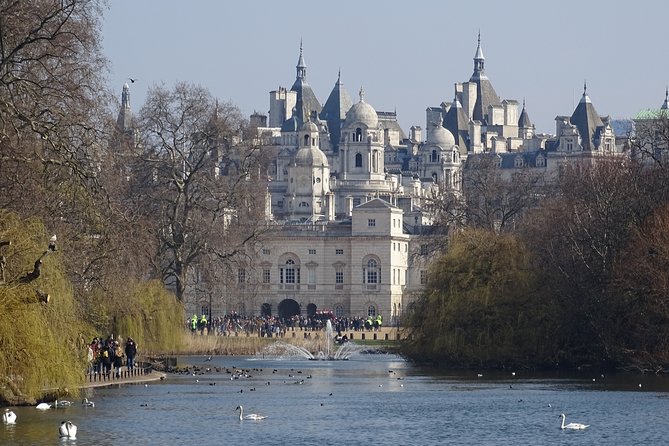
You start at Le Deli Robuchon at 82 Piccadilly (and the guide’s meeting is inside at 9:20 for a coffee option, or outside around 9:40 if you skip coffee). From there, the route naturally moves from the Mayfair side (more aristocratic street flavor) toward St James’s (more royal power and ceremony). The tour crosses Piccadilly, and you’ll feel the shift in the stories: from elegant commerce and elite leisure to palaces, guards, and royal parks.
Because the tour covers about 3 miles, your day is mostly walking time with story breaks. The guide also makes room for you to control your pace. If you need a slower speed or an extra break midway, that’s fine, and a lunch stop can be added for an extra cost.
Fortnum & Mason: how a market stall became a department-store legend
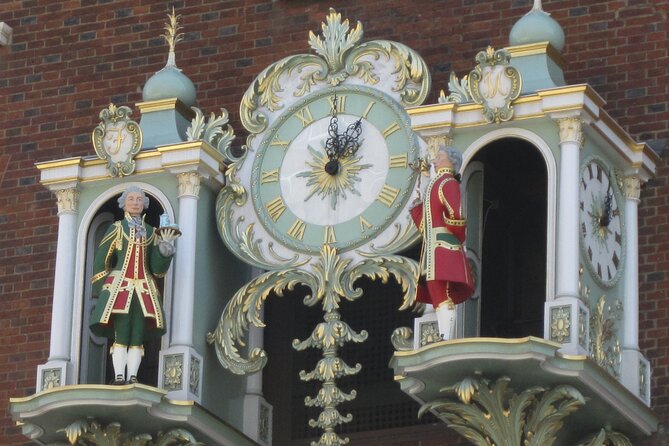
Fortnum & Mason is the opening act for a reason. It gives you a clear, early hook into London’s class-and-commerce story—one minute you’re looking at displays, the next you’re hearing how the store started as a market stall. Your guided time here is mostly a targeted walk of the ground floor, with the guide pointing out what the store invented about 300 years ago that’s still in demand today.
You’ll also look up, literally. The store has intriguing structures on its roof, and your guide uses that view to explain how the building fits into the bigger London story. Expect curiosity here more than rushing around. Your reward is that you’ll know what you’re looking at when you return later for a longer browse—exactly what the tour is trying to help you do.
What to watch for: this stop is short (about 10 minutes), so if you love shopping, be ready to leave with a wish list rather than finish shopping today. That’s not a drawback if you treat it as a guided orientation.
Royal Academy of Arts and Burlington Arcade: architecture, art, and a 200-year corridor of shops
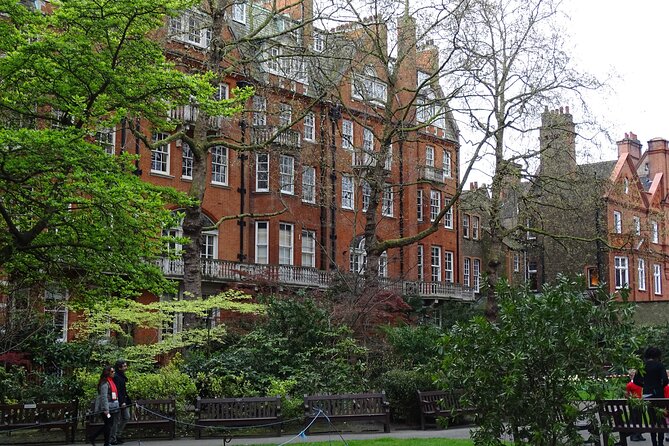
Next up is the Royal Academy of Arts. The building was built by the Earl of Burlington in the mid-1660s, and the fun point your guide makes is that it has been shaped by at least nine architects since then. Even in a quick stop, it helps you see how London buildings evolve—royal-era foundations stretched and reworked across centuries, until they fit modern cultural life.
From there you walk into Burlington Arcade. This is a classic “London you can’t fully understand unless someone points at it” place. It celebrated its 200th anniversary, and it was built by George Cavendish, one of the Earls of Burlington. You’ll window-shop through the arcade’s retailers (there are about 45) and notice the Beadles, who have guarded the arcade since day one.
Why this matters: Burlington Arcade isn’t just pretty. It’s a living example of planned elite commerce—contained, controlled, and built for strolling. In 10 minutes you won’t cover every shop, but you’ll understand the space, which makes your later self-guided visits more fun.
Berkeley Square: the square with nightingale lore and a river you can’t see
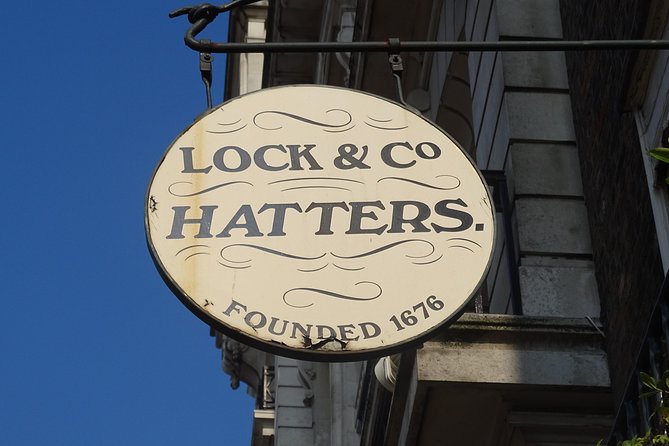
Berkeley Square is famous for nightingales. The twist is that they’re likely fictional, and that’s the kind of detail that makes the guide’s “short stop” approach work. Your time here is also about layers: this square has a forgotten river flowing beneath it, and the edges are lined with grade 1 listed buildings.
You’ll learn about the greenery too—plane trees around the square—then connect the historic streetscape to modern London. One of the grade 1 listed buildings is home to Annabel’s night club, which helps explain why these historic addresses keep getting reused rather than abandoned.
Drawback to consider: it’s another quick stop (about 10 minutes). If you want a long sit-down break, this isn’t the place for it. Think of it as a “get the story and move on” moment before the gardens.






Mount Street Gardens: the calm break—and the darker secret underneath
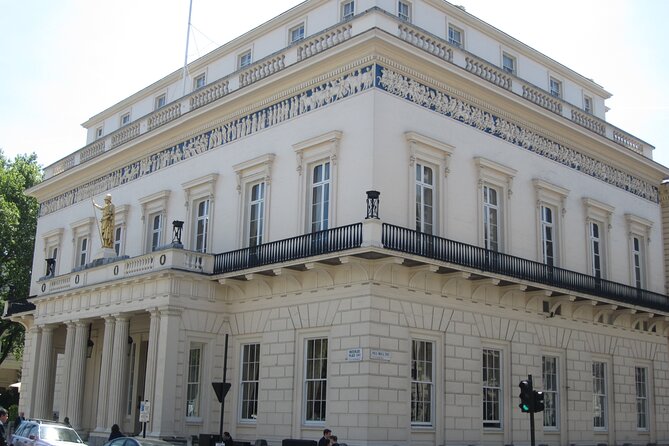
Mount Street Gardens is your reset button. In a small walk and short stop, you’ll go from busy streets into a quieter garden pocket that feels worlds away. Your guide points out what lies beneath your feet and shares a gruesome secret connected to one of the buildings along the garden’s side.
That’s a good reminder that London elegance often comes with complicated foundations. Gardens here aren’t just pretty lawns; they’re part of the city’s older structure, including what happened under the surface.
This stop is about peace plus perspective (about 10 minutes). If you’re the kind of traveler who likes to understand why a place feels the way it does, this garden moment is a high payoff.
Shepherd Market to Green Park: Mayfair’s older entertainments, then the royal shift
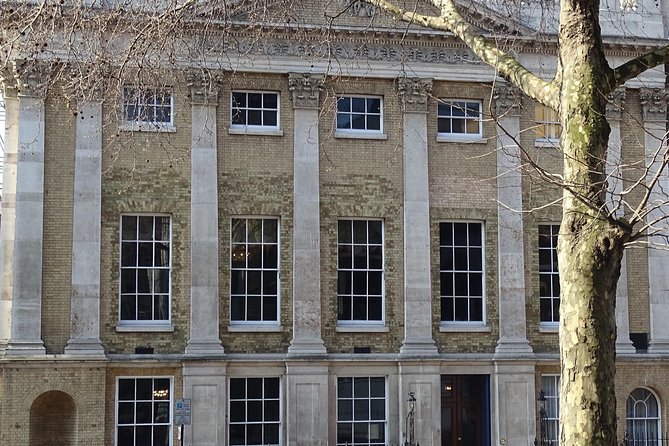
Shepherd Market is a leafy retreat now, but your guide gives it a very different past. It used to be at the centre of Mayfair’s red light district, where aristocrats with money and time went for entertainment. You’ll also hear about the downfall of an MP connected to the area—your guide holds back the key name until you’re standing there, and that makes the story feel earned, not random trivia.
Then the route shifts toward Green Park, still on foot, with a clear geography change: from Mayfair in the north to St James’s in the south. Green Park’s stop focuses on legends—how it gets its name—and then transitions into the royal dynasties you’ll be hearing about as the day becomes more ceremony-focused.
Why this pairing works: it sets up your brain for what’s coming next. You’re moving from aristocratic leisure stories into royal authority stories, and the tour’s structure helps your attention stay sharp instead of turning into one long list of landmarks.
St. James’s Palace and Buckingham Palace: origins, pageantry, and that famous balcony
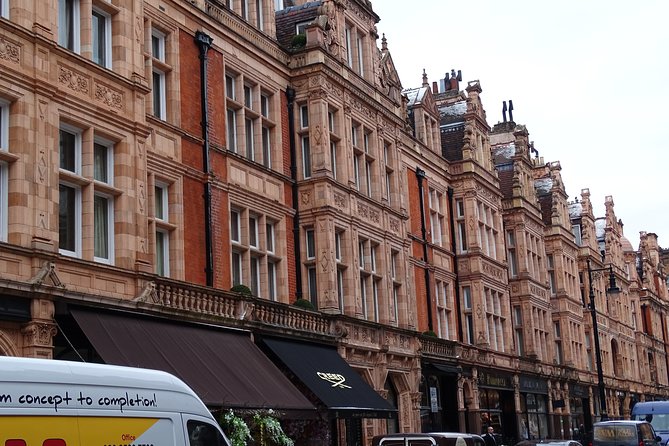
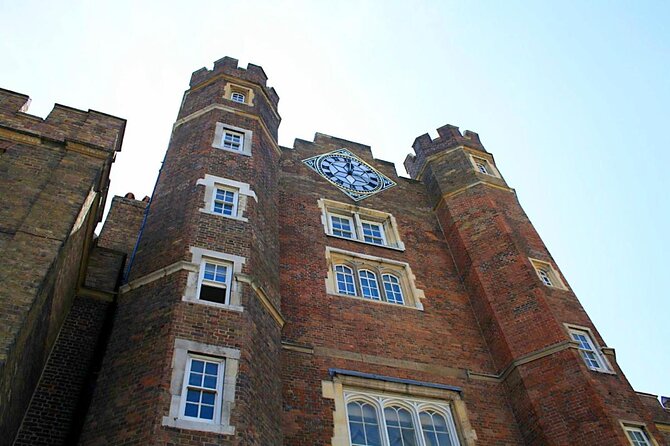
St. James’s Palace is where the tour becomes pure royal. You’ll learn it was built by Henry VIII on the site of a women’s leper hospital. It was intended as a palace for Henry’s son promised to him by Anne Boleyn—except the child turned out to be a daughter. Henry used the palace as a hunting lodge instead, which is a powerful example of how royal plans change fast and history follows.
Your guide also explains that the palace has been at the centre of many royal events. If the Changing of the Guard is scheduled on your day, you’ll be able to catch the pageantry at its best. If it isn’t, you’ll still get the context so you understand what you’re seeing when you walk near the machinery of ceremony.
Then comes Buckingham Palace. This stop is all about the monarchy’s London headquarters and the public-facing moments you recognize instantly. You’ll hear how Elizabeth II used it on weekdays, and that Charles III hasn’t decided where he’ll make his London home. The focus stays on the iconic balcony, tied to major celebrations including Elizabeth’s 50th, 60th, and 70th jubilees, plus William and Kate’s wedding celebrations.
A practical note: this stop is about 15 minutes. You’re not there to fully circle the building or settle into a long viewpoint. You’re there to get the story behind what you’ve already seen in photos—so you recognize the significance while you’re standing there.
St. James’s Park and Horse Guards Parade: pelicans, ceremonies, and Whitehall’s big moments
St James’s Park is one of the tour’s most satisfying pacing breaks because it slows you down naturally. You’ll learn it’s one of eight Royal parks in London, and your guide highlights the ornamental lake and wildlife. The pelicans are a key highlight. With luck you’ll see the resident pelicans, and you’ll hear the story that Charles II was gifted pelicans in 1664 by a Russian ambassador—so pelicans have been on the water ever since.
Even if you don’t catch a perfect wildlife sighting, you’ll understand why this park feels like it belongs to the monarchy, not just the city. It’s a strong contrast to the palace stops right before it.
Then you move to Horse Guards Parade at Whitehall. This location traces back to Henry VIII’s tiltyard for jousting, and today it’s known for ceremonies like the Changing of the Guard and Trooping of the Colour. Your guide also ties it to modern London memory: during the 2012 Olympics, Horse Guards was home to a gigantic sandpit. The tour even raises the question of which sport it was for—again, the detail is part of the guided payoff.
St. James’ Square and Jermyn Street: finishing in the sweet spot of old London addresses
To close, you head into St James’ Square, built by Henry Jermyn as a reward for his loyalty to Charles II during the English Civil War. The square is pretty and compact, but the guide points out what’s left of the old days—so you see the place as a home base for people who mattered in the 17th and early 1800s. Nancy Astor’s former home is part of the story, and one of Sir Christopher Wren’s churches graces the edge of the square.
Then you end on Jermyn Street, a sophisticated shopping street with deep roots. Your guide connects the dots: there’s a cheese shop that used to be a market stall, and a perfumery dating back to the 1700s. It’s a satisfying finale because it turns London’s royal storyline back into everyday elegance—where commerce is part of the culture, not a distraction.
The tour ends around Berkeley Square (the end point can be flexible depending on where you’re heading next).
The guide factor: why this tour feels personal
A big part of this experience is the private format with a guide who actually specializes. Sandy is accredited by ITG and the University of Westminster, and the tour is run as a small-group experience up to five. That matters because the day is built from short moments, not long lectures. You need good pacing and clear explanations, and that’s exactly what this format supports.
There’s also a personal touch you can feel in the feedback. One past client, Will, highlighted Sandy’s generosity and passion for history, plus the habit of sharing practical tips about restaurants. That kind of add-on doesn’t change the landmarks, but it changes how useful the day is afterward—especially if you’re trying to eat nearby like a local rather than a hunted tourist.
Who should book this tour (and who should skip it)
I think this tour is a great fit if you want a guided walk through royal and aristocratic London without committing to a full day of one big indoor site. It’s also ideal if you like stories tied to what you can see right now—roof structures, arcade details, fountains of small clues that make a place easier to recognize later.
You might want to skip or choose another option if you have serious medical conditions, walking difficulties, or back problems. The tour notes it’s not recommended for serious medical issues, and even for many healthy travelers it’s still a 5.5–6 hour walk.
If you’re traveling as a couple or group of up to five, the $279 price can feel especially fair because the guide’s attention stays with your group.
Should you book St James’ & Mayfair?
Yes, if you want a high-value private guide for a focused route that balances palaces, parks, and elite shopping streets. The blend of Mayfair-to-St James geography is smart, and the free admission at each stop keeps the day straightforward. Also, the small group size makes it easy to ask questions without losing your place.
Book it when you’re ready to walk, look closely, and learn details that make London feel less like a photo set and more like a real place with layers under your feet.
FAQ
How long is the St James’ & Mayfair private tour?
The tour runs about 5.5 to 6 hours, depending on your walking pace and how many questions you ask.
What’s the group size for this private tour?
It’s a private tour with small groups of up to five people.
Where do we meet, and what time does it start?
You meet at Le Deli Robuchon Piccadilly, 82 Piccadilly (W1J 8JA). The start time is 10:00 am, with an option to start at 9:20 inside for coffee, or 9:40 outside if you prefer.
Is there food included?
Food and drinks are not included. A lunch stop can be added at an extra cost.
Do we pay admission fees at the stops?
Admission tickets are listed as free for the tour stops, and you’ll use a mobile ticket.
Does the tour run in bad weather?
Yes. The tour goes ahead rain or shine. Wear comfortable shoes and clothing, and bring waterproofs or an umbrella if needed.
What language is the tour in?
The tour is offered in English.