REVIEW · LONDON
The Great Brixton History & Culture Experience Private Tour
Book on Viator →Operated by The Great Weekender · Bookable on Viator
Brixton tells stories if you know where to look. This private walking tour is a smart way to learn Brixton’s past and its multicultural present, with a local guide leading you past places like Electric Avenue and Windrush Square. I especially like how the route connects what you can see today (markets, shops, music venues, street culture) to the people and events that shaped the neighborhood.
I also like that it stays practical: you get a private group experience (up to 15) and a mobile ticket, plus several stops include admission so you spend time looking, not figuring things out. One thing to consider is that it’s still a walk with a moderate fitness level, so wear comfortable shoes and plan for about 2 to 2.5 hours on your feet.
In This Review
- Key things to know before you go
- How this Brixton tour actually helps you understand the neighborhood
- Starting at the David Bowie Memorial and setting the tone
- Electric Avenue and Brixton Market: where street life meets history
- Electric Avenue and the wider markets area
- Brixton Market and covered arcades
- O2 Academy Brixton: music culture with real-world context
- The Department Store in Brixton: architecture that tells you what changed
- Pop Brixton and the Bowie connection
- Windrush Square: a public space with social history
- Brixton Village: undercover markets and the old-meets-new feeling
- Brixton House Theatre and the arts side of the story
- Price and value: what $368.95 per group means in real life
- Who this Brixton history & culture walk is best for
- Should you book this Brixton history and culture private tour?
- FAQ
- Where does the tour start and end?
- How long does the tour take?
- Is this tour private?
- How many people can be in a group?
- Is it a mobile ticket experience?
- Are admissions included for any stops?
- What fitness level is required?
- What if the weather is bad?
- What is the cancellation policy?
Key things to know before you go
- Electric Avenue + street-level history: see the area through key landmarks and local context
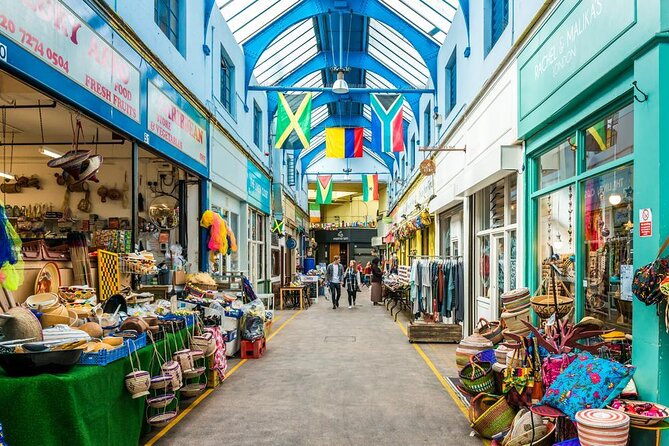
- Market stops with covered arcades: Brixton Market plus arcades like Reliance Arcade, Market Row, and Granville Arcade
- Music-venue time: an included look at O2 Academy Brixton
- Brixton’s architecture made readable: a stop at the Department Store in an Edwardian building
- Major cultural reference points: Bowie connections at Pop Brixton and the Windrush Square story
- Undercover market atmosphere: Brixton Village mixes old and new Brixton under one roof
How this Brixton tour actually helps you understand the neighborhood
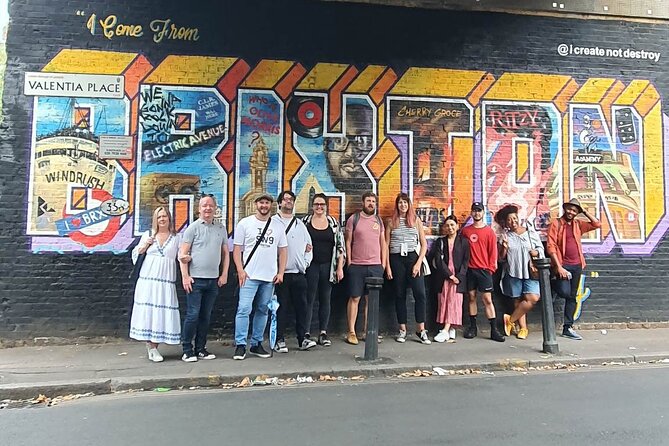
Brixton can feel like a lot at once: shops, street art, food, music venues, and different communities layered over each other. What makes this tour work is the way the guide turns those everyday sights into a clear storyline. You’re not just stopping for photos. You’re learning how the place got from then to now, and how that history shows up in what you pass on the street.
You’ll also like the pacing. The stops are short, so you keep momentum, and each location has a clear purpose: markets for daily life, music venues for culture, and public squares for wider social history. It’s the kind of tour that helps you get your bearings fast, then gives you context you can use later when you’re wandering on your own.
Finally, you’re doing it privately. That matters if you want questions answered directly, or if your group moves at a slightly different speed than a typical group tour.
You can also read our reviews of more private tours in London



Starting at the David Bowie Memorial and setting the tone
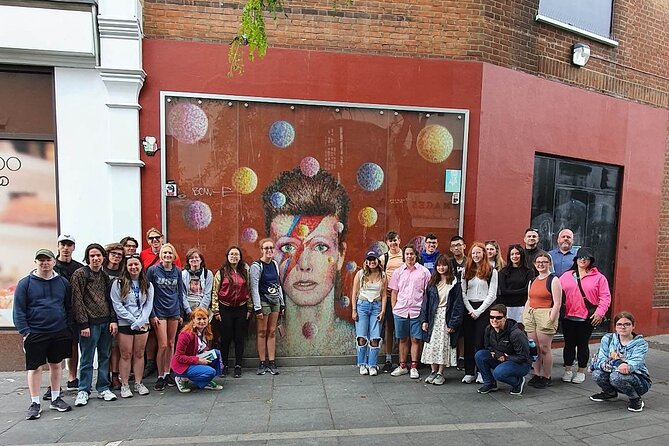
The tour meets at the David Bowie Memorial at 463 A23, London SW9 8BN, and it ends back at the same point. Starting here is more than a cute opener. It gives you an immediate cultural anchor for the whole walk, since Bowie references show up again at the Pop Brixton stop later.
Once you’re with the guide, you’ll get the lay of the land quickly. Even if you’ve visited London before, Brixton’s “side of London” feels different from the postcard areas. The briefing helps you understand what to notice as you move: how commercial streets connect to cultural landmarks, and how public spaces like squares and markets become meeting points for the community.
Practical note: this area is near public transportation, so it’s pretty straightforward to connect your day-plan to the walk.
Electric Avenue and Brixton Market: where street life meets history
A big chunk of your understanding of Brixton comes from the marketplace areas. You start by seeing a handful of key sights around Brixton, including the Markets, Electric Avenue, and the Department Store area, with history woven in as you walk. This is a great opening segment because it frames what you’ll see next.
Electric Avenue and the wider markets area
Expect about 40 minutes for the first stop cluster. It’s enough time to get the story behind the neighborhood without turning the early part into a lecture. You’ll also be set up to recognize what matters visually: the street itself as a corridor for culture, commerce, and community.
If you’re the kind of traveler who likes to know why streets look the way they do, this part will click. If you prefer deep museum-style explanations, you might want to pace yourself mentally, because this is a walking-history approach.
Brixton Market and covered arcades
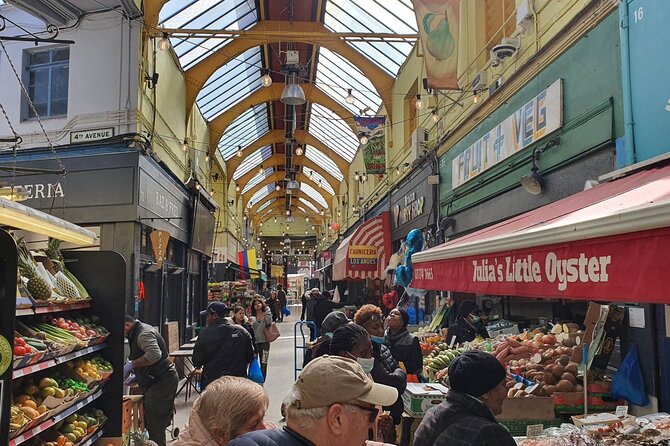
Next you move into Brixton Market for around 10 minutes. The focus here is the mix of open street market energy and nearby covered areas in arcades like Reliance Arcade, Market Row, and Granville Arcade.
Why this works: covered arcades are where people linger. They’re not just places to buy stuff; they’re places to bump into neighbors, try food, and feel the rhythm of local life. Even if you don’t plan to do heavy shopping, you’ll get a sense of how the market shapes daily culture.
There’s also included admission for this stop, so you’re not stuck trying to figure out access once you arrive.
You can also read our reviews of more historical tours in London


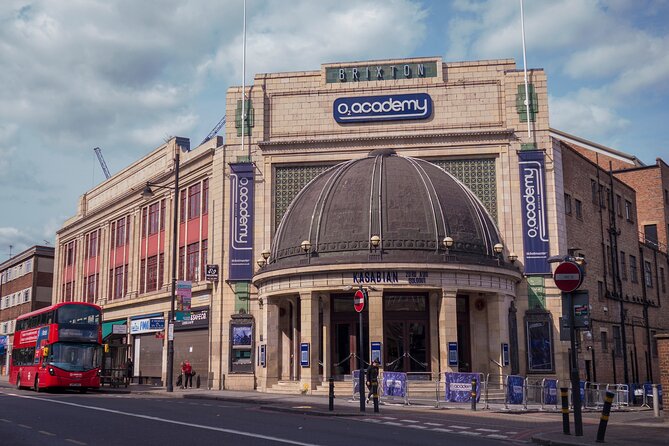
O2 Academy Brixton: music culture with real-world context
About 10 minutes takes you to O2 Academy Brixton (Brixton Academy), described as a mid-sized concert venue in South West London within the Lambeth district of Brixton. This is one of those stops that can easily be skipped if you’re only doing photo stops, but it’s exactly the kind of place that reveals how neighborhoods create culture.
The venue detail matters because music venues act like cultural magnets. They draw people in, help build identity, and often reflect the neighborhood’s evolving sound and audiences. With a guide, you get the context for why this kind of venue belongs in a history-and-culture walk.
Admission here is included, so you can spend the time looking without extra steps at the door.
The Department Store in Brixton: architecture that tells you what changed
Another included admission stop is the Department Store in Brixton, which is an award-winning refurbishment of a dilapidated Edwardian building. You’ll spend about 10 minutes here.
This stop is valuable because it translates “history” into something you can actually see. You’re not only hearing about the past. You’re looking at the physical evidence of change: an older Edwardian structure repurposed for modern use.
It’s a good reminder that cities don’t only change by tearing things down. They also change by adapting what’s there, and that adaptation tells you what a neighborhood values in different eras.
If you love urban design and how buildings get reused, you’ll likely enjoy this part more than you expect.
Pop Brixton and the Bowie connection
Then comes Pop Brixton, where David Bowie was born. You’ll have about 10 minutes here, and admission is included.
Even if Bowie isn’t your specific musical lane, this stop can still work because it connects a global name to a local birthplace. That’s often what makes London neighborhoods feel layered: worldwide attention meeting a very grounded street-level reality.
The note about senses and atmosphere matters too. Rather than treating this as a dry biography stop, the tour treats it like a cultural landmark you can experience through the surrounding vibe.
Windrush Square: a public space with social history
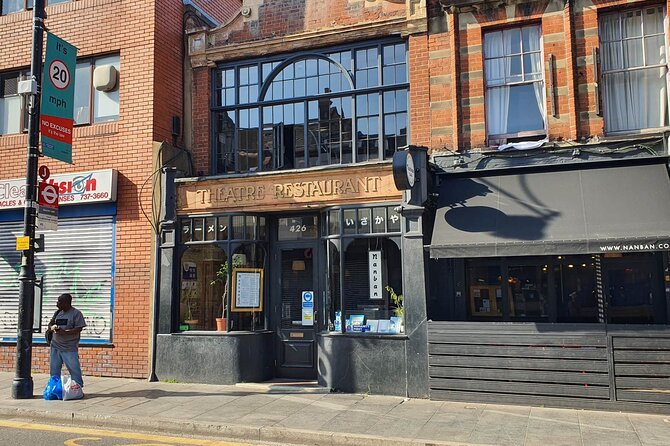
Windrush Square is a free stop for about 10 minutes. This is where the tour shifts from landmarks tied to culture and commerce into a wider, social-history focus.
Why this one matters: public squares are built for gathering, and they often become symbolic over time. If you’ve ever wondered why some places feel like they carry weight even when nothing is happening at that moment, Windrush Square is the kind of stop that helps you understand that feeling.
Since there’s no included admission here, you’ll mainly be using the guide’s explanation to read what the square means, and how it fits into Brixton’s larger story.
Brixton Village: undercover markets and the old-meets-new feeling
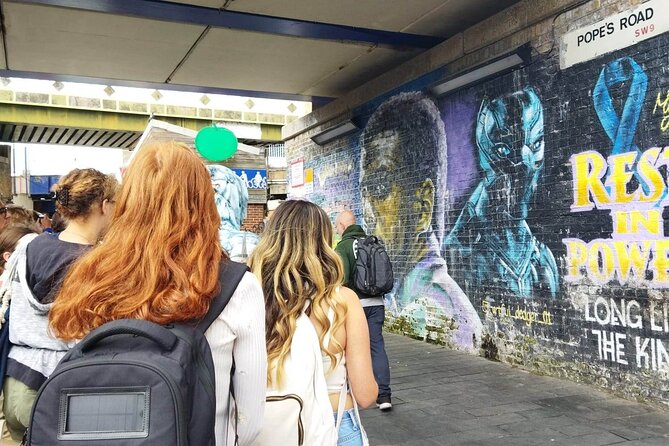
Brixton Village is another free stop, about 10 minutes. The key idea is the undercover market setup that brings older and newer Brixton into the same space.
This is a smart stop if you want to see how the neighborhood’s identity can be both traditional and changing at once. Covered markets tend to protect people from weather while keeping the social character of street commerce. That’s part of why places like this can feel like community hubs, not just shopping centers.
You don’t need to buy anything to get value here. Use the time to watch how people move through the space and where vendors pull you in. Then let the guide’s context connect that to the broader Brixton picture you’ve been building since Electric Avenue.
Brixton House Theatre and the arts side of the story
The final stop is Brixton House Theatre, for about 20 minutes, and it’s free. This longer segment signals that the arts side of Brixton deserves breathing room. You’ll hear about the artistic and cultural history of the area.
This stop rounds out the tour nicely. Markets explain day-to-day life, music venues show how culture gets amplified, and a theatre stop ties those threads into performance and community expression.
If your travel style includes learning how neighborhoods produce art (not just how they host it), this is likely to be a satisfying finale. It gives you something to carry away when you leave: a sense of how creativity is part of the neighborhood’s identity, not just an add-on.
Price and value: what $368.95 per group means in real life
The price is $368.95 per group, up to 15 people. That’s the big budgeting question: is it worth it?
Here’s how I’d think about value. You’re paying for a private guide, a focused route, and multiple stops with included admission. If you’re traveling with a small group, the cost can feel steep compared to a standard walking tour. But if you’re a family, friends, or a group of coworkers who want a shared experience without splitting up, it can work out well.
You also get a tight time window: about 2 to 2.5 hours. For London, that’s efficient. You’ll cover major Brixton cultural points without spending half a day commuting across town or assembling a self-guided plan.
A final value point: private tours are easier to tailor in real time. Even without changing the route, your guide can steer conversation toward what your group cares about, whether it’s markets, music venues, or the cultural significance of key public places.
Who this Brixton history & culture walk is best for
This is a great fit if you want a local-led overview that still feels specific. You’ll likely enjoy it if you:
- want culture and history without a museum-only format
- enjoy street-level context, like markets and music venues
- prefer a private group where questions are easy
- like tours that connect names and places, from Bowie references to Windrush Square
It’s less ideal if you expect long stays at each site, or if you want deep academic detail at every stop. The structure is purposeful and quick, so the story is built through several short stops rather than one long deep dive.
Should you book this Brixton history and culture private tour?
If your goal is to understand Brixton in a practical, human way, I think you should consider booking. The tour is built around places that shape everyday culture—markets, music venues, public squares, and theatres—so you walk away with context you can reuse when you keep exploring.
I’d book it especially if you’re traveling with a group who wants a private experience and you like the idea of included admissions at multiple stops. And if you’ve been to London before and feel you still want to see the city from a less expected angle, this one is a strong choice.
Just go in with comfy shoes and a weather plan, since the experience depends on good weather and is designed for a moderate fitness level.
FAQ
Where does the tour start and end?
It starts at the David Bowie Memorial, 463 A23, London SW9 8BN, UK, and it ends back at the meeting point.
How long does the tour take?
The tour lasts about 2 hours to 2 hours 30 minutes.
Is this tour private?
Yes. It is a private tour/activity, and only your group participates.
How many people can be in a group?
The price is per group up to 15 people.
Is it a mobile ticket experience?
Yes, the tour uses a mobile ticket.
Are admissions included for any stops?
Yes. Some stops include admission tickets, including Brixton Market, O2 Academy Brixton, the Department Store, and Pop Brixton. Other stops are listed as free.
What fitness level is required?
Travelers should have a moderate physical fitness level.
What if the weather is bad?
The experience requires good weather. If it is canceled due to poor weather, you’ll be offered a different date or a full refund.
What is the cancellation policy?
You can cancel up to 24 hours in advance for a full refund. If you cancel less than 24 hours before the experience’s start time, the amount you paid will not be refunded.