REVIEW · LONDON
The Mayflower Private Walking Tour
Book on Viator →Operated by Ye Olde England Tours · Bookable on Viator
Follow the Mayflower trail along the Thames.
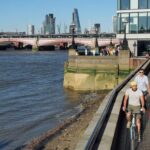
This private walking tour strings together London’s South Bank landmarks and darker historic corners, ending at Rotherhithe with real Mayflower connections. You get a guide to connect the dots as you pass bridges, markets, prisons, and old pubs tied to seafarers and social reform.
I love the private format: just your group with a guide, so you can ask questions and move at a human pace. I also like that the route mixes free stops (like the Millennium Bridge viewpoint) with places where admission is included, which helps you control the total cost.
One thing to plan for: it’s a long walk for a walking tour—around 4–5 miles—and some major attractions on the route are not included in the price. If you hate walking or only want one or two big-ticket sights, this may feel like more effort than you want.
In This Review
- Key things I’d pay attention to before you go
- Entering London’s South Bank: Millennium Bridge to Tate Modern
- Winchester Palace Ruins: the past that survived industry and war
- Clink Prison Museum and Golden Hinde: London’s cruelty and its sea fantasies
- Crossbones Graveyard and Marshalsea: plague, poverty, and Dickens links
- The George Tavern and Southwark Cathedral: writers, pilgrims, and overlooked beauty
- Borough Market and London Bridge: trade, food, and the darker river crossing
- Hay’s Galleria, HMS Belfast, and City Hall: docks, war, and modern government
- The Scoop, Tower Bridge, and Shad Thames: theater, hydraulics, and Dickens street-level grit
- Edward III’s Manor House and The Angel: from swamp land to smugglers’ secrets
- St Mary’s Church, Rotherhithe and the Mayflower Pub: your strongest end-of-tour payoff
- Brunel Museum, Watchhouse Café, and the Rotherhithe Picture Research Gallery
- Price and what you actually get for $205.29
- Logistics that matter: where to meet, how to plan the timing
- Who this Mayflower tour is best for (and who should skip)
- Should you book this private Mayflower walking tour?
- FAQ
- How long is the Mayflower Private Walking Tour?
- What does the tour cost?
- Where do we meet for the tour?
- What time does the tour start?
- Is hotel pickup included?
- Are entrance tickets included?
- Do I need to walk a lot?
- Is this a private tour?
- How does cancellation work?
- What should I do about weather?
Key things I’d pay attention to before you go
- Private, 3-hour South Bank-to-Rotherhithe route with just your group and a local guide.
- Mix of included, free, and paid stops, so your total spend depends on what you choose to enter.
- Mayflower-focused ending at Rotherhithe, including the Pilgrim Fathers memorial connection and ship departure sites.
- Dickens and poverty stories woven through prisons, executions, and burial grounds.
- A good break from heavy crowds, especially if you start a little later to skip rush hour.
- Optional hotel pickup and a mobile ticket, which makes logistics simpler on arrival day.
Entering London’s South Bank: Millennium Bridge to Tate Modern
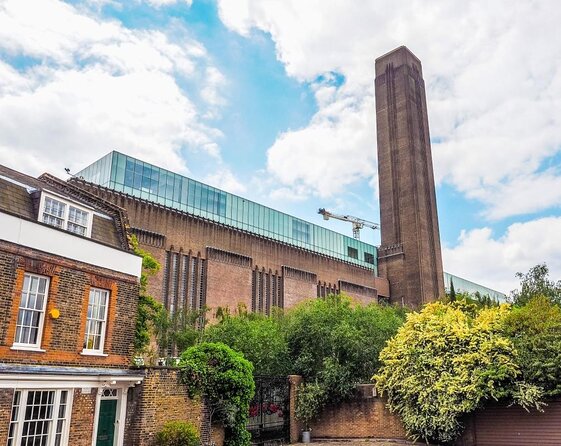
I like starting here because it feels like London in “setup mode.” You meet near Mansion House (Cannon Street), then head toward the Millennium Bridge, the newest bridge in London that links St Paul’s Cathedral with the Tate Modern. Even if you don’t care about architecture, this is an easy orientation point—and yes, you might recognize it from Harry Potter-style pop culture.
From the bridge area, your guide connects the location to the Tate Modern, which sits in an old power station. That reuse theme shows up again and again on this route: places that used to function one way now serve visitors, food, or film. It’s a simple idea, but it makes the whole walk click.
This first stretch is also a useful test of the pace. Stops are short—often about five minutes—so you can settle in without committing to long museum time right away.
You can also read our reviews of more walking tours in London



Winchester Palace Ruins: the past that survived industry and war
Next up is Winchester Palace, where you can see ruins of what was once a major palace. The standout detail here is the survival story: the ruins are described as miraculously surviving centuries of industry and World War II. That kind of survival gives you a different lens on the Thames side—history didn’t just happen here. It kept getting rebuilt over it.
In practice, this stop is quick, but it’s a good one if you like “how did this survive?” questions. If you’re hoping for a full-on site with lots of signage and time to roam, plan to treat this as a narrative checkpoint rather than a long detour.
A small drawback: because the stop is brief, you’ll get the most out of it if you engage with your guide instead of just taking photos and moving on.
Clink Prison Museum and Golden Hinde: London’s cruelty and its sea fantasies
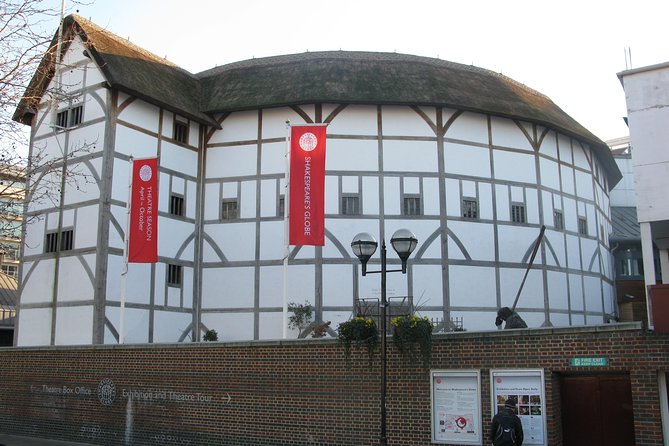
You’ll pass toward The Clink Prison Museum, described as possibly the most horrendous prison in Britain—or even in the world. The modern neighborhood around it can make the contrast feel extra sharp: fashionable today, grim in the story your guide tells. That contrast is the whole point.
Then comes Golden Hinde, a replica of a famous exploration ship. This is where the route shifts tone from punishment to navigation. It’s not the real thing, but replicas can be powerful because they help you picture a time when this part of the river mattered for sailing and supply.
Both of these stops are marked as not included for admission, so treat them as “look-and-learn unless you add ticket time.” If you want to go inside, bring extra time and expect to pay separately.
Crossbones Graveyard and Marshalsea: plague, poverty, and Dickens links
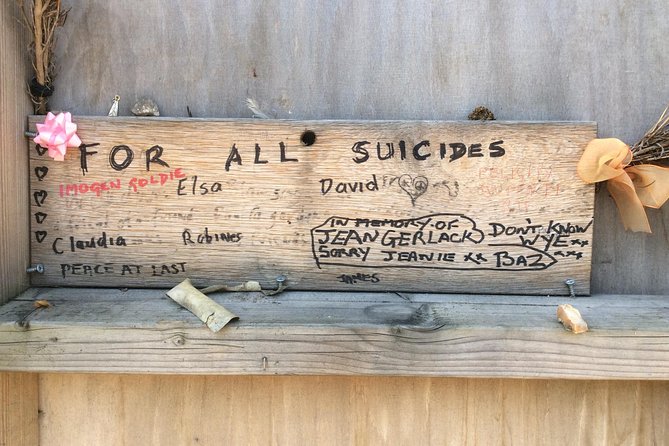
If you’re here for the human side of history, this middle section is where the walk gains emotional weight. At Crossbones Graveyard & Garden of Remembrance, you’re visiting the resting place of thousands of plague victims, criminals, and women buried unceremoniously. Your guide also ties the burial poverty to social reform and the writings of Charles Dickens. That connection matters because it turns “dark history” into “why society changed.”
After that, you step to Marshalsea Prison South Wall, now marked as a small park but once the site of a feared debtors prison. This is another Dickens connection: the Dickens family was incarcerated there. The mood here is different from Crossbones, but the theme is the same—people got trapped by systems, not just fate.
These are admission-included stops, so value-wise, this is where the tour starts paying back. Also, you’ll usually have enough time at each to pause and absorb rather than speed through.
The George Tavern and Southwark Cathedral: writers, pilgrims, and overlooked beauty
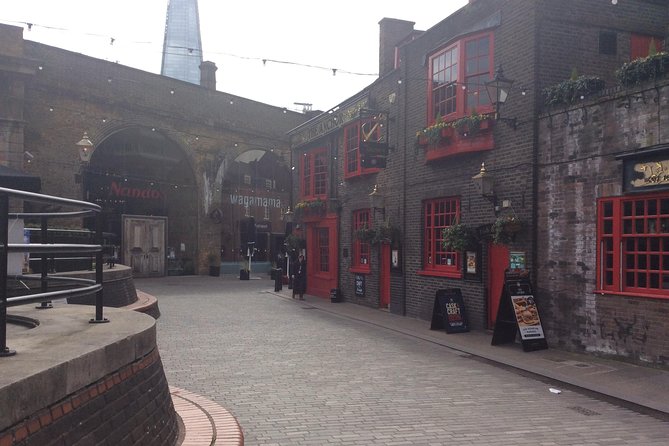
Then the route takes you into lighter—but still historic—territory. The George is described as the only remaining galleried tavern in London, associated with writing life. There’s also a literary link: the yard in front is where pilgrims assembled in The Canterbury Tales.
A few minutes later, you’ll reach Southwark Cathedral, which is noted as beautiful and often overlooked. This is the kind of stop that works even if you’re not religious: cathedrals are history objects. They reflect what a city thought mattered enough to build permanently.
Neither of these are marked as admission-included, so you’re mostly looking from the outside or paying only if you decide it’s worth it.
You can also read our reviews of more private tours in London






Borough Market and London Bridge: trade, food, and the darker river crossing
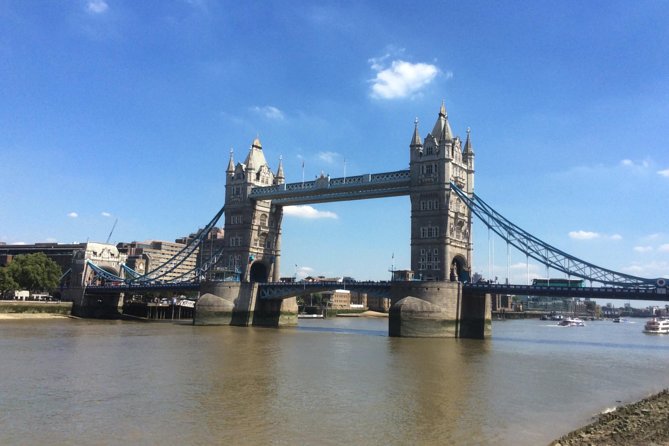
By the time you hit Borough Market, you’re at the “London eats” stop, and it’s one of the most practical moments on the tour. The market is described as world famous, with a history of a market here for at least 1,000 years, possibly since Roman times. Even if you don’t buy anything, it’s a living timeline.
Because the admission is listed as included here, this is another place where the tour price can feel reasonable. Use this break to reset. Grab water, try a bite if you want, and let your brain catch up before the next chunk of heavy history.
Then you roll into London Bridge, where your guide explains why it’s there at all and what awful things used to happen near it. It can be a gloomy storytelling stop, but it helps explain why the river side evolved the way it did—commerce, control, and punishment all sharing the same geography.
Admission is free for this stop, so you won’t feel pressured to pay extra to keep the momentum going.
Hay’s Galleria, HMS Belfast, and City Hall: docks, war, and modern government
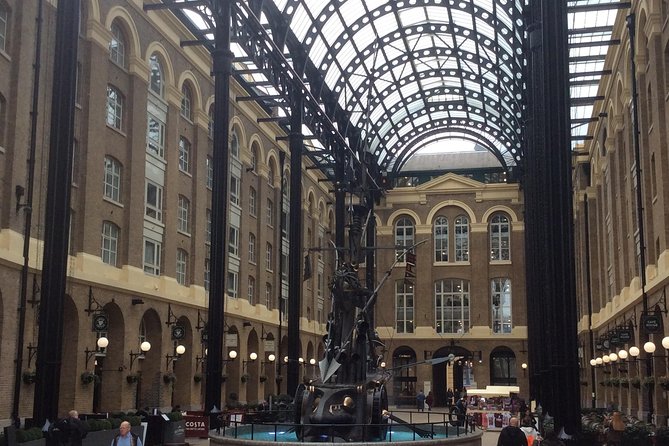
Next comes Hay’s Galleria, once described as the world’s first covered dockyard, now used for leisure and good eating. This is a classic “old function, new vibe” stop. You’ll see how the river economy shifted, and how London learned to monetize its past without erasing it.
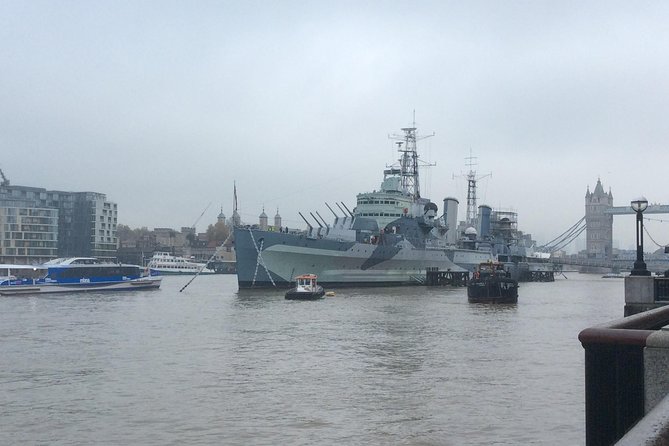
Then you’ll reach HMS Belfast, a World War II Royal Navy cruiser now berthed as a tourist attraction. Like a lot of naval exhibits, it’s best if you’re curious about real ships and wartime role rather than just wanting a quick photo. Admission is not included, so it’s your call whether to add tickets.
City Hall follows, the home of the Mayor of London and the London Assembly. It’s also known by the nickname the Armadillo. From a walking-tour point of view, this is a palate cleanser: the story turns from river survival to the machinery of modern London.
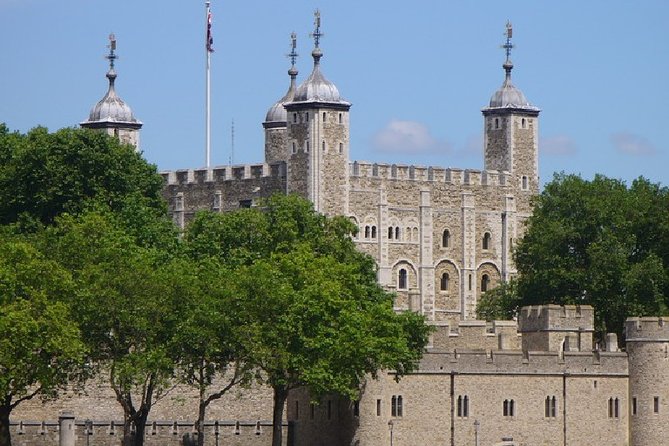
A short outside view is added too: you’ll see the old Tower of London from the Thames-side area. It’s not a full visit, but the sight anchors the entire stretch—London doesn’t hide its power.
The Scoop, Tower Bridge, and Shad Thames: theater, hydraulics, and Dickens street-level grit
Your route brings you to The Scoop, described as one of London’s modern outdoor theatres. It’s a quick stop, but it signals how the South Bank keeps changing its identity, generation after generation.
From there, you walk to Tower Bridge, specifically to the part where you go under the hydraulic lifting bridge. It’s one of those landmarks that’s more fun when you understand what makes it work—not just what it looks like.
Next is Shad Thames, where the tone goes gritty again. It’s described as what was once the Venice of Drains, tied to murders and executions and Dickens-era stories. This is where the tour earns its theme: you’re not just seeing famous sites; you’re tracing a pattern of life, fear, and reform through the same few streets and river bends.
Shad Thames has admission included, so if you want the story with less add-on cost, this is one of the payoff points.
Edward III’s Manor House and The Angel: from swamp land to smugglers’ secrets
At Edward III’s Manor House, you learn that this area was once swamp land and that King Edward III built a hunting lodge here. The remains were relatively recently unearthed, which gives you a sense of how archaeology still updates London’s story. This stop is admission included, so it’s another place where you’re paying for access, not just walking past.
Then you’ll reach The Angel, an old pub described as a smugglers den. The story includes trap doors still visible, and a strong maritime tie: Captain Cook set sail from here on his voyages of discovery. Your guide also references the hanging judge sitting nearby to watch sentences carried out.
Admission is not included here. For pubs, I always treat the choice as simple: if you enjoy history in a drink-and-chat setting, it’s worth paying attention. If you want the facts without the bar tab, you can still learn from the surroundings.
St Mary’s Church, Rotherhithe and the Mayflower Pub: your strongest end-of-tour payoff
Now you start moving into the most emotionally targeted part of the itinerary: the Mayflower connections. St Mary’s Church, Rotherhithe is where the route explicitly ties into the Pilgrim Fathers. There’s a monument, and the story includes the Captain of the Mayflower being buried here, with the ship beached up on the Thames behind.
This stop is admission included, which matters because church visits often cost money elsewhere. Here, you’re getting the key ending chapter without having to choose between “walk more” and “pay extra.”
Then comes The Mayflower Pub, marked as admission included. This is described as the famous old pub from which the crew departed for the New World. From a practical point of view, this also gives you a built-in decompression moment. After three hours of dense stories, you can sit down, have a drink, and let the route settle in.
If you want an extra benefit from the walk, this is where it works best. Grab a pub meal if it fits your day, or just enjoy the fact that you’re ending where the story says it mattered.
Brunel Museum, Watchhouse Café, and the Rotherhithe Picture Research Gallery
Even after the Mayflower-focused stops, the tour keeps going, and that’s a smart choice. It prevents the day from feeling like a single-idea walk.
At the Brunel Museum at Rotherhithe, your guide points out that Brunel built the very first underwater tunnel here, and that trains still use it today. The explanation also helps you picture how docking used to work when ships could take days or weeks to arrive—so technology wasn’t trivia. It was survival.
Admission here is not included, so you’ll decide based on your interests in engineering history.
Then you get The Watchhouse Café, described as funky and organic, good for a drink or snack. The history note is intense: it was once a watch house where dead bodies washed up on beaches of Rotherhithe were brought for protection from thieves and body snatchers until authorities arrived. It’s a lot for one block, but the café part makes it easier to handle emotionally.
This stop is free, and the vibe is likely to feel like relief after heavy themes.
Finally, Rotherhithe Picture Research Gallery gives you a creative angle on heritage. It’s in an old industrial building and serves cinema and heritage costuming, with a reference library full of photos of how this area used to look. Admission is free, and the stop is also marked for a lovely old cafe feel.
If you like seeing how the past gets made into film and TV, this is a satisfying last stop.
Price and what you actually get for $205.29
At $205.29 per person for about three hours, this tour sits in the mid-to-upper private-tour range. What helps it feel fair is the structure: private guiding, multiple landmarks, and several stops where admission is included.
A few stops are free (like Millennium Bridge, London Bridge, The Scoop, The Watchhouse Café, and the Picture Research Gallery). Several others include admission (Winchester Palace, Crossbones Graveyard, Marshalsea, Borough Market, Shad Thames, Edward III’s Manor House, St Mary’s Church, and The Mayflower Pub). That means your guide is not just leading you past things; you’re buying access where it counts.
Still, some notable entries are not included—Clink Prison Museum, Golden Hinde, HMS Belfast, Tower Bridge, and a few others. Your best value will come if you’re open to adding a couple of extra tickets yourself. If you plan to enter everything that’s optional, you might spend more than the base price, but you’ll also get a fuller day.
Two practical notes that affect the experience: transportation to attractions isn’t included, and the tour ends in a different location. The good part is that one end detail is noted as ending within walking distance of the Overground, which can make your post-tour plan easier.
Logistics that matter: where to meet, how to plan the timing
You meet at the Underground Ltd Station, Mansion House area (38 Cannon St, London EC4N 6JD). The start time is 9:30 am. There’s also an important suggestion: you can start later—around 10:30–11:00 am—to miss rush hour, and your guide is happy to come to your hotel to meet you if you choose that option.
If you hate wrangling Tube navigation before a tour, the meeting point is also a plus. It’s near public transportation, and you can arrive by taxi or Uber instead.
The tour runs in all weather conditions, so wear layers. And it’s set for moderate physical fitness because you’re doing a solid stretch of walking on uneven city terrain.
The private format also changes the feel of the day. You’re not sharing your guide with a busload. That makes it easier to ask questions and stay on track, even if the group is small.
Who this Mayflower tour is best for (and who should skip)
This is ideal if you like London stories that connect places to people and systems: prisons, poverty, reform, maritime departures, and the way the river shapes everything. I’d especially recommend it to history lovers who want something more specific than the usual big-bus highlights.
It’s also a good fit if you enjoy mixed stops: one minute you’re at a bridge that makes great photos, the next you’re thinking about debtors’ prisons tied to Dickens. That shift is part of the charm.
You might want to look elsewhere if you have very limited walking tolerance or you mainly want one single signature attraction with minimal wandering. Because some admissions are not included, you’ll also want to decide in advance whether you’re okay paying for optional entries.
If you like a calm experience away from peak crowds, the suggested later start time is a smart move.
Should you book this private Mayflower walking tour?
I think you should book it if you want a guided, Mayflower-linked London day that goes beyond just monuments. The route is built for story connections—South Bank landmarks, Dickens-era sites, and a strong ending in Rotherhithe—and the mix of free and included admissions helps your budget feel more controlled than many private tours.
Skip it only if you’re walking-sensitive, allergic to optional ticketing add-ons, or you’re chasing a short checklist of only the biggest sights. If you’re flexible and curious, this is the kind of tour that leaves you seeing the Thames as a timeline instead of just a view.
FAQ
How long is the Mayflower Private Walking Tour?
It runs for about 3 hours.
What does the tour cost?
The price is $205.29 per person.
Where do we meet for the tour?
You start at Underground Ltd Station, Mansion House, 38 Cannon St, London EC4N 6JD, UK.
What time does the tour start?
The start time is 9:30 am, with a suggestion to start around 10:30–11:00 am to help avoid rush-hour crowds.
Is hotel pickup included?
Hotel pickup and drop-off are offered if you select that option.
Are entrance tickets included?
Some stops are free, some include admission, and some do not include admission (so you may pay separately at certain attractions).
Do I need to walk a lot?
Plan for a 4–5 mile walk and a moderate fitness level. The tour is outdoors and you’ll move between many stops.
Is this a private tour?
Yes. It’s private, so only your group participates.
How does cancellation work?
You can cancel for free up to 24 hours in advance for a full refund. If you cancel less than 24 hours before the start time, it won’t be refunded.
What should I do about weather?
The tour operates in all weather conditions, so dress appropriately for the day.