REVIEW · LONDON
Working Women of the East End Walking Tour
Book on Viator →Operated by Women of London · Bookable on Viator
The East End has never told you everything. This 2.5-hour walk brings women’s history in real locations into sharp focus as you move between Tower Hill and Spitalfields Market. What I love most is the way the guide turns street corners into stories you can picture (from labor organizing to daily work), plus the careful pacing that keeps heavy topics from feeling random. One drawback to consider: there’s no lunch included, and the themes can get dark, so plan your snacks and mental comfort level.
If you want London that feels more like real life and less like postcards, this is a strong pick. With a maximum of 20 people, you get a closer, question-friendly vibe, and the tour includes a toilet break plus a mid-walk pause for tea or coffee.
In This Review
- Key Highlights You’ll Notice Right Away
- Why This East End Women’s History Walk Works
- Price and Value: $55.50 for 2.5 Hours That Adds Up
- Getting Oriented at Tower Hill Before the Stories Start
- Stop at Spitalfields Market: Why This Place Matters to Women
- Brick Lane Time: Working Life, Community, and Change
- The Women of the Tower Segment: Power, Punishment, and Survival
- Jack the Ripper and Other Dark Threads (Handled as Context)
- The Storytelling Style: Guides Like Becky and Emily
- What’s Included (and What You Need to Bring)
- How Long It Really Feels: 2 Hours 30 Minutes on Foot
- Who Should Book This Tour (and Who Might Not Love It)
- Final Call: Should You Book Working Women of the East End?
- FAQ
- How long is the Working Women of the East End walking tour?
- What does it cost?
- Where do I meet the tour?
- Where does the tour end?
- Is the tour in English?
- Do I need an admission ticket for the stops?
- What’s included in the ticket price?
- Is lunch included?
- Is there a toilet break during the tour?
- What is the cancellation policy?
Key Highlights You’ll Notice Right Away
- Small-group feel (up to 20 travelers) makes it easier to ask questions and follow the story.
- Women’s labor and organizing in the East End is the main thread, not an afterthought.
- Stops tied to recognizable places like Spitalfields Market and Brick Lane, with free admission at the sites listed.
- A Tower-focused women’s history segment adds power and consequence to the narrative.
- Jack the Ripper-era events are part of the tour’s storytelling, handled as history rather than shock value.
- Restroom and refreshment break is included, so you are not white-knuckling two-plus hours.
Why This East End Women’s History Walk Works
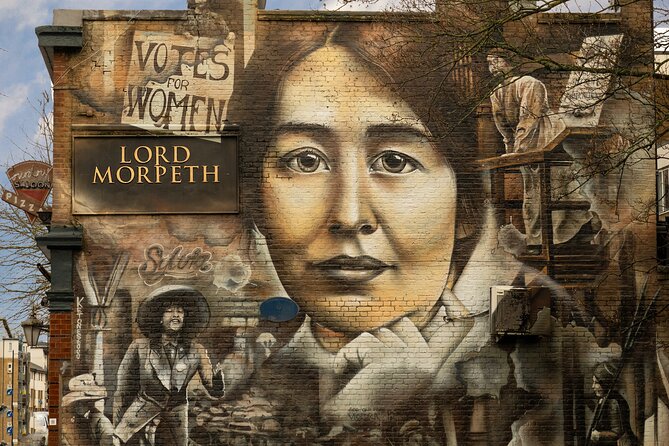
London’s East End often gets described in broad strokes: factories, crime, poverty, immigration. This tour takes those same themes and puts women at the center—women who worked, organized, defended their communities, and shaped the everyday rules of life.
You’ll start at Tower Hill (London EC3N 4DJ) and finish at Spitalfields Market (65 Brushfield St, London E1 6AA). That end point matters. Spitalfields is a practical place to land after a walk: it has local transport and food options, so you’re not stuck figuring out dinner from scratch.
The vibe is story-led and street-level. In the best moments, you stop where something happened, then the guide connects it to what women were doing—whether that was paid work, working-class politics, or the behind-the-scenes support systems that held neighborhoods together.
You can also read our reviews of more walking tours in London



Price and Value: $55.50 for 2.5 Hours That Adds Up
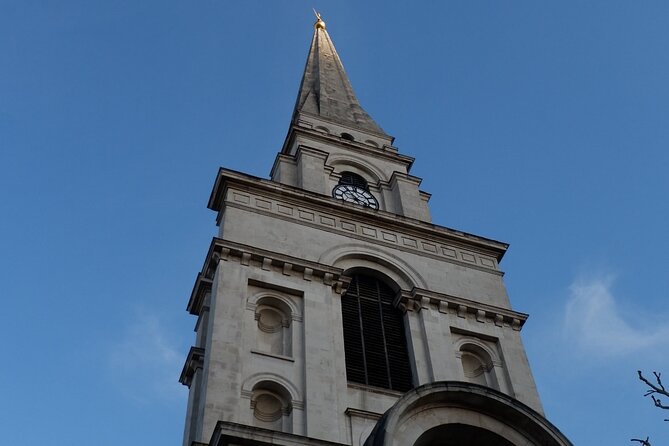
At $55.50 per person for about 2 hours 30 minutes, the value comes from two things: the time on foot and the focus of the content. You’re paying for guided interpretation, not just movement between famous landmarks.
Here’s how I look at value on tours like this:
- If a walk is two-plus hours and only gives you surface-level facts, it feels expensive fast.
- If the guide helps you connect streets to lives—especially in a part of London that many visitors skip—that same price starts to feel fair.
This one has that “fair” feeling because it targets women’s history across different eras, and it’s organized as a clear route with defined stops (including Spitalfields Market and Brick Lane). Add in the included toilet/rest break, and you’re not sacrificing comfort to make the schedule work.
Also, this experience is booked ahead often (the average booking window is about 37 days), which usually means the schedule fills up. If you’re going on a weekend or during peak travel, I’d book sooner rather than later.
Getting Oriented at Tower Hill Before the Stories Start
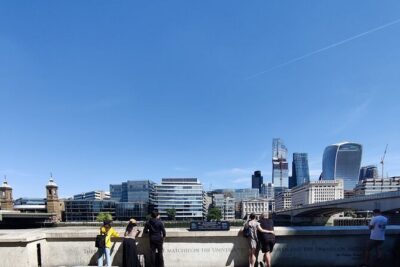
The tour meets at Tower Hill, right where the East End narrative has been drawn for centuries. Even if you’re not visiting Tower of London itself, the area anchors the theme: power, institutions, and consequences are part of the context.
One practical plus here: Tower Hill is easy to reach with public transport. And because the group is capped at 20, you’re not stuck in a long, slow-moving pack. That matters because this tour depends on attention—if you’re always sprinting to catch up, the stories will slide right off.
If you like to ask questions as you walk, this is a good setup. The guides for this experience are consistently described as personable and engaging, with a style that invites interaction rather than running one-way lectures.
Stop at Spitalfields Market: Why This Place Matters to Women
You’ll spend time at Spitalfields Market (E1), listed as a stop where admission is free. Spitalfields is more than shopping now. Historically, markets shaped schedules, wages, and survival.
On this tour, the point of the stop is to connect market life with the working women who depended on it. Think: the routines of buying, selling, and preparing food or goods, and the community networks that grew around regular commerce. When the guide explains these connections, Spitalfields starts to feel like a living system, not just a location on a map.
A useful way to enjoy this part: don’t only watch the stalls. Look for the sense of rhythm—where people gather, where routes funnel, where daily business would have happened. The market environment becomes a shortcut to understanding how work shaped the neighborhood.
And because the tour ends here, you get a bonus benefit: after you’re done listening, you can actually keep exploring the same streets with fresh eyes—and refuel without having to travel far.
Brick Lane Time: Working Life, Community, and Change
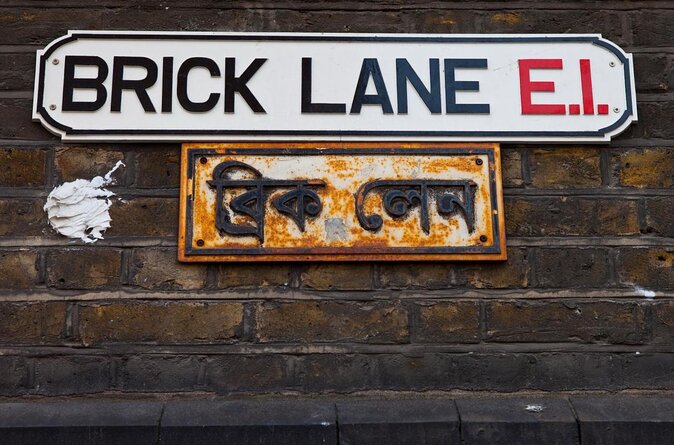
Next, you’ll hit Brick Lane, another free-admission stop. Brick Lane is famous for many reasons, but for this tour, it’s treated as a corridor of working life—where trades, jobs, and community change over time.
This is one of the areas where the tour’s central theme becomes clear: women’s roles weren’t limited to one job category or one social class. You’ll hear how different kinds of work intersected with politics and community power, including how working women helped push for safer and more equal conditions.
Even if you know Brick Lane already, I’d still do this stop with your curiosity turned up. The guide’s job is to show what you might walk past and never think about—like what kinds of social pressures were at work, and how women navigated them.





The Women of the Tower Segment: Power, Punishment, and Survival
A key part of the route is the segment described as exploring the women of the tower. Since the tour begins at Tower Hill, it’s clearly meant to connect the Tower area with women’s stories—how institutions and public life affected real people, not abstract history.
This portion is important for two reasons.
First, it widens the story beyond ordinary workplaces. East End women weren’t just responding to the economy; they were also dealing with authority, rules, and consequences tied to big-city institutions.
Second, it helps explain why women’s history here includes both strength and fear. You’re not only learning about organizing and labor. You’re also hearing about the horrific events associated with Jack the Ripper, and how that period sits within the broader social picture of the East End.
A heads-up: this is history with dark material. If you prefer tours that keep things light, consider that before booking. If you’re fine with serious context, this section is one of the reasons the walk earns its strong rating.
Jack the Ripper and Other Dark Threads (Handled as Context)

The tour highlights “horrific events caused by Jack the Ripper.” That can sound like a jump scare. In practice, what matters is the framing: the tour treats these events as part of a larger social environment, not just a headline for the curious.
I like this approach because it prevents the story from becoming only crime trivia. You come away with a sharper sense of why certain communities were already living with hardship, and how fear could sit on top of daily struggle.
If you’re asking yourself whether you’ll leave unsettled, here’s my practical advice: bring realistic expectations. You’re not going to a themed entertainment event. You’re walking through London’s historical layers, including the ugly ones.
The Storytelling Style: Guides Like Becky and Emily
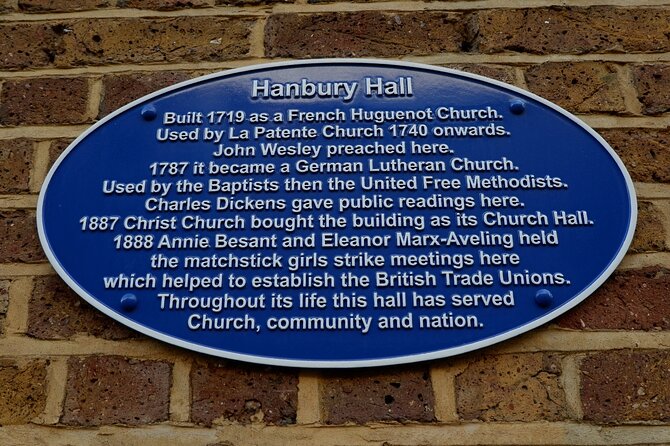
Two guide names come up repeatedly: Becky and Emily. Across the experiences described, the guides share a few standout traits:
- they bring stories to life on the walk
- they answer questions without making you feel rushed
- they blend major figures with everyday working women, including women from different backgrounds
One of the best signs here is pacing. People mention that the tour feels packed with information but not chaotic. That’s hard to do on a walking format, especially when the subject spans multiple periods and includes heavy topics.
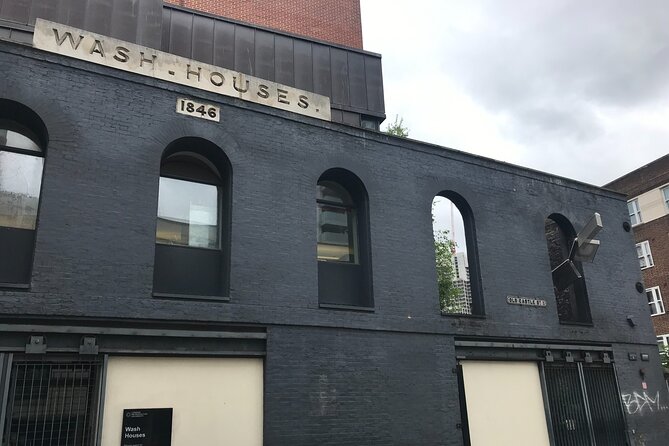
You’ll also hear signs of careful research—detail about specific places and how events connected to local work and community life. One example from the content people highlight: a focus on wash-house history tied to 1846, including a look at a wash-house layout. If you love when a tour gives you one concrete detail you can look up later, this kind of stop is exactly that.
And yes, there’s a sense of humor in the delivery. A good guide can keep you listening without turning everything into a slog.
What’s Included (and What You Need to Bring)
This tour includes:
- a tour guide (professional guide)
- all fees and taxes
- a toilet break
It does not include lunch, and that’s a key planning point. Because the tour lasts around 2.5 hours, you could easily start hungry if you planned badly. The mid-walk pause is described as a small break where you can get restrooms and tea or coffee, but that is not the same thing as a meal.
So my practical recommendation:
- Eat a real breakfast or late lunch before/after.
- Bring a light snack if you know you get shaky between meals.
- Have water on hand, especially if it’s warm.
Also, you get a mobile ticket, and confirmation is sent at booking time. That’s helpful if you hate printing and want to travel light.
How Long It Really Feels: 2 Hours 30 Minutes on Foot
The stated duration is about 2 hours 30 minutes. On a walking tour, that’s long enough for a full story arc, but not so long you feel trapped outside all morning.
The route is built around short stops—each one meant to be a point of attention rather than a long museum-style visit. That’s why the included break matters: it keeps you able to concentrate through the heavier segments.
Group size stays small at up to 20, which usually makes walking pace more manageable than larger tours. And because it’s offered in English, you won’t have to worry about losing layers of meaning to translation.
Who Should Book This Tour (and Who Might Not Love It)
This experience fits best if you want:
- women’s history in London’s streets, not just in a textbook voice
- social history that connects work, labor conditions, and community organizing
- a guided walk that includes both well-known and less-talked-about stories
- an East End route that doesn’t feel like the same sightseeing loop
It may be less ideal if:
- you need a strictly upbeat, crime-free route
- you hate walking and would rather sit in a vehicle for the entire tour
- you want lunch included, because lunch is not part of the ticket
If you’re visiting with a friend or family member, this can also work as a shared learning experience. The subject is broad enough to be interesting without requiring expert background knowledge.
Final Call: Should You Book Working Women of the East End?
With a 5/5 rating and 100% recommended from the provided feedback, the odds are good you’ll leave feeling like you saw London with a new lens. The biggest strength is that the tour doesn’t treat women’s history as decorative. It uses the East End itself—markets, streets, and the Tower area—to explain how women’s work and organizing shaped daily life and social change.
If you can handle serious material that includes Jack the Ripper-era events, and you’re willing to plan food (since lunch isn’t included), I think this is a smart use of time. Book it if you want a walking tour that changes what you notice when you wander the neighborhood on your own afterward.
FAQ
How long is the Working Women of the East End walking tour?
It runs for about 2 hours 30 minutes.
What does it cost?
The price is $55.50 per person.
Where do I meet the tour?
The meeting point is Tower Hill, London EC3N 4DJ, UK.
Where does the tour end?
It finishes at Spitalfields Market, 65 Brushfield St, London E1 6AA, UK.
Is the tour in English?
Yes, it’s offered in English.
Do I need an admission ticket for the stops?
The listed stops are free to enter (Spitalfields Market and Brick Lane are shown with free admission).
What’s included in the ticket price?
You get a tour guide, all fees and taxes, and a professional guide.
Is lunch included?
No. Lunch and all food and drink are not included.
Is there a toilet break during the tour?
Yes. A toilet break is included.
What is the cancellation policy?
Free cancellation is available up to 24 hours in advance for a full refund. If you cancel less than 24 hours before the start time, the amount paid is not refunded.