REVIEW · LONDON
Jack the Ripper Private Immersive Tour
Book on Viator →Operated by Jack the Ripper Walks · Bookable on Viator
Jack the Ripper walks at headphone volume. This private Jack the Ripper Private Immersive Tour turns classic true-crime locations into a guided story you can track in real time, with answers as you go. You’re moving through London streets while the guide connects each place to what happened there in 1888.
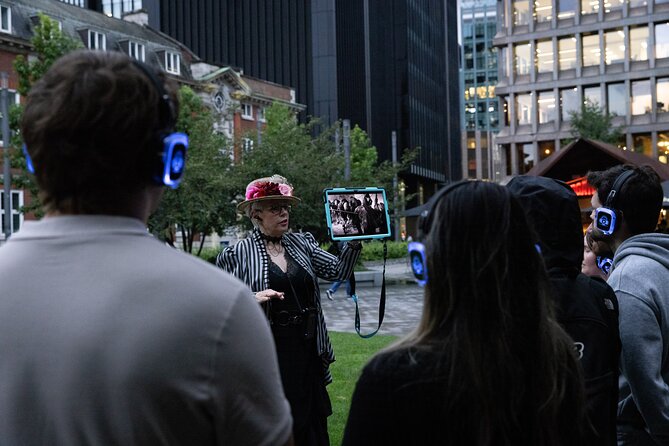
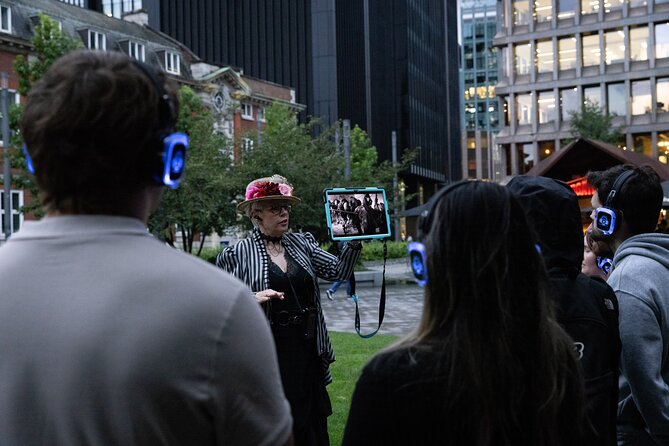
I really like the structure: you get social context at the same time as the murders, so it’s not just gore and guessing. I also like the tech support for night-time walking—hi-tech headphones and a 14-inch tablet with photos that make it easier to see details even after dark.
One drawback to consider is the pace. It’s about 2 hours 30 minutes with no break built in, and it isn’t recommended if you struggle with standing or walking. Also, if you’re hard of hearing, ask to stand nearer the front so you can catch more of the guide’s audio.
In This Review
- Key highlights at a glance
- Private storytelling on Jack the Ripper’s London streets
- Headphones, tablets, and what you actually see in the dark
- Pace, route, and logistics for a 2.5-hour walk
- Aldgate to Mary Kelly: a stop-by-stop street story
- Stop 1: Dorsett City Hotel (the opening murders and the 1888 setting)
- Stop 2: St Botolph’s Aldgate (homelessness, lodging houses, and workhouses)
- Stop 3: Mitre Street (Elizabeth Stride and Louis Diemschultz’s discovery)
- Stop 4: Mitre Square (Catherine Eddowes, PC Edmund Watkins, and the clue trail)
- Stop 5: Goulston Street (108–119 and what happened after the clue)
- Stop 6: Wentworth Street (a non-canonical victim accredited by Professor David Wilson)
- Stop 7: Osborn Street (soundscape as you turn into Brick Lane)
- Stop 8: Brick Lane near the Frying Pan pub (Polly Nichols and Berner Street)
- Stop 9: Brick Lane again (street vendors and questioning the community)
- Stop 10: Hanbury Street (Annie Chapman, Mrs Long, and the backyard lure)
- Stop 11: Wilkes Street (outrage, newspapers, and why houses matter)
- Stop 12: Puma Court (letters to the press: 1092 and what stood out)
- Stop 13: Commercial Street (Ten Bells, Spitalfields Market, and Christchurch Graveyard)
- Stop 14: Brushfield Street (London Fruit and Wool Exchange entrance and the Lusk Letter)
- Stop 15: London Fruit & Wool Exchange courtyard (Mary Kelly indoors, suspects, and the exit route)
- How the guide’s approach shapes the whole case
- Should you book the Jack the Ripper Private Immersive Tour?
- FAQ
- How long is the Jack the Ripper Private Immersive Tour?
- What’s included in the tour price?
- Where does the tour start and end?
- Is this a private tour?
- What should I know about walking during the tour?
- Is the tour dependent on weather?
- What’s the cancellation and refund policy?
Key highlights at a glance
- Private guide time with lots of questions so you can steer what you want to know next
- Hi-tech headphones plus a 14-inch tablet that keeps visuals clear in low light
- Real named moments like PC Edmund Watkins and the clue connected to Goulston Street
- All the famous murders plus one added case via criminologist Professor David Wilson’s more recent accreditation
- Explains police rivalry between the Metropolitan and City of London forces
- Finishes with practical routing—the guide points you toward the shortest way to Liverpool Street
Private storytelling on Jack the Ripper’s London streets
This tour is for people who like their history with edges. You’re not just hearing a timeline—you’re hearing why each location mattered and what life looked like around it. The format is private, so you’re not stuck with a rigid script or hoping your questions get squeezed in.
A big part of the appeal is how the guide handles the balance. The story covers the five famous victims, but it also pauses for the poverty and daily reality of 1888 Whitechapel—lodging houses, workhouses, lack of employment, and the way homelessness showed up street level. That mix helps the murders feel connected to the era rather than floating in isolation.
And yes, it’s still London, meaning you’ll hear London sounds along the way too. One segment adds the feel of coming out of pubs and music halls as you turn toward Brick Lane—small detail, but it helps the setting stick.
You can also read our reviews of more private tours in London
Headphones, tablets, and what you actually see in the dark
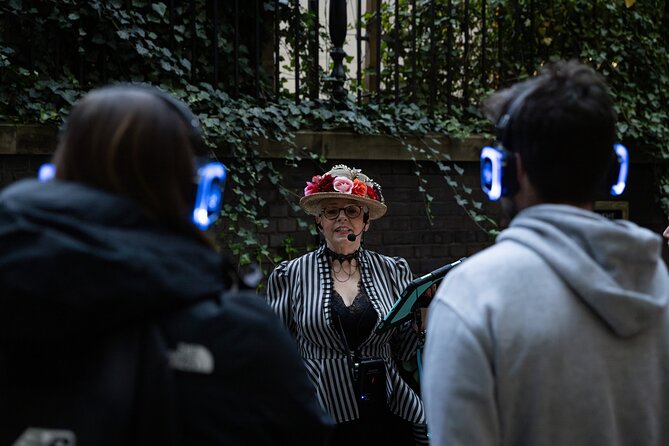
The tour includes hi-tech headphones, which is the difference between a “walk and listen” and something that feels more like a guided experience you can follow tightly. Several stops rely on visuals, and the guide uses a 14-inch tablet with photos to illustrate street views, victim locations, and key evidence points.
That tablet detail matters because many stops are outdoors and it gets dark. You don’t have to strain to read tiny signs or guess where the important doorway or street corner is. At multiple points, you’re looking at the spot the story refers to, while photos help you orient what you’re seeing.
Practical tip: if you’re even a little sensitive to audio issues, come prepared. In one case, there was confusion about the headphones set-up, and in another the guide used a mic rather than the headphone feed at least part of the time. To protect your experience, arrive early enough to confirm your set-up before the first stop.
Pace, route, and logistics for a 2.5-hour walk
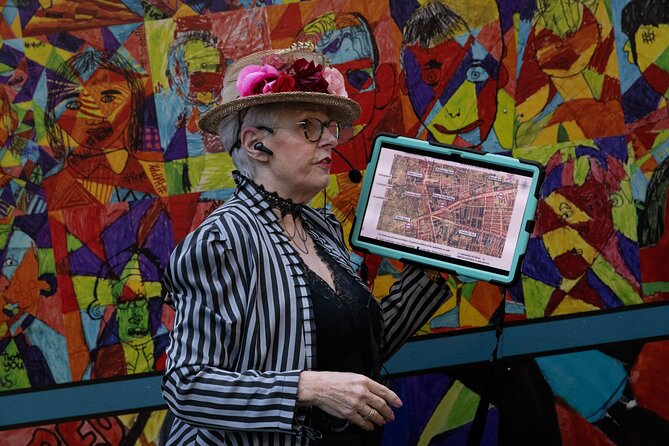
This is an outdoor route in central London, starting at Aldgate Station and ending around Bell Lane. The tour runs roughly 2 hours 30 minutes and you should expect walking and standing with no built-in break.
So plan like this is your main activity for the afternoon/evening. The tour also depends on good weather, so if you’re booking for a rainy week, keep an eye on conditions. Bottled water is not included, so if you tend to get thirsty, bring your own.
For mobility: the tour says it’s not recommended if you have walking or standing difficulties. Even if you can manage the distance, the lack of breaks means you should be comfortable staying on your feet for long stretches.
For ticketing: you’ll use a mobile ticket, which is handy if you prefer digital access rather than printed vouchers.
Aldgate to Mary Kelly: a stop-by-stop street story
The route moves through Whitechapel’s core, layering crime, evidence, and everyday hardship. Here’s what you can expect at each stop and why each one matters.
Stop 1: Dorsett City Hotel (the opening murders and the 1888 setting)
You start with an introduction to the murders and what the surrounding area looked like in 1888. This is a useful warm-up because the tour later zooms into specific streets and alleyways—having that baseline helps the names make sense.
What to watch for: pay attention here. If you get the timeline and location basics right at the start, every later doorway and gateway will feel clearer instead of confusing.



Stop 2: St Botolph’s Aldgate (homelessness, lodging houses, and workhouses)
On the green by St Botolph’s, the guide talks about the lived reality of the time: homelessness, common lodging houses, workhouses, and the lack of employment. It’s a reminder that this wasn’t a far-off crime story—it was part of daily life for people nearby.
Why it helps: this context changes how you interpret the victims’ circumstances and the fear circulating in the neighborhood later on.
Stop 3: Mitre Street (Elizabeth Stride and Louis Diemschultz’s discovery)
Mitre Street centers on the murder of Elizabeth Stride, including the early-hours lead-up and the moment Louis Diemschultz discovered her body at the gateway of Dutfield’s Yard.
You’ll have photos to support what you’re hearing—street and victim context—so you’re not just taking names on faith.
Stop 4: Mitre Square (Catherine Eddowes, PC Edmund Watkins, and the clue trail)
This stop covers Catherine Eddowes, discovered dead and mutilated on 30 Aug 1888, described as the second murder within an hour. The guide also covers how her body was found by PC Edmund Watkins on his beat.
Then the story shifts into the search route for Jack, including the point where the only clue connected to the case was found.
Small consideration: this section moves quickly because it has both evidence and motion. If you like to ask questions, this is a good time to do it, since later stops will reference what you already heard.
Stop 5: Goulston Street (108–119 and what happened after the clue)
Opposite 108–119 Goulston Street, you view the doorway tied to the clue. The guide explains what followed after it was discovered and why the Metropolitan and City of London police forces were and still are separate.
This is one of the most practical stops for understanding the case mechanics: it’s not only who did it, but how information was handled, chased, and divided.
Stop 6: Wentworth Street (a non-canonical victim accredited by Professor David Wilson)
Here the tour returns to the beginning and focuses on a victim not included in the canonical five—but recently credited as likely by Professor David Wilson, a criminologist.
You’ll hear the murder and get conversation about it afterward, plus photos of the murder site and victim.
Why this is interesting: it’s a reminder that true-crime cases don’t stay frozen. Based on this tour’s framing, research can shift what’s considered most likely over time.
Stop 7: Osborn Street (soundscape as you turn into Brick Lane)
As you turn into Brick Lane, you’ll hear music as it might have sounded coming out of pubs and music halls in 1888. The audio cue helps you mentally set the scene before you hit the major Brick Lane stops.
This is short, but it’s memorable.
Stop 8: Brick Lane near the Frying Pan pub (Polly Nichols and Berner Street)
Opposite the Frying Pan pub in Brick Lane, you hear Polly Nichols’ story, including why desperation for lodging money may have driven her toward the path of danger. The tour then covers how two men discovered her body in Berner’s St Whitechapel and that police were sent, but Polly was already dead.
Photos again support the street and murder-site context.
Note on tone: this is one of the tragic stops, so take it at your own pace and don’t feel rushed to keep moving past the details.
Stop 9: Brick Lane again (street vendors and questioning the community)
After Polly, you’re back on Brick Lane for what life looks like in the moment: street vendors trying to sell their wares, and police questioning local community members about suspicious men.
This part makes the investigation feel like a human event, not just a mystery solved by logic after the fact.
Stop 10: Hanbury Street (Annie Chapman, Mrs Long, and the backyard lure)
Hanbury Street is focused on Annie Chapman. You’ll hear about her life and the events leading up to her death on 8 Sept 1888, including she was seen less than an hour before the murder by Mrs Long with a man outside no 27.
The story includes how she was enticed into the backyard of 29 with promises of money, and the description of the attack. A prominent suspect is mentioned as later discounted, and you’ll see photos of the victim and murder site.
Practical angle: if you enjoy evidence and motives, this stop gives you the most “how it happened” feeling of the afternoon.
Stop 11: Wilkes Street (outrage, newspapers, and why houses matter)
Down Wilkes Street, the guide covers how the murders caused outrage in the local community. Newspapers are described as stoking terror, and the guide talks about the houses here, including that some date back to the 1700s and why they were built.
This is less about a single event and more about the neighborhood’s pressure cooker.
Stop 12: Puma Court (letters to the press: 1092 and what stood out)
At Puma Court, you look at one of the letters received by the press. The tour notes that 1092 letters were sent to both the police and the press, but this one—and another—stood out as important.
As you leave, you hear how newspaper boys or men shouted lurid headlines, fueling fear.
Stop 13: Commercial Street (Ten Bells, Spitalfields Market, and Christchurch Graveyard)
On Commercial Street, you stop opposite the Ten Bells, tied to Mary Kelly’s favorite pub. You hear about the area at the time, including Spitalfields Market, and how the case has stirred controversy over the years.
This stop also highlights Christchurch Graveyard’s importance for homeless people, plus how the lack of security and resources could spark fights.
Stop 14: Brushfield Street (London Fruit and Wool Exchange entrance and the Lusk Letter)
Standing in the entranceway of the London Fruit and Wool Exchange building, you hear about the Lusk Letter. The tour says it arrived in a box with an article that could have come from one of the victims, and you’ll see photos of the letter and recipient.
This stop is evidence-oriented, but still tied to the human media cycle—how sensational communication can become part of a case.
Stop 15: London Fruit & Wool Exchange courtyard (Mary Kelly indoors, suspects, and the exit route)
In the central courtyard of the London Fruit & Wool Exchange building, you stop at the closest point to where Mary Kelly, the last victim, was slaughtered in her own room. The tour notes she was the youngest victim and the only one killed indoors.
You’ll hear events leading up to her death and the murder described in all its gruesome detail. Then the guide discusses suspects then and now and shares her theory on who may have been responsible. Finally, you get directions for the shortest route to Liverpool Street Station.
This last stretch ties the case together and gives you a clear way to move on afterward.
How the guide’s approach shapes the whole case
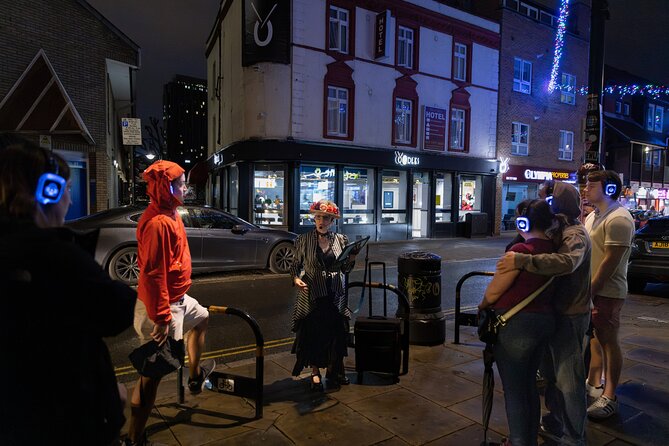
One thing the positive feedback keeps pointing toward is the guide’s energy and clarity. When Jenny is the guide, she’s described as making the tour easy from start to finish, with first-class communication and deep familiarity with the subject.
Even without naming your guide, you can expect a similar role: the guide answers your questions and ties each stop back to what matters in the case. The private format also helps here. If you want to ask why the police forces mattered, or why letters created more fear, you can.
At the same time, not every part will work for every body. If audio clarity is vital for you, you’ll want a plan: stand nearer the front, and don’t hesitate to tell the guide at the start that you have hearing trouble so they can adjust where possible.
Should you book the Jack the Ripper Private Immersive Tour?
Book it if you want a private true-crime walk that mixes evidence points with the real 1888 conditions around Whitechapel. The combination of hi-tech headphones, a 14-inch tablet with photos, and a guide who can handle questions is a strong value for a London evening.
Skip it (or reconsider) if you need frequent breaks or you have trouble with long standing and walking. Also, if you know you’re hard of hearing, plan to position yourself for maximum audio.
If you do book, do one simple thing that pays off immediately: arrive a little early, confirm your headset set-up, and ask the guide how they’re handling audio that night. Then settle in—this is the kind of tour where the right spot near the front can be the difference between hearing the story and missing it.
FAQ
How long is the Jack the Ripper Private Immersive Tour?
It lasts about 2 hours 30 minutes.
What’s included in the tour price?
The tour includes hi-tech headphones and the guided experience.
Where does the tour start and end?
It starts at Aldgate Station and ends at Bell Lane.
Is this a private tour?
Yes, it’s a private tour/activity with only your group participating.
What should I know about walking during the tour?
You should have moderate physical fitness. It’s not recommended for people with walking or standing difficulties, since there’s no break.
Is the tour dependent on weather?
Yes. It requires good weather. If it’s canceled due to poor weather, you’ll be offered a different date or a full refund.
What’s the cancellation and refund policy?
There’s free cancellation. You can cancel up to 24 hours in advance for a full refund. If you cancel less than 24 hours before, the amount paid isn’t refunded.