REVIEW · LONDON
Private Bespoke Walking Tour in London
Book on Viator →Operated by Undercover England · Bookable on Viator
London has layers; this walk shows the good ones. You’ll get a private route led by an ex-Westminster police officer, and the day’s theme ties big landmarks together with smaller streets and places most people walk past. It’s a great way to get your bearings fast while still feeling like London is telling you its own story.
I love the way the guide turns serious topics into clear, human moments, from policing royal weddings to local crime and punishment. I also like that you’re with someone who’s first-aid trained, so you can relax as you cover a lot of ground in 3 hours 30. One possible drawback: this is still a walking tour, so wear solid shoes and be ready for a moderate pace (even if the stops are short).
In This Review
- Key highlights you’ll feel on the walk
- How a private London walk beats trying to wing it
- Meeting point, pacing, and what 3 hours 30 really means
- Stop-by-stop: the London route that ties everything together
- Barbican Centre: fires, rebuilding, and why this theme repeats
- The Charterhouse: plague, piety, and a surprisingly entertaining mix
- Smithfield Market: a trading hub that once ran the city’s pulse
- Church of St. Bartholomew the Great: Romanesque roots and movie-ready stone
- West Smithfield: jousting, riots, executions, and wartime damage
- St. Bartholomew’s Hospital Museum: 900 years of medical care
- Golden Boy of Pye Corner: a Great Fire reminder you can spot
- Holy Sepulchre London: musicians, grave-robbers, and last rights at dawn
- Old Bailey: hangings and public executions
- Christchurch Greyfriars Churchyard: a garden church with lost queen’s hearts
- Postman’s Park: 19th-century bravery memorials
- Temple Bar Memorial: the old gate that framed entering London
- St. Paul’s Cathedral: take in Wren’s exterior from the right angle
- The rooftop finish at Madison Bar: a practical end to a big day
- Price and value: what $342.14 per group really buys
- Best for you if you want London to make sense fast
- What I’d do to get the most out of it
- Should you book this private London walking tour?
- FAQ
- How long is the private walking tour in London?
- How much does the tour cost, and how many people can join?
- Where do you start and end the tour?
- What’s included, and is lunch included?
- Is the tour suitable for people with mobility needs?
- Can I cancel or change the booking?
Key highlights you’ll feel on the walk
- A private route for your group, so you can ask questions and set your pace
- Great Fire of London thread showing up across multiple stops, not just one museum
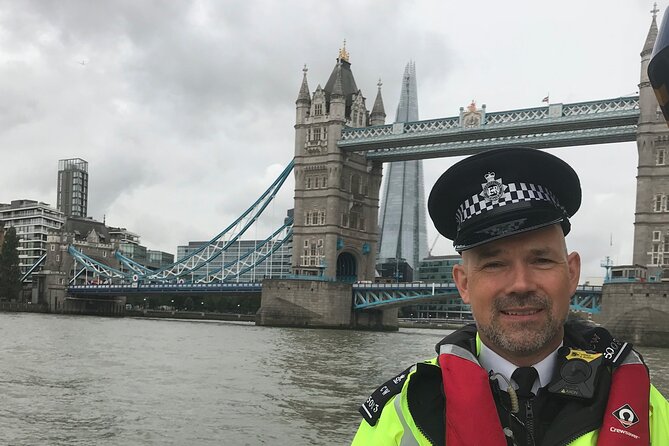
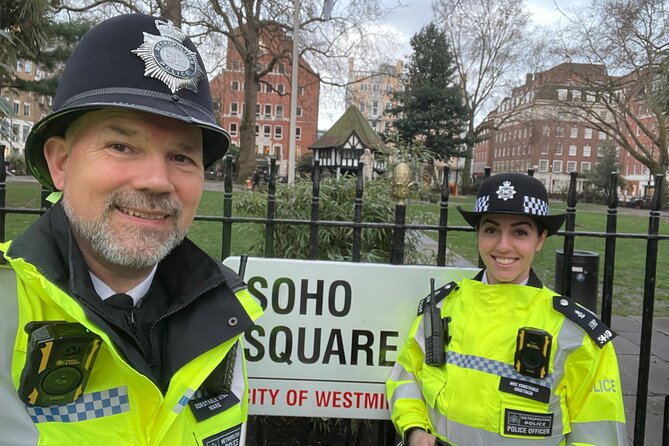
- Former police officer guide sharing Westminster-era stories and first-aid readiness
- Free-to-enter stops for many key sights, plus a practical ending with rooftop views
- A mix of London worlds: markets, courts, churches, hospitals, and film locations
How a private London walk beats trying to wing it
London can be overwhelming fast. You look up, you take photos, and somehow you’ve seen St. Paul’s and still don’t know what you just stood in front of. This tour solves that problem by doing two things at once: it keeps the route tight, and it gives you a through-line so the city starts making sense.
The private format matters more than you’d think. Because it’s for your group only (up to 15), you’re not stuck with a one-size-fits-all script. If something catches your interest—say a church used in movies or a market that used to be the center of public life—you can spend a little more time there and ask follow-ups. If you want a faster rhythm, the guide can move you along.
And the fact that the guide worked in Westminster adds a different flavor. You’re not just getting generic guidebook facts. You get the kind of stories that explain how power, ceremony, and everyday policing shaped the city over time, with a bit of humor thrown in.
You can also read our reviews of more walking tours in London



Meeting point, pacing, and what 3 hours 30 really means

You start near Barbican Underground (Aldersgate St), in central London, and you end at MadisonRooftop Terrace One in New Change. That end point is smart: it’s a natural place to pause, grab coffee or a drink (or even a meal, at your own cost), and let your legs recover while you absorb the skyline.
The tour is about 3 hours 30 minutes with a series of short stops. Many are brief—think 5 to 20 minutes—so you’ll be moving, but you won’t be stuck in one place for ages. The good news is that a lot of the sightseeing here is outdoors or quick interior moments, so you’re not trapped in long lines.
A practical note: it’s rated for moderate physical fitness, and it’s a walking format. If you’ve got knee or mobility issues, plan for uneven pavements, curbs, and the simple reality of covering multiple neighborhoods in one afternoon or morning.
Stop-by-stop: the London route that ties everything together

Barbican Centre: fires, rebuilding, and why this theme repeats
You begin at the Barbican Centre, and right away the guide frames London as a city that keeps getting rebuilt. The story starts with major fires and how the city responded each time—so when those same themes show up later, they land harder.
What makes this stop useful is that it sets your expectations. Instead of treating landmarks as isolated highlights, you start seeing patterns: disaster, change, and rebuilding.
The Charterhouse: plague, piety, and a surprisingly entertaining mix
Next comes The Charterhouse, where you hear about plague and the religious life that shaped institutions like this. The guide also makes connections you might not expect, including references that can run from serious history to lighter cultural touchpoints.
Even though the stop is short, it gives you context for why places like this mattered. You’ll understand that London wasn’t only about kings, wars, and parliaments—it was also about institutions that handled sickness, belief, and daily discipline.
You can also read our reviews of more private tours in London






Smithfield Market: a trading hub that once ran the city’s pulse
At Smithfield Market, the focus is on markets and what they reveal about London life. This area has long served as a center for food and commerce, and you’ll get a bigger picture of how that kind of place shapes the city’s rhythm.
If you want value from this tour, don’t rush this stop. Even a quick walkthrough helps you “read” what you see later, because markets explain a lot about the city’s social layers.
Church of St. Bartholomew the Great: Romanesque roots and movie-ready stone
Then you reach the Church of St. Bartholomew the Great. This is one of those stops where the building feels like a time machine. You’ll hear how it survived from before the Great Fire era, and you’ll also learn why it has appeared in films—London reuses its old bones in ways that are still visible today.
Here’s the takeaway: this church isn’t just pretty. It’s a rare survivor, and knowing that changes how you look at details like the stonework and the overall structure.
West Smithfield: jousting, riots, executions, and wartime damage
At West Smithfield, you hear about jousting, fairs, riots, executions, and bombing. It’s an intense range, but the guide threads it so the area reads as one place with many eras stacked on top.
This is one of the moments where you realize why a guide adds value. If you walk past Smithfield on your own, you might see streets and buildings. With a guide, you understand what happened there and why that history still affects the atmosphere of the neighborhood.
St. Bartholomew’s Hospital Museum: 900 years of medical care
Next is Saint Bartholomew’s Hospital Museum, highlighting its 900-year milestone (noted for 2023) and its place as possibly London’s oldest hospital. This stop is quick, but it gives you an anchor point: London’s story also runs through medicine, care, and institutional survival.
It’s a nice balance after heavier public events. You shift from courts and crowds to people and systems built to keep going.
Golden Boy of Pye Corner: a Great Fire reminder you can spot
At the Golden Boy of Pye Corner, the guide ties the statue back to the Great Fire of London. This is one of those locations that can feel like a “small thing” until you learn what it symbolizes.
Take this stop slowly if you enjoy symbolism and city folklore. The point here is that London plants reminders in plain sight, and knowing the meaning makes your photos better.
Holy Sepulchre London: musicians, grave-robbers, and last rights at dawn
Then you’re at Holy Sepulchre London, where the stories go dark and specific. You’ll hear about musicians, grave-robbers, and last rights given to prisoners at Newgate Prison—people facing execution at dawn.
This stop is only about a few minutes, but it’s heavy in information. The value is in the context: it connects churches to the justice system, not as abstract ideas, but as a lived part of daily life in historical London.
Old Bailey: hangings and public executions
From there, you move to the Old Bailey, and the focus lands on Newgate Prison and the public side of punishment: hangings and executions. It’s not a cheerful topic, but it’s also one of the most important parts of understanding how the city worked.
If you prefer lighter storytelling, you might think this section is too much. I get it. But if you’re building real understanding, these moments are the spine of the story.
Christchurch Greyfriars Churchyard: a garden church with lost queen’s hearts
At Christchurch Greyfriars Churchyard, you get something calmer: a garden church setting and the idea of lost queen’s hearts tied to memorial tradition. It’s a short stop, but it’s a nice sensory break after the courthouse material.
This is where London feels intimate. You’re not just looking at famous buildings—you’re stepping into a place shaped by memory.
Postman’s Park: 19th-century bravery memorials
Next is Postman’s Park, known for memorials to heroic acts from the 19th century, connected with the artist G F Watts. The guide helps you understand why these memorials exist and what kind of values they were trying to protect.
If you’re the type who likes meaningful details—things you’d never hunt down on your own—this is a great stop. It’s quietly powerful for how small it is.
Temple Bar Memorial: the old gate that framed entering London
At Temple Bar Memorial, you hear about the old 17th-century gate into the city. This is history you can almost feel in your walking path: borders, entrances, and how London separated inside from outside.
I like this kind of stop because it helps you map the city. Once you understand gates and boundaries, it’s easier to “place” everything else you see.
St. Paul’s Cathedral: take in Wren’s exterior from the right angle
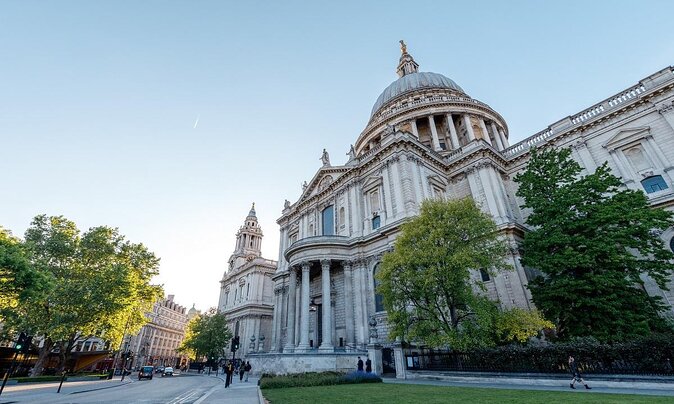
Finally, you arrive at St. Paul’s Cathedral for an exterior look at the work of Sir Christopher Wren. The focus here is on seeing it with fresh eyes, not treating it as a quick photo stop.
Even with just an exterior view, you’ll come away with a better sense of why it became a symbol—especially after hearing the rebuilding and fire context earlier in the walk.
The rooftop finish at Madison Bar: a practical end to a big day
You end at MadisonRooftop Terrace One at New Change, with the option to stop for coffee, drinks, or a meal at your own cost. Rooftops are touristy for a reason: you get the skyline all at once.
This finish also makes the tour feel complete. You’re not wandering off feeling rushed or unsure what to do next. You’ve got a built-in pause that lets you process what you learned and decide what you want to see later.
If you’re traveling with friends or family, this is also the moment where everyone can agree on what they enjoyed most—markets, churches, courts, or fire stories.
Price and value: what $342.14 per group really buys
The price is $342.14 per group, for up to 15 people. That can sound like a lot until you do the math and compare it to paying separately for individuals.
If you have a full group of 15, you’re looking at about $23 per person for a private guide and a structured route with many free stops. If you have fewer people, the per-person cost goes up, but you’re still paying for time, planning, and a guide who links the city’s pieces together.
The real value is the “thinking” part: the tour isn’t only sightseeing. It’s a guided path through themes—fires, justice, institutions, and memorials—so you leave with more than photos. And because it’s private, you can ask questions without feeling like you’re slowing down a big group.
Best for you if you want London to make sense fast
This tour fits best when you:
- Want a high-signal route that covers lots of ground in one session
- Enjoy stories that connect major events to everyday places
- Like your history guided by someone who can explain it clearly and with humor
- Prefer a moderate pace with short stops rather than long museum marathons
It’s less ideal if you want a long, sit-down deep study of a single landmark, or if you don’t want to handle a walking route with multiple stops.
What I’d do to get the most out of it
Bring comfortable walking shoes. Plan for weather. Many stops are short, but the walking adds up.
Also, go in with one expectation: the guide is going to give you connections. If you try to memorize every detail, you’ll miss the fun. Instead, pick one thread you like—Great Fire, justice and punishment, or the city’s institutions—and follow that theme through the stops.
Finally, don’t rush St. Paul’s. The earlier fire context changes what you notice in the exterior.
Should you book this private London walking tour?
Yes, if you want a private, high-structure walk that helps you understand London quickly without feeling like you’re stuck in a classroom. The strongest reason to book is the guide’s background and the way the route links places you’d never connect on your own, from market life and churches to the justice system and rebuilding after fires.
I’d skip it only if you want minimal walking or you already have a detailed plan for each stop. In that case, you might be better off picking a more focused experience.
FAQ
How long is the private walking tour in London?
It runs for about 3 hours 30 minutes.
How much does the tour cost, and how many people can join?
The price is $342.14 per group, up to 15 people. It’s a private tour for only your group.
Where do you start and end the tour?
You start at Underground Ltd, Aldersgate St, Barbican, London EC1A 4JA, UK, and you end at MadisonRooftop Terrace One, New Change, London EC4M 9AF, UK.
What’s included, and is lunch included?
A personal qualified guide is included. Lunch is not included, but you’ll have an option to buy coffee, drinks, or a meal at your own cost during the stop at Madison Bar & Restaurant.
Is the tour suitable for people with mobility needs?
The tour is designed for travelers with a moderate physical fitness level. Service animals are allowed, and it’s near public transportation.
Can I cancel or change the booking?
No. The experience is non-refundable and cannot be changed for any reason.